APC chieftain urges service chiefs to act swiftly as killings, abductions surge nationwide

Olatunbosun Oyintiloye, a chieftain of the All Progressives Congress (APC) in Osun State, has called on the nation’s Service Chiefs to urgently strengt…

Olatunbosun Oyintiloye, a chieftain of the All Progressives Congress (APC) in Osun State, has called on the nation’s Service Chiefs to urgently strengthen security operations as violent attacks, mass abductions, and killings continue to spread across several states.

Speaking with journalists on Sunday in Osogbo, the former lawmaker condemned the escalating incidents in Kwara, Kebbi, Niger, and other parts of the country, warning that the situation had become “unbearable” for citizens.

Oyintiloye noted that the recent killings and abductions of worshippers, schoolchildren, and other vulnerable groups had plunged many families into distress and further deepened fears about Nigeria’s security stability.

“I want to passionately appeal to the Service Chiefs to do everything within their power to rescue the abducted children and also stop the senseless killings by the terrorists across the country,” he said.

Read also: Tinubu mourns Musa Uba, other fallen soldiers, vows safe return of kidnapped Kebbi schoolgirls

He lamented that several communities had become desolate due to large-scale displacement, with families living in fear as violence spreads unchecked.

According to him, parents and relatives of abducted schoolchildren are “in a state of devastation,” demanding urgent intervention from security authorities.

“If it means the Service Chiefs changing their operational tactics to get things right, they should do so without hesitation because Nigeria is bleeding and time is running out,” he added.

Related News

While acknowledging the efforts of security agencies, the APC chieftain stressed that the intensity and frequency of recent attacks required a review of operational strategies to stem the tide of violence.

He also urged President Bola Tinubu and Nuhu Ribadu, National Security Adviser, to uncover and prosecute individuals allegedly sabotaging military operations.

“The President and the NSA should discreetly identify those sabotaging the efforts of the military in protecting Nigerians.

“Those saboteurs within the system must be identified and flushed out before they do more damage,” he said, expressing concern over reports of internal sabotage and external collaboration.

According to him, the manner in which some military efforts are being undermined suggests the need for a thorough investigation.

Oyintiloye commended Tinubu’s ongoing initiatives to strengthen national security and expressed optimism that Nigeria can win the fight against terrorism with collective cooperation and vigilance.

He appealed to citizens not to lose hope, saying the country will overcome its current security challenges with unity and sustained support for security agencies.


Kaduna launches $150m fund to boost critical minerals exploration

Kaduna State has launched a $150 million Green Mining Investment Fund aimed at accelerating early-stage exploration of critical minerals and positionin…

Kaduna State has launched a $150 million Green Mining Investment Fund aimed at accelerating early-stage exploration of critical minerals and positioning the state as Nigeria’s most attractive destination for global mining capital.

The Fund was announced on the sidelines of the G20 Summit in Johannesburg—Africa’s first—where the Kaduna State Government signed a Memorandum of Understanding (MoU) with international advisory firm Core International at an event hosted by the Nigerian Investment Promotion Commission (NIPC).

According to a joint statement under the agreement, Core International and the Kaduna Mining Development Company (KMDC) will jointly structure the Fund and secure anchor capital, with a firm deadline to make it fully operational and deployment-ready by the end of Q1 2026.

Read also: Uba Sani pitches Kaduna as Nigeria’s top investment destination at G20 forum

Kaduna officials say the Fund directly targets one of Nigeria’s biggest mining barriers: the chronic shortage of early-stage, risk-tolerant financing needed to move mineral assets from potential to bankable projects.

The vehicle is designed as a private sector–led platform that will co-finance drilling, resource definition, and initial project preparation for minerals essential to the global energy transition—particularly lithium, rare earth elements (REEs), and gold.

Signing the MoU in Johannesburg was intentional, aligning Kaduna’s mineral ambitions with the G20’s priority on securing critical mineral supply chains and advancing clean energy development across the Global South.

“This Fund is the mechanism that transitions Kaduna from having potential to realizing value,” said Shuaibu Kabir Bello, managing director, KMDC.

Related News

“Our commitment of capital signals to global investors that we are not just seeking funding—we are sharing exploration risk, providing data, and building a transparent, modern mining sector.”

Also speaking Suleiman Zakari, managing partner with Core International described the partnership as a “secure bridge for global capital,” noting that the Fund is being designed to meet international standards for governance, transparency, and co-investment.

“By signing this agreement at a moment when major economies are racing to secure critical minerals, Kaduna is sending a strong message: it is ready, organized, and investment-grade,” Zakari said.

The launch of the Fund completes Governor Uba Sani’s State Exploration Acceleration Programme, which includes geological data generation, regulatory streamlining, and investor support systems. State officials say Kaduna is now presenting a fully de-risked and integrated investment environment—rare in Nigeria’s mining landscape.

By providing both data and co-financing, the state aims to shorten project timelines, attract strategic mining companies, and unlock billions of dollars in future investment.

With global demand for battery metals and energy-transition minerals surging, Kaduna is positioning itself as a frontier jurisdiction capable of supplying critical minerals to global markets while offering investors clarity, partnership, and reduced risk.

Kaduna launches $150m fund to boost critical minerals exploration

Kaduna State has launched a $150 million Green Mining Investment Fund aimed at accelerating early-stage exploration of critical minerals and positionin…

Kaduna State has launched a $150 million Green Mining Investment Fund aimed at accelerating early-stage exploration of critical minerals and positioning the state as Nigeria’s most attractive destination for global mining capital.

The Fund was announced on the sidelines of the G20 Summit in Johannesburg—Africa’s first—where the Kaduna State Government signed a Memorandum of Understanding (MoU) with international advisory firm Core International at an event hosted by the Nigerian Investment Promotion Commission (NIPC).

According to a joint statement under the agreement, Core International and the Kaduna Mining Development Company (KMDC) will jointly structure the Fund and secure anchor capital, with a firm deadline to make it fully operational and deployment-ready by the end of Q1 2026.

Read also: Uba Sani pitches Kaduna as Nigeria’s top investment destination at G20 forum

Kaduna officials say the Fund directly targets one of Nigeria’s biggest mining barriers: the chronic shortage of early-stage, risk-tolerant financing needed to move mineral assets from potential to bankable projects.

The vehicle is designed as a private sector–led platform that will co-finance drilling, resource definition, and initial project preparation for minerals essential to the global energy transition—particularly lithium, rare earth elements (REEs), and gold.

Signing the MoU in Johannesburg was intentional, aligning Kaduna’s mineral ambitions with the G20’s priority on securing critical mineral supply chains and advancing clean energy development across the Global South.

“This Fund is the mechanism that transitions Kaduna from having potential to realizing value,” said Shuaibu Kabir Bello, managing director, KMDC.

Related News

“Our commitment of capital signals to global investors that we are not just seeking funding—we are sharing exploration risk, providing data, and building a transparent, modern mining sector.”

Also speaking Suleiman Zakari, managing partner with Core International described the partnership as a “secure bridge for global capital,” noting that the Fund is being designed to meet international standards for governance, transparency, and co-investment.

“By signing this agreement at a moment when major economies are racing to secure critical minerals, Kaduna is sending a strong message: it is ready, organized, and investment-grade,” Zakari said.

The launch of the Fund completes Governor Uba Sani’s State Exploration Acceleration Programme, which includes geological data generation, regulatory streamlining, and investor support systems. State officials say Kaduna is now presenting a fully de-risked and integrated investment environment—rare in Nigeria’s mining landscape.

By providing both data and co-financing, the state aims to shorten project timelines, attract strategic mining companies, and unlock billions of dollars in future investment.

With global demand for battery metals and energy-transition minerals surging, Kaduna is positioning itself as a frontier jurisdiction capable of supplying critical minerals to global markets while offering investors clarity, partnership, and reduced risk.

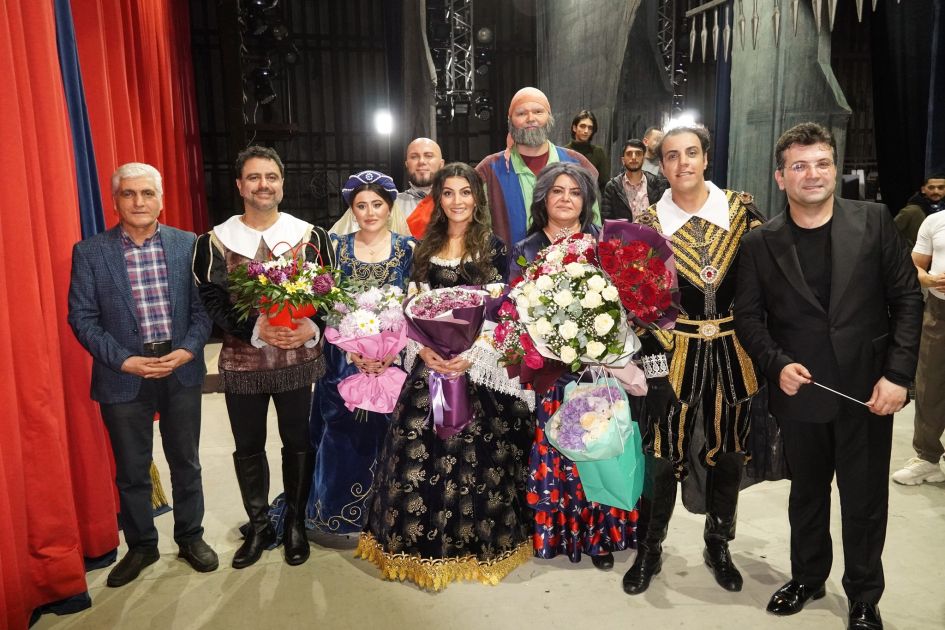
Baku Music Academy revives Verdi’s “Il trovatore” in stunning production

Giuseppe Verdi’s Il trovatore (The Troubadour)
was staged at the Opera Studio of the Uzeyir Hajibeyli Baku Music
Academy.
As Azernews reports, the production completes
the great composer’s renowned trilogy alongside La
traviata and Rigoletto. The opera…

Giuseppe Verdi’s Il trovatore (The Troubadour)
was staged at the Opera Studio of the Uzeyir Hajibeyli Baku Music
Academy.

As Azernews reports, the production completes
the great composer’s renowned trilogy alongside La
traviata
and Rigoletto. The opera, celebrated for its
unrelenting dramatic intensity across four acts, has remained a
jewel of the world operatic repertoire for more than 170 years,
captivating audiences and drawing full houses with every
performance.

The passionate Italian drama last appeared on a Baku stage
several years ago. This latest production once again brought to
life a story of bitter enmity, unwavering devotion, emotional
clashes and powerful human passions.

The evening, held to a packed auditorium, featured some of the
most iconic numbers in the global opera canon: the “Miserere”
chorus, the gypsy chorus punctuated by the echoing hammer blows of
the anvil, Leonora’s cavatina “Tacea la notte placida”, Manrico’s
famous aria “Di quella pira”, and Count di Luna’s beloved aria “Il
balen del suo sorriso”. The performance also showcased Azucena’s
dramatic highlights such as “Stride la vampa” and “Sol, son tuo
figlio?”, along with the Manrico–Leonora duet that drew frequent
cries of “Bravo!” from the enthusiastic audience.

Leading roles were performed by distinguished Azerbaijani
vocalists. Honoured Artist Afaq Abbasova delivered a compelling
portrayal of Leonora, while Honoured Artist Farid Aliyev embodied
Manrico with skill and passion. Talented baritone Taleh Yakhyayev
captured the full emotional breadth of Count di Luna. Honoured
Artist Anton Fershtandt took on the role of Ferrando, the captain
of the guard. Honoured Artist Sabina Asadova appeared as Azucena,
impressing audiences with her deep and resonant mezzo-soprano in
one of the opera’s most demanding roles. The cast also included
soloists Sema Həmzayeva as Ines, Leonora’s confidante, and Igor
Yadrov as the old gypsy.

The Symphony Orchestra of the Azerbaijan State Academic Opera
and Ballet Theatre performed under the baton of Honoured Artist
Ayyub Guliyev.

Staged in Italian, the production left a lasting mark on the
cultural life of the capital with its dramatic narrative and
virtuosic performances, a fact affirmed by the audience’s prolonged
applause.

The production was directed by Honoured Artist Hafiz Guliyev,
with Honoured Artist Sevil Hajiyeva serving as chorus master.

Sterling Bank positions agriculture as Africa’s next big investment frontier at ASA 2025

Sterling Bank is pushing for a continent-wide shift toward bankable, technology-driven agriculture, calling on African governments and financiers to un…

Sterling Bank is pushing for a continent-wide shift toward bankable, technology-driven agriculture, calling on African governments and financiers to unlock catalytic capital and build stronger cross-border partnerships to accelerate growth across the food and agribusiness value chain.

At the 2025 Agriculture Summit Africa (ASA) in Abuja recently, the bank made a case for agriculture as one of Africa’s most promising economic opportunities—with the potential to attract long-term private investment if policy, financing, and innovation are aligned.

Olushola Obikanye, group head, Agric and Solid Mineral Finance at Sterling Bank, said conversations at the summit showed rising investor interest in sustainable agribusiness.

“Africa’s narrative is being rewritten by people who refuse to accept limits,” he said, noting that collaboration, technology, and green innovation are becoming key drivers of competitiveness.

In one of the most significant business announcements at the event, the Federal Government unveiled the National Livestock Growth Acceleration Strategy, a plan to grow Nigeria’s livestock sector from $32 billion to $74 billion by 2035.

Idi Mukhtar Maiha, minister of Livestock Development, urged banks to create dedicated livestock desks to close financing gaps for pastoralists and processors, saying the new strategy could cut import dependence and stimulate millions of jobs in rural markets.

Industry analysts at the summit said the plan could open up new investment opportunities in feed production, refrigerated logistics, dairy processing, veterinary services, and industrial-scale ranching.

In a move expected to boost private-sector participation, the National Agricultural Development Fund (NADF) announced a strategic on-lending agreement with Sterling Bank.

Mohammed Ibrahim, executive secretary, NADF said the partnership would de-risk lending and create new pipelines for private capital. “Catalytic finance can transform agriculture from a high-risk venture into a bankable sector,” he noted.

Related News

The deal is expected to support agribusinesses across high-impact value chains, particularly those seeking long-term financing for machinery, processing, and climate-smart technologies.

Mai Mala Buni, governor of Yobe State represented by Garba Tahir Usman, permanent secretary, said the state is scaling mechanisation and digital tools to improve yields and reduce post-harvest losses.

He called for private investment in tech-enabled agriculture, especially irrigation and extension services.

Read also: Sterling Bank CEO calls on youth to take active role in governance

Corporate leaders from Noor Takaful, Bank of Agriculture, and Sunbeth Global Concepts also used the summit to spotlight investment prospects in risk-sharing, insurance, export markets, and supply-chain integration.

Panels throughout the summit examined policy reforms, green innovation, data-driven farming, and climate-resilient food systems—all viewed as areas with strong commercial potential.

ASA 2025 concluded with exhibitions showcasing agritech solutions, processing equipment, and renewable-energy applications aimed at boosting productivity and lowering operating costs for farmers and agribusiness operators.


Sterling Bank positions agriculture as Africa’s next big investment frontier at ASA 2025

Sterling Bank is pushing for a continent-wide shift toward bankable, technology-driven agriculture, calling on African governments and financiers to un…

Sterling Bank is pushing for a continent-wide shift toward bankable, technology-driven agriculture, calling on African governments and financiers to unlock catalytic capital and build stronger cross-border partnerships to accelerate growth across the food and agribusiness value chain.

At the 2025 Agriculture Summit Africa (ASA) in Abuja recently, the bank made a case for agriculture as one of Africa’s most promising economic opportunities—with the potential to attract long-term private investment if policy, financing, and innovation are aligned.

Olushola Obikanye, group head, Agric and Solid Mineral Finance at Sterling Bank, said conversations at the summit showed rising investor interest in sustainable agribusiness.

“Africa’s narrative is being rewritten by people who refuse to accept limits,” he said, noting that collaboration, technology, and green innovation are becoming key drivers of competitiveness.

In one of the most significant business announcements at the event, the Federal Government unveiled the National Livestock Growth Acceleration Strategy, a plan to grow Nigeria’s livestock sector from $32 billion to $74 billion by 2035.

Idi Mukhtar Maiha, minister of Livestock Development, urged banks to create dedicated livestock desks to close financing gaps for pastoralists and processors, saying the new strategy could cut import dependence and stimulate millions of jobs in rural markets.

Industry analysts at the summit said the plan could open up new investment opportunities in feed production, refrigerated logistics, dairy processing, veterinary services, and industrial-scale ranching.

In a move expected to boost private-sector participation, the National Agricultural Development Fund (NADF) announced a strategic on-lending agreement with Sterling Bank.

Mohammed Ibrahim, executive secretary, NADF said the partnership would de-risk lending and create new pipelines for private capital. “Catalytic finance can transform agriculture from a high-risk venture into a bankable sector,” he noted.

Related News

The deal is expected to support agribusinesses across high-impact value chains, particularly those seeking long-term financing for machinery, processing, and climate-smart technologies.

Mai Mala Buni, governor of Yobe State represented by Garba Tahir Usman, permanent secretary, said the state is scaling mechanisation and digital tools to improve yields and reduce post-harvest losses.

He called for private investment in tech-enabled agriculture, especially irrigation and extension services.

Read also: Sterling Bank CEO calls on youth to take active role in governance

Corporate leaders from Noor Takaful, Bank of Agriculture, and Sunbeth Global Concepts also used the summit to spotlight investment prospects in risk-sharing, insurance, export markets, and supply-chain integration.

Panels throughout the summit examined policy reforms, green innovation, data-driven farming, and climate-resilient food systems—all viewed as areas with strong commercial potential.

ASA 2025 concluded with exhibitions showcasing agritech solutions, processing equipment, and renewable-energy applications aimed at boosting productivity and lowering operating costs for farmers and agribusiness operators.


UNN @ Times Rankings’ 161 and VC Ortuanya’s 100 Days in Office

Every so often, a narrative unfolds that demands more than reportage. It demands reflection. Interpretation. Contextual excavation. The newly released …

Every so often, a narrative unfolds that demands more than reportage. It demands reflection. Interpretation. Contextual excavation. The newly released 2026 Times Higher Education Interdisciplinary Science Rankings is one such narrative, a moment where statistics transcend spreadsheets and become symbols of institutional destiny. Covenant University has just made history by placing 49th globally and first in Africa, the only African university to break into the world’s top 50. That headline will expectedly enjoy the limelight. But if one shifts the gaze slightly – if one peers beyond the dazzle of Covenant’s triumph, another story emerges, quieter yet equally consequential – the University of Nigeria, Nsukka securing second place in Nigeria, second in Africa, and 161st globally. For UNN, an institution often romanticised for its founding philosophy but criticised for inconsistent performance, this ranking is a subtle rebirth. It is a quiet re-entry into the conversation of relevance, a declaration that the Lion is still capable of roaring.

But like all good stories, this one has a compelling subplot: the coincidence of this ranking with the first 100 days of the new Vice Chancellor, Prof. Simon Uchenna Ortuanya, who assumed office in August 2025. The ranking does not credit him with instant miracles. No serious scholar would make such a claim. Instead, it offers something perhaps more important; it is a providential timing, a symbolic endorsement, an unexpected tailwind propelling the early days of his leadership. To understand this moment correctly, we must deconstruct the ranking, revisit its historical undercurrents, interpret its present implications, and project its future possibilities. Only then can we appreciate why this confluence of events is neither trivial nor accidental – and why it validates, in tone and texture, my earlier verdict: indeed, Simon is working.

The Interdisciplinary Science Rankings, now in their second edition, are not the typical STEM-or-publication-heavy metrics familiar to the academic world. They measure universities across 11 indicators that reflect the global shift toward knowledge integration: interdisciplinary research quality, cross-disciplinary publications, external funding, measures of research success, facilities, administrative support, structures that promote interdisciplinarity, academic reputation, etc. These metrics reward institutions that can break disciplinary silos and create ecosystems, where engineering dialogues with ethics, medicine with machine learning, agriculture with economics, psychology with public policy, language with AI, and environmental science with legal frameworks. In this emerging global academic architecture, interdisciplinarity is not a buzzword; it is the engine of innovation. The ranking therefore rewards institutions that not only produce knowledge, but connect it. That UNN has performed strongly in these metrics tells a deeper story, one that predates the current VC but aligns perfectly with his administrative temperament and stated vision.

UNN’s present ranking is not the result of a single administration, nor the work of 100 days. It is the cumulative outcome of years of incremental reforms, sometimes visible, sometimes invisible – undertaken by successive leaderships. The past vice chancellors strengthened digital infrastructure, improved Senate processes, expanded postgraduate enrollment, initiated curricular reforms, revamped research centres, encouraged international linkages, and nurtured a slow but steady culture of interdisciplinarity across departments. Their efforts built the scaffolding from which UNN now projects itself into global visibility. It is academically proper and ethically necessary to acknowledge this heritage. Universities, unlike governments, do not operate on four-year or eight-year cycles. Their achievements accumulate over decades. What we celebrate today is therefore the fruit of long-term institutional investments, policy adjustments, and intellectual perseverance. However, the fact that the ranking was released just as Prof. Ortuanya marks his 100th day in office gives the moment a symbolic coherence that one cannot ignore. History often chooses its own punctuation marks.

Prof. Simon Ortuanya assumed office with a reputation for administrative precision, legal clarity, and systemic discipline. His leadership style, even within 100 days, has reflected a calm, methodical, and purposeful approach, focused less on noise and more on structure. Even though this ranking predates his tenure, its emergence during his early days does three things. First, it confers legitimacy early. New Vice Chancellors often struggle with internal resistance, competing interests, and the inertia of long-standing university cultures. A ranking of this magnitude is a psychological enabler. It boosts morale, softens resistance, and gives the new administration a stronger mandate to pursue reforms. Second, it offers a platform for acceleration. Since the ranking highlights interdisciplinarity as UNN’s rising strength, Ortuanya inherits a clear, data-driven direction. Expand cross-disciplinary research clusters, strengthen multi-faculty laboratories, incentivise team grants, and integrate technology with traditional scholarship. It is now possible to intensify momentum rather than create it from scratch. Third, it positions UNN for global partnerships. Visibility attracts collaborations. Grants follow reputation. Philanthropists support institutions that demonstrate measurable impact. With UNN at 161 globally and 2nd in Africa, Ortuanya can approach international partners with confidence rather than persuasion. Thus, the ranking is not merely a feather in the cap; it is fuel for a larger journey. Altogether, the Ortuanya moment is a tonic, a turning-point, a tailwind.

Covenant University’s exceptional performance – Africa’s No. 1 – is a landmark achievement. But for UNN, this should not be a discouragement. It should be a benchmark. If a private university with a shorter lifespan can rise to global prominence, then a public institution with UNN’s breadth, diversity, intellectual capital, and historical grounding can surpass it – if governance sustains the present trajectory. Interdisciplinarity is UNN’s entry point into this competitive future. It is a university’s reawakening beyond nostalgia, and towards renewal. For decades, UNN’s reputation rested heavily on the mythos of its founding. The nostalgia of being “the first indigenous university” became both a source of pride and a subtle burden. Too often, that heritage became a hiding place for contemporary underperformance. But this ranking signals a philosophical shift – from a past-oriented narrative to a forward-facing identity. UNN is no longer resting on its founding story. It is writing a new chapter—one measured, not in slogans, but in metrics; not in sentiment, but in data. The old Lion is stirring again with a renewed roar, hitting the road ahead towards a future of greater possibilities.

The future that this ranking unlocks is expansive, but it requires deliberate leadership. For UNN to climb from 161 into the top 100 – or even contest Covenant’s continental lead – several imperatives must be pursued. Institutionalise interdisciplinarity through joint degrees, shared laboratories, and thematic research clusters. Strengthen administrative efficiency to support grant management, research ethics, and digital workflows. Expand global partnerships with universities prioritising cross-disciplinary research. Prioritise digital research infrastructure, data repositories, and open-access scholarship. Promote postgraduate research, particularly in emerging fields: AI, biotechnology, environmental governance, digital humanities, health economics, and climate science. All of these fall within the natural temperament of the new Vice Chancellor – structured, deliberate, research-oriented, and strategically ambitious. The timing could not be more auspicious.

Related News

Ultimately, the 2026 Times Higher Education Interdisciplinary Science Ranking is more than an institutional accolade. It is a call to action. It affirms the labour of UNN’s past leaderships.

It offers symbolic wind to Ortuanya’s early sails. It opens doors, widens horizons, and sharpens possibilities. It transforms a university from a relic of past glory into a contender for future greatness. Most importantly, it challenges the new administration to do more, aim higher, and sustain momentum. Because rankings do not reward history; they reward performance. And as UNN stands on this threshold – with its legacy behind it and its destiny before it – one truth resonates with clear, resonant conviction. This is not UNN’s summit; it is its starting point;

not the climax of a journey, but the overture of a renaissance.

In the final reckoning, the Times Higher Education ranking does more than shuffle universities on a global ladder; it reshapes narratives, sharpens perceptions, and recalibrates what is thinkable for an institution long weighed down by nostalgia and episodic underperformance. It affirms the cumulative labour of past administrations and gifts Prof. Simon Ortuanya a symbolic tailwind just as he crosses his 100-day threshold – an auspicious moment when coincidence becomes consequence, and consequence becomes mandate. The challenge before UNN is clear: consolidate this momentum, deepen interdisciplinarity, and transform promise into permanence. And as the Lion begins to stir again, reclaiming its place not by sentiment but by metrics, one truth stands tall in the quiet clarity of its own eloquence – that Prof Ortuanya is, indeed breaking new grounds.

And because leadership is language, and rankings are narratives, and narratives are the architecture of institutional destiny, this moment reminds us – forcefully and beautifully – why we pay attention to the things we say, the stories we tell, and the meanings we make of them. In the end, as always, word indeed, matters.

.Agbedo, a professor of Linguistics, University of Nigeria Nsukka, Fellow of Netherlands Institute for Advanced Study, is a public affairs analyst.

Malaysia plans social media ban for under-16s from next year

Malaysia has announced plans to implement a comprehensive social
media ban for children under 16 beginning next year, as part of a
broader initiative to enhance online safety for young users across
the country.
Communications Minister Fahmi Fadzil conf…

Malaysia has announced plans to implement a comprehensive social
media ban for children under 16 beginning next year, as part of a
broader initiative to enhance online safety for young users across
the country.

Communications Minister Fahmi Fadzil confirmed the government’s
intention to prohibit social media access for minors under 16,
requiring platform providers to implement electronic know your
customer (eKYC) identity verification systems by the target
implementation date. “We expect all platform providers to be ready
to implement the measures by next year,” Fadzil stated during a
media briefing following an educational seminar.

International Precedents and Monitoring
The minister acknowledged Australia’s pioneering move to establish
age restrictions on social media platforms starting December 10,
making it the first nation to prohibit users aged 16 and under from
accessing major platforms including Facebook, Instagram, TikTok, X,
and YouTube. Malaysian authorities will closely observe the
implementation and outcomes of Australia’s approach as they develop
their own regulatory framework.

Comprehensive Online Safety Legislation
The social media age restriction forms part of Malaysia’s wider
Online Safety Act, scheduled to take effect on January 1, 2026.
This legislative package represents the government’s comprehensive
approach to addressing digital risks facing young internet users.
The Cabinet had previously decided in October to raise the minimum
age for social media access to 16, formalizing this protective
measure.

Parental Guidance and Alternative Activities
Minister Fadzil emphasized the importance of parental involvement
in children’s digital habits, encouraging families to promote
outdoor activities and reduce screen time for younger children. He
stressed that parental supervision of device usage remains crucial
even as the government implements regulatory measures to create
safer online environments for Malaysia’s youth population.

50 abducted Niger school pupils escape as over 260 remain in captivity

Fifty pupils abducted from St. Mary’s Secondary and Primary School in Papiri, Agwara Local Government Area of Niger State, have escaped from captivity….

Fifty pupils abducted from St. Mary’s Secondary and Primary School in Papiri, Agwara Local Government Area of Niger State, have escaped from captivity.

Armed men had stormed the school in the early hours of Friday, shooting a security guard and whisking away more than 200 pupils and students, along with at least 13 teaching and non-teaching staff.

Initial figures released by Bulus Dauwa Yohanna, Chairman of the Christian Association of Nigeria (CAN) in Niger State, who also owns the school, indicated that 215 students and 12 staff were taken.

Read also: Niger school attack: Number of abducted students, teachers climbs to 315, says CAN

However, by Saturday the numbers became more alarming as the cleric reported that 88 additional students could not be accounted for, pushing the total missing victims higher than earlier feared.

In a statement released on Sunday by Daniel Atori, his aide, Yohanna confirmed that 50 of the abducted pupils managed to escape on Saturday and had since been reunited with their families.

“This is to notify the public that as of Sunday, 23rd November 2025, we have received some good news as fifty (50) pupils escaped and have reunited with their parents,” the statement read.

Related News

He explained that the school runs both boarding and day programmes.

“The primary section alone has 430 pupils, including 377 boarders and 53 day students”, he added.

Giving further clarity on the current situation, the CAN chairman said: “Aside from the 50 pupils that escaped and have returned home, we have 141 pupils who were not taken.

“As it stands now, 236 pupils, three children belonging to staff members, 14 secondary school students, and 12 staff members remain with the abductors”, he clarified

Security agencies have intensified search-and-rescue operations as pressure mounts for the safe return of the remaining victims.


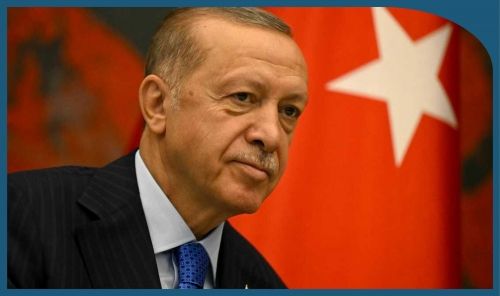
President Erdogan plans to meet his Russian counterpart to discuss Ukraine

Turkish President Recep Tayyip Erdogan on Sunday said he will
call his Russian counterpart Vladimir Putin on Monday to discuss
the revival of Black Sea grain corridor.
Speaking to the press on the margins of the G20 leaders’ summit
in Johannesburg, Sou…

Turkish President Recep Tayyip Erdogan on Sunday said he will
call his Russian counterpart Vladimir Putin on Monday to discuss
the revival of Black Sea grain corridor.

Speaking to the press on the margins of the G20 leaders’ summit
in Johannesburg, South Africa, Erdogan said, “Our efforts regarding
the grain corridor were, in fact, intended to open the path towards
peace.”

“I believe that, if we can set this process in motion, it would
be highly beneficial,” he added.

Ankara first arranged Russia-Ukraine talks in 2022, and later
brokered the Black Sea grain deal to facilitate the export of grain
and fertilizers from Ukrainian ports amid the war. Russia suspended
its participation in July 2023.

On the Sudan conflict, the Turkish president said the Sudanese
people want Ankara to play role in resolving issue, vowing:
“Wherever there is trouble, we will be there.”

“Whether in Gulf, Sudan, or Somalia, we have been part of these
efforts, from now on, we will continue rushing everywhere for
peace,” Erdogan added.