In the National Interest: An agenda for a holistic renewal of Nigeria

Nigeria goes by the sobriquet “Giant of Africa”, principally because of its size. But the best metaphorical description of the country is a “sleeping g…

Nigeria goes by the sobriquet “Giant of Africa”, principally because of its size. But the best metaphorical description of the country is a “sleeping giant”. And being asleep, Nigeria is not fulfilling its potential. The challenges are daunting and if things remain as they are, the omens are not good. Cobbled together by Britain in 1914, Nigeria remains today, over 110 years later, a deeply fractured society, lacking internal cohesion and a shared purpose. The core ethnic identities compete with, and often trump, the national identity. On the economic front, Nigeria is one of the world’s most volatile and fragile economies. Socially, Nigeria is ravaged by endemic corruption, widespread unemployment, extreme poverty and inequality, and debilitating insecurity. Put simply, Nigeria lacks the political wherewithal and institutional capacity to engender stability, progress and prosperity.

The foregoing is the context in which I wrote my book, In The National Interest: The Road to Nigeria’s Political, Economic and Social Transformation, which was launched last week. The book is a bold call to action, grounded in deep historical insight and focused on one central truth: Nigeria cannot move forward until its leaders and citizens alike begin to act in the national interest. In it, I explore the root causes of our national challenges – political, economic, and social – and present a clear-eyed roadmap for transformative change. I argue that Nigeria needs a new political and constitutional settlement as well as a new economic model to unlock its great potential and become politically stable, economically prosperous and socially cohesive, and thus become the great nation that it should be. As someone committed to the future of this country, I believe this book offers the kind of holistic analysis and forward-thinking solutions that are urgently needed.

Analytically, the book’s approach is based on the premise that there is a symbiotic relationship between the political, economic, and social factors shaping Nigerian society and that political governance, economic performance, and social well-being are interdependent. For instance, the right political institutions that positively shape the character and efficiency of democratic governance are a prerequisite for successful economic governance and management, and both political stability and economic prosperity are critical to social progress and internal cohesion, both of which, in turn, can affect the operation and performance of the political and economic systems.

“Analytically, the book’s approach is based on the premise that there is a symbiotic relationship between the political, economic, and social factors shaping Nigerian society and that political governance, economic performance, and social well-being are interdependent.”

The book’s core political argument is that Nigeria’s political and governance structures are deeply flawed and are hindering development. To govern its economy and society well and achieve maximum economic and social benefits, a country needs, in the first place, political institutions and governance structures that work. Without a stable political environment, economic progress is impossible. Therefore, it is futile to talk about economic governance without, as a starting point, political governance. Thus, the book argues that Nigeria needs political restructuring, which must lead to an inclusive and enduring political and constitutional settlement and a new constitution that ensures that the country is governed in a pluralistic, unity-inducing and prosperity-engendering manner.

Complementing the political argument is the economic one, which addresses economic, trade, and industrial issues. Following on from the political argument, it is submitted that once Nigeria has had a negotiated political and constitutional settlement and a new constitution, it would need to restructure its economy. Without economic progress, even a stable political environment will begin to unravel. So, economic restructuring must follow from political restructuring, and the book’s central economic argument is that Nigeria must be an open, competitive, market economy, and an export-led industrial nation. Adam Smith’s immutable words are worth remembering: “No nation is ever rich by the exploitation of the crude produce of the soil but the exportation of manufactures and services.”

Related News

Then the book addresses a significant issue in Nigeria: weak state capacity. This deficiency hinders Nigeria’s ability to manage various societal challenges, including joblessness, poverty, inequality, and insecurity. The issue isn’t due to a lack of skilled individuals; Nigerians are recognised for their leadership on global stages. Instead, the root of the problem lies in ineffective governance, fragile institutions, and a deficit of visionary and competent political leadership. But Nigeria cannot be an effective state unless it is first a strong nation where leaders and citizens alike, regardless of ethnic, regional, or religious differences, have a sense of shared purpose and of the national interest. That means that Nigeria must first be restructured to create a new political and governance system that is fair, just, and equitable, ensuring that the right values, norms, and incentive structure underpin that system. Only when Nigeria is united and stable, only when there is a sense of shared belonging and purpose, will an effective state emerge and state capacity and, with it, progress.

Thus, my deeply held conviction, which informed the writing of the book, is that it is impossible for Nigeria to achieve the much-needed political, economic, and social transformations and fulfil its great potential without a negotiated political and constitutional settlement and a new constitution, followed by the revamping of its economic model. The book rejects the argument that Nigeria does not need to be restructured, that what it needs are good leaders and good citizens. While the success of all institutions depends, in large part, on those who run them, it is also true that institutional structures can constrain behaviour and shape outcomes. Of course, leadership matters, and the attitudes of citizens matter, but the right institutional structures, underpinned by the right values, are powerful incentives in driving behaviours, performance and outcomes.

The overarching appeal of the book is to the national interest. It is not beyond human ingenuity and creativity to produce for a country an enduring political and constitutional settlement and create a fit-for-purpose economic and governance structure. However, it requires acting in the national interest to do so. Acting in the national interest means reacting as every group with a shared identity does in the face of real and present danger and putting the best interests of a nation and its people above sectional and myopic considerations. The truth is that Nigeria’s current political and governance structures cannot ensure or guarantee its unity, stability and progress, and maintaining the status quo is not sustainable; it is even dangerous. Nigeria must, therefore, chart a new path forward.

My greatest hope is that the book will contribute to that process and that it will lead to a national consensus to restructure Nigeria and create a new political and constitutional settlement, and a new constitution, both of which are preconditions for economic and social transformations. As Professor Paul Collier says in his Foreword, “This is the book that Nigerians have long needed: an agenda for root-and-branch renewal based on a profound historical understanding.” In his own Foreword, Professor Pat Utomi, described the book as “thoughtful, a call for action to change course”. He adds: “From an analytic but fair and balanced commentary on historical evolution of politics, governance and development practices in Nigeria, the book puts forward what can be called a Federalist agenda.” If you care about Nigeria’s future, as I hope you do, I invite you to read the book and join national the discourse on the remaking of the country.


Malaysian floods affect 11,000 people across seven states

Kelantan, which borders Thailand, the worst hit

PUBLISHED : 24 Nov 2025 at 11:06

Kelantan, which borders Thailand, the worst hit

A man walks a horse as rain pours in Kuala Lumpur on Monday. (Photo: Reuters)

KUALA LUMPUR – More than 11,000 people in seven Malaysian states have been affected by flooding caused by torrential rain, the national disaster agency said on Monday.

Floods are common on the eastern coast of Malaysia during the annual monsoon season from October until March, with thousands of people displaced each year.

A report from the National Disaster Management Agency showed 11,009 people from 3,839 families have been affected by flooding in the states of Kedah, Kelantan, Penang, Perak, Perlis, Terengganu, and Selangor, as of 6am (5am Thai time) on Monday.

The north-eastern state of Kelantan, which borders Thailand, has been the worst hit, with 8,228 people affected. No deaths have been reported.

Sixty temporary shelters have been opened in the affected states to house those displaced by floods, the agency report showed.

In a separate incident on Sunday, around 400 people were left stranded by a landslide caused by continuous rain in Wang Kelian, a village in the northwestern state of Perlis, state media reported.

The people were safe and sheltering in a mosque on higher ground, state news agency Bernama reported late on Sunday, citing a district police official.

Govt deploys ‘all resources’ for stricken Hat Yai

Songkhla residents park their cars on a bridge as flood levels continue to recede in Hat Yai municipality. However, the area around Kim Yong Market remained waist-deep on Sunday. Songkhla Public Relations Office

Security forces and emergency crews have been instructed to mobilise all resources at hand to save Hat Yai, as severe flooding inundated large parts of the city.

Military units, along with disaster relief agencies and local authorities, are working around the clock to rescue residents who are trapped in their homes as floodwaters continue to rise across parts of the southern province of Songkhla.

Soldiers with the Fourth Army Region were instructed to help evacuate patients from hospitals in flood-hit areas on Sunday, in addition to delivering essential supplies to stranded residents.

Mobile medical units have also been set up at flood shelters to provide first aid and support vulnerable individuals.

Police, meanwhile, were ordered to patrol flood-hit communities throughout the day to prevent theft of properties, while traffic police put up warning signs to prevent motorists from getting stranded in flooded areas.

Rapid-response teams are also on standby to assist residents and support flood relief efforts, local authorities said.

Prime Minister Anutin Charnvirakul on Sunday visited Hat Yai to inspect the situation.

At the airport, he spoke to stranded passengers, including foreign tourists, before he received a briefing on relief operations.

He then boarded a truck to visit flood victims at a temporary shelter.

As of Sunday, 10 districts in Songkhla have been declared disaster-hit areas, with authorities in Hat Yai saying the situation in the economic hub of the southern region remains “critical”.

In the city, many streets in the main commercial area were submerged.

That said, water levels in some areas have begun to recede, allowing many stranded tourists from Malaysia to leave their hotels for the land border checkpoint, a hotel operator on Nipat Uthit 2 Road said.

Songkhla governor Rattasart Chidchoo said the floods, which began on Nov 19, have affected more than 465,000 people across 16 districts — most of whom, about 243,000, live in Hat Yai district. In Ranot district, strong winds have damaged more than 700 households. No casualties have been reported.

Local authorities have been instructed to maintain 24-hour communication lines and respond immediately to emergency calls.

Mr Anutin said post-flood rehabilitation will begin as soon as conditions allow.

Outside the city, floodwaters from Sadao district overflowed into communities along the U-Tapao canal, submerging Thung Lung intersection.

Sections of the Pak Thong–Khuan Chong Road were cut off by runoff from Na Mom district, forcing many motorists to abandon their vehicles.

The local meteorological office said more intense showers can be expected across the lower South, including Songkhla, until Wednesday due to a strong monsoon trough over the Gulf of Thailand.

China rice order a ‘timely boost’

Farmers harvest rice using a combine harvester in Nonthaburi. Pattarapong Chatpattarasill

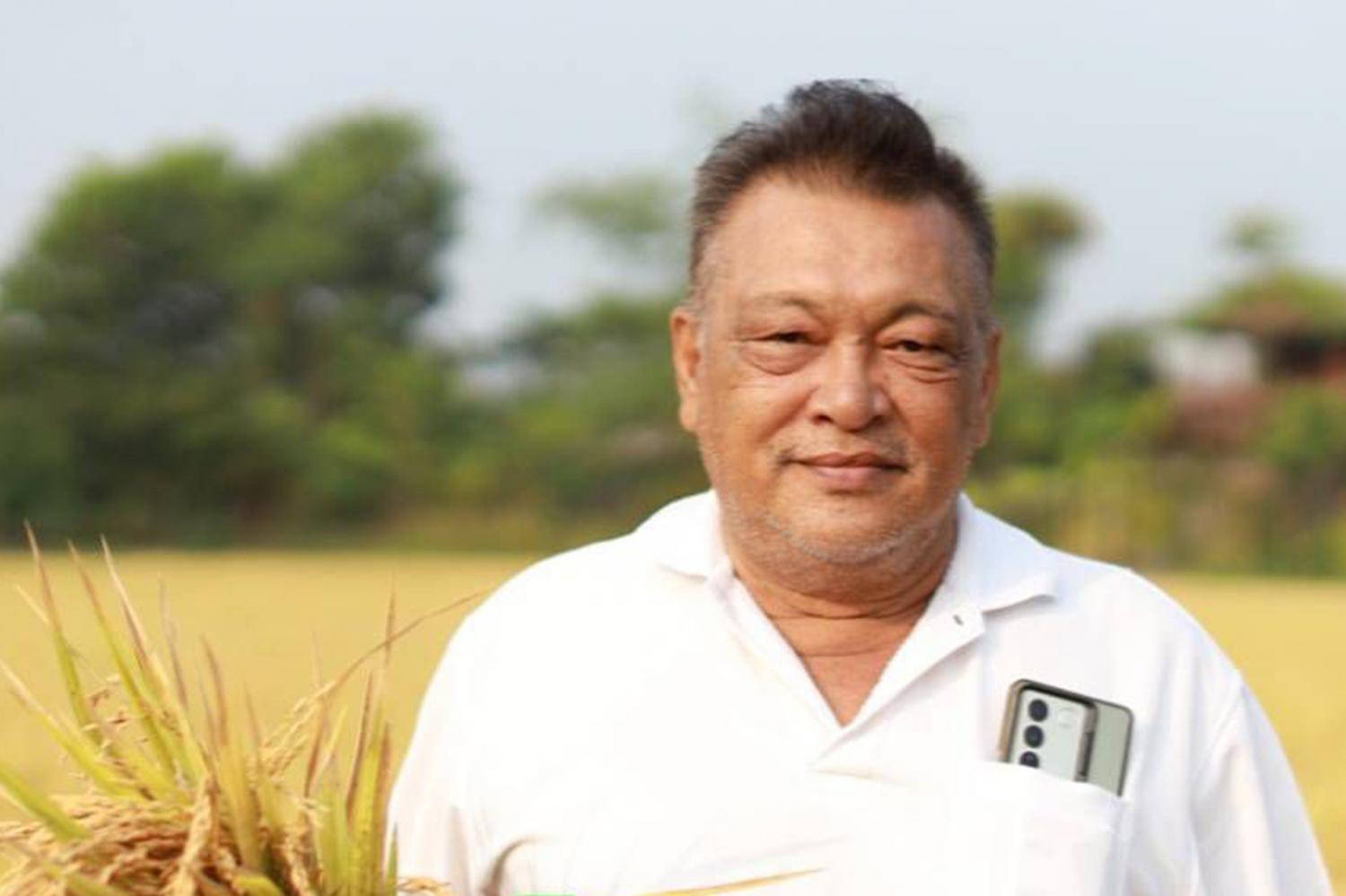
China’s plan to buy 500,000 tonnes of Thai rice is expected to give a timely boost to exports at a time when the United States is applying tariff pressure across the region, says political economist Somjai Phagaphasvivat.

He said the rice deal with Beijing brings mutual benefits because countries in the region are under pressure from the US tariff measures and are seeking to diversify their markets.

Thailand’s growth is likely to reach only 1.2% in the third quarter, down from 3.2% in the first quarter and 2.8% in the second quarter, he said, adding that without new measures the final quarter is predicted to fall to 0.6%.

China’s rice purchase suits the needs of both countries, and together with Singapore preparing to buy another 100,000 tonnes of rice and food products, the government is confident Thailand can reach its rice export target of 7.5 million tonnes this year and possibly 8 million next year, he said.

“It’s a timely boost. Buying 500,000 tonnes is already a lift and if the payment is accelerated, the money can help this quarter and spill over into early next year,” he said.

The government says the rice purchase deal is likely to be signed next month when Chinese Premier Li Qiang visits Thailand for the Mekong‑Lancang summit in Bangkok.

Somjai: Deal blunts US tariff impact

Somjai: Deal blunts US tariff impact

Despite the rice deal, Mr Somjai said that Thailand has been cautious, maintaining a balance between the two superpowers.

Thailand holds joint military exercises with both the United States and China. But in trade and tourism, most countries in the region rely heavily on China because of US tariff pressure, he said.

Global trade rules have apparently weakened following US tariff policies, leaving smaller economies such as Thailand at a disadvantage, as the US exercises its “hard power”.

China, likewise, has responded to Japan with economic pressure after a recent political spat. It took offence at comments by Japan’s new PM regarding Japan’s stance on the need to protect Taiwan, which China covets as its own.

“We must engage both sides, maintain balance and diversify trade and investment especially among the Global South. A united Asean with a real single market would help enormously,” he said.

The rice deal and other economic measures, including the Khon La Khrueng Plus co-payment scheme, have improved public perceptions of the government, he said.

These measures show the government understands people’s problems, adding the co-payment programme also helps small shops upgrade their skills in marketing, cost control and digital technology.

Pramote: Demandfor rice 'strong'

Pramote: Demand for rice ‘strong’

Farmers upbeat

The rice deal has been welcomed by farmers groups who are hoping for a quick transaction so the revenue can flow into the rural economy.

Pramote Charoensilp, president of the Thai Agriculturist Association, said Thailand has yet to export around 280,000 tonnes to China overhanging from earlier agreements and it remains unclear whether the new order includes previous quota.

“But the fact that rice purchase was agreed during His Majesty the King’s visit is delightful and farmers are overwhelmed. I think the rice purchase will actually happen,” he said.

Mr Pramote said an order of 500,000 tonnes of rice from China is not huge relative to the country’s supply, but still meaningful. The Commerce Ministry has also secured interest from other countries, including an order of more than 100,000 tonnes from Singapore.

White rice is selling for just 4,000–5,000 baht per tonne while jasmine rice prices are strong at around 14 baht per kilogramme, he said, adding it is unclear what varieties China will buy.

“It is a good opportunity. China may buy more in the future. But the price of white rice will not rise much because most stocks are already with mills and traders, not farmers,” he said.

Mr Pramote said he is not concerned that the US may react negatively and reduce imports of Thai products.

“Thai jasmine rice is cheaper than Indian and Vietnamese rice, but better in quality. Demand remains strong,” he said.

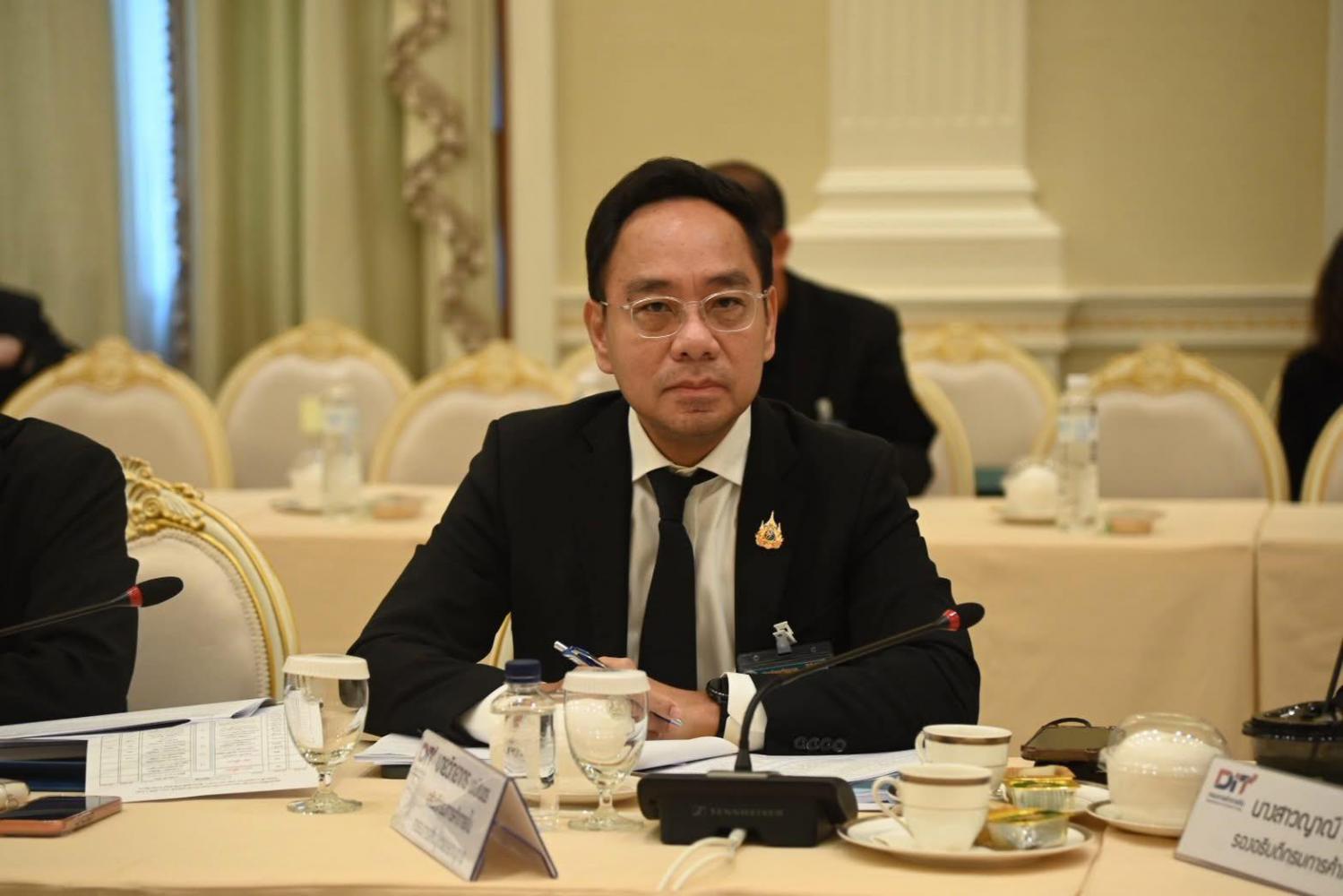
Wittayakorn: Localprices have gone up

Wittayakorn: Localprices have gone up

Prices improving

The ministry’s Department of Internal Trade (DIT) says domestic rice prices have increased sharply following measures approved by the National Rice Policy and Management Committee (NRPMC).

The measures include storage support schemes, delayed-sale programmes and expanded provincial paddy markets to absorb supply and stabilise the market.

Wittayakorn Maneenetr, director-general of the DIT, said jasmine paddy prices have climbed to 14,700–16,100 baht per tonne, up by 1,000 baht, while white rice paddy is up by as much as 400 baht per tonne.

He said the ministry has organised provincial rice-market events since Nov 10 and the events will continue until April next year covering 32 provinces in the North, Northeast and Central Plains.

These rice market fairs have become a key mechanism to draw buyers from outside provinces directly into farming areas, he said. The events reduce transport burdens, create new sales channels and solve long-standing problems in districts where farmers previously had no buyers.

DSI launches ‘VIP inmate’ probe

Chinese prisoners got ‘illicit privileges’

PUBLISHED : 24 Nov 2025 at 04:54

Chinese prisoners got ‘illicit privileges’

DSI launches 'VIP inmate' probe

The Department of Special Investigation (DSI) has launched a full-scale probe into the expanding scandal involving Chinese inmates who received VIP treatment inside Bangkok Remand Prison.

The case, initially referred by Justice Minister Pol Lt Gen Rutthapon Naowarat, centres on reports that Chinese prisoners were granted illicit privileges, including allegations that Chinese models were secretly brought into the prison for sexual encounters.

Under directives from DSI director-general Pol Maj Yutthana Praedam, the Security Crime Division has been assigned to investigate the network responsible for procuring women and determine what offences may apply.

The DSI chief on Sunday outlined the agency’s priorities: establishing the full facts, identifying officials who facilitated or enabled the misconduct, and tracing any influential figures operating behind the scenes.

Investigators will also examine whether the foreign inmates who paid for such services have links to transnational criminal groups, particularly in light of suspicious activity including large financial flows connected to the case.

A committee is reviewing the Corrections Act after prohibited items were found inside Bangkok Remand Prison under the supervision of former chief warden Manop Chomchuen, who has since been transferred to an inactive post pending further investigation into what officials admit is an unusual case.

The Immigration Bureau has been asked to examine Mr Manop’s travel records as part of the probe.

The Department of Corrections (DoC), led by deputy director-general Yutthana Nakrueangsri, has deployed reinforced teams to regulate the prison and remove banned items including knives, cigarettes, electronic devices, mobile phones, refrigerators, microwaves, and portable air conditioners.

On Nov 16, special operations teams conducted a series of surprise raids at the Bangkok Remand Prison, located in Lat Yao of Chatuchak district, without the participation of regular prison staff. Another raid followed on Nov 20.

According to a reporter close to the case, CCTV footage is now being reviewed for evidence.

Zones 2, 4, and 8, where many Chinese inmates are housed, are under close scrutiny, particularly Zone 8, which contains more than 900 prisoners and is adjacent to a disused carpentry workshop believed to have served as a potential meeting area.

The reporter also said the two Chinese inmates found with women in a concealed room have been transferred to the high-security Khao Bin Central Prison in Ratchaburi.

Flavors of Jiangsu: A Culinary Journey through Nanjing, Suzhou, and Yangzhou

Yangzhou morning tea is a must-try culinary experience for visitors.

In the eastern heartland of China lies Jiangsu Province — a region that captivates not only with its classical gardens, canals, and ancient towns, but also with a culinary heritage as refined as its culture. Jiangsu is home to thirteen cities, each boasting its own distinctive local delicacies that reveal the soul of the place. From the rich duck dishes of Nanjing to the delicate sweetness of Suzhou and the world-famous Yangzhou cuisine, this province invites travellers to savour its stories — one bite at a time.

Nanjing: A City of Ducks and Deep Flavors

As the capital of Jiangsu, Nanjing has been a crossroads of cultures and cuisines for centuries. Here, food is not just nourishment; it’s a reflection of the city’s long history and its people’s enduring love for hearty, comforting flavours.

A local saying captures it best: “No duck can fly out of Nanjing alive.” For over a thousand years, duck has reigned as the city’s culinary symbol. Whether simmered, roasted, or braised, it appears on almost every local menu — and in countless variations.

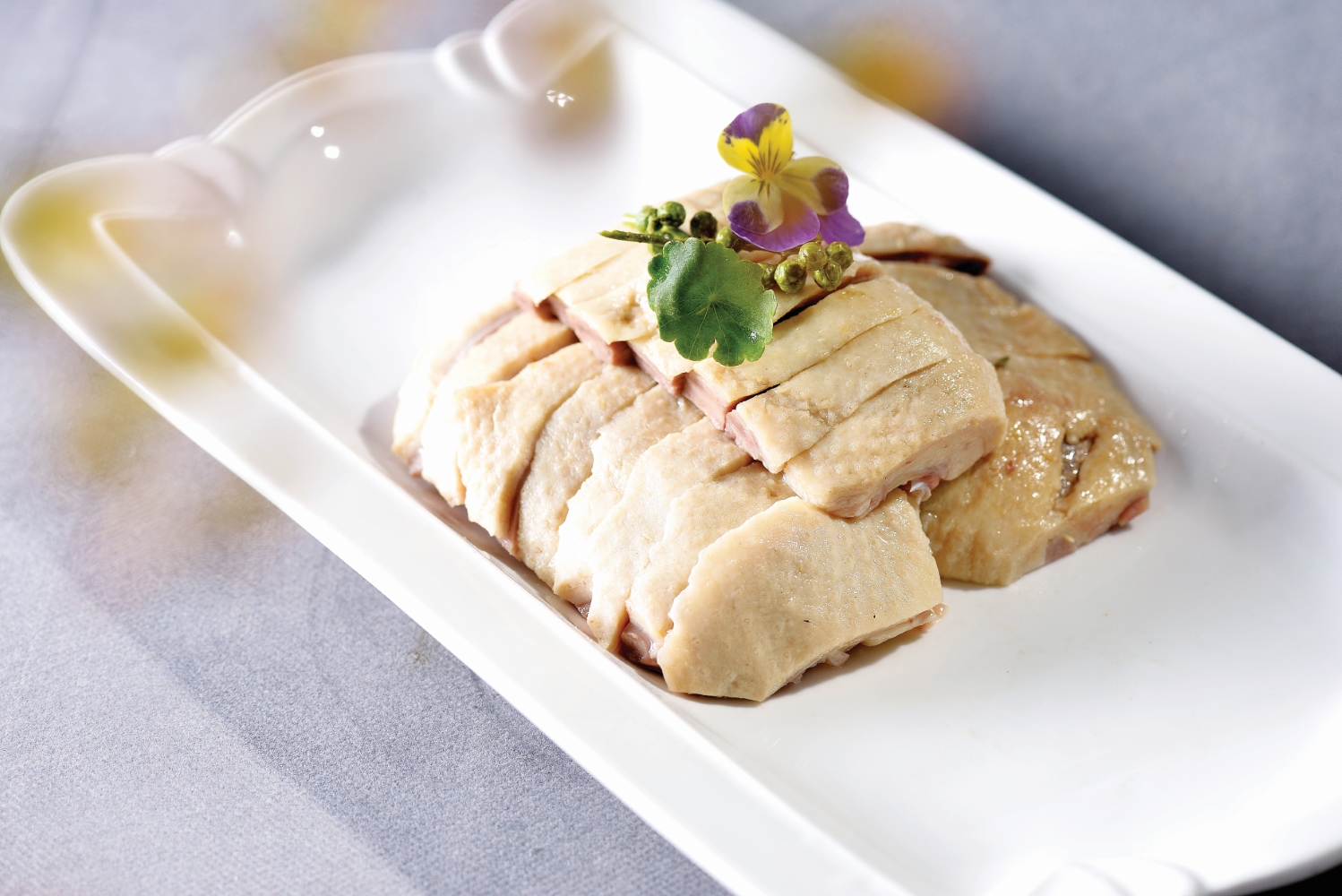
Among the must-tries is the famous Nanjing Salted Duck, tender and subtly spiced with a lingering fragrance that pairs perfectly with steamed rice. Another favourite is Nanjing Roast Duck, crisp on the outside and juicy within, often compared to its Beijing cousin but loved for its distinct regional twist. For a warming street-side experience, locals swear by a bowl of Duck Blood and Vermicelli Soup — a savoury broth filled with translucent rice noodles, duck offal, and cubes of congealed duck blood that somehow tastes far better than it sounds.

But Nanjing’s flavours don’t stop with ducks. At traditional eateries such as Nanjing Impressions or around the bustling Fujimiao (also known as Confucius Temple) area, you’ll find a mouthwatering array of small bites and desserts that speak of the city’s comfort food culture. Try the Beef Potstickers with their golden, crispy bottoms; the flower-shaped Plum Blossom Cake; or the Glutinous Rice Balls in Fermented Red Bean Wine — a sweet, fragrant dessert often enjoyed warm. And don’t leave without sampling Sweet Lotus Root with Sticky Rice, a glossy treat that embodies the elegance of Jiangsu desserts.

Salted duck with a subtle fragrance of osmanthus — best enjoyed in autumn.

Salted duck with a subtle fragrance of osmanthus — best enjoyed in autumn.

Suzhou: The Poetry of Sweetness

If Nanjing’s cuisine is robust and bold, Suzhou, located at the heart of the Yangtze River Delta and the Taihu Plain, represents refinement and balance. Known since ancient times for its mastery of fish dishes, Suzhou cuisine celebrates subtlety — where sweetness enhances rather than overwhelms, and every ingredient is treated with delicate respect.

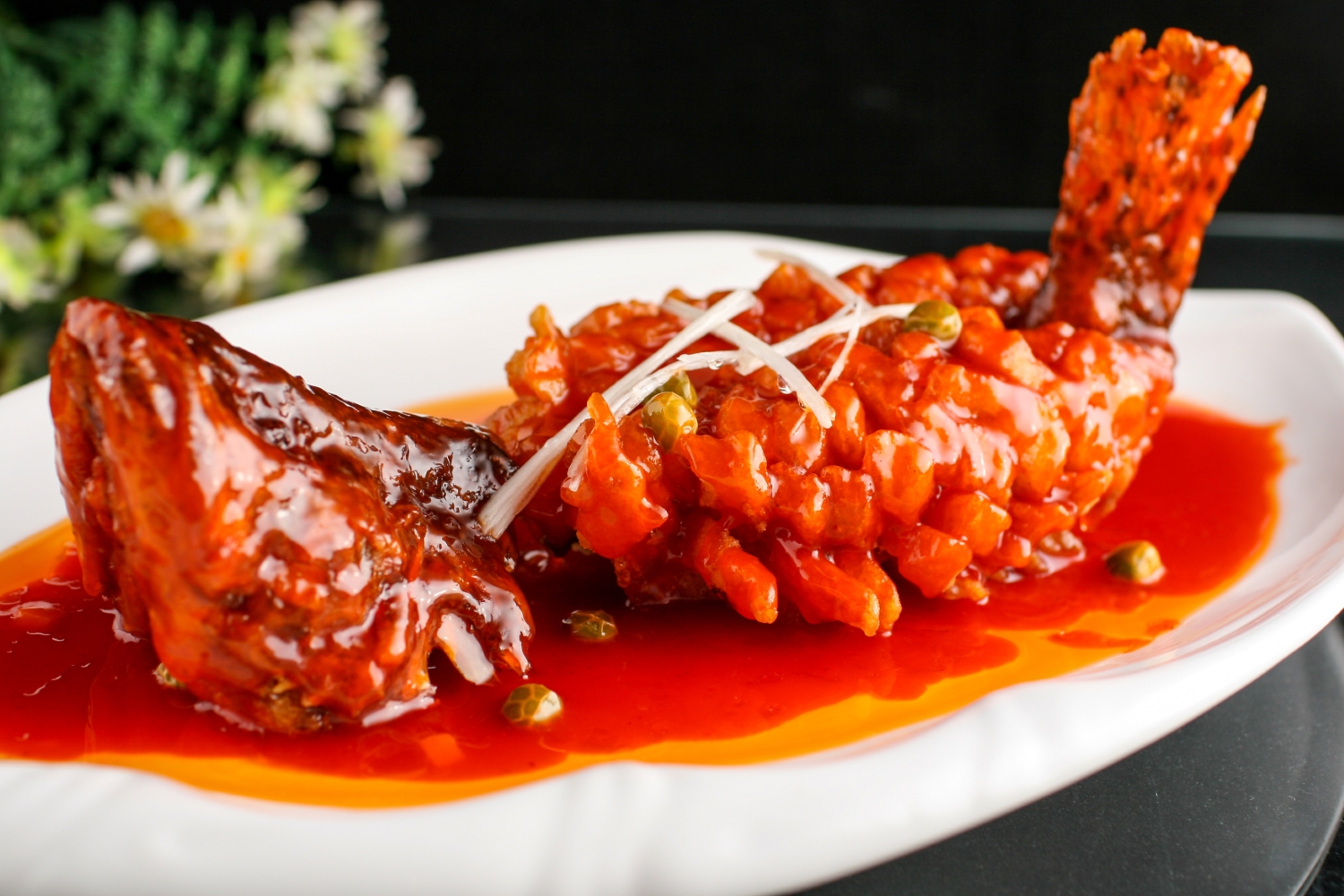
The city’s culinary crown jewel is Sweet and Sour Mandarin Fish (also known as Squirrel Fish), a dish as beautiful as it is delicious. The fish is expertly cut to resemble a squirrel’s tail, deep-fried to golden perfection, then topped with a tangy, sweet sauce that sizzles when poured over. Another Suzhou favourite is Eel in Hot Oil Sauce, rich and savoury with a satisfying fragrance, followed closely by Cangshu Mutton — a local speciality that warms the body during the chilly months.

Sweet and Sour Mandarin Fish, renowned for its intricate knife work.

Sweet and Sour Mandarin Fish, renowned for its intricate knife work.

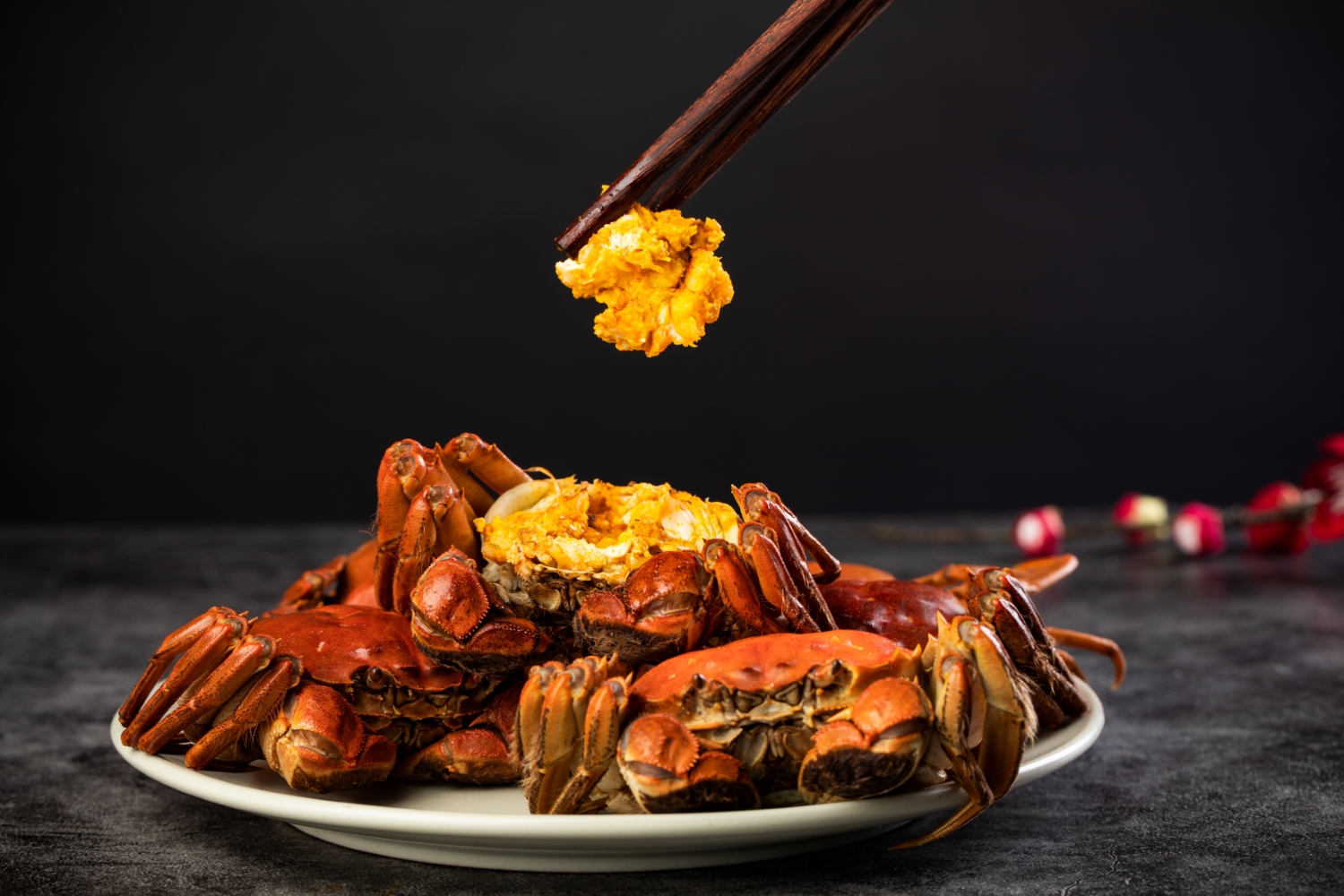
When autumn comes, the city celebrates the arrival of Yangcheng Lake Hairy Crab, a seasonal delicacy prized across China for its golden roe and creamy texture. For those who prefer lighter bites, Suzhou’s dim sum selection is unparalleled: Crab Roe Soup Dumplings that burst with rich broth; Pan-Fried Buns with juicy pork filling; and Sweet Fermented Rice Cakes that carry the aroma of rice wine.

Don’t miss the charming Green Glutinous Rice Balls (also known as Qingtuan) during spring or the Three Whites of Taihu Lake — whitefish, white shrimp, and silver fish (or whitebait) — which showcase the lake’s bounty.

Suzhou’s food, much like its classical gardens, values harmony and precision. Every dish reflects the city’s pursuit of aesthetic perfection — from the choice of ingredients to the artful plating. For travellers, Guanqian Street is the perfect place to explore this culinary world, where traditional teahouses and modern eateries blend seamlessly to serve both nostalgia and innovation.

Yangcheng Lake Hairy Crab — a seasonal delicacy available only in autumn.

Yangcheng Lake Hairy Crab — a seasonal delicacy available only in autumn.

Yangzhou: The World’s Capital of Cuisine

In 2019, Yangzhou earned the title of “City of Gastronomy” from UNESCO — a well-deserved recognition for a place where culinary craftsmanship has flourished for centuries. If there’s one dish that has made Yangzhou famous across the globe, it’s undoubtedly Yangzhou Fried Rice.

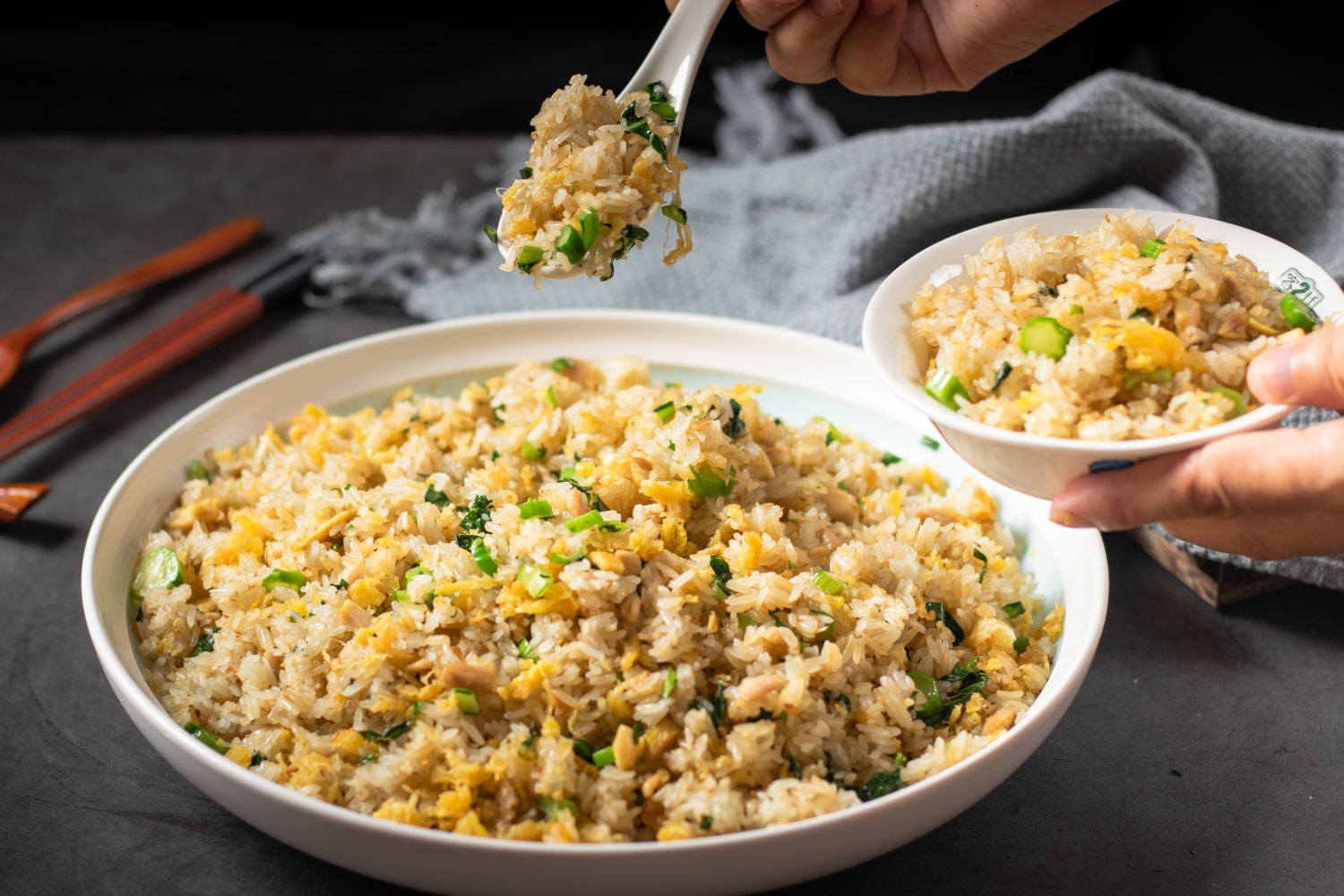
Simple as it may seem, true Yangzhou fried rice is an art form. The premium long-grain rice is stir-fried with shrimp, diced chicken, ham, egg, sea cucumber, scallops, fresh bamboo shoots, and a touch of green peas — each grain perfectly separated, glistening, and full of aroma. It’s the kind of dish that has travelled far beyond China; wherever there’s a Chinese restaurant in the world, “Yangzhou Fried Rice” almost certainly appears on the menu.

But Yangzhou’s food story goes far deeper. The city’s rich culinary tradition includes sophisticated dishes such as Steamed Pork Meatballs (or Lion’s Head Meatball) with Crab Roe — tender “lion’s head” meatballs served in clear broth — and Shredded Tofu in Broth (Wensi Tofu), a masterpiece of knife skills where tofu is sliced into countless hair-thin strands floating like silk threads in soup.

No visit to Yangzhou would be complete without experiencing its morning tea culture, a cherished ritual that rivals Cantonese dim sum in variety and finesse. Locals call it “Yangzhou Morning Tea”, but it’s more like a leisurely feast. Must-tries include the Three-Diced Buns stuffed with pork, shrimp, and bamboo shoots; Jade Shaomai (Feicui Shaomai) wrapped in translucent green skins; Crab Roe Soup Dumplings ; and the signature Shrimp Roe Noodle Soup.

For many, sipping tea and sampling these delicate snacks in a traditional teahouse is as essential to understanding Yangzhou as visiting its gardens and canals. After all, in this city, dining is an art — and breakfast is where it all begins.

World-famous Yangzhou Fried Rice.

World-famous Yangzhou Fried Rice.

A Taste of Jiangsu’s Soul

Across Nanjing, Suzhou, and Yangzhou, Jiangsu’s cuisine tells a story of refinement, seasonality, and balance. It’s a cuisine that values texture and presentation as much as taste — where the goal is not intensity, but harmony.

From the savoury aroma of Nanjing’s duck dishes to the poetic sweetness of Suzhou’s seasonal fare and the world-renowned elegance of Yangzhou’s banquets, Jiangsu offers travellers a journey that lingers far beyond the plate.

In every city, a different flavour awaits — a reminder that food, like history and art, can be the most delicious way to remember a place. 

Duterte found unconscious? Not true – VP Sara

Evelyn Macairan – The Philippine StarNovember 24, 2025 | 12:00am

MANILA, Philippines — Vice President Sara Duterte yesterday said that former presi…

Evelyn Macairan – The Philippine Star

November 24, 2025 | 12:00am

MANILA, Philippines — Vice President Sara Duterte yesterday said that former president Rodrigo Duterte is OK amid rumors that he was found unconscious in his cell at the International Criminal Court (ICC) in The Hague, Netherlands.

“His lawyer called him last night, especially after the news came out that he was found unconscious in his room, and the lawyer said that he was OK,” the Vice President told News5.

The Vice President also denied the rumor in her speech at the “Run for Du30” event in Davao City yesterday, as she thanked her father’s supporters.

“It was not true and nothing of the sort happened,” she said, adding that her father himself dismissed the claim as a possible prank.

She noted that their family is awaiting the ICC’s Nov. 28 public hearing on their appeal for Duterte’s interim release.

“We hope to hear good news… But if not, the family will continue to support him in his stay in The Hague and work with his defense team regarding his legal case,” she said.

The former president has been detained at the ICC since March 12 on allegations of crimes against humanity in relation to the war on drugs campaign.

AIA RnR Manila introduces 1km kids run

The Philippine StarNovember 24, 2025 | 12:00am

MANILA, Philippines — The fourth edition of the AIA Rock ‘n’ Roll Running Series Manila presented by…

The Philippine Star

November 24, 2025 | 12:00am

MANILA, Philippines — The fourth edition of the AIA Rock ‘n’ Roll Running Series Manila presented by ASICS, set on Nov. 29 at Rizal Park is gearing up to be more than just an annual year-end racing festival.

This year’s staging introduces a special highlight: a meaningful celebration of family fitness and youth participation. There’s the inaugural AIA 1km Kids Run. Meanwhile, runners of all levels can take on the 5K, 10K, half marathon and full marathon categories.

UNN @ Times Rankings’ 161 and VC Ortuanya’s 100 Days in Office

Every so often, a narrative unfolds that demands more than reportage. It demands reflection. Interpretation. Contextual excavation. The newly released …

Every so often, a narrative unfolds that demands more than reportage. It demands reflection. Interpretation. Contextual excavation. The newly released 2026 Times Higher Education Interdisciplinary Science Rankings is one such narrative, a moment where statistics transcend spreadsheets and become symbols of institutional destiny. Covenant University has just made history by placing 49th globally and first in Africa, the only African university to break into the world’s top 50. That headline will expectedly enjoy the limelight. But if one shifts the gaze slightly – if one peers beyond the dazzle of Covenant’s triumph, another story emerges, quieter yet equally consequential – the University of Nigeria, Nsukka securing second place in Nigeria, second in Africa, and 161st globally. For UNN, an institution often romanticised for its founding philosophy but criticised for inconsistent performance, this ranking is a subtle rebirth. It is a quiet re-entry into the conversation of relevance, a declaration that the Lion is still capable of roaring.

But like all good stories, this one has a compelling subplot: the coincidence of this ranking with the first 100 days of the new Vice Chancellor, Prof. Simon Uchenna Ortuanya, who assumed office in August 2025. The ranking does not credit him with instant miracles. No serious scholar would make such a claim. Instead, it offers something perhaps more important; it is a providential timing, a symbolic endorsement, an unexpected tailwind propelling the early days of his leadership. To understand this moment correctly, we must deconstruct the ranking, revisit its historical undercurrents, interpret its present implications, and project its future possibilities. Only then can we appreciate why this confluence of events is neither trivial nor accidental – and why it validates, in tone and texture, my earlier verdict: indeed, Simon is working.

The Interdisciplinary Science Rankings, now in their second edition, are not the typical STEM-or-publication-heavy metrics familiar to the academic world. They measure universities across 11 indicators that reflect the global shift toward knowledge integration: interdisciplinary research quality, cross-disciplinary publications, external funding, measures of research success, facilities, administrative support, structures that promote interdisciplinarity, academic reputation, etc. These metrics reward institutions that can break disciplinary silos and create ecosystems, where engineering dialogues with ethics, medicine with machine learning, agriculture with economics, psychology with public policy, language with AI, and environmental science with legal frameworks. In this emerging global academic architecture, interdisciplinarity is not a buzzword; it is the engine of innovation. The ranking therefore rewards institutions that not only produce knowledge, but connect it. That UNN has performed strongly in these metrics tells a deeper story, one that predates the current VC but aligns perfectly with his administrative temperament and stated vision.

UNN’s present ranking is not the result of a single administration, nor the work of 100 days. It is the cumulative outcome of years of incremental reforms, sometimes visible, sometimes invisible – undertaken by successive leaderships. The past vice chancellors strengthened digital infrastructure, improved Senate processes, expanded postgraduate enrollment, initiated curricular reforms, revamped research centres, encouraged international linkages, and nurtured a slow but steady culture of interdisciplinarity across departments. Their efforts built the scaffolding from which UNN now projects itself into global visibility. It is academically proper and ethically necessary to acknowledge this heritage. Universities, unlike governments, do not operate on four-year or eight-year cycles. Their achievements accumulate over decades. What we celebrate today is therefore the fruit of long-term institutional investments, policy adjustments, and intellectual perseverance. However, the fact that the ranking was released just as Prof. Ortuanya marks his 100th day in office gives the moment a symbolic coherence that one cannot ignore. History often chooses its own punctuation marks.

Prof. Simon Ortuanya assumed office with a reputation for administrative precision, legal clarity, and systemic discipline. His leadership style, even within 100 days, has reflected a calm, methodical, and purposeful approach, focused less on noise and more on structure. Even though this ranking predates his tenure, its emergence during his early days does three things. First, it confers legitimacy early. New Vice Chancellors often struggle with internal resistance, competing interests, and the inertia of long-standing university cultures. A ranking of this magnitude is a psychological enabler. It boosts morale, softens resistance, and gives the new administration a stronger mandate to pursue reforms. Second, it offers a platform for acceleration. Since the ranking highlights interdisciplinarity as UNN’s rising strength, Ortuanya inherits a clear, data-driven direction. Expand cross-disciplinary research clusters, strengthen multi-faculty laboratories, incentivise team grants, and integrate technology with traditional scholarship. It is now possible to intensify momentum rather than create it from scratch. Third, it positions UNN for global partnerships. Visibility attracts collaborations. Grants follow reputation. Philanthropists support institutions that demonstrate measurable impact. With UNN at 161 globally and 2nd in Africa, Ortuanya can approach international partners with confidence rather than persuasion. Thus, the ranking is not merely a feather in the cap; it is fuel for a larger journey. Altogether, the Ortuanya moment is a tonic, a turning-point, a tailwind.

Covenant University’s exceptional performance – Africa’s No. 1 – is a landmark achievement. But for UNN, this should not be a discouragement. It should be a benchmark. If a private university with a shorter lifespan can rise to global prominence, then a public institution with UNN’s breadth, diversity, intellectual capital, and historical grounding can surpass it – if governance sustains the present trajectory. Interdisciplinarity is UNN’s entry point into this competitive future. It is a university’s reawakening beyond nostalgia, and towards renewal. For decades, UNN’s reputation rested heavily on the mythos of its founding. The nostalgia of being “the first indigenous university” became both a source of pride and a subtle burden. Too often, that heritage became a hiding place for contemporary underperformance. But this ranking signals a philosophical shift – from a past-oriented narrative to a forward-facing identity. UNN is no longer resting on its founding story. It is writing a new chapter—one measured, not in slogans, but in metrics; not in sentiment, but in data. The old Lion is stirring again with a renewed roar, hitting the road ahead towards a future of greater possibilities.

The future that this ranking unlocks is expansive, but it requires deliberate leadership. For UNN to climb from 161 into the top 100 – or even contest Covenant’s continental lead – several imperatives must be pursued. Institutionalise interdisciplinarity through joint degrees, shared laboratories, and thematic research clusters. Strengthen administrative efficiency to support grant management, research ethics, and digital workflows. Expand global partnerships with universities prioritising cross-disciplinary research. Prioritise digital research infrastructure, data repositories, and open-access scholarship. Promote postgraduate research, particularly in emerging fields: AI, biotechnology, environmental governance, digital humanities, health economics, and climate science. All of these fall within the natural temperament of the new Vice Chancellor – structured, deliberate, research-oriented, and strategically ambitious. The timing could not be more auspicious.

Related News

Ultimately, the 2026 Times Higher Education Interdisciplinary Science Ranking is more than an institutional accolade. It is a call to action. It affirms the labour of UNN’s past leaderships.

It offers symbolic wind to Ortuanya’s early sails. It opens doors, widens horizons, and sharpens possibilities. It transforms a university from a relic of past glory into a contender for future greatness. Most importantly, it challenges the new administration to do more, aim higher, and sustain momentum. Because rankings do not reward history; they reward performance. And as UNN stands on this threshold – with its legacy behind it and its destiny before it – one truth resonates with clear, resonant conviction. This is not UNN’s summit; it is its starting point;

not the climax of a journey, but the overture of a renaissance.

In the final reckoning, the Times Higher Education ranking does more than shuffle universities on a global ladder; it reshapes narratives, sharpens perceptions, and recalibrates what is thinkable for an institution long weighed down by nostalgia and episodic underperformance. It affirms the cumulative labour of past administrations and gifts Prof. Simon Ortuanya a symbolic tailwind just as he crosses his 100-day threshold – an auspicious moment when coincidence becomes consequence, and consequence becomes mandate. The challenge before UNN is clear: consolidate this momentum, deepen interdisciplinarity, and transform promise into permanence. And as the Lion begins to stir again, reclaiming its place not by sentiment but by metrics, one truth stands tall in the quiet clarity of its own eloquence – that Prof Ortuanya is, indeed breaking new grounds.

And because leadership is language, and rankings are narratives, and narratives are the architecture of institutional destiny, this moment reminds us – forcefully and beautifully – why we pay attention to the things we say, the stories we tell, and the meanings we make of them. In the end, as always, word indeed, matters.

.Agbedo, a professor of Linguistics, University of Nigeria Nsukka, Fellow of Netherlands Institute for Advanced Study, is a public affairs analyst.

Verbruggen emerges penalty hero as Brighton beat Bees 2-1, move fifth in PL

Bart Verbruggen was the Brighton hero as his stoppage-time penalty save from Igor Thiago earned the Seagulls a 2-1 win over Brentford at the American E…

Bart Verbruggen was the Brighton hero as his stoppage-time penalty save from Igor Thiago earned the Seagulls a 2-1 win over Brentford at the American Express Community Stadium.

Verbruggen produced a stoppage-time penalty save from Igor Thiago earned the Seagulls a 2-1 win.

Saturday’s victory moved Brighton up to fifth in the Premier League table with the win over Brentford on 19 points from 12 matches.

The Bees took the lead through a Thiago first half penalty, his ninth goal of the season to continue a run of seven goals in seven games for Brentford.

His flick to release Dango Ouattara in the build-up was even better as the Brentford winger was then felled by Carlos Baleba, who was taken off at half-time in another poor display from the midfielder.

Related News

Brighton fared better after the break and while Danny Welbeck missed a massive chance to level, firing over from 10 yards out, he eventually found the leveller with 20 minutes to go.

Yankuba Minteh’s glorious cross from the right was turned in by the striker who is set to turn 35 on Wednesday.

His chances of an England call-up, after being name-checked by Thomas Tuchel as an option during the international break, have gone up.

And Brighton completed the turnaround with six minutes to go when substitute Jack Hinshelwood, who had missed the last nine games with a ligament injury, turned home from the edge of the box after the electric Minteh saw a run and shot blocked.