Ukraine seeks NATO-like shield from US, counter-proposal says

PUBLISHED : 23 Nov 2025 at 18:48

  …

Emergency responders stand by an apartment building which was destroyed in a deadly Russian missile hit on Wednesday, amid Russia's attack on Ukraine, in Ternopil, Ukraine, Nov 21, 2025. (Reuters photo)
Emergency responders stand by an apartment building which was destroyed in a deadly Russian missile hit on Wednesday, amid Russia’s attack on Ukraine, in Ternopil, Ukraine, Nov 21, 2025. (Reuters photo)

Ukraine and its European allies will insist that discussions with Russia on any territorial swaps can only take place once the war ceases along the current line of contact, according to people familiar with a counter-proposal that will be presented to the US later today in Switzerland.

Their response to the US 28-point plan asks for a security guarantee from Americans that mirrors NATO’s Article 5 mutual-defence clause and demands that frozen Russian assets be used to reconstruct and compensate Kyiv, according to the people who spoke on condition of anonymity to discuss private deliberations. They reject Moscow’s demands that Kyiv cede unoccupied territory in the east.

Furthermore, the US would be compensated for the robust guarantees it provides and Russian assets would stay frozen unless Moscow agrees to pay for the damage it has caused.

Other sanctions would be lifted in phases and Russia would be progressively let back into the global economy if it abides by the deal.

The European response comes as US, Ukrainian and European national security advisors are set to meet in Geneva on Sunday to discuss a US plan as President Donald Trump continues to push for a quick deal.

Under the terms proposed by the US, Ukraine would have to withdraw troops from parts of the eastern Donbas region that Russia has failed to fully occupy. The area would become a neutral demilitarised buffer zone internationally recognised as Russian.

Moscow would also obtain de facto recognition over Crimea, Luhansk and Donetsk. Most of the remainder of the frontline, including in Kherson and Zaporizhzhia, would be effectively frozen.

The US proposal, which was drafted with Russian input, would also limit the size of Ukraine’s armed forces to 600,000 personnel. 

European leaders, joined by Group of Seven members Canada and Japan, pushed back against the notion that Ukraine’s borders could be shrunk or that the armed forces could be capped in a statement issued on the sidelines of a Group of 20 summit in South Africa on Saturday.

The statement said a higher cap could be negotiated. Ukraine has previously said it needs an army of at least 800,000 troops during peacetime.

Many other clauses proposed by the US, including the return of all hostages, including children, would be acceptable. The plans would need to include a family reunification programme and provisions to address the suffering of the victims from the war, the people said.

Any agreement would be monitored under US supervision and guaranteed by a peace board chaired by Trump.

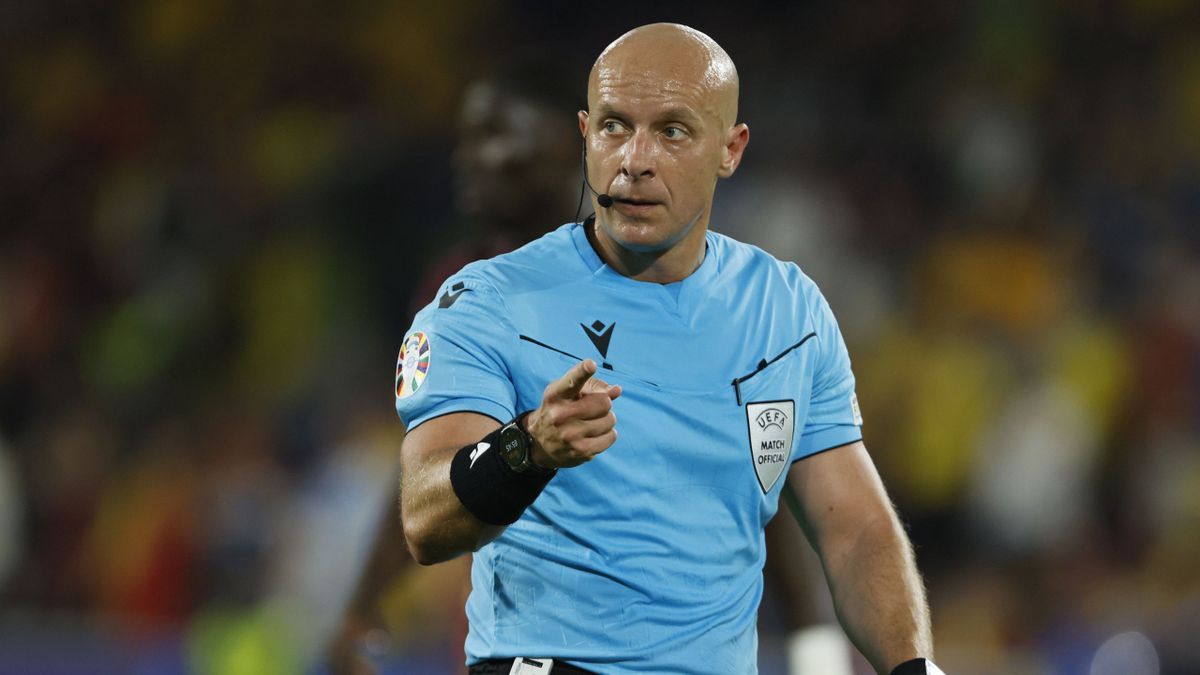
Szymon Marciniak to officiate Napoli-Qarabağ clash

UEFA has confirmed the referee appointments for the upcoming
UEFA Champions League Group Stage clash between Napoli and Qarabağ,
scheduled to take place in Italy.
Polish referee Szymon Marciniak will take charge of the match,…

UEFA has confirmed the referee appointments for the upcoming
UEFA Champions League Group Stage clash between Napoli and Qarabağ,
scheduled to take place in Italy.

Polish referee Szymon Marciniak will take charge of the match,
assisted by Tomasz Listkiewicz and Adam Kupsik. Wojciech Mick will
serve as the fourth official.

In the VAR booth, Dutch referee Paul van Boekel will oversee
video review, with Croatian referee Ivan Bebek acting as AVAR.

The highly anticipated encounter will kick off on 25 November at
00:00 local time at the Stadio Diego Armando Maradona in
Naples.

Here we are to serve you with news right now. It does not cost much, but worth your attention.

Choose to support open, independent, quality journalism and subscribe on a monthly basis.

By subscribing to our online newspaper, you can have full digital access to all news, analysis, and much more.

Subscribe

You can also follow AzerNEWS on Twitter @AzerNewsAz or Facebook @AzerNewsNewspaper

Thank you!

People’s Party names 3 PM candidates

PUBLISHED : 23 Nov 2025 at 18:40

  …

People's Party leader Natthaphong Ruengpanyawut, centre, introduces himself and deputy leaders Sirikanya Tansakul, right, and Veerayooth Kanchoochat as its three prime ministerial candidates at the party's headquarters in Bangkok on Sunday. (Screenshot)
People’s Party leader Natthaphong Ruengpanyawut, centre, introduces himself and deputy leaders Sirikanya Tansakul, right, and Veerayooth Kanchoochat as its three prime ministerial candidates at the party’s headquarters in Bangkok on Sunday. (Screenshot)

The People’s Party (PP) has revealed its three prime ministerial candidates and outlined a policy agenda centred on equality, transparency and modern governance, insisting it will not leave voters guessing about its choice for premier.

The announcement was made during the party’s “Recharge the People” event at the Future Forward Building in Ramkhamhaeng Soi 42 in Bangkok’s Hua Mak district, where party leader Natthapong Ruengpanyawut said the PP aims to offer a “clear, honest leadership team”, announcing himself, Sirikan Tansakun, deputy leader and head of policy, and Veerayooth Kanchoochart, deputy leader and head of strategy, as the party’s three PM nominees.

He said voters must not be left guessing who will become prime minister after the election, adding: “We do not believe in a lucky-draw PM. When you enter the voting booth, you must already know who is No. 1, No. 2 and No. 3.”

Mr Natthaphong outlined the PP’s first policy package, focusing on tackling inequality, fixing gaps in public health and education, and modernising basic infrastructure. He cited one million out-of-school youths, high maternal mortality rates, labour shortages allegedly aggravated by conscription, and 18,000 annual road deaths — most involving motorcyclists — as signs of systemic neglect.

The party also pledged major land reform and a digital-driven push for government transparency, arguing that public trust must be restored before deeper reforms can succeed.

Mr Natthaphong said the party will operate as a team, not a single strongman: “Our promise is a Thailand that is equal, fair and ready for the future.”

In August last year, the Constitutional Court dissolved the Move Forward Party (MFP). The party’s prime ministerial candidate Pita Limjaroenrat was banned from politics for ten years.

Former MFP members quickly formed the People’s Party to continue their political agenda and Mr Natthaphong was selected as the new party leader. The party has the highest number of House representatives, 143, as MFP won the 2023 election.

Tashkent hosts youth forum strengthening Azerbaijan–Uzbekistan relations

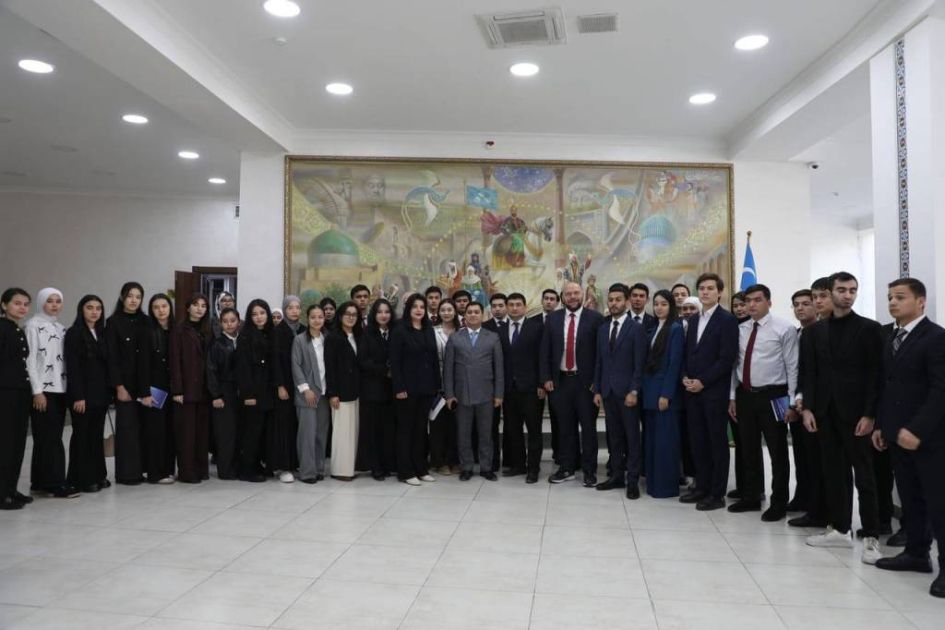
A youth conference was held at the Tashkent State University of
Oriental Studies, jointly organised by the Uzbekistan Youth Union
and Azerbaijan’s “Young Reformers” Public Union, with support from
Azerbaijan’s Agency for Stat…

A youth conference was held at the Tashkent State University of
Oriental Studies, jointly organised by the Uzbekistan Youth Union
and Azerbaijan’s “Young Reformers” Public Union, with support from
Azerbaijan’s Agency for State Support to NGOs.

According to the Uzbekistan National News Agency, the event
provided an important platform for strengthening bilateral ties and
expanding cooperation between young people in both countries.

The conference brought together the university’s rector,
Gulchehra Rikhsiyeva, leaders of youth organisations from
Uzbekistan and Azerbaijan, and several academics.

Speakers noted that the countries’ strategic partnership — and
the close relationship between Presidents Shavkat Mirziyoyev and
Ilham Aliyev — has opened up significant opportunities for broader
collaboration between youth bodies. They highlighted growing
prospects for joint work in science, innovation, culture,
volunteering, and start-up development.

It was also stressed that Azerbaijan’s victory in Karabakh has
become a unifying factor for the country’s youth, giving new
impetus to their civic engagement.

Participants agreed that joint programmes, student and expert
exchanges, shared forums, and cooperation in innovation and
start-ups will further deepen ties between the young people of both
nations.

Here we are to serve you with news right now. It does not cost much, but worth your attention.

Choose to support open, independent, quality journalism and subscribe on a monthly basis.

By subscribing to our online newspaper, you can have full digital access to all news, analysis, and much more.

Subscribe

You can also follow AzerNEWS on Twitter @AzerNewsAz or Facebook @AzerNewsNewspaper

Thank you!

Tigers claw Bulldogs to seize UAAP semis berth

Ralph Edwin Villanueva – Philstar.comNovember 23, 2025 | 7:02pm

MANILA, Philippines — University of Santo Tomas punched its ticket to the UAAP Seas…

Ralph Edwin Villanueva – Philstar.com

November 23, 2025 | 7:02pm

MANILA, Philippines — University of Santo Tomas punched its ticket to the UAAP Season 88 men’s basketball Final Four after stunning the top-seeded National University Bulldogs, 80-71, Sunday at the Mall of Asia Arena.

The Growling Tigers rose to 8-5 in the standings, good for solo third, with one more game. NU, on the other hand, dropped to 11-3 to end its elimination round campaign.

UST is now ahead of the fourth-seeded La Salle Green Archers, who are holding a 7-6 win-loss record, as well as Far Eastern University and Ateneo, both with 6-7 slates.

Gelo Crisostomo sparked the Tigers off the bench with 13 points and five rebounds, to go with a block and a steal. Mark Llemit, Amiel Acido and Collins Akowe each had 11 markers.

NU led by seven points, 52-45, in the third quarter after back-to-back layups by Mun dela Cruz.

UST then waxed hot and unleashed a 13-1 run to grab a 58-53 lead heading to the fourth quarter.

The blitz was broken by an early layup by Omar John, but the Tigers’ furious rally continued as their advantage grew to 11, 66-55, with back-to-back triples by Crisostomo and Llemit, as well as a short deuce by Kyle Paranada.

NU tried to claw their way back, but UST found answer after answer to keep their opponents at bay.

The nearest the Bulldogs got to was the nine-point spread at the end of the game.

Paranada and Nic Cabanero had nine points each, while Forthsky Padrigao had eight.

John flexed his muscles with 12 points and 11 rebounds, while Nath Tulabut backstopped with 10 markers and three boards. Tebol Garcia had nine points.

It will now all boil down to one gameday for the fourth and final spot on Wednesday. The Tigers will take on FEU, while Ateneo will tussle up with La Salle.

If one of, or both, the Tamaraws and the Blue Eagles lose, they are eliminated from semifinal contention and La Salle will complete the Final Four.

A La Salle victory will give them the outright semifinal berth, even if FEU wins, since the former will have an 8-6 slate while the latter has 7-7.

If either Ateneo or FEU win, and La Salle loses, a playoff for the Final Four will commence. But if both the Eagles and the Tamaraws win, it will trigger a stepladder playoff as all three remaining teams will have 7-7 records.


Trade ministry vows tight controls as southern floods threaten supplies

PUBLISHED : 23 Nov 2025 at 17:47

  …

Soldiers from the 42nd Military District assist residents in flood-hit tambon Phatong, Hat Yai district, Songkhla, on Saturday, helping evacuate elderly people, delivering drinking water and food, and moving belongings to higher ground as water levels continued to rise. (Photo: Royal Thai Army)

The Department of Internal Trade (DIT) has ordered strict monitoring of food and household supplies in flood-hit southern provinces, warning retailers not to hike prices and urging shoppers not to panic-buy.


Director-general Wittayakorn Maneenetr said on Sunday that the department had received reports of damage to crops and farmland, disrupted transport links and temporary closures at some department stores and outlets in provinces including Songkhla, Nakhon Si Thammarat, Surat Thani, Trang, Phatthalung and Pattani. The interruptions, he said, have raised the short-term risk of local shortages in affected areas.

“Some branches of supermarkets and shops have had to close or reduce services because roads are cut off or for safety reasons, though many vendors remain open as normal,” Mr Wittayakorn said. He urged residents to buy essential items gradually and not to hoard, adding that the DIT is already coordinating with manufacturers and distributors to build stocks and expedite deliveries into flooded zones as soon as routes allow.

The DIT has ordered provincial commerce offices in affected and neighbouring areas to step up inspections of retail outlets — checking that items are sold at normal prices, that price tags are clearly displayed, and that no unlawful price gouging or hoarding takes place. Violators face penalties under the Price of Goods and Services Act of 1999, the department warned.

Mr Wittayakorn admitted that transport problems may temporarily disrupt supplies of some items but said the DIT will hold immediate talks with major producers and traders to plan emergency shipments and, where necessary, reroute logistics to maintain supply flows.

The department said it will monitor the situation daily and is prepared to introduce additional measures should signs of real shortages emerge, stressing its aim is to ensure consumers can continue to buy essentials at fair prices and with minimal disruption.

Ninety arrested at London rally backing banned Palestine Action group

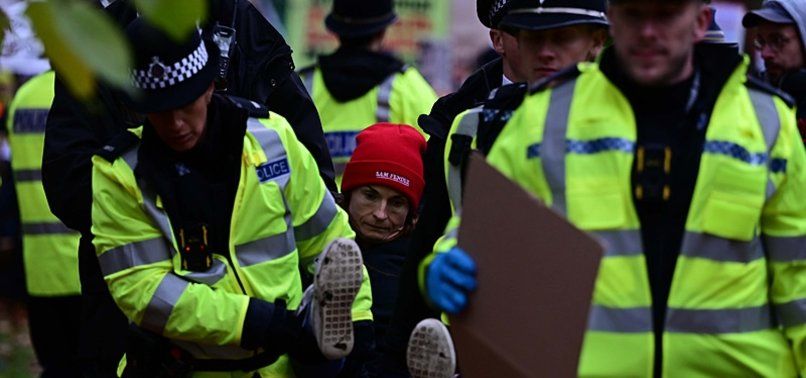
At least 90 protesters were arrested at a London demonstration
in support of the banned activist group, Palestine Action, police
said Saturday, Azernews reports via Middle East
Monitor.
The arrests as of 1800GMT are in relati…

At least 90 protesters were arrested at a London demonstration
in support of the banned activist group, Palestine Action, police
said Saturday, Azernews reports via Middle East
Monitor.

The arrests as of 1800GMT are in relation to the protest
organized by Defend Our Juries in support of the “proscribed
terrorist organisation Palestine Action,” Metropolitan Police said
in a statement.

It added that the protest concluded and those involved have left
the area.

Protesters gathered in Tavistock Square, where demonstrators
carried Palestinian flags and signs while chanting pro-Palestine
slogans.

Some of the banners read: “I oppose genocide, I support
Palestine Action.”

The Defend Our Juries group wrote on the US social media
platform X that police instantly started arresting protestors for
silently holding signs that it said opposed genocide and the
Palestine Action ban.

Here we are to serve you with news right now. It does not cost much, but worth your attention.

Choose to support open, independent, quality journalism and subscribe on a monthly basis.

By subscribing to our online newspaper, you can have full digital access to all news, analysis, and much more.

Subscribe

You can also follow AzerNEWS on Twitter @AzerNewsAz or Facebook @AzerNewsNewspaper

Thank you!

The art of letting things be

Not everything is broken and needs fixing. Know when to move and when to rest

Not everything is broken and needs fixing. Know when to move and when to rest

The art of letting things be

In a world obsessed with fixing, improving and optimising, sometimes the bravest act is to stop and simply let things be.

We are conditioned to act: to chase, correct, refine and rebuild. When something breaks, we fix it. When something slows down, we push harder. When uncertainty arises, we plan more.

But there comes a moment, often in the midst of success rather than struggle, when you realise that not everything needs your control. Some things just need your calm.

Our culture celebrates the fixer mindset. Leaders solve problems, entrepreneurs pivot quickly and professionals seek solutions. Action feels powerful. Stillness feels passive.

Yet not everything is broken and needs fixing. Some things need space. Some people need time. Some seasons need to unfold without our interference.

It is a hard lesson for high achievers: effort is not always the answer. Sometimes what is needed is acceptance, not of failure, but of the natural rhythm of life.

Many of us reach a point where constant striving turns into quiet fatigue. The harder you try to control outcomes, the more they seem to slip through your hands.

Relationships, careers, even personal growth all thrive not by force, but by flow. Letting go does not mean giving up. It means trusting that not everything must bend to your will to hold value.

Try this: instead of asking, “What can I do next?” ask, “What if I don’t?”

What if the best idea comes when you stop pushing for one?

What if growth happens in the silence between decisions?

What if calm itself is a strategy?

Pausing creates clarity. It allows life to speak in whispers we miss when we are shouting for progress.

Three Practices to Let Things Be

1. Step back before you step in. When tension rises, resist the urge to fix it immediately. Watch, listen and understand. Many problems dissolve once they are seen clearly.

2. Redefine control. Control is not about micromanaging others. It is about managing yourself: your tone, your pace, your energy.

3. Trust the timing. Not every seed sprouts when you want it to. Patience is not passivity; it is partnership with reality.

When you stop forcing outcomes, life reveals its natural intelligence.

The conversation that once felt strained becomes softer.

The project that stalled finds new direction.

The team that seemed tired starts breathing again.

Progress does not disappear; it evolves. It moves from doing more to being more present.

Letting things be is not surrender. It is mastery — the quiet kind that says, “I know when to move and when to rest.”

In a world that constantly tells you to do more, it takes courage to pause, to observe and to trust.

Because sometimes, peace is not found in control. It is found in the grace of letting go.

Arinya Talerngsri is Senior Vice President, Local Partner and Managing Director at BTS Thailand (formerly SEAC), part of the BTS Group, a leading global strategy implementation firm. She is passionate about revolutionising education and creating opportunities for Thais and people worldwide. Executives and organisations looking to collaborate or learn more about leadership development, talent development, succession planning and organisational transformation can contact her directly at arinya.talerngsri@bts.com or visit her LinkedIn profile.

Poor leadership qualities in children, preventing development in Nigeria – Centre

The Abuja Leadership Centre, University of Abuja, has identified poor leadership in children from a very tender age as one of the factors preventing th…

The Abuja Leadership Centre, University of Abuja, has identified poor leadership in children from a very tender age as one of the factors preventing the development of Nigeria, saying there was need to inculcate the right leadership qualities in children from a very tender age.

The observation was made during the training of secondary school students leadership skills over the weekend in Lokoja with the theme “Empowering The Next Generation Leaders” to enable them become agents of national unity, transformation and cohesion for governance.

The clinic, funded by TETFUND Centre for Excellence in Public Governance and Leadership, aims to equip young people with leadership skills and values to enable them to become agents of positive change in their communities.

Philip Dahida, director, Abuja Leadership Centre, emphasised the importance of leadership training for young people with the necessary skills and knowledge to excel in leadership roles, saying this was the only way to overcome the leadership problems in the country.

Related News

Represented by Adewale Banjo, Dahida stressed that leadership begins at home and that young people should be taught leadership traits from an early age.

“Leadership traits are essential for driving developmental agenda at all levels of society. You need a strong foundation, sound education, and the right values to provide effective leadership at all levels,” he said.

Japhet Omaye, coordinator, Kogi/Kwara Youth Leaders’ Clinic, said the initiative aims to raise emerging transformational leaders through mentorship programmes.

“We want to empower young people with leadership skills and values to enable them to become agents of national unity, transformation, and cohesion for governance,” he said.

Vote-buying and the death of freedom of choice: Lessons from the Anambra election

Democracy rests on a very simple truth: citizens should be able to choose their leaders freely, without pressure, fear, intimidation, or anyone inducin…

Democracy rests on a very simple truth: citizens should be able to choose their leaders freely, without pressure, fear, intimidation, or anyone inducing them by dangling money in front of them. Across the world, elections are used to determine how strong a country’s democracy is and has become. But here in Nigeria, it is different, and it seems something troubling is quietly taking root.

What used to be an open secret has now grown into a defining feature of our elections. Vote-buying is no longer an occasional problem; in fact, it is becoming a norm and the pathway for election victory. And nowhere was this more obvious than in the just concluded 2025 Anambra governorship election.

What happened in the Anambra election wasn’t new, and that is precisely the problem with the recent reality of Nigeria’s democracy. Like most elections in Nigeria, the Anambra governorship election wasn’t different; it started with early inducements of potential voters through customised gifts, food items, vouchers, and money.

By the time people started queuing up to vote, security agencies had reportedly arrested several individuals for sharing cash with voters. Reports indicated that sums ranging from ₦15,000 to ₦30,000 exchanged hands in different local government areas. With voters reportedly being offered between ₦15,000 and ₦30,000 in different local governments, people are swayed, and their choices begin to change. Some agents didn’t even bother to hide; they walked around openly with envelopes and bundles of notes, trying to buy the loyalty they could never earn through genuine service. The report of this unfolding felt like witnessing a slow disaster, one that threatens to swallow whatever is left of our democratic values.

Elections are gradually shifting from an expression of choice to a simple exchange of money.

Vote-buying is not just a crime under the law; it is an insult to the dignity of citizens. It weaponizes poverty in a way that leaves voters choosing between their conscience and their need to survive. With the rising cost of living squeezing families from every angle, it’s easy to understand why some people take the money. But what is gained in the moment is nothing compared to what is lost. Collecting ₦15,000 today means losing the moral right to demand accountability tomorrow.

Once votes are exchanged for cash, leaders no longer answer to the electorate; they answer only to their own ambitions and the people who funded them.

And this is not a uniquely Anambra problem. Nigeria’s electoral story has long been stained by ballot snatching, rigging, and intimidation. But the rise of monetized elections is a more sophisticated danger. It doesn’t shout. It doesn’t break windows. It doesn’t make the headlines the way violence does. Yet it quietly eats away at the very core of democracy.

The “see-and-buy” method witnessed in Ekiti in 2018 and Ondo in 2020 has now become a nationwide strategy embraced by desperate politicians. Instead of stuffing ballot boxes, they simply stuff pockets, and the damage is even harder to reverse. They do not hijack ballots anymore; they hijack the freedom of choice.

The consequences are heavy. When money overshadows ideas, competence, and character, elections stop being a contest of ideas, vision, and a mission to deliver good governance, transparency, and accountability to the people. They become markets. In such a market, only the rich or the heavily sponsored stand a chance, no matter how incompetent they may be.

Leaders who spend millions to win elections inevitably seek to recover their investment, which fuels corruption and weakens governance. And ordinary citizens, seeing elections as opportunities for small financial gains, lose faith in the entire system.

Related News

The Anambra election is a wake-up call. It exposes a painful truth: vote-buying now poses a greater threat to freedom of choice than many of the traditional electoral problems we fear. It deepens poverty, distorts political competition, and erodes the sacrifices of those who fought for democracy in this country.

But the situation is not hopeless.

Institutions like INEC, the EFCC, and civil society groups must step up, not only by making arrests but by addressing the deeper roots of the problem. Nigerians need sustained voter education that goes beyond slogans. People must understand that selling their vote means selling their future.

At the same time, the government must confront the harsh economic realities that make voters vulnerable in the first place. Until poverty is reduced, money will continue to speak louder than manifestos.

Democracy should offer every citizen a moment when their voice carries the same weight as that of the wealthy and powerful. The ballot used to symbolize that equality. Today, that symbol is fading. If Nigeria continues to normalize vote-buying, we will lose more than elections; we will lose our freedom, our future, and the soul of our democracy.

It is time, once again, to reclaim the freedom to choose.


.Ogundeyi is executive director, Institute for Free Market and Entrepreneurship West Africa,

Ibadan Nigeria [email protected]

+2349035930050