Edun courts S’African investors at G20

Nigeria’s Finance Minister, Wale Edun, has urged South African corporates and fund managers to deepen their commitments to Africa’s most populous econo…

Nigeria’s Finance Minister, Wale Edun, has urged South African corporates and fund managers to deepen their commitments to Africa’s most populous economy, saying sweeping reforms under President Bola Tinubu are beginning to stabilise markets, improve investor sentiment and lay the groundwork for stronger growth.

Speaking on the sidelines of the G20 Investment Breakfast Dialogue in Johannesburg, Edun told executives from MTN Group, development partners and officials from both countries that Africa must accelerate economic reforms to withstand a rapidly shifting global landscape.

He noted that developing regions are grappling with weakening capital flows, higher interest rates and rising debt burdens.

Read Also: Edun urges more reforms as Nigeria pitches progress to G20
Africa is expected to spend about $163 billion on debt service in 2024—significantly more than the less than $100 billion it attracts in foreign direct investment—according to African Development Bank estimates.

The squeeze, he said, leaves governments with fewer resources for development at a time when technology is reshaping labour markets and the effects of climate change are intensifying.

“These shifts mean one thing: we must accelerate bold economic reforms and strengthen domestic resource mobilisation,” Edun said.

He argued that Nigeria is demonstrating what this looks like in practice. Since May 2023, the government has removed fuel subsidies, liberalised the foreign-exchange market, implemented tax reforms and introduced structural adjustments across power, energy, logistics and industrial production. The goal, he said, is to build a competitive, private-sector-led economy supported by a stable macroeconomic environment.

Related News

According to him, early indicators suggest the reforms are gaining traction. GDP grew by 4.23 percent in the second quarter of 2025, up from 3.1 percent a year earlier, marking the fastest expansion in at least four years.

Inflation has slowed for seven consecutive months to 16.05 percent in October, while foreign reserves have risen to $46.3 billion. Growth is becoming more broad-based—driven by telecoms, trade, construction, rail expansion, improvements in electricity supply and increased refining capacity.

“These indicators carry a simple message: Nigeria is more stable, more predictable and more investable than it has been in many years,” he said.

To cushion the pressures of reform, the government has expanded direct cash transfers to 15 million households, with 9 million already receiving support.

Edun emphasised that Nigeria–South Africa economic cooperation must anchor Africa’s broader growth ambitions. MTN Group CEO Ralph Mupita described Nigeria as a “true African success story,” while Nigerian Investment Promotion Commission chief Aisha Rimi said the reform drive is resetting the foundation for new investment flows.

Edun added that Nigeria has “laid the foundation for a modern, resilient economy,” targeting medium-term growth of at least 7 percent driven by private investment.

Edun courts South African investors at G20

Nigeria’s Finance Minister Wale Edun urged South African corporates and fund managers to deepen their commitments to Africa’s most populous economy, sa…

Nigeria’s Finance Minister Wale Edun urged South African corporates and fund managers to deepen their commitments to Africa’s most populous economy, saying sweeping reforms under President Bola Tinubu were beginning to stabilise markets, improve investor sentiment and lay the groundwork for stronger growth.

Edun made the pitch on the sidelines of the G20 Investment Breakfast Dialogue in Johannesburg, where he told executives from MTN Group, development partners and officials from both countries that Africa must move faster on economic reforms to withstand a rapidly shifting global landscape.

He said developing regions were grappling with a combination of weakening capital flows, higher interest rates and rising debt burdens.

Africa is expected to pay about $163 billion in debt service in 2024, far more than the less than $100 billion it attracts in foreign direct investment, according to African Development Bank estimates.

Read also: Nigeria at the G20: Tinubu’s test of leadership in a fading giant’s era

That squeeze, he said, leaves governments with fewer resources for development at a time when technology is disrupting labour markets and the effects of climate change are intensifying.

“These shifts mean one thing: we must accelerate bold economic reforms and strengthen domestic resource mobilisation,” Edun said.

Nigeria, he argued, is demonstrating what this looks like in practice. Since May 2023, the government has removed fuel subsidies, liberalised the foreign-exchange market, implemented tax reforms and undertaken structural adjustments across power, energy, logistics and industrial production. The goal, he said, is to build a competitive, private-sector-led economy with a stable macroeconomic environment.

Related News

The minister said early indicators show the reforms are gaining traction. GDP grew 4.23 percent in the second quarter of 2025, up from 3.1 percent a year earlier, marking the fastest growth in at least four years.

Inflation has slowed for seven straight months to 16.05 percent in October, while foreign reserves have risen to $46.3 billion. Growth is becoming more broad-based, driven by telecoms, trade, construction, rail expansion, electricity improvements and increased refining capacity.

Read also: Edun urges more reforms as Nigeria pitches progress to G20

“These indicators carry a simple message: Nigeria is more stable, more predictable and more investable than it has been in many years,” he said.

To cushion reform pressures, the government has expanded direct cash transfers to 15 million households, with 9 million already receiving support.

Edun emphasised that Nigeria–South Africa economic cooperation must anchor Africa’s growth. Ralph Mupita, MTN Group CEO, called Nigeria a “true African success story,” while the head of the Nigerian Investment Promotion Commission, Aisha Rimi, said reforms were resetting the foundation for new investment flows.

Edun noted that Nigeria had “laid the foundation for a modern, resilient economy,” targeting medium-term growth of at least 7 percent powered by private investment.

Iran battles fire in UNESCO-listed forest

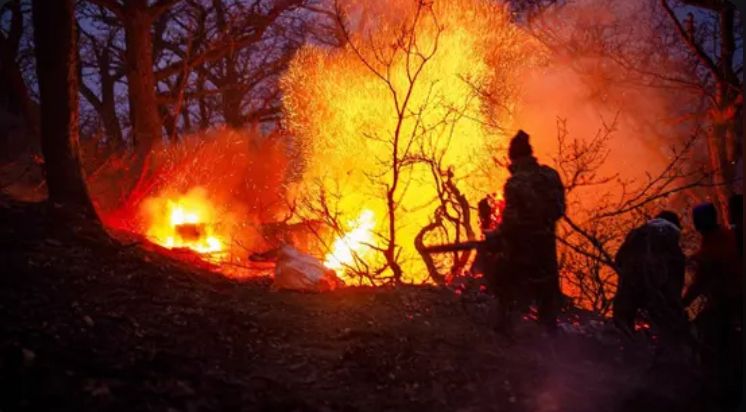
Iran has sought help to fight a devastating fire in
UNESCO-listed forests in its north, with neighbouring Türkiye
sending firefighting planes, Iran’s top environmental official said
on Saturday, Azernews reports via Reuters.
The fire threatens the Hyrc…

Iran has sought help to fight a devastating fire in
UNESCO-listed forests in its north, with neighbouring Türkiye
sending firefighting planes, Iran’s top environmental official said
on Saturday, Azernews reports via Reuters.

The fire threatens the Hyrcanian forests, which stretch along
the southern Caspian Sea coast and date back 50 million years. They
are home to 3,200 plant species – a “floral biodiversity …
remarkable at the global level”, according to UNESCO, opens new
tab, which listed them as a World Heritage site in 2019.

“Two firefighting aircraft (and) one helicopter … are being
dispatched by the Turkish government today. There is also the
capacity to have cooperation from Russia if needed,” Vice-President
Shina Ansari told state television.

Two Iranian Ilyushin firefighting aircraft, seven helicopters
and about 400 firefighters are battling the blaze, which follows a
drought marked by rain levels across Iran at 85% below average. The
fire reignited last Saturday following media reports that it was
put out after breaking out in late October.

Meanwhile, the head of a provincial nature protection unit said
unauthorised hunters may have started the blaze and Reza Aflatouni,
the head of Iran’s forestry body, suggested that the fire may be
linked to illegal efforts to destroy forested areas in order to
build private residences, according to Iranian media
reports.

Take urgent action against anti-christian violence, US tells Nigeria

Pete Hegseth, United States Defence Secretary, has urged the Nigerian government to take urgent and sustained action to halt escalating attacks on Chri…

Pete Hegseth, United States Defence Secretary, has urged the Nigerian government to take urgent and sustained action to halt escalating attacks on Christian communities.

Hegseth delivered the message during a meeting with Nuhu Ribadu, Nigeria’s National Security Adviser (NSA), at the Pentagon on Thursday.

According to the U.S. Department of Defence, the engagement formed part of a broader diplomatic push following increasingly strong statements from top American officials in recent weeks.

In a post on his X handle on Friday, Hegseth said he met Ribadu and his delegation to review the “horrific violence against Christians” in Nigeria, stressing that the U.S. government, under President Donald Trump, is working “aggressively” with Abuja to curb the threat posed by jihadist groups.

“Under @POTUS leadership, DOW is working aggressively with Nigeria to end the persecution of Christians by jihadist terrorists,” Hegseth said.

Sean Parnell, Pentagon spokesman reinforced this position in an official statement, noting that the Defence Secretary urged Nigeria to take both “urgent and enduring action” to stop the killings.

Washington, he added, is seeking deeper counterterrorism cooperation with Abuja “to deter and degrade terrorists that threaten the United States.”

Related News

The meeting comes on the heels of Donald Trump’s recent remarks alleging that Christianity in Nigeria faces an “existential threat.”

The U.S. President warned that if Abuja fails to halt the violence, he could order the deployment of American troops to Nigeria, a comment that has stirred diplomatic debate.

Read also: Tinubu calls for global partnership to defeat terrorism

Meanwhile, Riley Moore, U.S. Congressman revealed that he also held talks with the Nigerian delegation on Wednesday night in Washington, DC.

Moore described the discussions as “frank, honest, and productive,” noting that they focused on counterterrorism collaboration, security assistance, and the protection of vulnerable communities.

Nigeria’s delegation to the talks was led by Ribadu and included Bianca Odumegwu-Ojukwu, Minister of State for Foreign Affairs, Kayode Egbetokun, Inspector General of Police, Lateef Fagbemi, Attorney General of the Federation and Minister of Justice, Olufemi Oluyede, Chief of Defence Staff, and Emmanuel Undiendeye, Chief of Defence Intelligence.


Trickery in the land of tavern trivia

The world of pub quizzes …

Trickery in the land of tavern trivia

The world of pub quizzes was shaken in Britain recently when a team at The Barking Dog pub in Manchester was kicked out for cheating. Although disputes may occasionally occur in such quizzes it doesn’t usually come down to such strong disciplinary action. However the team involved was believed to be clearly in breach of trivia etiquette.

Participants at the weekly quiz began to notice that one team seemed to triumph nearly every week. Initially it was thought that this team just happened to be more intelligent than the others. However suspicions were aroused when the group still came up with the correct answers to really difficult questions.

So one week the landlord kept a close eye on this team and discovered that they were discreetly whispering the questions into their smart watches which were giving immediate answers. Actually I am surprised that doesn’t happen more often, or perhaps it does. The team has now been banned from participating although their identity has not been revealed.

No doubt many Bangkok Post readers have taken part in pub quizzes in Thailand. Such nefarious goings on couldn’t possibly happen here could they?

Pub quizzes have been a part of the English culture since the 1970s. Some take them far too seriously but the majority participate just for fun and an excuse to spend an evening in a pub. This is reflected in the team names which are invariably laden with painful puns.

Among a few that caught the eye are Quizzard of Oz, No Eye Dear, Smarty Pints and I’m Just Here For The Chips. However the team that I could relate to most was And In Last Place…

Question time

I have rarely indulged in pub quizzes, but some years ago was dragged into in a Bangkok Post quiz team. We actually did quite well though it was no thanks to me. Fortunately there were some smart teammates who saved the day.

I found it great fun when the whole team could consult one another but this particular quiz also featured a section requiring participants answering individually. This was more stressful than I had imagined, especially when I couldn’t answer a simple question while everyone else in the pub clearly knew the answer. It felt like being in the hot seat of Mastermind the celebrated BBC TV quiz show.

Cultured cabbie

Originally hosted by Magnus Magnusson, the long-running Mastermind has always had an intimidating atmosphere that puts contestants under the spotlight. The questions can be quite difficult and the imposing music “Approaching Menace” is enough to unsettle the calmest of souls. The most recent programmes have been hosted by BBC news presenter Clive Myrie.

One of the most celebrated moments occurred in 1980 when the winner was London cabbie Fred Housego, who had minimal academic qualifications. His specialist subject was the Tower of London and his win was regarded as a triumph for the working man. It was no fluke either as he had earlier breezed through two rounds on Henry II and Westminster.

The taxi driver certainly enjoyed his Mastermind experience more than a teacher who performed so badly on the show that he suffered absolute hell from his mocking pupils for several years.

Moving Everest

Another high profile TV quiz show was The Weakest Link hosted by Anne Robinson at her menacing best. This was more sensitive than Mastermind in that the up to nine contestants at the end of each round would vote out one of the group, that person being regarded as the “weakest”.

So it all got a bit personal. The questions were easier than Mastermind but the pressure prompted some entertaining answers as witnessed in the following exchanges:

Robinson: Which Italian city is overlooked by Vesuvius?

Contestant: Bombay?

Robinson: Vietnam has borders with Laos, Cambodia and which other country?

Contestant: The US?

Robinson: In which country is Mt Everest?

Contestant: Er, it’s not Scotland is it? (er, no it isn’t)

Robinson: What is the correct name for the wild Australian dog?

Contestant: The dingbat?

The wicked link

Some readers may recall that back in 2002 Thailand had its own version of Weakest Link or as one taxi driver called it “wicked ling”. It was called Kamjad Orn and despite high ratings was dropped after a year with the authorities calling it “inappropriate”.

Certainly the programme in which some contestants were made to look quite foolish did not sit well in a culture which tends to avoid confrontation, criticism and extols politeness. One teacher was reduced to tears when she couldn’t answer a simple question. A cabinet minister duly announced that the show was “unbecoming to Thai culture and morality”.

It wasn’t officially banned but quietly dropped by nervous TV execs. After that it was back to traditional flaky quiz shows with pop singers, would-be actresses and unfunny comedians.

Ask a stupid question

Anyone familiar with old British TV quiz shows will not be surprised at some of the daft answers. Here are a few I have collected over the years.

Presenter: Which former British colony was handed back to China in 1997?

Contestant: London?

Presenter: Name the man who was president of Italy until May 2006.

Contestant: Don Corleone?

Presenter: What was the purpose of Hadrian’s Wall?

Contestant: To keep out the Zulus?

Presenter: Where is the Sea of Tranquillity:

Contestant: Ibiza.

Land Bridge built on shaky science

The planned Land Bridge m…

Land Bridge built on shaky science

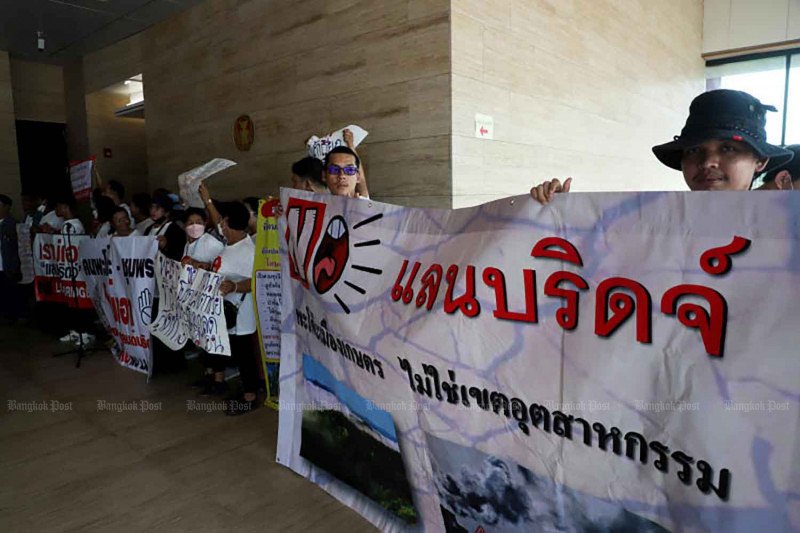
The planned Land Bridge megaproject and its deep-sea ports in the South pose no environmental threats because the seas there are already barren — or so the government’s study claims. Science, however, shows the opposite.

That raises a serious question: If the government cannot get even the basics of marine life right, how can anyone trust this trillion-baht megaproject?

For a public hearing in August, the government’s Environmental and Health Impact Assessment (EHIA) outlined its findings on the seas off Ranong and Chumphon, where the Land Bridge’s deep-sea ports will be built.

These waters — rich in marine life — have sustained local livelihoods for generations and form a unique ecosystem. The Ministry of Natural Resources has even proposed the area for Unesco World Heritage status.

Yet the state-sponsored EHIA reported only seven units of a single bottom-dwelling species per square metre. Benthic animals are key indicators of marine health. The result contradicts previous research in nearby waters showing up to 200 species per square metre of seabed.

Marine scientists, environmentalists and local fishing communities have called the report a sham. Despite protests and repeated demands for new surveys, the government continues to rely on this rubber-stamp EHIA in public hearings.

Determined to protect the seas, a coalition of marine scientists, environmentalists and local communities conducted their own survey early this month, with the media present for transparency.

They collected samples from 20 stations in Ranong waters. A single scoop of seabed from one station was enough to expose how flawed the state’s EHIA truly is.

Sorting the sediments with the naked eye, they identified multiple groups of bottom-dwelling animals: four crustaceans, 45 polychaetes, six single-shelled molluscs and one small starfish — all in just 0.1 square metres. That is not an empty sea. That is abundance.

Team leader Sakanan Plathong, president of the Marine Scientists Association of Thailand, said samples would be sent to a lab for proper scientific identification, with full results to be released publicly.

This is not a minor discrepancy. It calls the entire Land Bridge project into question. If the government’s study on marine life is wrong, how can anyone trust its conclusions on sediment, mangroves, water flows or pollution? Every claim about the Land Bridge’s safety and benefits collapses under scrutiny.

The Land Bridge has been sold as an economic miracle: a 90-kilometre transport corridor linking a deep-sea port in Ranong on the Andaman side to another in Chumphon on the Gulf of Thailand. Cargo would be unloaded, transported across the peninsula by road and rail, then reloaded onto ships bound for global markets.

The government says this will allow shippers to bypass Singapore and transform the South into a logistics hub.

Critics disagree. Moving containers twice is slower, costlier and less efficient — unable to compete with Singapore’s fully automated Tuas Port. Environmentalists warn the project will destroy world-class mangroves, wetlands, coral reefs and fishing grounds. Tourism will suffer, and local communities fear a repeat of the Eastern Economic Corridor: pollution, dispossession and lost livelihoods.

Sovereignty is at stake, too. The Southern Economic Corridor framework overrides land-use, environmental, labour and immigration laws. It has sweeping authority to rezone land, greenlight projects and bypass oversight.

Investors — largely from China — will receive 99-year leases, land-ownership rights and permission to hire unlimited foreign workers.

The flawed seabed survey is only one crack in the government’s EHIA. Other red flags run throughout the report.

The five-kilometre study radius is far too narrow, leaving out major impact zones such as Koh Phayam, coral reefs and several fishing and coastal communities. It ignores proposed World Heritage sites, coastal-erosion risks and the effects of massive land reclamation.

Impacts on local livelihoods and tourism were barely assessed. Pollution risks were minimised. The EHIA also disregarded a Chulalongkorn University study concluding the project is not economically viable.

Still, these concerns fall on deaf ears. The government and its backers dismiss critics as anti-national — a familiar tactic when vast sums of money are involved.

The Land Bridge is too big, too costly and too destructive to be justified by faulty data. If the government wants public trust, it must start by getting the facts right.

Nottingham Forest hammer Liverpool 3-0 to pile pressure on Slot

Nottingham Forest stunned Premier League champions Liverpool 3-0 at Anfield on Saturday, piling further pressure on manager Arne Slot.
The defeat marke…

Nottingham Forest stunned Premier League champions Liverpool 3-0 at Anfield on Saturday, piling further pressure on manager Arne Slot.

The defeat marked Liverpool’s sixth Premier League defeat in their last seven games, effectively ending their hopes of mounting a credible title defence this season. The Reds now sit eight points behind leaders Arsenal.

Brazilian defender Murillo opened the scoring in the 33rd minute after a corner, before Nicolo Savona doubled Forest’s advantage early in the second half.

Read Also: Arne Slot gets Liverpool backing despite Carabao Cup exit

Related News

Morgan Gibbs-White sealed the emphatic victory 12 minutes from time, reacting quickest to fire home after Alisson had initially saved Omari Hutchinson’s effort.

Liverpool, now 11th in the Premier League table before Saturday’s late fixtures, have now lost six of their past seven league games as scrutiny intensifies over Slot’s near £450m summer spending spree.
Forest, meanwhile, continues their resurgence, climbing to 16th and moving further away from the relegation zone.

This was Liverpool’s second successive Anfield defeat to Forest and their eighth loss in their last 11 games across all competitions. It also marked the first time since 1965 that the club has suffered back-to-back league defeats by a three-goal margin.

Slot admitted on Friday that his squad is still emotionally affected by the tragic death of Diogo Jota in a car crash in Spain in July.

Head of Sports at BusinessDay Media, a seasoned Digital Content Producer, and FIFA/CAF Accredited Journalist with over a decade of sports reporting.Has a deep understanding of the Nigerian and global sports landscape and skills in delivering comprehensive and insightful sports content.

COP30 climate talks in Brazil reach tentative deal, sources say

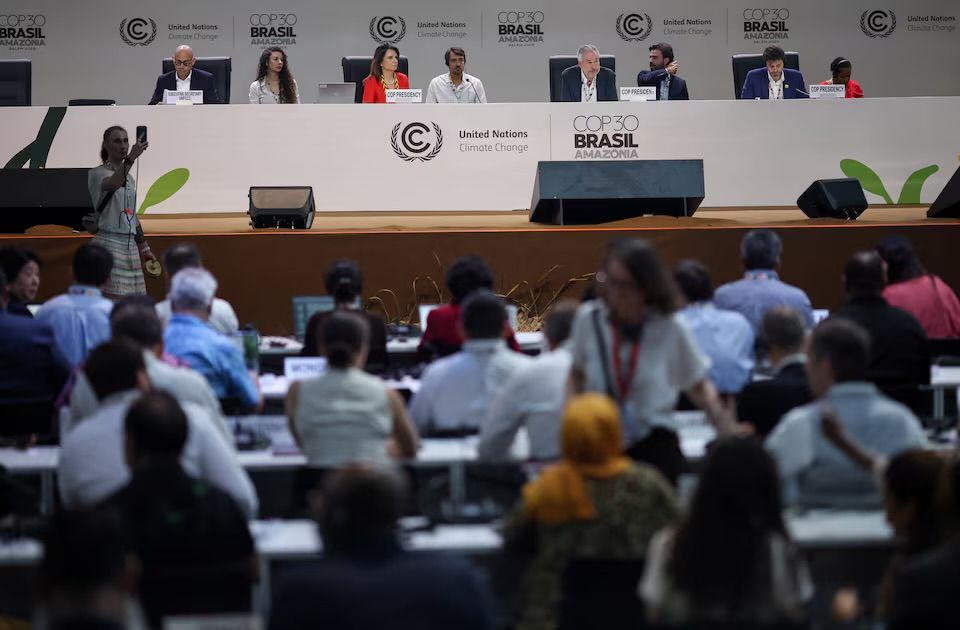
The COP30 climate talks in Brazil have reached a tentative deal
after negotiators resolved a protracted standoff over action to cut
greenhouse gas emissions and provide climate finance.
The two-week conference, billed as a chance to show that nations
c…

The COP30 climate talks in Brazil have reached a tentative deal
after negotiators resolved a protracted standoff over action to cut
greenhouse gas emissions and provide climate finance.

The two-week conference, billed as a chance to show that nations
can still join forces to tackle climate change despite the absence
of the United States, had been scheduled to end on Friday but
dragged into overtime.

The European Union had been pressing for language on the move
away from fossil fuels, but had come up against stiff resistance
from the Arab Group of nations including top oil exporter Saudi
Arabia.
The impasse was resolved after all-night negotiations led by host
nation Brazil, according to negotiators.

A draft deal issued on Saturday showed countries had agreed on
steps to help speed up climate action, review related trade
barriers, and triple the money given to developing countries to
help them withstand extreme weather events.

The European Union’s climate commissioner, Wopke Hoekstra, said
on Saturday that the proposed accord was acceptable, even though
the bloc would have liked more.

“We should support it because at least it is going in the right
direction,” he said.
The Brazilian presidency scheduled a closing plenary session. Any
deal needs a consensus to be approved.

COP30 President Andre Correa do Lago said on Saturday that the
presidency would publish a side text on fossil fuels as well as on
protecting forests – instead of adding them to the official
agreement – as there had been no consensus on these issues at the
global climate talks.

“I will announce that the Brazilian presidency will do the two
‘roadmaps’ because visibly we did not have maturity to reach
consensus. I believe if we do it under the presidency we will have
results,” he said.

The decision to triple climate finance by 2035, meanwhile, will
be part of the COP30 agreement, resolving a key demand from poorer
nations struggling to cope with climate impacts.

Separately, a Leaders’ Declaration from a G20 meeting in South
Africa stressed the seriousness of climate change, in a snub to
U.S. President Donald Trump.

Edun urges more reforms as Nigeria pitches progress to G20

Africa must move decisively to accelerate economic reforms if it is to unlock sustained growth and withstand the pressures of a rapidly shifting global…

Africa must move decisively to accelerate economic reforms if it is to unlock sustained growth and withstand the pressures of a rapidly shifting global economy, Nigeria’s Minister of Finance and Coordinating Minister of the Economy, Wale Edun, said on the sidelines of the G20 Investment Breakfast Dialogue in Johannesburg, South Africa.

Delivering the keynote address at a forum convened by MTN, CEOs from across South Africa, the Nigerian Investment Promotion Commission (NIPC), and development partners, Edun said Africa is meeting at a moment of “profound global economic change” that demands coordinated action, deeper regional collaboration, and an investment climate built on stability and reform.

A global landscape in flux

Setting the global context, Edun outlined four major disruptions reshaping the prospects of developing regions. First, global trade dynamics are being rewritten, with the old rules that supported the rise of China, India, and Brazil changing rapidly. Second, capital flows to emerging markets have tightened dramatically. Many developing economies, he noted, now pay more in debt service than they receive in development assistance. Africa alone is estimated by the African Development Bank to be paying about $163 billion in debt servicing in 2024, while total foreign direct investment is less than $100 billion.

At the same time, technology is disrupting labour markets and reshaping the future of work — a worrisome trend for a continent where the median age is just 20 and millions of young Africans require jobs, skills, and opportunities.

Finally, he said the world faces a paradox of “insufficient resources to fight poverty, yet abundant resources to fight climate change” — resources that often bypass Africa, despite the continent being disproportionately vulnerable to climate shocks.

“These shifts mean one thing for Africa,” Edun said. “We must accelerate bold economic reforms and strengthen domestic resource mobilisation to finance investments, jobs, and long-term development.”

Read Also: Uba Sani pitches Kaduna as Nigeria’s top investment destination at G20 forum

Nigeria’s reform path: building a platform for growth

Using Nigeria as a case study, the minister said the country has embarked since May 2023 on a disciplined programme of reforms aimed at building a modern and competitive economy.

Nigeria’s strategy, he explained, rests on two pillars: establishing macroeconomic stability so private investment can thrive, and increasing government savings to expand investments in education, healthcare, and infrastructure.

To achieve this, the government implemented several difficult but necessary decisions, including the removal of fuel subsidies, liberalisation of the foreign exchange market, landmark tax reforms, and structural adjustments across energy, power, logistics, education, and industrialisation.

“All these reforms have one purpose,” Edun said, “to build a competitive economy where private capital is rewarded, innovation is encouraged, and businesses have the confidence to invest.”

Edun told investors that Nigeria is beginning to see clear signs of economic recovery and stabilisation. GDP grew by 4.23 per cent in Q2 2025, compared to 3.1 per cent in Q2 2024 and 2.51 per cent in Q2 2023. Inflation, though still elevated, has been moderating consistently since March 2025, reaching 16.05 per cent by October. External reserves have risen to $46.3 billion, and growth is increasingly broad-based, driven by trade, telecommunications, construction, and expansions in rail, electricity, and refining.

“These indicators carry a simple message,” the minister said. “Nigeria is more stable, more predictable, and more investable than it has been in many years.”

Related News

He acknowledged, however, that reforms have posed challenges for vulnerable populations. To cushion the impact, the government has expanded direct benefit transfers to 15 million households, with about 9 million already receiving cash support.

Nigeria–South Africa partnership central to Africa’s future

Edun stressed that Africa’s two largest economies must lead the continent’s drive towards investment, industrial growth, and job creation.

“South African companies have had a long, deep, and successful presence in Nigeria,” he said. “This is the moment to learn from the past and invest deeper — not retreat.”

He urged South African businesses to take advantage of Nigeria’s ongoing reforms and join the country’s new growth cycle.

“Nigeria is not only open for business — Nigeria is reforming to accelerate business,” he added.

The minister emphasised that sustained dialogue between government, the private sector, and development partners is essential for unlocking Africa’s economic potential.

“Government’s role is to provide macroeconomic stability, invest in infrastructure and energy, ensure policy consistency and transparency, reduce the cost of doing business, and create an environment where capital can grow and scale,” he said.

Industry leaders and state governors echo confidence

Welcoming delegates earlier, MTN Group CEO Ralph Mupita described Nigeria as a “true African success story,” noting that the country accounts for 35–40 per cent of MTN’s business and serves 85 million customers.

He said MTN continues to support a strengthened Nigeria–South Africa business partnership through the bi-national commission, and he encouraged South African investors to leverage Nigeria’s reform momentum.

Similarly, NIPC Executive Secretary Aisha Rimi highlighted the economic transformation underway in Nigeria, crediting President Bola Ahmed Tinubu’s reforms for establishing the foundation for accelerated growth. Many of the long-standing issues affecting South Africa–Nigeria investment relations, she said, are now being addressed through the bi-national commission. Representatives from South Africa’s Department of Trade and Investment echoed this view.

Governors from Nasarawa, Gombe, Kaduna, and Plateau States also made presentations showcasing opportunities in agriculture, mining, transportation, and tourism. They noted that federal reforms have expanded fiscal space for state-level investment and enabled a pivot towards value-added industries rather than raw material exports.

In his closing remarks, Edun said Nigeria has “laid the foundation for a modern, resilient, private-sector-led economy,” with a medium-term ambition of achieving at least 7 per cent growth driven by private investment.

Former Brazilian president arrested by federal police

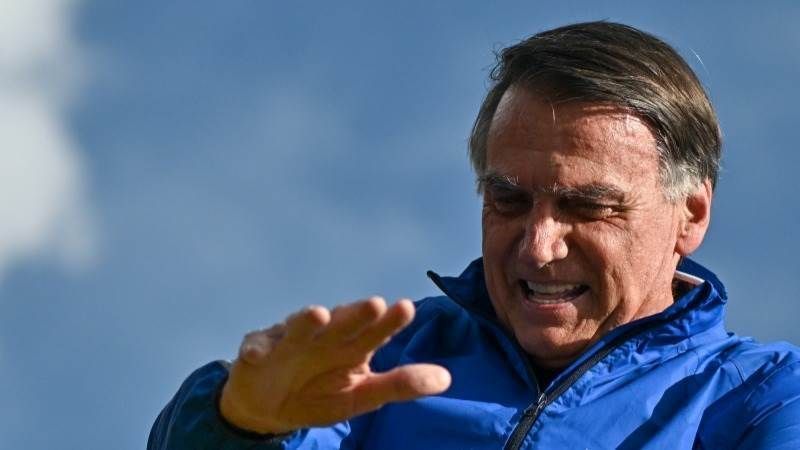
Former Brazilian President Jair Bolsonaro was arrested on
Saturday by federal police, his spokesman Fabio Wajngarten
reported, Azernews reports.
According to the spokesman, Bolsonaro was taken into protective
custody, just da…

Former Brazilian President Jair Bolsonaro was arrested on
Saturday by federal police, his spokesman Fabio Wajngarten
reported, Azernews reports.

According to the spokesman, Bolsonaro was taken into protective
custody, just days before starting his 27-year prison sentence.
“IT’S UNBELIEVABLE. On a Saturday. With completely compromised
health status. SHAMEFUL. [November] 26 is right around the corner,”
Wajngarten wrote on X.

The former president was sentenced back in September to 27 years
and three months in prison for leading a coup attempt to remain in
power, after he lost elections to President Luiz Inacio Lula da
Silva in 2022.

Here we are to serve you with news right now. It does not cost much, but worth your attention.

Choose to support open, independent, quality journalism and subscribe on a monthly basis.

By subscribing to our online newspaper, you can have full digital access to all news, analysis, and much more.

Subscribe

You can also follow AzerNEWS on Twitter @AzerNewsAz or Facebook @AzerNewsNewspaper

Thank you!