NBA: Mavericks fire GM Nico Harrison 9 months after Luka Doncic trade

Dallas Mavericks general manager Nico Harrison speaks during a press conference at the NBA basketball team’s basketball practice facility, Friday, June 27, 2025, in Dallas. (AP Photo/Tony Gutierrez, File)

DALLAS — The Dallas Mavericks fired genera…

Dallas Mavericks general manager Nico Harrison speaks during a press conference at the NBA basketball team's basketball practice facility, Friday, June 27, 2025, in Dallas. (AP Photo/Tony Gutierrez, File)

Dallas Mavericks general manager Nico Harrison speaks during a press conference at the NBA basketball team’s basketball practice facility, Friday, June 27, 2025, in Dallas. (AP Photo/Tony Gutierrez, File)

DALLAS — The Dallas Mavericks fired general manager Nico Harrison on Tuesday, an admission nine months later that the widely criticized trade of Luka Doncic backfired on the franchise.

The move came a day after Mavericks governor Patrick Dumont attended a 116-114 loss to the Bucks in which fans again chanted “fire Nico,” a familiar refrain since the blockbuster deal in February that brought Anthony Davis from the Los Angeles Lakers and angered the Dallas fan base.

Article continues after this advertisement

The Mavericks appointed Michael Finley and Matt Riccardi as co-interim general managers to oversee basketball operations.

FEATURED STORIES

Dumont’s hope for goodwill with the fans never came even after Dallas landed No. 1 overall pick Cooper Flagg with just a 1.8% chance to win the draft lottery.

There have been plenty of empty seats in the upper deck of American Airlines Center this season, something not seen consistently since 2018, when the Mavericks traded up to get Doncic with the third overall pick.

Doncic was a 25-year-old generational point guard in his prime when Harrison unloaded him for the oft-injured Davis, who has missed 30 of 44 regular-season games since his arrival in February.

Article continues after this advertisement

Harrison was in his fourth season and had engineered three trades that helped the Mavs go on a run to the Western Conference finals in 2022 and the NBA Finals two years later.

The Doncic trade and a slow start to the first full season without the young superstar led to a stunning downfall for Harrison, who declined to comment to The Associated Press. Dallas is 3-8, and Davis has missed six of the 11 games with a calf injury.

“No one associated with the Mavericks organization is happy with the start of what we all believed would be a promising season,” Dumont wrote in a letter to fans. “You have high expectations for the Mavericks, and I share them with you. When the results don’t meet expectations, it’s my responsibility to act.”

Article continues after this advertisement

While Dumont didn’t directly mention the Doncic trade in the letter, he acknowledged the vitriolic reaction of fans, who protested after the shocking deal. The Las Vegas-based Dumont and Adelson families, who bought the Mavericks from Mark Cuban in late 2023, were targets of the criticism as well.

“I understand the profound impact these difficult last several months have had,” Dumont wrote. “Please know that I’m fully committed to the success of the Mavericks.”

Dumont approved Harrison’s decision to trade Doncic, which kept the Mavericks from having to commit to a $346 million, five-year supermax extension for the Slovenian star.

Harrison tried to defend the deal by repeating a “defense wins championships” line. But with Davis sidelined by a calf injury and star guard Kyrie Irving still out after tearing the ACL in his left knee last March, defense hasn’t mattered much because Dallas has one of the worst offenses in the NBA.

With Davis and Irving playing together for just part of one game last season, the Mavericks missed the playoffs a year after Doncic led them to the NBA Finals.

The slow, injury-plagued start to this season for the Mavericks coincided with Doncic joining Wilt Chamberlain as the only NBA players to open a season with three consecutive games of at least 40 points.

Doncic’s historic run was interrupted by a three-game injury absence, but the Lakers won twice without him and are 8-3.

Harrison had spent 20 years with Nike and had close relationships with several NBA stars, including the late Kobe Bryant, when Cuban hired him in 2021.

The hiring of Harrison was the first step in trying to restore stability after former general manager Donnie Nelson was fired, then Rick Carlisle resigned as coach a day later. Nelson and Carlisle had been together for 13 years.

Harrison hired Jason Kidd as coach, and the Mavericks reached the Western Conference finals their first season together after Harrison’s first blockbuster trade.

He broke up the European pairing of Doncic and Kristaps Porzingis and got Spencer Dinwiddie, who played a key supporting role with Doncic as the Mavericks stunned Phoenix with a Game 7 blowout in the second round before losing to Golden State in five games.

A year later, Dinwiddie was part of the next blockbuster trade, which brought Irving from Brooklyn. The Mavericks faltered the rest of that season largely because of injuries, but they reached their first NBA Finals in 13 years in 2023-24, led by the pair of star guards. Dallas lost to Boston in five games.

That deep playoff run came in the first six months after Cuban sold the team. He said then that he would maintain control of basketball operations, but that didn’t happen.

Dumont quickly put full control of the basketball side in the hands of Harrison, who saw Davis as a championship-caliber player in the mold of Bryant. Davis won a title with LeBron James and the Lakers in 2020.

Cuban criticized the trade of Doncic, saying he never would have approved it and adding that he didn’t think Dallas got enough in return. Months later, though, Cuban credited Harrison for his salary cap management.

Finley, who was Harrison’s top assistant and has been in the Dallas front office for a decade, was a two-time All-Star for the Mavericks in the early 2000s when Hall of Famer Dirk Nowitzki was coming of age.


Your subscription could not be saved. Please try again.


Your subscription has been successful.

Finley had moved on to San Antonio when Nowitzki led the Mavericks to the NBA Finals in 2006. Dallas lost to Miami that year but beat the Heat five years later for the franchise’s only championship.
A delicate balancing act

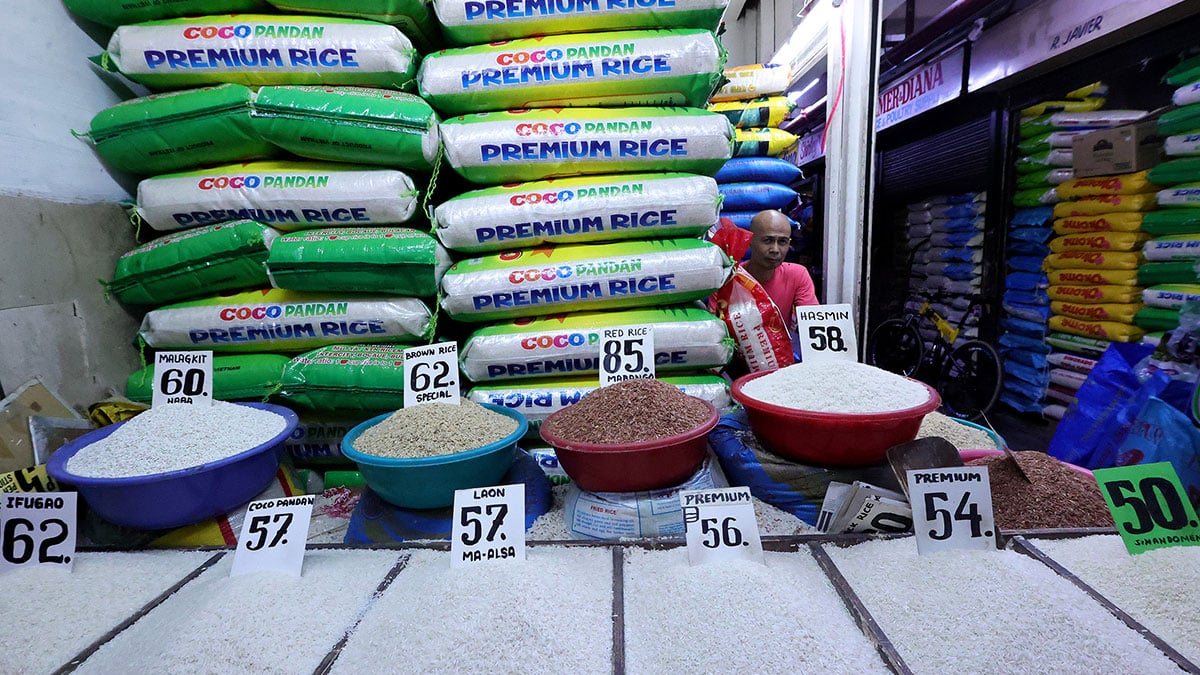
In an attempt to strike a delicate balance between protecting farmers’ incomes and keeping prices of basic goods as low as possible for consumers, President Marcos last week approved a “trigger-based” rice tariff mechanism that will adjust import dutie…

In an attempt to strike a delicate balance between protecting farmers’ incomes and keeping prices of basic goods as low as possible for consumers, President Marcos last week approved a “trigger-based” rice tariff mechanism that will adjust import duties depending on global prices of the country’s primary staple.

Under Executive Order No. 105 signed last Friday, the current 15 percent tariff on rice brought in from abroad—mainly from neighbors Thailand and Vietnam—will be kept in place until the end of this year.

But starting Jan. 1, 2026—when rice imports will be allowed to resume—the tariff will be adjusted by 5 percentage points for every 5 percent movement in world market prices, although it will not go below 15 percent or above 35 percent.

Article continues after this advertisement

“The automatic tariff mechanism aims to ensure price stability for Filipino consumers while safeguarding fair income for local farmers,” said the order, which amends the June 2024 EO 62 that slashed rice tariffs from a high of 35 percent to a flat 15 percent until 2028 to force down rice retail prices and cool inflation.

FEATURED STORIES

As to what the starting tariff will be, the Department of Agriculture (DA) has until Dec. 15 to determine, with Agriculture Secretary Francisco Tiu Laurel Jr. saying that it will likely not stay at 15 percent.

Twin mandates

By making the rate more flexible, the Marcos administration hopes to smooth out the volatility in rice prices and keep them at a level that will make it profitable for farmers to keep planting rice, and at the same time, within reach of consumers who allot a big part of their everyday budget on rice, which is also one of the key drivers of inflation.

To ensure that the policy will bring in the intended benefits, the President created an Inter-Agency Group on Rice Tariff Adjustment composed of agencies under the economic cluster to closely monitor global rice trends, determine trigger levels, and determine when the adjustments are warranted.

Article continues after this advertisement

On paper, the “trigger-based” tariff scheme seems like a Solomonic solution to fulfill the government’s twin mandates to take care of both the rice industry including farmers and consumers. But its success will rest primarily on the ability of the newly formed interagency group to implement the tariff adjustments at the right time and at the right magnitude.

It cannot afford to stray from closely monitoring global movements of rice prices as well as realities on local ground considering the dynamic and opposing forces that are at play.

‘Recycled experiment’

Economists are pushing for lower tariffs and lifting of the import ban to lower consumer prices on one side while farmers’ groups are calling for the maximum 35-percent tariffs on imports to protect the local industry and push up their income.

Article continues after this advertisement

Last month, the Foundation for Economic Freedom, whose members include some of the country’s top economists, urged the government to immediately lift the import ban and maintain the rice import tax at 15 percent to keep inflation in check.

They argued that banning imports and possibly raising the tariffs to a high of 35 percent as floated by the DA would cause rice prices to increase and also “represent a significant setback to economic liberalization, consumer welfare, and overall national competitiveness.”

The Kilusang Magbubukid ng Pilipinas (KMP), on the other hand, is urging the Marcos administration to do the exact opposite and keep the tariffs at 35 percent, adding that the latest EO was “a recycled experiment” to hide the impact of rice liberalization that it claimed devastated local rice production and made the Philippines even more dependent on imports to feed its people. “Sa bawat pagbaba ng taripa, mas nalulugi ang mga magsasaka (With every reduction in tariffs, farmers lose more money,)” said KMP chair Danilo Ramos.

Clearly divisive

The Samahang Industriya ng Agrikultura (Sinag) shares this view, claiming that the longer reduced tariff remains in effect, the greater the damage will be to local rice farmers who are already reeling from depressed palay prices.

Sinag pointed out that the landed cost of imported rice at current rates is already down to P25 to P26 a kilo, thus even with a 35 percent tariff, imported rice would remain affordable and will put locally produced rice at a more competitive position.

“It is deeply disappointing that the National Economic and Development Authority (now the Department of Economy, Planning, and Development) continues to turn a blind eye to both the sharp decline in global prices and the plight of local producers,” said Sinag executive director Jayson Cainglet.

Given how the tariff issue is clearly divisive, the new body certainly has its job cut out for it as the Marcos administration puts this latest measure into effect.


Your subscription could not be saved. Please try again.


Your subscription has been successful.

Adjusting tariff rates by too little, too much, too early, or too late will have profound implications on the prices at which households buy rice, thus, it should pull the policy levers with great caution and intent to benefit the majority.

PSEi plunges to fresh 5-year low, tracks pandemic level

FILE PHOTO: PSE Center INQUIRER FILES

MANILA, Philippines — The government’s corruption crisis, softer consumption and cut in public spending that led to economic growth slowing to a four-year low continued to erode investor confidence, with the cap…

FILE PHOTO: PSE Center INQUIRER FILES

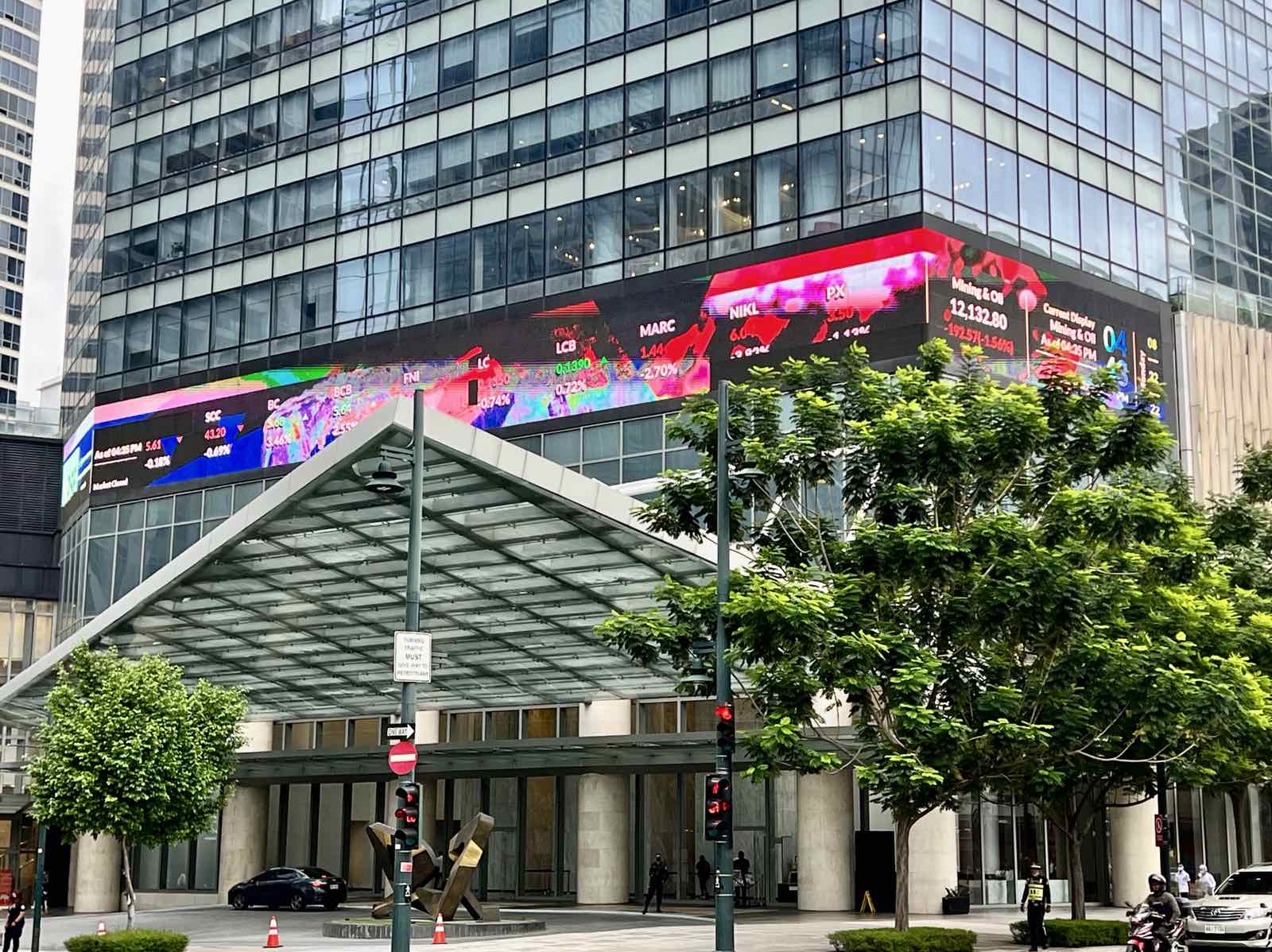
MANILA, Philippines — The government’s corruption crisis, softer consumption and cut in public spending that led to economic growth slowing to a four-year low continued to erode investor confidence, with the capital index on track to drop to its weakest finish since the COVID-19 pandemic.

The Philippine Stock Exchange index (PSEi) fell by another 1.29 percent, or 73.57 points, to close at 5,629.07, a fresh five-year low.

The broader All Shares Index also declined by 0.94 percent, or 32.82 points, to 3,465.61.

Article continues after this advertisement

Among the key sectors, only the services ended in the positive territory. Financials and property sectors bled more on Tuesday’s trading.

FEATURED STORIES

READ: Stocks rally on hopes of US government shutdown ending

Analysts said that the local bourse continued to see a bloodbath as depressing government data clouded investor optimism.

“The market remained weak as investors continue to price in softer GDP (gross domestic product) growth for the next few quarters, with 3Q25 corporate earnings starting to show strain from the weakening economy,” said Alfred Benjamin Garcia, research head at AP Securities Inc.

Last week, the government reported that the economy grew by just 4 percent in the July to September period, its slowest since the first quarter of 2021—when the Duterte administration imposed hard lockdowns to lessen the virus’ blow.

Article continues after this advertisement

The Marcos administration’s growth target, on the other hand, is set at 5.5 percent to 6.5 percent.

Blamed on infrastructure anomalies

The sharp contraction in public spending was blamed on widespread anomalies linked to flood control projects. To recall, the Department of Public Works and Highways had suspended a number of activities, especially those covering bidding and procurement for local projects.

Article continues after this advertisement

Household consumption also slowed to 4.1 percent due to a series of typhoons.

“While the index may stage an interim rebound due to oversold conditions, the general directional bias remains on the downside. Any rally, if any, may just be temporary,” Ron Acoba, chief investment strategist at Trading Edge Consultancy, said in a message.

READ: Ombudsman uncovers paper trail, bank transactions in flood control mess

“As of now, the index is clearly trending south, and is now eyeing its pandemic low of around 4,500,” Acoba added.

He even noted that the index would have already plunged to the pandemic level without a lift from International Container Terminal Services, Inc. and Manila Electric Co., which he said “account for about 20 percent weight in the index.”

“As for whether the weakness could drag on, short-term, the market seems to be trying to find a support level where valuations are cheap enough to justify bargain-hunting. Until that bottom is found, we can’t say for certain when this trend will reverse,” Garcia added.


Your subscription could not be saved. Please try again.


Your subscription has been successful.

For Tuesday’s trading, DigiPlus Interactive Corp. logged the highest gain, increasing 7.65 percent to P27.45. Universal Robina Corp., on the other hand, was the worst index performer, falling 6.64 percent to P66.10. INQ

PSEi plunges to fresh 5-year low, tracks pandemic level

FILE PHOTO: PSE Center INQUIRER FILES

MANILA, Philippines — The government’s corruption crisis, softer consumption and cut in public spending that led to economic growth slowing to a four-year low continued to erode investor confidence, with the cap…

FILE PHOTO: PSE Center INQUIRER FILES

MANILA, Philippines — The government’s corruption crisis, softer consumption and cut in public spending that led to economic growth slowing to a four-year low continued to erode investor confidence, with the capital index on track to drop to its weakest finish since the COVID-19 pandemic.

The Philippine Stock Exchange index (PSEi) fell by another 1.29 percent, or 73.57 points, to close at 5,629.07, a fresh five-year low.

The broader All Shares Index also declined by 0.94 percent, or 32.82 points, to 3,465.61.

Article continues after this advertisement

Among the key sectors, only the services ended in the positive territory. Financials and property sectors bled more on Tuesday’s trading.

FEATURED STORIES

READ: Stocks rally on hopes of US government shutdown ending

Analysts said that the local bourse continued to see a bloodbath as depressing government data clouded investor optimism.

“The market remained weak as investors continue to price in softer GDP (gross domestic product) growth for the next few quarters, with 3Q25 corporate earnings starting to show strain from the weakening economy,” said Alfred Benjamin Garcia, research head at AP Securities Inc.

Last week, the government reported that the economy grew by just 4 percent in the July to September period, its slowest since the first quarter of 2021—when the Duterte administration imposed hard lockdowns to lessen the virus’ blow.

Article continues after this advertisement

The Marcos administration’s growth target, on the other hand, is set at 5.5 percent to 6.5 percent.

Blamed on infrastructure anomalies

The sharp contraction in public spending was blamed on widespread anomalies linked to flood control projects. To recall, the Department of Public Works and Highways had suspended a number of activities, especially those covering bidding and procurement for local projects.

Article continues after this advertisement

Household consumption also slowed to 4.1 percent due to a series of typhoons.

“While the index may stage an interim rebound due to oversold conditions, the general directional bias remains on the downside. Any rally, if any, may just be temporary,” Ron Acoba, chief investment strategist at Trading Edge Consultancy, said in a message.

READ: Ombudsman uncovers paper trail, bank transactions in flood control mess

“As of now, the index is clearly trending south, and is now eyeing its pandemic low of around 4,500,” Acoba added.

He even noted that the index would have already plunged to the pandemic level without a lift from International Container Terminal Services, Inc. and Manila Electric Co., which he said “account for about 20 percent weight in the index.”

“As for whether the weakness could drag on, short-term, the market seems to be trying to find a support level where valuations are cheap enough to justify bargain-hunting. Until that bottom is found, we can’t say for certain when this trend will reverse,” Garcia added.


Your subscription could not be saved. Please try again.


Your subscription has been successful.

For Tuesday’s trading, DigiPlus Interactive Corp. logged the highest gain, increasing 7.65 percent to P27.45. Universal Robina Corp., on the other hand, was the worst index performer, falling 6.64 percent to P66.10. INQ

BIZ BUZZ: Big business comes to the rescue

MANILA, Philippines — Filipino resilience has become a hackneyed idea during typhoons. How about bayanihan instead?

In the past days, as the successive Typhoon “Tino” and Supertyphoon “Uwan” left parts of the Philippines in a sorry state, some of th…

MANILA, Philippines — Filipino resilience has become a hackneyed idea during typhoons. How about bayanihan instead?

In the past days, as the successive Typhoon “Tino” and Supertyphoon “Uwan” left parts of the Philippines in a sorry state, some of the country’s biggest businesses showed up to help victims across Luzon and the Visayas.

The Lucio Tan Group extended help to families in Tino-hit Cebu and surrounding provinces through its firms, Philippine Airlines (PAL), Asia Brewery and Philippine National Bank.

Article continues after this advertisement

READ: Typhoon Uwan death toll climbs to 18 – OCD

FEATURED STORIES

The conglomerate said the flag carrier PAL was helping in airlift goods to Cebu and other typhoon-hit areas, adding it was “working with government agencies, humanitarian organizations, and private donors to move essential supplies as quickly as possible.”

Some 3,000 6-liter bottles of water have been distributed in Talisay, Cebu, with additional relief operations planned in Liloan and Consolacion.

Meanwhile, power distributor Meralco said it had restored power for about 203,000 customers as of Monday morning, down from 400,000 at midnight.

As the Philippines navigates through the ravages of Tino and Uwan, we can surely expect more of these acts of bayanihan not just from big businesses like these, but even among ordinary Filipinos. —Logan Kal-El M. Zapanta

Article continues after this advertisement

Italpinas names new chief

Italpinas Development Corp. (IDC) has a new chief as it seeks boutique living bloom beyond the capital region.

Giuseppe Garofalo will lead the listed boutique developer’s dream to cash in on the rising demand for real estate projects in provincial areas.

Article continues after this advertisement

He will succeed Romolo Nati, IDC’s co-founder who will continue to serve as the chair of the board and the chief of the design office.

The outgoing CEO said naming a new leader was necessary as the group’s growth vision needs “execution capability more than ever.”

READ: Italpinas expands Cagayan de Oro development

Garofalo has been in the firm’s leadership team, serving as chief operating officer.

“IDC’s success is built on a unique blend of sustainability, innovation, and teamwork,” he said.

“I look forward to leading our talented team as we continue to grow responsibly, create value for our shareholders, for the environment and for the communities and deliver thoughtfully designed certified green developments to our clients,” Garofalo added.

Backing its goal of launching a stronger footprint in the property market, Italpinas had vacated the energy sector through the divestment of its minority stake in Constellation Energy Corp.


Your subscription could not be saved. Please try again.


Your subscription has been successful.

It also secured joint venture agreements for several real estate developments in Palawan and Mindanao. —Lisbet K. Esmael INQ

PVL: Chery Tiggo outlasts Capital1 behind Yuni Batista’s 41

Chery Tiggo Crossovers’ Yuni Batista during a game against Capital1 Solar Spikers in the PVL Reinforced Conference. –MARLO CUETO/INQUIRER.net
MANILA, Philippines–Chery Tiggo kept its quarterfinal hopes alive with a dramatic 27-25, 23-25, 25-12, 22-…

Chery Tiggo Crossovers’ Yuni Batista during a game against Capital1 Solar Spikers in the PVL Reinforced Conference. –MARLO CUETO/INQUIRER.net

MANILA, Philippines–Chery Tiggo kept its quarterfinal hopes alive with a dramatic 27-25, 23-25, 25-12, 22-25, 15-13 victory over Capital1 in a grueling PVL Reinforced Conference match Tuesday at FilOil EcoOil Centre in San Juan.

Leading the charge was Yuni Batista, who scored a tournament-high 41 points, including the match-winning hit that sealed the victory.

Article continues after this advertisement

In a tense fifth set, Chery Tiggo led 14-11 before Capital1 rallied to 13-14. After a Capital1 dig, Batista reset and finished the clinching point off a pass from Alina Bicar.

FEATURED STORIES

Chery Tiggo Crossovers’ Yuni Batista during a game against Capital1 Solar Spikers in the PVL Reinforced Conference. –MARLO CUETO/INQUIRER.net

“I didn’t think too much; I just took it point by point,” said Batista, who set a new tournament scoring mark, surpassing Sasha Bytsenko’s 39 points.

The win halted Chery Tiggo’s slump and improved its record to 2-4, tying Choco Mucho for ninth place. While still outside the top tier, the victory kept the Crossovers in the hunt for a quarterfinal berth as the two-round preliminaries near their conclusion.

“This win is so important to us. We still need to reach the quarterfinals,” Batista said.

Article continues after this advertisement

Supporting Batista, Ara Galang added 11 points for Chery Tiggo, Shaya Adorador seven, and Mylene Paat, Renee Peñafiel, and Cza Carandang six apiece.

Capital1 meanwhile, draw 34 points from Oleksandra Bytsenko while  rookie Bella Belen shone with a career-high 22 points in a losing effort .


Your subscription could not be saved. Please try again.


Your subscription has been successful.

Truck hits boy, 14, in Mandaue

Responders retrieve the body of the boy hit by a truck in Mandaue City on Nov. 11. | Photo from the Mandaue City Police Office

CEBU CITY, Philippines – A 14-year-old boy was severely injured after he was struck by a wing van…

Responders retrieve the body of the a boy hit by a truck in Mandaue
Responders retrieve the body of the boy hit by a truck in Mandaue City on Nov. 11. | Photo from the Mandaue City Police Office

CEBU CITY, Philippines – A 14-year-old boy was severely injured after he was struck by a wing van truck while walking along B. Suico St., Barangay Tingub, Mandaue City on Tuesday, Nov. 11 around 11 a.m.

The victim was identified as a grade 9 student, a resident of Sitio Train 2 in the same barangay.

Meanwhile, the truck driver was identified as Romelito Elustricimo Castillote, 48 years old, a resident of Barangay Tambongon, San Remigio town.

Based on the investigation of the Mandaue City Police Office, the victim was walking on the side of the road, accidentally fell onto the road and was struck by the wing van truck.

The victim sustained injuries and was immediately brought to Mandaue City District Hospital by responders for medical treatment.

As of this writing, the driver of the wing van truck was detained by the Mandaue police and will be face charges of reckless imprudence resulting in serious physical injury.


Your subscription could not be saved. Please try again.


Your subscription has been successful.

Read Next

Disclaimer: The comments uploaded on this site do not necessarily represent or reflect the views of management and owner of Cebudailynews. We reserve the right to exclude comments that we deem to be inconsistent with our editorial standards.