Three Chinese fleeing Myanmar scam centre sneak into Thailand

Thai soldiers arrest three Chinese m…

Thai soldiers arrest three Chinese men in Tak province for illegally entering Thailand after fleeing from the KK Park scam site in Myawaddy, Myanmar. (Photos: supplied/Assawin Pinitwong)

Three Chinese men who fled from the KK Park scam complex in Myawaddy, Myanmar, were caught sneaking into Thailand near the border in Tak northern province on Thursday.

They were apprehended by soldiers and border police patrolling along the border in tambon Mahawan in Mae Sot district.

The Chinese nationals, whose names were not revealed, admitted to sneaking into Thailand via a natural path. 

The KK Park complex sitting across from Mae Sot on the banks of the Moei River covers roughly 500 acres and is run by Chinese crime families.

The site is now controlled by Myanmar military forces, which have bombed dozens of buildings there since Oct 22. An operation on Thursday took place closer to the Thai side, forcing some Thai households to evacuate for safety reasons.

Chinese scam syndicates have managed to avoid the crackdown on KK Park by moving to other nearby locations in Myanmar, according to local reports. But the lower-level foreigners who worked there continue to escape across the border.

Thai authorities on Wednesday reported 39 foreign nationals — 34 males and five females — fleeing from KK Park were caught illegally entering Thailand by foot. They were 12 Pakistanis,12 Kenyans, three Ugandans, three Vietnamese, two Indians, two Nepalis, a South Sudanese, an Egyptian, a Kazakhstani, a Burundian and a Rwandan.

Del Monte at 100: A century-long legacy of nourishing the nation

MANILA, Philippines — From the farms of Bukidnon to millions of Filipino tables, Del Monte’s century-long story is one of nourishing a nation—one meal, one moment, one family and one community at a time.

The brand’s quiet but constant presence in Fili…

MANILA, Philippines — From the farms of Bukidnon to millions of Filipino tables, Del Monte’s century-long story is one of nourishing a nation—one meal, one moment, one family and one community at a time.

The brand’s quiet but constant presence in Filipino homes is seen almost every day, from a glass of pineapple juice to start our day to the fruit salad we prepare every Noche Buena.

Soon celebrating its centennial year in 2026, Del Monte is continuously building on its legacy of Nourishing Goodness—a commitment to nurturing the land, uplifting communities and feeding both body and spirit, with purpose and heart. Such promise is depicted in Del Monte’s anthemic film titled Kaayo.

Kaayo, which translates to ‘goodness’ in Bisaya, celebrates the spirit of goodness—passed from hand to hand, from generation to generation. It reminds us that our greatest harvest is the goodness we’ve shared,” says Luis Alejandro, president and COO of Del Monte Philippines Inc.

Luis Alejandro, president and COO of Del Monte Philippines Inc.

Sustaining the future

In the scenic fields of Bukidnon, where the company was founded, over 30,000 hectares have been cultivated with care for both harvest and habitat.

Farmers have cared for the land as home—sustaining it as the source of nourishment and goodness for generations.

Through careful stewardship, Del Monte has planted over 700,000 trees, recycled water for irrigation, and maintained carbon-negative operations across its plantation—making it one of the country’s pioneers in sustainable farming.

Uplifting lives

Through the decades, Del Monte has cultivated something rarer: a thriving community where families can live, learn and grow together.

Today, more than 24,000 men and women work in the Bukidnon plantation, many of them third- and fourth-generation employees whose roots are intertwined with Del Monte’s history.

Within the plantation lies a self-sustaining village complete with free housing, schools, a hospital and recreational facilities, proving that Del Monte’s concept of nourishment extends well beyond the kitchen.

Through the Del Monte Foundation, the company’s impact reaches far beyond its gates. Over 200,000 Filipinos in more than 100 barangays have benefited from education, livelihood and nutrition programs.

These include scholarships for over 1,700 students, feeding programs to combat malnutrition, and livelihood initiatives that help farming families become self-sustaining.

At the heart of every Filipino table

Few brands have become as deeply woven into Filipino homes as Del Monte. From everyday dishes to festive occasions, the brand has stood as a mark of quality and comfort.

Every product carries the same seal of trust and nutrition that generations have relied on—from Del Monte 100% Pineapple Juice with PiñaPhyto5—naturally rich in phytonutrients—to Tomato Sauce with LycoNutrients, fortified with Vitamins A, C and Iodine.

And for four decades, Del Monte Kitchenomics has been a trusted kitchen companion. The beloved TV cooking show in the 1980s has evolved into a vibrant digital community that continues to inspire creativity, confidence and connection among Filipino home cooks today.

Spreading more goodness through partnerships

Del Monte is also celebrating with partners that share its belief in espousing goodness—bringing joy and purpose to people’s lives.

Disney-themed Spaghetti Sauce – Del Monte continues its purpose by nourishing happy childhoods because a childhood that is filled with joyful memories builds the foundation for happy, well-rounded adults. That’s why Del Monte Spaghetti Sauce is giving 100 families of four a free trip to Hong Kong Disneyland—a once-in-a-lifetime reward for the generations who have made Del Monte part of their own stories.

Uniqlo x Del Monte: Wear the Goodness – Through a collaboration with Uniqlo’s UTMe line, Del Monte celebrates positivity and shared values of comfort and authenticity. The limited-edition shirts and tote bags will be available in select UNIQLO stores nationwide from Nov. 21, 2025 to May 31, 2026.

Del Monte Pineapple Crunch – Auro Chocolate and Del Monte unite world-class chocolate craftsmanship with the sweet, tangy flavor of pineapples from Bukidnon. The Auro x Del Monte Pineapple Crunch will be available in Auro and Kultura stores starting November 24, while limited-edition menu items will be served in Auro Cafés until December 31.

Blend in the Good limited-edition drinks – The Jamba Juice x Del Monte collab offers limited-edition flavors Piña Colada Fruit Refresher and Aloha Pineapple Smoothie. For every cup sold, P5 will be donated to Del Monte farmers. The drinks are available until December 31 at Jamba Juice branches nationwide.

“These partnerships reflect what we stand for: joy, wellness and shared purpose,” explains Sharon Tanganco, chief marketing officer at Del Monte.

“Partnering with Disney allows us to extend our purpose of nourishing goodness to the next generation, by creating joyful experiences. With Uniqlo, it’s about affordable quality for every day. With Auto Chocolate, we celebrate Filipino craftsmanship; and with Jamba Juice, we make healthy living even more purposeful.”

Sharon Tanganco, chief marketing officer at Del Monte

A fresh new look

To commemorate its 100th year, Del Monte also embraces a Centennial Packaging Refresh—a vibrant, modern design that honors its heritage.

The new look celebrates the brand’s commitment to health and innovation, while retaining the unmistakable heart-shaped logo that has stood for quality and trust for generations.

It’s a visual reminder that the goodness Filipinos have always loved continues, but now fresher and stronger.

Celebrating a century of goodness

In a simple yet meaningful gathering, the 100th-year milestone brought together Del Monte’s leaders, partners and friends. Alejandro opened the celebration with messages of gratitude and purpose, and a heartfelt look back at Del Monte’s journey.

Everyone was treated to the premiere of Kaayo, the short film that captured the brand’s enduring story of nourishment and nation-building. The special documentary paid tribute to the farmers and generations of employees whose loyalty and hard work have kept Del Monte’s heritage alive.

Throughout the program, journalist Karen Davila—through a video—and content creators chef RV Manabat, Dr. Alvin Francisco and Dr. Kilimanguru shared their own experiences visiting the Del Monte plantation and seeing how the brand’s goodness begins from the land itself.

The event also officially introduced Del Monte’s latest brand collaborations with Disney, Uniqlo, Auro and Jamba Juice to the public. Guests even enjoyed a taste of the collaboration firsthand, with Del Monte x Auro and Del Monte x Jamba Juice creations served at the venue.

Nourishing the next century

As Del Monte turns 100, it continues to champion nutrition through innovation and programs that empower and nourish Filipino families every day.

More than preserving its century-old pineapple fields, the company continues to spread goodness that uplift communities and strengthen the nation—and its legacy will continue to grow for generations to come.

“Thank you for making us part of your homes for 100 years. Every can opened, every meal shared, every glass poured—you’ve made us part of your stories. As we celebrate this centennial, we look forward to nourishing more Filipino generations with the same care, passion and goodness that started it all,” Alejandro concludes


Editor’s Note: This #Brandspace story is created with Del Monte. It is produced by the Advertising Content Team that is independent of our Editorial newsroom. 


Five Indians held in Pattaya online gambling raid

Five Indian men are seen with some o…

Five Indian men are seen with some of the evidence seized during a raid on a Pattaya condominium by Chon Buri immigration police on Wednesday. (Photo supplied/Amporn Sangkaew)

Five Indian nationals have been arrested for allegedly working as administrators for an online gambling network during a raid on a condominium in Pattaya.

Immigration police searched a room in the condominium on Soi Thep Prasit 17 in Nong Prue on Wednesday, after receiving information that a group of Indian nationals were staying and working there.

The officers found five men working on laptop computers inside the room.

The officers seized three laptops, 22 mobile phones, a tablet, credit cards and notebooks containing records of money transfers amounting to several million rupees, or about 2 million baht. The transactions were believed to be linked to online gambling sites.

The five men, aged 24 to 39, were held for questioning. All denied any involvement in illegal activities but police say they gave confusing statements.

They reportedly admitted to acting as administrators responding to customers but refused to say what services they provided, police said.

Thailand Post seeks tech joint venture

Mr Dhanant says the planned joint venture will drive Thailand Post to become a "Tech Post" company. (Photo: Sirivish Toomgum)
Mr Dhanant says the planned joint venture will drive Thailand Post to become a “Tech Post” company. (Photo: Sirivish Toomgum)

Thailand Post expects to formulate a joint venture with technology partners to create an “in-house tech engine” for developing logistics tech solutions to serve its own operations and outside businesses.

According to president Dhanant Subhadrabandhu, the joint venture is expected to be established next year.

Thailand Post expects to hold a 25% share in the venture, and is in talks with a number of tech companies regarding a deal, he said.

Mr Dhanant said the move is similar to Krungthai Bank’s investment via subsidiary Infinitus with a tech company to develop the Pao Tang application.

The joint venture would focus on both logistics and other related businesses.

“The venture would drive Thailand Post to become a ‘Tech Post’ company and trusted logistics brand in the region,” he said.

Mr Dhanant said the agency invested 1.5 billion baht in IT development this year, including on the replacement of some parts of its existing IT system.

Thailand Post reported total revenue of 16.9 billion baht for the first nine months of 2025, up 7% year-on-year.

The transport and logistics group made the biggest revenue contribution with 7.99 billion baht, or 47.4% of total revenue, rising 8.42% year-on-year.

This growth aligns with economic expansion across several industries, including retail, e-commerce, fashion and lifestyle.

Mr Dhanant said 2025 is the first year Thailand Post has begun to see concrete results from its investments in network expansion, technology, service quality and human resources.

Meanwhile, customer trust and brand confidence have reached record highs: the 2025 brand confidence survey showed an increase to 97.9%, up from 91.9% in 2024.

Thailand Post is also positioning itself as a key player in international logistics, one of its core strategic business areas.

Between 2024 and 2025, international delivery volumes have grown steadily, reflecting strong confidence among Thai businesses that rely on Thailand Post’s global network to expand their exports.

Express Mail Service remains the top performer, accounting for 34% of all international delivery revenue.

Looking ahead to 2026, Thailand Post aims to enhance cross-border service standards to meet global benchmarks.

It plans to expand logistics partnerships with key international destinations, enabling Thai entrepreneurs and online sellers to access new markets more easily and at competitive costs.

The company also launched fulfilment services for Amazon FBA (Fulfillment by Amazon), designed for sellers on Amazon.com wanting to ship products from Thailand to the US.

Thailand Post collects deliveries and handles customs clearance, delivering products directly to Amazon FBA warehouses for distribution.

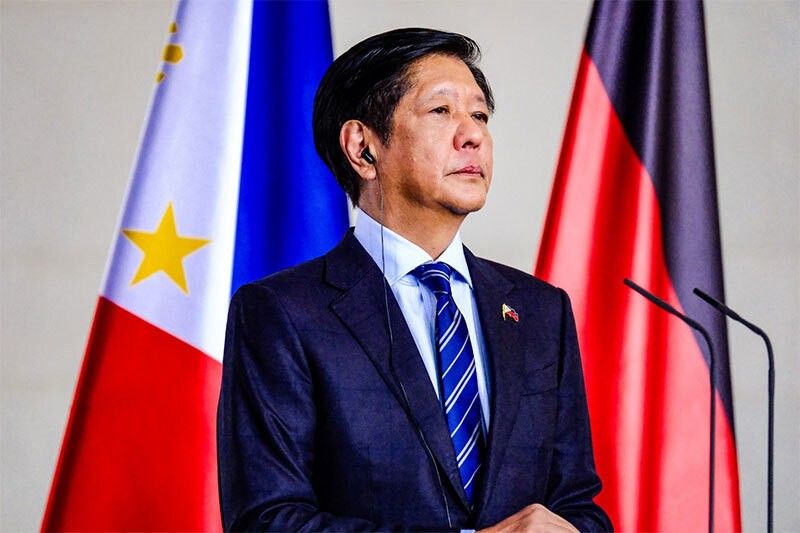
Marcos’ net worth nears P1.4 billion after 2024 valuation

Jean Mangaluz – Philstar.comNovember 21, 2025 | 7:15am

MANILA, Philippines (First published Nov. 21, 6:55 p.m.) — President Ferdinand Marcos Jr.’s …

Jean Mangaluz – Philstar.com

November 21, 2025 | 7:15am

MANILA, Philippines (First published Nov. 21, 6:55 p.m.) — President Ferdinand Marcos Jr.’s net worth is currently estimated at P1.375 billion as of end-2024, based on an appraisal report attached to his statement of assets, liabilities, and net worth (SALN).

The president’s SALN, which also includes the wealth of First Lady Liza Marcos, listed at least 21 real properties, many in his stronghold of Ilocos Norte. He also owns properties in Metro Manila, Benguet and Laguna. Three were inherited, five donated and the rest purchased or built.

Altogether, these properties cost P142.025 million.

In personal assets, Marcos reported cash worth P38.7 million and P134.12 million in investments.

He also declared jewelry worth P22.8 million, plus millions in motor vehicles and paintings. Many of the paintings were gifted and thus not counted toward acquisition costs.

All in all, his personal properties were declared at P247.33 million.

Marcos, who was known to hold residence at Forbes Park in Makati, however, does not list a property in the upscale village. Asked why this was not disclosed, Palace Press Officer Claire Castro told Philstar.com, “Kung ano lang po nasa SALN. ‘Yan po properties niya.” (Whatever is listed in the SALN, those are his properties.)

The president also listed 10 relatives in government, including his sister, Sen. Imee Marcos, and House Majority Leader Sandro Marcos, and cousin-in-law Rep. Toby Tiangco (Navotas).

What was appraised 

The large disparity between the declared net worth and the appraised net worth of the president mainly came from increased value of Marcos’ properties, as seen in his 2024 SALN and its appendices, as obtained by Akbayan Party-list.

Attached to the president’s SALN was an appraisal report from Cuervo Appraisers Inc. The valuer estimated that Marcos’ real properties were worth P1.058 billion as of 2024.

Marcos’ personal properties, meanwhile, were valued at P317.37 million.

Taken together, this brings Marcos’ net worth to P1,375,378,062.74—almost a billion pesos higher than the initially disclosed SALN.

What’s the difference? 

There is a large disparity between what was initially declared in the SALN and what appraised, with Cuervo’s estimates at P986.02 million more than what Marcos declared.

The difference lies in how Marcos got the assets.

In the Bureau of Treasury’s guidelines for the filing of the SALN, the basis of the official’s net worth is not the market value of the property that they own, but the cost of acquisition.

Marcos’ net worth declared in the SALN does not include items that were either donated, inherited, or gifted to him. Other than the real properties that were given to him, many of the paintings he declared were also labeled as gifts.

In short, Cuervo estimated the current fair market value of Marcos’ properties, not the cost at which he acquired them.

At a press conference on Thursday, the Palace said that the effort to include a third-party valuer was for transparency reasons.

“Para mas maganda ring makita ng taumbayan kung magkano na iyong value ng mga properties na dating na-acquire before dahil darating ang panahon na sasabihin nila na ito na ang value niyan. So, dapat i-declare din,” Palace Press Officer Claire Castro said.

(It is better for the people to see how much the value of these properties is that were acquired before because the time will come when they will say that this is how much it costs. So it should be declared.)

It is important to note that while SALNs are mandated by law, it is not a perfect gauge to see how much an official is worth. For example, the submission of SALNs does not require supporting documents or appraisals.


Pawn shop lending growth skyrockets

Uptick attributed to gold prices

Uptick attributed to gold prices

Mr Suthee, left, and Mr Sittiwit, who said young Thai entrepreneurs such as freelancers and online vendors increasingly rely on pawn shop services as working capital for inventory or short-term investments.

Easy Money, one of the country’s leading pawn shop operators, expects to record its highest loan growth in two decades this year, driven largely by surging gold prices.

For the first 10 months of this year, the company’s total outstanding loans rose to 27 billion baht.

Outstanding loans are projected to reach 29-30 billion baht by year-end, representing year-on-year growth of around 30%, according to Sittiwit Tangthanakiat, chairman of Easy Money Group.

“The sharp rise in gold prices has drawn more customers to use gold-pawn services. This supports what we expect will be a 20-year high in loan expansion,” he said.

According to Mr Sittiwit, young Thai entrepreneurs including freelancers and online vendors increasingly rely on pawn shop services as working capital for inventory or short-term investments.

As a result, Easy Money has evolved into an asset-backed lender that supports customer liquidity and enables them to pursue broader business opportunities, he said.

Many small entrepreneurs still struggle to access bank loans, making pawn shops an alternative financial channel. As their businesses grow, these clients often improve their ability to access formal bank credit and transition out of informal borrowing, said Mr Sittiwit.

“With 20 years of experience, we have consistently seen this customer pattern. Easy Money offers a bridging loan role, helping local entrepreneurs move into the formal financial system,” he said.

The company’s loan growth is shaped by three factors: economic conditions, gold prices and customer behaviour.

In general, a recovering economy tends to support stronger loan demand compared with periods of stagnation, said Mr Sittiwit.

Chief executive Suthee Panaworn said Easy Money is preparing for a potential listing on the Stock Exchange of Thailand within three years.

The planned fundraising would support long-term business expansion, he said.

Easy Money operates 98 branches across 33 provinces and also offers services via its digital platform.

The company serves roughly 700,000 customers nationwide, with substantial room for further growth.

Thailand’s pawn shop sector is expected to offer strong potential over 5-10 years, in line with rising household wealth, said Mr Suthee.

“Our customers typically have assets they can convert into cash, and have the ability to generate income to redeem their pawned items,” he said.

Regulations limit pawn contracts to a maximum of five years. Easy Money reports a high redemption rate of about 95% of total transactions.

The company charges an interest rate of 1.25% a month.

US congressional panel: Taiwan could fund EDCA upgrades in Philippines

Cristina Chi – Philstar.comNovember 21, 2025 | 7:00am

MANILA, Philippines — A United States congressional body has recommended that Taiwan bankroll…

Cristina Chi – Philstar.com

November 21, 2025 | 7:00am

MANILA, Philippines — A United States congressional body has recommended that Taiwan bankroll improvements to Enhanced Defense Cooperation Agreement (EDCA) sites in the Philippines, a proposal it believes will boost Washington’s ability to defend the self-ruled island from a potential invasion from China. 

In a report released earlier this week, the US-China Economic and Security Review Commission urged Congress to direct the State Department to set up an arrangement allowing Taiwan to pay for infrastructure upgrades and support services — not weapons — at EDCA sites in Luzon and Palawan.  

This funding, according to the commission’s report, would go through the US government’s Foreign Military Sales program. 

The commission was established in 2000 to advise lawmakers on China policy issues.

Funding to pass through US military sales

Under the proposal, Taiwan would fund the projects in the Philippines — along with similar efforts in Japan’s southwestern islands and Pacific Island nations that recognize Taipei — to strengthen US’ regional posture and deterrence capacity around Taiwan. 

Through this initiative, Taiwan would “fund projects in third countries, ultimately benefiting its own security,” the report read.

“Such investments would make sense for Taipei because they are directly related to the US ability to defend Taiwan, if the political decision was made to do so,” Randall Schriver, the commission’s vice chairperson, was quoted as saying in a Nikkei Asia report. 

Schriver, a former assistant secretary of defense for Indo-Pacific security affairs, said using the Foreign Military Sales program would provide “political cover” to Taiwan, which may not want to be seen as directly spending to upgrade a Philippine base. 

The recommendation for Taiwan is one of 28 proposals the commission included in its annual report to Congress. 

The commission also urged Congress to pass a wide-ranging package to help the Philippines counter China’s “military aggression and malign influence,” saying Washington must strengthen Manila’s front-line defenses while deepening economic and security cooperation.

In the same report, the panel said lawmakers should ensure the Philippines Coast Guard — often the target of Chinese harassment in the South China Sea — is “prioritized” in foreign military financing and continues receiving support from capacity-building programs run by the State, Defense, and Homeland Security departments. Those efforts are currently funded through the Bureau of International Narcotics and Law Enforcement Affairs.

The commission recommended that Congress push the State Department to establish a “Quad Plus” mechanism that would give the Philippines a seat in discussions on gray-zone and “illegal, coercive, aggressive, and deceptive” activities. It also called for expanded US assistance on cybersecurity, saying Manila needs help defending government networks and critical infrastructure from attacks.

On defense industry cooperation, the commission recommended investments to strengthen shipbuilding and repair in the Philippines alongside partners such as Japan and South Korea, including measures that would expand the country’s maintenance, repair, and overhaul capabilities.

Sensitive EDCA politics

The proposal for Taiwan to finance upgrades at EDCA sites touches on one of the most sensitive pieces of the US-Philippines’ security alliance. 

EDCA is a 2014 agreement that allows the US to rotate troops through select Philippine bases and build facilities like warehouses, runways and fuel storage there. The sites remain Philippine-owned, but the pact expands US troops’ access for joint training. 

There are currently nine EDCA sites nationwide: Basa Air Base in Pampanga, Fort Magsaysay in Nueva Ecija, Lumbia Air Base in Cagayan de Oro City, Antonio Bautista Air Base in Palawan, Mactan-Benito Ebuen Air Base in Cebu, Naval Base Camilo Osias in Sta. Ana in Cagayan, Lal-lo Airport also in Cagayan, Camp Melchor Dela Cruz in Gamu in Isabela and Balabac Island in Palawan. 

Four of nine sites were opened under President Ferdinand Marcos Jr., who has chosen to widen the US’ footprint in the country at a time of rising tensions with China in the South China Sea. 

Both Manila and Washington frame EDCA as essential to rapid disaster response and regional deterrence. But EDCA has also faced criticism from human rights defenders who warn that increased US military presence in the country could further inflame tensions with China.

Besides the sovereignty aspect, there are also concerns that the continued presence of American soldiers in the country will have social costs.


Anutin warns against corrupt practices

PUBLISHED : 21 Nov 2025 at 05:54

  …

Prime Minister Anutin Charnvirakul listens to Pol Maj Gen Jruykiat Pankaeo, Deputy Commissioner of the Central Investigation Bureau, during a briefing on human trafficking and northern drug operations at Chiang Mai Police Region 5 on Thursday. (Photo: Government House)

CHIANG MAI: The government will step up investigations into narcotics and grey-market businesses, warning that all involved, including officials, will face consequences, Prime Minister Anutin Charnvirakul said.

“Every organisation has both good and bad people. Those who break the law will be dealt with,” he said, urging officials not to fear political or social pressure.

Mr Anutin made his comments while leading a government delegation to Chiang Mai, beginning his inspection tour with the handover ceremony of an urgent flood-prevention project along the Ping River.

The prime minister addressed an ongoing probe into the fraudulent use of Thai ID cards by foreigners, confirming that the investigation is being expanded and will reach senior officials if necessary. In his capacity as the interior minister, he asked the Department of Provincial Administration to clarify details regarding alleged bribes involved in such cases.

Mr Anutin urged members of the public to provide information directly to the police rather than keeping it hidden, saying authorities will pursue cases fully and expand investigations based on each lead.

When asked whether this amounted to a purge within the Interior Ministry, Mr Anutin rejected the term, explaining that misconduct is limited to a minority of officials who damage the reputation of the majority. “Removing these individuals is not difficult,” he said.

“Corrupt officials who accepted bribes have already been dismissed and prosecuted, but further investigations will track their financial flows linked to organised crime,” he said.

He also said Thailand’s grey business networks are deeply interconnected, spanning human trafficking, gambling, online scams, and the sex trade.

Minister vows VAT increases

Value-added tax to reach 8.5% in 2028

Value-added tax to reach 8.5% in 2028

Finance Minister Ekniti Nitithanprapas says the ministry has outlined its medium-term fiscal framework (MTFF), which includes a gradual increase in VAT by 2028. (Photo: Wisuttipong Rodpai)

The Finance Ministry plans to gradually raise the value-added tax (VAT) rate by an additional 1.5 percentage points to 8.5% by 2028, Finance Minister Ekniti Nitithanprapas said on Thursday.

Additionally, under the plan, the VAT rate will be increased to the full legal ceiling of 10% in 2030, he said.

Adjusting the rate and reducing expenditure are part of the Finance Ministry’s plans to strengthen medium-term fiscal stability.

Speaking at Money Expo 2025 Bangkok Year-End on Thursday, Mr Ekniti said that the ministry has outlined its medium-term fiscal framework (MTFF), which includes a gradual increase in VAT by 2028.

“I believe that by 2028, Thailand will be able to return to its full growth potential. That may be the right time for us to begin gradually raising VAT,” he said.

Mr Ekniti noted that the VAT increase is included in the MTFF, which was approved by the cabinet on Nov 18.

The MTFF aims to demonstrate to domestic and foreign investors that there is confidence in the government’s fiscal position. The MTFF also states that if the government cannot raise the VAT rate, it will adopt alternative measures to reassure both foreign and Thai investors that the government’s fiscal position remains sound.

Mr Ekniti said two rating agencies — Moody’s and Fitch Ratings — have revised Thailand’s outlook to negative from stable, while S&P Global Ratings has not changed its outlook because it trusts the government’s fiscal-discipline plan.

He said the two agencies revised Thailand’s outlook because the country’s fiscal deficit is higher than international norms — exceeding 3%. In the last fiscal year, Thailand’s deficit reached 4.4%. Under the MTFF plan, the deficit must be brought below 3% of GDP by 2029 to restore confidence in the government’s fiscal health.

In addition to tax-reform measures, such as the VAT increase, the MTFF also includes plans to reduce spending, use the Thailand Infrastructure Fund and expand public-private partnerships to support public investment and ease fiscal burdens.

On expenditure reduction, the minister said the cabinet has directed the Finance Ministry and the Budget Bureau to prepare a plan to eliminate redundant spending.

For example, overlapping welfare schemes run by multiple agencies may need to be consolidated into a unified welfare system, supported by inter-agency data connectivity to cut duplication.

Mr Ekniti also referred to a stimulus package soon to be submitted to the cabinet: an SME-promotion package covering loans, loan guarantees, tax measures and initiatives to help SMEs gain greater access to government procurement and bidding.

He said the government will launch a “big brothers help little brothers” programme to encourage large corporations to support smaller businesses, backed by tax incentives.

He also discussed measures to support retirement savings, saying that the government plans to adopt the Stock Exchange of Thailand’s concept of the Thailand Individual Savings Account to replace the retirement mutual fund, the Super Savings Fund and the Thailand ESG Fund.

SCG banking on Vietnam as key investment base

Firm unveils $5.4bn petrochemical plant

Firm unveils $5.4bn petrochemical plant

Located on Long Son Island in Vietnam's Ba Ria-Vung Tau province, Long Son Petrochemicals complex is owned by SCG Chemicals.
Located on Long Son Island in Vietnam’s Ba Ria-Vung Tau province, Long Son Petrochemicals complex is owned by SCG Chemicals.

Siam Cement Group (SCG) has reinforced its footprint in Southeast Asia with the launch of Vietnam’s largest petrochemical plant, aiming to make the country its major investment base in the region.

Subsidiary SCG Chemicals (SCGC) opened the Long Son Petrochemicals (LSP) complex, a fully integrated facility designed to support Vietnam’s economic growth.

Kulachet Dharachandra, executive vice-president and country director for Vietnam at SCGC, said the project highlights Vietnam’s strong potential in both domestic and export markets, buoyed by more than 60 free trade agreements.

SCGC operates petrochemical plants in Thailand, Indonesia and Vietnam, with LSP set to enhance competitiveness regionally and globally, he said.

The US$5.4-billion (173-billion-baht) project is SCG’s largest single investment in Vietnam, where the group has been active for 33 years, with $7 billion invested across 28 companies and 50 plants.

The LSP facility will produce 1.4 million tonnes of olefins-derived petrochemical products annually, feeding demand for plastics such as high-density polyethylene, linear low-density polyethylene and polypropylene, which averages 4 million tonnes a year in Vietnam.

Its flexible technology allows switching between naphtha and propane feedstocks, with propane currently accounting for 70% of input to cut costs.

SCGC has committed an additional $500 million to upgrade the plant under the LSP Enhancement Project, adding ethane storage and processing capacity.

Construction is 20% complete and expected to finish by 2027.

The company plans to use more ethane — a colourless, odourless, gaseous hydrocarbon — as a raw material to reduce its dependence on naphtha, which is a product of fossil fuels.

This can help to avoid the impact of crude oil price volatility, which affects naphtha prices, leading to expensive raw materials, chief executive and president Sakchai Patiparnpreechavud said earlier.

SCGC previously secured a 15-year ethane supply agreement from the US, he said.

The company forecasts LSP’s annual turnover at $1.5 billion, with a sales volume of 1 million tonnes, but has ruled out a second phase for now, citing a focus on sustainable growth.

SCGC also plans to earn 2 billion baht over 3-5 years from its new business offering digital solutions to customers across industries that want to improve factory operations.