SC Asset Corporation promotes rent-to-own strategies

Visitors evaluate mortgage deals at a GH Bank booth at a previous edition of Money Expo. SC is offering rent-to-own schemes to customers interested in its residential units, but unable to secure a mortgage approval. (Photo: Patipat Janthong)

SET-listed developer SC Asset Corporation is adapting to a sluggish housing market, offering rent-to-own options for buyers struggling to secure mortgages and selling show units from the start of project launches.

Chief executive Nuttaphong Kunakornwong said the economic slowdown has softened housing demand, leaving some prospective buyers unable to afford a home and others delaying their decision despite having sufficient means.

“We must take every reasonable step that helps customers move forward,” Mr Nuttaphong said, adding that hesitation and weaker purchasing power are increasingly shaping the market.

“We start with customer behaviour — preferred locations, desired features and technologies — and adjust our projects accordingly rather than beginning with financial considerations.”

In recent months, SC has begun offering rent-to-own schemes for customers interested in its residential units, but unable to secure mortgage approval. These people are likely to qualify for mortgages within a few years, he said.

“This approach provides short-term relief, giving those who can’t secure a loan but can afford monthly rent a place to live, while allowing rental payments to be converted to mortgage payments,” said Mr Nuttaphong.

“Developers with strong balance sheets can afford to wait for this money — and it is certainly better than losing the customer altogether.”

Looking ahead, he said more occupants will be tenants rather than buyers, while most purchasers will be investors.

“This model means we will hold the properties, place tenants in them and eventually sell the portfolio to investors while continuing to provide warranties and related services,” said Mr Nuttaphong.

“There is rising rental demand among Gen Z and younger groups. As more customers choose to rent, we must shift our focus. In the future, the occupant and the buyer may not be the same person — the occupant will be a tenant and the buyer an investor.”

He said GDP growth of 2% this year is making it difficult for prospective homebuyers to make decisions. If growth escalated, the household debt-to-GDP ratio would fall, making mortgage approval easier.

“The economic slowdown may continue for another two years, with a recovery likely in 2028,” said Mr Nuttaphong.

“During this period, housing supply will shrink as new launches remain limited due to banks’ greater caution in providing project loans.”

Another strategy shift is selling show units of single detached houses at the outset of launches.

Typically these homes are kept as display units and sold only near the end of a project.

The first project where SC released a show unit for sale was Grand Bangkok Boulevard Donmueang-Chaengwattana in Nonthaburi.

The fully furnished single detached home priced at 100 million baht was purchased by influencer Ratchanok “Janey” Suwannaket, who recently made headlines for live-streaming product sales from the house.

“She visited the project and wanted our show unit because she wanted to move in immediately,” said Nattagit Sirirat, senior executive vice-president for marketing and innovation.

“After booking the unit, she completed the transfer within just two weeks.”

This sale also signalled to SC that offering show units can help qualified buyers secure a single, comprehensive home loan, without requiring further financing for interior design and fittings.

If buyers purchase an unfurnished home, they can obtain financing only for the unit itself, while any interior work must be financed separately, typically at a higher interest rate, according to the developer.

Despite unfavourable sentiment this year, even during the fourth quarter, which is usually high season for home sales, SC is proceeding with its launch schedule.

This weekend the company plans to unveil Bangkok Boulevard Vibhavadi-Phaholyothin 2 on a 51-rai plot on Phahon Yothin Road in the Rangsit area. The project comprises 163 units priced between 13.5-25 million baht.

Investors urged to target AI, healthcare and gold in 2026

A sales staff member at Hua Seng Heng gold shop on Yaowarat Road in Bangkok counts banknotes to pay customers. (Photo: Somchai Poomlard)

Artificial intelligence (AI) technology, healthcare stocks and gold will lead the investment market in 2026, which is expected to be another highly volatile year, with Thai equities recovering gradually, says Krungsri Asset Management (KSAM).

KSAM projects volatility for global markets next year, but sees clear structural opportunities emerging in American and Chinese AI technology, backed by fundamentals rather than speculation, said chief investment officer Sira Klongvicha.

Healthcare is also poised to outperform, while gold remains a crucial hedge, with a recommended portfolio allocation of 5-10%. In contrast, Thailand’s stock market is projected to recover gradually.

“The global economy is gaining momentum heading into 2026, supported by easing fiscal pressures in the US, improving global trade, and likely rate cuts by major central banks,” Mr Sira said.

The US economy remains resilient, Europe is stabilising as inflation moves closer to its target, while China continues to struggle with weak consumption and property sector stress, he said. Japan is improving on stronger wage growth and supportive government policy.

Given this backdrop, KSAM sees technology and AI as the strongest multi-year growth engines. The bond market is entering a more constructive phase as expectations for global rate cuts solidify. Additional tailwinds include fast-advancing AI applications, ongoing digital transformation, and a supply chain adjustment driven by US tax and industrial policy, noted the firm.

The Federal Reserve’s plan to wind down its US$40 billion-per-month quantitative tightening programme also provides liquidity support. However, KSAM cautions that risks remain in terms of US tax reform uncertainties, geopolitical conflicts, potential political instability in Europe, and labour market disruption from AI adoption.

For 2026, the company highlights four themes, comprising American AI-related stocks, US equities benefiting from tax policy incentives, healthcare companies trading at attractive valuations, and Chinese tech names riding the country’s rapid AI rollout.

Tanitpong Chuenpibal, chief investment risk officer at KSAM, said Thailand’s economy is improving, supported by fiscal stimulus, stronger exports, and recovering manufacturing, while third-quarter earnings from listed companies exceeded expectations.

However, political uncertainty continues to weigh on market sentiment, and KSAM does not expect a strong election rally with the upcoming vote, he noted.

“Structural challenges, including slow progress towards a technology-driven economy, continue to undermine investor confidence. Thailand’s 2025 GDP growth is targeted at 1.8–2%, with softer momentum in 2026 due to the impact of US tax policy on global trade,” said Mr Tanitpong.

Despite the subdued macro outlook, Thai equities still offer selective value. KSAM highlighted the market’s attractive valuations relative to regional peers and dividend yields above 4%. Banks remain the strongest earnings performers, with dividends as high as 7-8%.

The asset manager maintains a positive view on both Thai and global bonds going into 2026. The Fed is expected to cut rates gradually over 12-24 months, while Thailand’s low inflation, potentially turning negative in 2025, creates room for the Bank of Thailand to cut rates once or twice, bringing the policy rate to 1.00-1.25% by mid-2026, he said.

KSAM recommends a diversified portfolio allocation, with 48% equities led by US and Chinese technology stocks, 45% fixed income focusing on high-quality global and government bonds, 5-10% gold, and 2% Thai equities.

The company is nearing the end of 2025 with 715 billion baht in assets under management, up 10% year-to-date and outpacing the industry by 3%. Mutual funds remain the company’s main growth engine, expanding 13% with 57 billion baht in net inflows, representing 23% of the industry total, with KSAM ranking fifth among mutual fund houses as of September.

Iconsiam unveils New Year celebration plans

PUBLISHED : 21 Nov 2025 at 04:53

  …

Iconsiam is set to host the 'Amazing Thailand Countdown 2026' from Dec 27-31.
Iconsiam is set to host the ‘Amazing Thailand Countdown 2026’ from Dec 27-31.

Iconsiam is partnering with the public and private sectors to host the “Amazing Thailand Countdown 2026” under the theme “A Global Phenomenal Celebration at the Icon Unrivalled”.

Supoj Chaiwatsirikul, managing director of Iconsiam Co Ltd, said the event will position the mall as a premier global destination and bolster the Thai tourism industry, while also strengthening the country’s economy.

The event showcases Thailand as a global festival destination, he said.

Running from Dec 27-31 at Iconsiam, the event features performances by more than 200 artists, including Mark Tuan, Keng & Namping, Lingling-Orm, Zee – Nunew, BUS because of you i shine, Jeff Satur, Bodyslam, Slot Machine, Three Man Down, Y2Z, 4EVE, PiXXiE, ATLAS, DEXX, URBOYTJ and CIR*CRL.

Visitors can also look forward to the “In Eternity Reverence” to honour Her Majesty The Queen Mother, which includes an eco-friendly fireworks show with drone performances along the Chao Phraya River for 20 minutes on New Year’s Eve.

Risk assets set to benefit most from rising liquidity

Risk assets set to benefit most from rising liquidity

Merkle Capital, a licensed digital asset fund manager in Thailand, expects a broad improvement in global liquidity next year, setting the stage for growth across equities, fixed income, real estate investment trusts (REITs), and assets such as Bitcoin and gold.

Thanalop Preedamanoch, fund manager at Merkle, said a dominant investment theme for late 2025 through mid-2026 is the global easing cycle, as markets increasingly anticipate 2-3 additional Federal Reserve rate cuts next year.

The Fed also signalled it will halt balance sheet reduction through quantitative tightening on Dec 1, and analysts predict the US regulator may even resume quantitative easing next year, reinforcing the view that global liquidity is rising, according to Merkle.

Against this backdrop, risk assets stand to benefit the most. Equities and yield-bearing instruments such as bonds and REITs are poised to attract capital inflows, while store-of-value assets may outperform given their strong historical correlation with global liquidity, he said.

Both Bitcoin and gold have recorded a 70-80% positive correlation with liquidity trends over the past several years, said Mr Thanalop.

For Bitcoin, speculative momentum and growing institutional acceptance remain powerful catalysts heading into 2026. After gaining legitimacy through the launch of spot exchange-traded funds in 2024, Bitcoin entered 2025 with further validation as the US government designated it a strategic reserve asset.

Looking ahead, the implementation of US legislation such as the Genius Act and Clarity Act passed earlier this year is expected to accelerate mass adoption by expanding regulatory clarity and broadening investor participation, he said.

Meanwhile gold continues to thrive amid intensifying geopolitical competition between the US and China. The US is strengthening its dominance in digital finance by supporting dollar-backed stablecoins, while China and several emerging market economies, including the Brics bloc, are seeking to reduce reliance on the dollar by lowering their holdings of US treasuries and increasing their gold reserves.

With China’s central bank holding gold of only 7% of its foreign reserve portfolio, compared with more than 70% among major Western economies such as the US, Germany, France and Italy, demand for gold could remain structurally elevated, according to Merkle.

These trends support a “dual store of value portfolio” strategy, blending gold’s stability with Bitcoin’s long-term upside potential, said Mr Thanalop.

Gold can help buffer volatility during crypto downturns, while Bitcoin offers growth opportunities driven by technology adoption and institutional demand. A balanced allocation tailored to investors’ risk tolerance may serve as an effective hedge against inflation and shifting global liquidity conditions, he said.

Stiebel Eltron eyes 15% rise in water heater sales

PUBLISHED : 21 Nov 2025 at 01:01

  …

Mr Hoehn says the Thai water heater market is valued at 3 billion baht and continues to expand steadily, driven by urbanisation and interest in energy-saving products.

Stiebel Eltron, a water solution provider, expects its business to grow steadily in line with the overall market this year.

The company predicts it will increase water heater sales by 15% this year, buoyed by urbanisation and rising demand for energy-efficient appliances.

Roland Hoehn, managing director of Stiebel Eltron Asia Co Ltd, said the water heater market in Thailand is valued at around 3 billion baht and continues to expand steadily.

“Our core business is the water heater category. This year will be the first that our sales of water heaters surpass 200,000 units,” he said.

Stiebel Eltron expects total sales for 2025 to reach 1.11 billion baht, rising 5% year-on-year, supported by a strong performance in the water heater category, which accounts for 77% of its revenue.

The company controls a 25% market share in the Thai water heater market.

To capture year-end demand, Stiebel Eltron is targeting modern Thai homeowners who view the bathroom as both a utility space and a personal relaxation area.

Mr Hoehn said that demand for smaller and smarter appliances is growing.

Consumer trends in 2025 focus on safety in design and reliability. Consumers and real estate developers place great emphasis on the environment and sustainability.

He said the company’s strategic focus is on modern design, enhanced safety standards, and reliable performance at an affordable price.

On Wednesday, the company launched the Titanium Series featuring two flagship models: the WS Titanium shower heater and the DDP 6 Titanium multipoint heater.

“Sustainability is the heart of our new products,” said Mr Hoehn.

The new series emphasises rapid heating performance, advanced safety functions and improved energy efficiency, reflecting a shift in consumer behaviour towards appliances that blend functionality with aesthetics.

Stiebel Eltron continues to focus on strengthening sales channels in Bangkok and in other regions, focusing on online platforms to reach more customers as the market shifts to e-commerce.

The company also plans to open a new heat pump factory in Hi-Tech Industrial Estate in Ayutthaya in 2026, its third factory in Thailand.

Cathay foresees passenger demand rising in 2026

Cathay Pacific group focuses on boosting load factors or adding capacity for existing routes in Thailand and Southeast Asia.

Hong Kong’s Cathay Pacific says the performance of its Thailand routes is rebounding in the second half after being hampered by unsafe travel sentiment, with strong demand from transit passengers, particularly the long-haul market.

The airline is focusing on strengthening performance for existing routes in Thailand and Southeast Asia.

Lavinia Lau, chief customer and commercial officer for Cathay, said the group sees passenger demand on a healthy trajectory next year.

Ms Lau said the group focuses on a dual branding strategy, with Cathay Pacific and its low-cost carrier HK Express posting a 20% uptick in flight capacity this year.

Capacity on Cathay Pacific’s core routes in Southeast Asia has already returned to 2019 levels. For instance, it is now operating up to eight flights a day between Hong Kong and Bangkok, and eight flights a day between Hong Kong and Singapore.

Meanwhile, HK Express has been a growth engine for the group, and it recently launched flights to two Malaysian cities — Kuala Lumpur and Kota Kinabalu, she said.

Concerning Thailand, Ms Lau said the country has not been the best performing so far, as it had faced several challenges in the first half of this year, such as a Chinese actor kidnapped into a scam centre in Myanmar, the March 28 earthquake that rocked Bangkok and political instability. This significantly hampered markets such as Hong Kong and China more than others.

However, Thailand has started to see some recovery since the start of the second half.

She said Cathay Pacific is still seeing strong demand to Thailand from long-haul routes, such as Dallas in the US, which it launched earlier this year, attributed to season 3 of HBO’s White Lotus. The series was shot in Thailand.

Despite rising competition from mainland carriers, which have increased flights to Southeast Asia banking on a variety of visa-free programmes, Ms Lau said Cathay Pacific could still compete with them for Chinese travellers visiting the region via transit in Hong Kong.

She said the group does not have a plan yet to open new routes for Thailand, but will maintain its frequency and instead focus on boosting load factors and performance.

Cathay Pacific operates flights to Bangkok and Phuket, while HK Express flies from Hong Kong to Bangkok, Phuket and Chiang Mai.

When it comes to Southeast Asia, the airline is strengthening routes by adding flights to existing routes serving Ho Chi Minh City and Hanoi.

Enhancing value for passengers, the airline has launched the new “Aria Suite” business class on 10 of its 12 existing 777-300ER aircraft this year, with the aim of completely launching the Aria Suite to cover all 12 aircraft by the end of this year.

These planes were mainly used for long-haul routes, but are sometimes utilised for the Bangkok-Hong Kong route.

During the second half, the airline will also retrofit its business class on regional A330 aircraft from recliner seats to modern lie-flat beds.

Cathay Pacific is awaiting delivery of 35 new 777-9 jets, which offer four cabin types, including an all-new first class.

Despite Boeing’s announcement of a delivery delay for the first batch of 777-9 aircraft to 2027 from 2026, which affects the fleet planning of many global airlines, Ms Lau said Cathay Pacific still hopes to receive its first aircraft in 2027.

The airline is maintaining flexibility in its fleet planning, such as extending the operating age of existing owned and leased aircraft.

She said the cargo business remains an important segment for the group in Southeast Asia. While the cargo sector is facing challenges this year from tariffs and the trade war, some manufacturers are finding alternatives to China, and opting for Southeast Asia instead.

This sector is recording demand for products such as electronics, fruit, vegetables and pharmaceuticals for shipment out of the region.

Crystal Cuckoo can’t stick the landing

The Crystal Cuckoo is Netflix’s new limited series from Spain — a country that has steadily delivered some of the platform’s most reliably gripping thrillers over the years. Consisting of six episodes, this crime drama keeps you guessing until…

The Crystal Cuckoo is Netflix’s new limited series from Spain — a country that has steadily delivered some of the platform’s most reliably gripping thrillers over the years.

Consisting of six episodes, this crime drama keeps you guessing until the very end, or at least until the major reveal arrives. It’s dark, twisted and unsettling. The central crime is genuinely disturbing, and its depiction of violence against women will be difficult for many viewers to stomach. At times the narrative moves with a slow-burn rhythm, but at its core, the show presents a compelling mystery that draws you in.

I’ve never read the novel the series is adapted from, but I imagine fans of author Javier Castillo will be pleased with how this screen version unfolds.

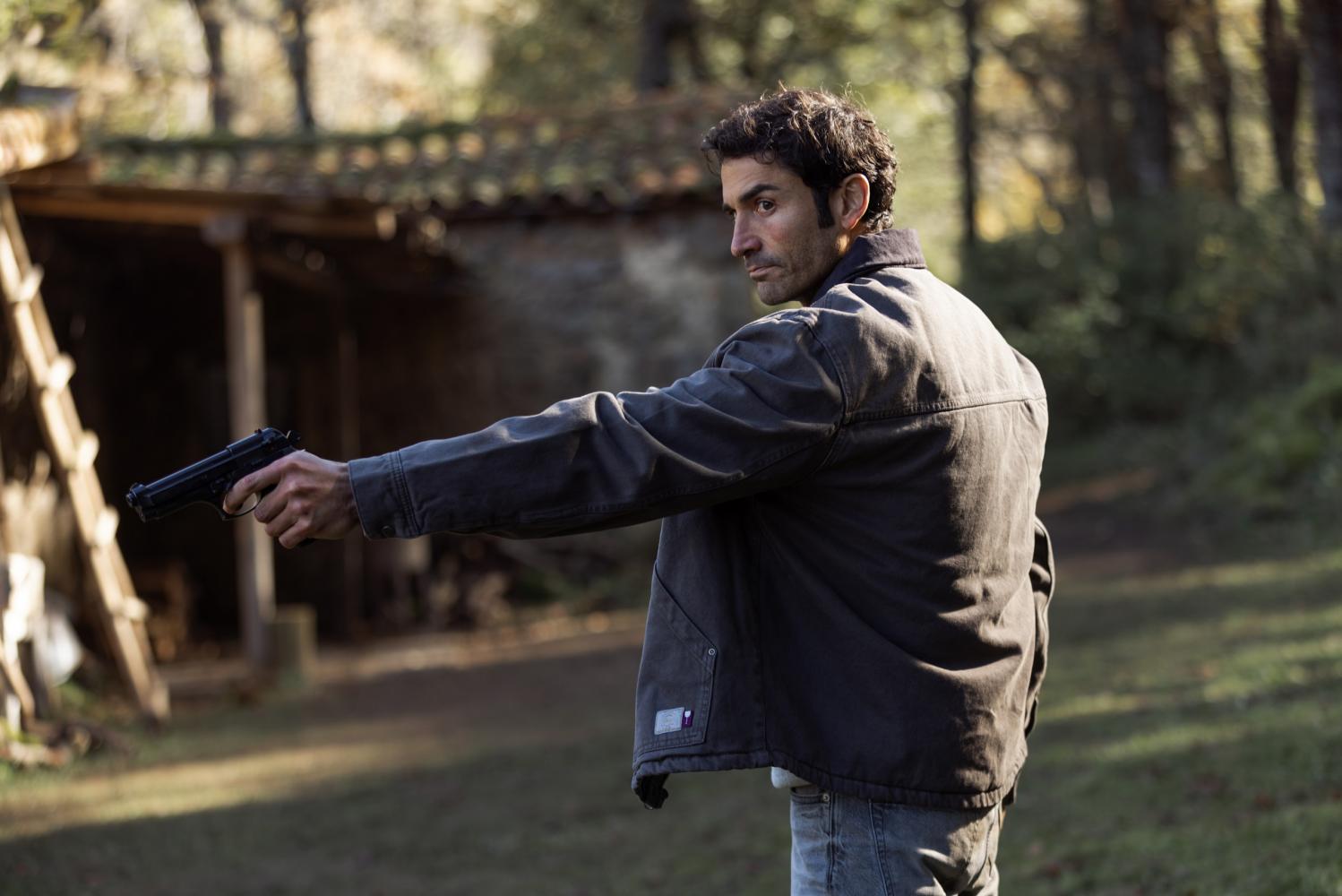
A scene from The Crystal Cuckoo.

A scene from The Crystal Cuckoo.

The Crystal Cuckoo follows Clara Merlo, played by Catalina Sopelana, a first-year medical resident who suffers a sudden and massive heart attack.

Her subsequent transplant gives her a second chance at life — yet it also awakens an unshakeable instinct she cannot ignore. She needs to uncover the identity of her donor. This search leads Clara to a small, enigmatic town, where she eventually learns that the heart now beating inside her belonged to a young man whose death is tied to an unresolved tragedy. Her arrival triggers a chain of events that unravels a past many residents believed was buried forever.

The concept initially feels familiar. Stories about organ recipients seeking information about their donors have appeared in films and series before — sometimes even veering into supernatural territory with visions and premonitions guiding the protagonist. What I appreciated here is The Crystal Cuckoo avoids that angle.

Instead, the heart becomes the narrative thread linking a series of mysterious disappearances, and the story leans heavily into the classic trope of a remote, tightly knit community hiding dark secrets.

The town itself is small, isolated and steeped in tradition. One of its strangest customs is an annual parade dedicated to honouring the people who have gone missing in the surrounding forest — a detail that is both intriguing and unnerving.

The imagery of townspeople dressed in elaborate, slightly eerie animal costumes adds to the atmosphere, creating visuals that are memorable precisely because of their strangeness. All of this builds a setting that feels drenched in sorrow and heaviness.

What stands out most in the town’s uneasy aura is the undefined sadness that lingers over everything. It’s visible in the main characters we follow and even in the small, incidental interactions with townspeople.

So many residents appear shaped — or damaged — by the community’s mysterious past. The series also captures the haunting, almost desolate beauty of the Spanish countryside, using its isolation as a thematic extension of the characters’ experiences.

However, this is a series that requires constant attention. The narrative jumps between multiple timelines throughout, and although these shifts eventually make sense, the execution is frequently jarring.

I found the structure somewhat clumsy: instead of allowing significant stretches of one timeline to play out before shifting to another, the show repeatedly cuts back and forth in short bursts. For a six-episode series, this rhythm undercuts the momentum it builds, creating disorientation rather than elegant complexity.

The pacing as a whole is uneven. The show begins slowly, then gathers real energy midway, only to lose that drive again as it approaches the finale. A major reveal arrives in Episode 4, and while this twist isn’t ineffective, the remaining two episodes struggle to maintain tension.

I don’t mean the entire final stretch is dull — there are still pockets of urgency, including pursuit sequences that generate genuine suspense. But the consistency of that tension dissipates. Instead, we get one episode that functions almost entirely as a flashback, followed by the conclusion.

The flashback does offer necessary context behind the earlier reveal, but it also attempts to reframe a character’s motivations in a way that feels questionable. I understand the narrative impulse to humanise or complicate a villain, but in this case, the attempt walks a fine line between explanation and justification.

I personally feel that certain actions remain inexcusable, no matter what hardships a character endured. The series seems torn between condemning the character’s choices and softening them, and that ambivalence weakens the emotional impact.

The constant time-jumping does allow the dual plotlines to develop in parallel, but the result is a rhythm that feels both uneven and occasionally frustrating. The performances themselves work — they create a mix of sympathetic figures, suspicious personalities, and morally murky characters — but the writing’s attempt to offer emotional understanding to one particular figure felt, to me, misplaced.

The ending is another area where the show falters. Ambiguity in an ending can be powerful, but here it feels less like deliberate design and more like a missed opportunity. What the show chooses not to depict in the final moments feels like a decision made to seem profound rather than to serve the story.

Another curious choice is the shifting focus of the narrative. Although Clara is positioned as the lead, the investigator Miguel — operating in the past timeline — emerges as the true driving force. His determination to solve the case becomes the emotional backbone of the series, which occasionally overshadows Clara’s arc in a way that seems structurally unintended.

Overall, The Crystal Cuckoo presents a premise with genuinely intriguing potential but delivers it with inconsistent execution. Its biggest reveal arrives too early, leaving the final episodes scrambling to maintain the momentum.

While there are moments of intensity, visually striking sequences and some well-crafted suspense, the series ultimately lands in a place that feels safe, expected and not quite as memorable as it could have been.

  • The Crystal Cuckoo
  • Starring Itziar Ituño, Catalina Sopelana, Alfons Nieto
  • Created by Laura Alvea and Juan Miguel del Castillo
  • Now streaming on Netflix

The football team that won over the nation

Monthongwittaya School’s big match. …

Monthongwittaya School's big match.
Monthongwittaya School’s big match.

Monthongwittaya School’s 7-a-side football team from Bang Nam Priao district of Chachoensao is now among Thailand’s most inspiring underdog stories, capturing national attention with their remarkable run in the 2025 7HD Football Champion Cup.

The small secondary school’s team, nicknamed the “Celtic of Bang Nam Priao” owing to its green jersey, has stunned Thai football fans with its fairy-tale run to the national final. The team fits its underdog image — no reputation, no ranking. Only a few expected the team to achieve much in a national tournament. Yet they defied the odds spectacularly.

Starting in the qualifying round of 503 teams on Oct 6, the team stunned the nation by defeating powerhouse teams such as Nakhon Ratchasima Municipality Sports School, Assumption Thonburi, Debsirin School, and Assumption College Sriracha.

Even though the team lost 2–1 to Chainat Provincial Administrative Organisation School in the final, they won the hearts of fans, businessmen, politicians, and influencers who rallied behind them. Their final match on Nov 8 at Supachalasai National Stadium drew around 30,000 fans while Channel 7HD reported a peak of 4.2 million concurrent viewers during the live broadcast.

Why did this grassroots football story become so popular? Because Monthongwittaya’s journey was not paved with rose petals, they travelled to matches in an old truck nicknamed Rot Khon Fun (the Dream Transport). This symbolised their perseverance, humble beginnings and their unexpected fighting spirit.

Of course, I’m one of the legion of fans and followed the team’s progress on social media. I watched interview clips of Sakon Kliengprasert, the team’s renowned youth football coach, who has developed some players for the Thai national team.

Now, in retirement, Coach Sakon has guided Monthongwittaya School to its first-ever appearance in the 7HD Football Champion Cup final. He is widely known as a “coachbuilder”. More than coaching on how to play and win, he instils discipline and moral values in his players.

Through social media, I have been able to follow these young footballers closely. From their interviews, it’s clear that they are determined and full of dreams — to become professional footballers and better people.

Some players in the team openly admit that they come from poor families; football for them is more than a hobby, but is seen as a passport to a better life. Such hope drives them to be disciplined, hard-working and clinical when they play. Like world-class athletes, they dream, even in their waking hours, of becoming champions.

I believe that their victories across so many games, defeating major schools along the way, were not the result of coincidence or luck. Rather, it was the outcome of passion, hard work, and grit under the guidance of Coach Sakon that brought them to this point.

What I found even more inspiring was how the team’s journey dominated national attention. Politicians, regardless of their political hues, influencers, and fans alike, were drawn to their performance, proving that football can unite, drive community, and create pride in the country.

Who stepped in to help them along their journey? Thai Smile Bus donated a 4.5-million-baht electric bus to replace their old truck, ensuring the team could travel safely and sustainably to future matches.

Pimradaporn Benjawattanapat, aka Pimrypie, the famous YouTuber and online seller, posted on her Facebook page after the final match on Nov 8 that Coach Sakon will receive 10,000 baht per month for life as a gesture of support.

Additionally, Deputy Prime Minister and Agriculture and Cooperative Minister Capt Thamanat Prompow donated 150,000 baht from his foundation to Monthongwittaya. He also ordered improvements to the school to encourage and support young athletes. It could not help but be noticed that Capt Thamanat’s actions have been perceived as a political move ahead of next year’s general election.

But Monthongwittaya’s rise offered a rare chance to bridge politics, community, culture, and sport in a single narrative. By helping the team, these figures are tapping into a national mood of hope, solidarity, and admiration for the underdog.

Monthongwittaya have become more than a football team. They have become a stage for Thailand’s leaders and opinion-makers to demonstrate empathy, relevance, and connection to the people. Their story reminds us that football is not just a game — it is a mirror reflecting society’s struggles and aspirations.

World nears climate tipping point

File photo dated May 10, 2024 shows …

File photo dated May 10, 2024 shows Sommay Singsura, a fisherman, is seen close to bleached corals near Chao Lao Beach, Chantaburi province, Thailand. (Photo: Reuters)

The consequences of climate tipping points are almost too big to imagine. The thought that, over the course of a few decades, the Amazon rainforest could become a savannah, or coral reefs could become extinct, seems like science fiction. Given how many people have been lulled into a false sense of control over the environment, it is perhaps even harder to grasp that incremental changes in temperature and rainfall irreversibly reorganise planetary-scale systems.

But data from ever-more advanced Earth system models indicate that these tipping points are fast approaching or may, in the case of coral reefs and the West Antarctic Ice Sheet, already be in the rear-view mirror. And it is not at all clear that climate interventions could make the problem go away.

Institutions at all levels are not prepared to manage such possibilities. The current processes for synthesising climate science into policy recommendations are stronger for global-scale changes than they are for the local insights that a city planner in Jakarta, a finance minister in Brazil, or a farmer in the Sahel needs. That is because these processes are better equipped to highlight the areas of agreement than they are to map the terrain of uncertainty.

Most infrastructure plans, policy frameworks, financial markets, and risk-management strategies do not recognise the possibility of crossing climate tipping points, which are foreseeable but not predictable. This makes it difficult to weigh investments in immediate needs against the future effects of such spending.

The lack of capacity to respond to climate tipping points must be addressed now. Reducing the risk of crossing them poses a global collective-action problem, especially because they cover different domains. For example, many factors contribute to coral reef collapse, including global warming, ocean acidification, ecosystem loss, pollution runoff, and overfishing. And yet climate science, biodiversity research, pollution monitoring, and resource management are consigned to separate silos, leaving nobody responsible for monitoring and mitigating tipping dynamics.

Building the institutional architecture for tipping-point governance comes down to three essential tasks. The first is continuous tracking of tipping dynamics — including human and social dimensions — and the development of a shared, actionable understanding of them. The second is increased recognition of the risks, which means ensuring that they are central considerations in government and business decision-making. Lastly, it is important to establish the capacity for timely, coordinated response across policy domains, sectors, and scales.

In a concept note for the Global Tipping Points Report 2025, we show how these capacities can be developed through regional Tipping Element Monitoring and Response Facilities (TEMRFs) which would share information and coordinate action as needed. Each TEMRF would focus on a specific tipping element and be regionally grounded — but globally networked. These facilities could weave together existing regional frameworks for cooperation, including networks of scientists, policymakers, city governments, Indigenous peoples, and diplomats.

TEMRFs can learn from other initiatives that have developed new ways of synthesising climate science for decision-makers, such as the World Climate Research Programme’s My Climate Risk Lighthouse Activity, the Arctic Monitoring and Assessment Programme, the Science Panels for the Amazon, the Congo Basin, and Borneo, and the Amazon Regional Observatory. These programmes have demonstrated how to represent systemic risks in a tangible way that is tailored to different stakeholders. TEMRFs should follow their example by aggregating information from a wide range of sources — such as quantitative models, satellite data, and indigenous knowledge — and creating a comprehensive picture for various audiences.

Political and business leaders, with their focus on election cycles and quarterly earnings, need contextual frameworks that recognise and incorporate the risks of crossing climate tipping points. To that end, TEMRFs will have to consider decades-long time horizons and ensure that tipping elements are a part of policy frameworks for infrastructure planning, financial regulation, and development policy. Tough trade-offs — between short-term growth and long-term resilience, and between preserving the status quo and adapting to new realities — will be unavoidable.

Lastly, TEMRFs must organise responses at a scale and pace that matches the urgency of the situation. The Amazon rainforest spans nine countries, and ocean currents connect continents; both have tipping dynamics with local to global impacts unfolding over complicated time scales. This requires institutions capable of coordinating action across jurisdictions, bridging the public and private sectors, and responding flexibly to changing conditions.

Regional bodies are well positioned to achieve these objectives because they are close enough to see the effects of crossing tipping points, and large enough to devise and implement coordinated cross-border measures. Organisations like the Nordic Council of Ministers or the Amazon Cooperation Treaty Organisation could play important roles in developing this architecture, drawing on their experience of navigating evolving concerns with incomplete mandates. Regional development banks and alliances around shared interests such as the International Coral Reef Initiative can also be good starting points.

There is a deeper imperative for strengthening regional capacities. Global efforts often falter under the weight of profound inequities and lingering mistrust — both between and within countries — about whose interests are really being served. In this context, Earth system tipping points can easily be framed and perceived as yet another agenda pushed from the Global North to discipline development elsewhere. TEMRFs chart a different course: creating space for regions to claim their voice, cultivate their own scientific capabilities and grounded insights, and work with stakeholders across scales to shape development pathways rooted in their own geographies and the Earth systems that sustain them. TEMRFs offer a way to connect global ambition with regional realities — on terms defined by those who live them. ©2025 Project Syndicate

How many must perish?

The deaths of at least tw…

How many must perish?

The deaths of at least two Thais in Cambodia’s Poipet in the past week attest to the fact that the transnational call centre networks remain active and strong, as the government in Phnom Penh shamefully fails to keep its commitment to uprooting this heinous criminality.

The two, Suda Chonlaket and Sarawut (surname not released), were said to be working for one of these networks. The bruises on their bodies suggest they were tortured for failing to meet network revenue targets.

A rescue organisation believes that five people might have been murdered by the network in recent weeks. At print time, Suda’s husband, also a network employee, remains unaccounted for.

Meanwhile, another 14 Thai citizens who claimed they were lured into working for scam syndicates in Cambodia were rescued and repatriated earlier this week by a joint rescue team.

However, like the cases of Suda and Sarawut, there are no reports of crime bosses, said to be members of a Chinese mafia, being arrested in the operation.

It’s an open secret that Cambodian authorities, from top to bottom, have allegedly been paid under the table by the crime bosses.

Allegedly, the ill-gotten gains systematically go to those in government, as the grey business has expanded extensively, so much so that Cambodia has earned the reputation of being one of the largest online scam hubs in the world.

Some high-profile bosses, like Yim Leak — a wealthy businessman blacklisted by the US for his grey businesses — have close connections with the influential Hun family in Cambodia. There are also allegations that Yim Leak, as well as his fellow tycoons, also had strong ties to politicians and businesspeople in Thailand.

More than just a few young Thais working for these networks have died over the past years. There have been no investigations, as Cambodian authorities have just claimed the workers plunged to their death or had heart failure, a very unusual cause of death for people of working age. Yet, it’s reported that Thai authorities have received hardly any cooperation from their Cambodian counterparts — even when relations were warm and cordial — in cracking down or conducting probes into those unusual deaths.

Unlike the case of the South Korean student who was abducted and killed by gangsters in Cambodia, which triggered global attention last month, those unusual deaths of the Thai citizens largely faded from public attention. But such irregularities must not be allowed to go on.

Phnom Penh must be reminded of its obligations to crack down on transboundary scam networks. In fact, it’s one of the four prerequisites it agreed to before entering into the peace deal with Thailand last month.

Thailand must reinforce its efforts to combat transboundary crime and keep the global community engaged, taking Cambodia to task for failing to dismantle criminal networks as promised.

At the same time, Thai authorities must clean up Thailand’s own backyard by accelerating operations against scam networks so that no criminal bosses escape the law.