A still from the social media video showing the confrontation between the vendor and the customer. (Photo: @besttawankim)
A viral social media video filmed at Chatuchak’s Red Building market has resulted in the ending of a vendor’s lease over a confrontation with a customer.
The customer said she was browsing with her family and picked up a metal box to show her child. The vendor had responded with: “You’d be smarter if you asked first,” and later added: “If you don’t buy something, don’t touch it. There’s a no-touching sign right there, can’t you see?”
The customer said she apologised, but saw only an English-language “Thank you” sign, not a “Do not touch” notice.
The vendor then allegedly approached nearby shops to criticise the customer, claiming she had opened the metal box and not closed it. The vendor was also accused of telling the customer: “If you have no money, don’t come here and touch things.”
When asked about these remarks, the vendor claimed to have been joking and apologised for the noise level.
The video had over five million views, with many negative comments and shared experiences from other customers claiming similar encounters with the vendor.
On Tuesday, Red Building Wintage Chatuchak announced that following discussions with the vendor, both parties agreed to terminate the lease with immediate effect.
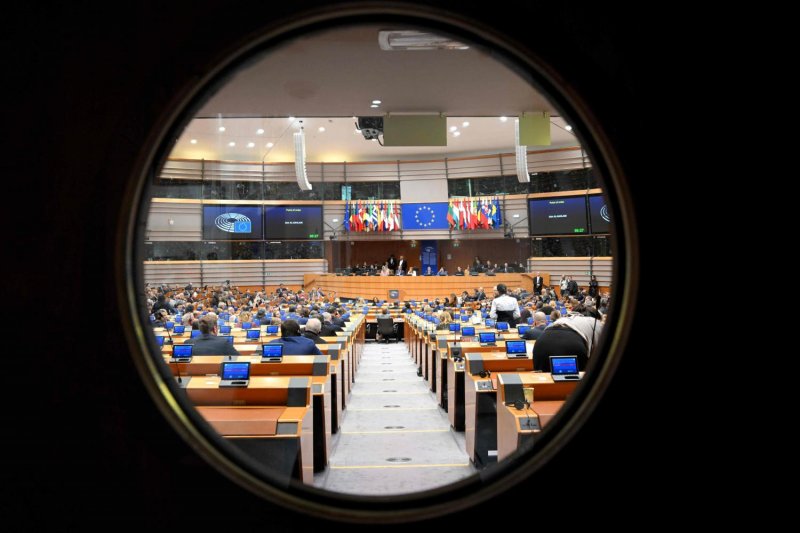
File photo dated Nov 12 shows members of the European Parliament attending a session in the hemicycle in Brussels. (Photo: AFP)
Europe and the Indo-Pacific find their futures increasingly interlinked in a world marked by geopolitical shifts, economic uncertainty, and intensifying strategic competition. Challenges ranging from growing pressure on the multilateral system intensified by Russia’s war of aggression against Ukraine, to the weaponisation of trade and technology, and the accelerating climate crisis, are not dividing our regions. They bring us closer together. There is a greater need than ever for collective action to effectively address these common challenges.
When the European Union launched its Strategy for Cooperation in the Indo-Pacific in September 2021, the world looked different. Four years on, the strategy has become the backbone of a stronger, more engaged European presence in the region. The 4th EU Indo-Pacific Ministerial Forum in Brussels today and tomorrow is focusing on our cooperation to support our joint stability, prosperity and sustainability, while upholding international law, open trade and shared values.
Within the forum, the EU High Representative/Vice-President will convene a high-level event on the protection of critical maritime infrastructure. This underscores Europe’s commitment to working with Indo-Pacific partners to safeguard vital sea lanes and undersea networks that underpin global stability and connectivity.
The EU is stepping up its contribution to the security of the Indo-Pacific through new security partnerships and regular security dialogues, including on hybrid threats. Cooperation in naval activities such as Operation ASPIDES and Operation ATALANTA, as well as initiatives such as Critical Maritime Routes in the Indo-Pacific (Crimario) aim to ensure freedom of navigation and promote maritime security from Europe to the Indo-Pacific through the Red Sea.
Trade agreements with Japan, South Korea, Singapore, Vietnam, New Zealand, and Kenya have already deepened economic integration, while negotiations have concluded with Indonesia and are advancing with Australia, India, Thailand, the Philippines, among others.
The EU’s Global Gateway initiative is delivering sustainable, high-quality infrastructure, working hand in hand with partners in the region and involving the private sector. Together with Thailand, our objective is to promote secure connectivity, mobilise sustainable investments while fostering the twin green and digital transition, and delivering the sustainable development goals.
Together, we are promoting a model of growth that is environmentally sustainable, inclusive, and climate resilient. The EU also shares the Indo-Pacific’s ambition for a green and blue future. From supporting the 2050 Strategy for the Blue Pacific Continent to advancing Green Alliances with Japan, Kenya, Philippines, Republic of Korea and 15 Pacific island countries as well as Just Energy Transition Partnerships with Indonesia, South Africa and Vietnam. Europe stands with Indo-Pacific nations in their efforts to build climate resilience, protect biodiversity, and achieve net zero by 2050.
Europe’s engagement in the Indo-Pacific is not only about policies but also about people. Over 23,000 students and professionals have already benefited from EU-funded exchanges since 2021. The EU’s cultural, educational, and health partnerships and Erasmus+ mobility and research collaboration are building the foundations of lasting friendship and trust between our societies.
In an increasingly fragmented and polarised geopolitical environment, building and consolidating partnerships that reduce our common vulnerabilities and strengthen our mutual resilience are central pillars of the EU’s vision and engagement in the world.
The EU and its 27 member states have recently reaffirmed that the EU’s strategic engagement in the Indo-Pacific aims to uphold the multilateral system and the rules-based international order with full respect for international law, including the United Nations Convention on the Law of the Sea. Respect for sovereignty and territorial integrity of all countries remains the cornerstone of a future stable and peaceful world. Russia’s illegal war of aggression against Ukraine is a stark reminder of the fundamental importance of standing up for international law together.
In an era of growing uncertainty, the EU and its member states are reliable, long-term partners. The Indo-Pacific Ministerial Forum in Brussels this week will be another opportunity to deepen our cooperation and work together to turn today’s challenges into opportunities for shared peace, resilience and prosperity.
Central Investigation Bureau (CIB) police raid a Chon Buri apartment on March 11, arresting a 54-year-old foreigner (middle, in blurred face), who was allegedly selling sexually explicit images of children on the dark web. (Photo courtesy of CIB)
A key element of child protection is to amplify the business sector’s participation as a partner in the process. This is particularly challenging in regard to the expanding mass of child sexual exploitation and abuse materials (CSAM) in a world of digitalisation, algorithms and artificial intelligence (AI).
A recent report backed by the UN concerning the impact of AI on child sexual exploitation notes that Cyber Tipline received some 36 million CSAM reports in 2023. There are the traditional forms of exploitation, such as photos of children exploited in prostitution, pornography and human trafficking, now coupled with more modern forms, such as suggestive texts used for grooming children and livestreaming.
Sextortion, namely blackmail threatening children with exposure of sexual materials involving them, is also a worrying phenomenon in the expansive crucible of online scams and deception.
The advent of AI complicates the scenario. It can “nudify” ordinary pictures of children and adults by converting them into sexualised images. This might be ordered by a text to create an abusive new image or by manipulating an older image to become sexualised.
There then arises the question: what are the costs and benefits for the sector in harnessing its cooperation more effectively?
The preferred entry point is to follow the UN’s Guiding Principles on Business and Human Rights, which underline the business sector’s duty to respect human rights, especially through due diligence measures, and to share with the state the duty to remedy the harm to target groups. The state itself is under the duty to protect human rights, such as by adopting good laws.
There are at least two approaches to the due diligence advocated. On the one hand, voluntary measures on the part of the business sector can be promoted. Voluntary action from the sector is based on self-regulation (“soft law”) such as business codes of conduct, community standards, terms of service (TOS) or contractual terms linked with TOS.
They can be coupled with oversight boards and personnel for content moderation, and technological tools and filters to block illegal and harmful content. The sector is encouraged to produce due diligence reports as a monitoring tool for harm prevention and mitigation, to use “notice and take down” requests to delete such content, and to make a range of remedies available.
On the other hand, the state or a regional organisation to which it belongs (such as the European Union) might seek to impose stricter measures by means of legislation (“hard law”) such as online safety and child protection laws, a digital services act or AI related-regulations, with mandatory reporting by the business sector to oversight mechanisms for the purpose of transparency, subject to hefty fines in the case of non-compliance. Australia’s online safety law, effective from 2022, follows this approach. There might also be a mix of the hard law and soft law approaches.
How expensive is it for the business sector to be involved in such measures? Disaggregation of the various measures shows that expenses vary and do not need to be high.
For example, including a provision on child protection in the contractual terms of service does not necessarily impose an additional cost. Paradoxically, the cost might be incurred by the consumer who clicks “agree” without reading the contract terms! This implies that contractual terms need to be more reader-friendly and child-sensitive.
How expensive is adopting codes of conduct or community standards with provisions on child protection, and how costly is the oversight board, as well as the content moderators who help screen and take down illegal and harmful content?
Interestingly, one major digital platform gave its board about US$150 million (4.9 billion baht) a couple of years ago to help oversee the flow of materials on the internet and moderate abusive content.
However, the resources of that platform are in the billions. As for an individual content moderator, there is also subcontracting to technicians in developing countries to save costs, and a key consideration is the psychological support these people may need to mitigate the impact of having to review a plethora of abusive materials.
With regard to requests to take down objectionable content as part of a “notice and take down” channel, it should cost nothing (or very little) to the platform or the complainant; the request can be from the user to the platform or from the platform to the person/group responsible for the content or loading it.
How costly are the technological tools, such as filters, for identifying and eliminating these materials?
Some are free under open-source licences, while others can be costly. They range from filters to identify old abusive material, namely “hash matching”, to language processing tools to identify sextortion. A tool for assessing the possibility of AI producing offensive material is known as “red teaming”. At the same time, there is also a tool for labelling or watermarking AI-generated material for transparency, offered free to some developers.
As for due diligence reports, the cost of preparation by experts ranges from several thousand dollars for small platforms to substantial sums for mega-platforms. However, failure to submit such a report under hard law systems may result in substantial fines. The bottom line is that there is a need to integrate child protection measures into digital platforms and operations through a variety of means.
This is not necessarily expensive, as some facilities are free, e.g., various filters and technological tools available as open source. Bigger operations may need to meet higher standards, such as mandatory reporting requirements. Small operations may need assistance and incentives that the larger operations can offer, such as peer cooperation.
Where soft law (such as community standards) does not work or has a poor impact, a hard law (such as an online safety law, with mandatory reporting and related remedies) may be required. Multi-stakeholder action, including the business sector, is thus essential for child protection, with age-appropriate and gender-sensitivity.
Intrinsically, it makes good business sense for the sector to integrate child protection into its platforms because it is the right thing to do, builds responsible consumerism, and prevents harm that could lead to exponential accountability.
Jeremy Allaire, CEO and co-founder of the Circle Internet Group, reacts to the price of first trades, on the day of the company’s IPO, at the New York Stock Exchange in New York, on June 5. (Photo: Reuters)
Stablecoins are on the rise in global finance, promising to facilitate faster and cheaper payments and lead a wave of financial innovation. But what if that wave erodes governments’ control over money and debt, fundamentally reshaping how modern economies manage inflation, stabilise markets, and finance public spending?
This prospect has received surprisingly little public attention. As digital tokens backed by assets such as dollar deposits or US Treasury bills, stablecoins are redeemable on demand. When demand for them rises, issuers create new tokens and buy more Treasuries; when investors redeem tokens, those issuers must sell Treasuries. Stablecoin issuers thus are conducting their own miniature version of what the US Federal Reserve does: creating and withdrawing liquidity from the financial system. But unlike the Fed, they do so for profit, not public purpose.
The stock of dollar-denominated stablecoins outstanding has skyrocketed from US$138 billion (4.5 trillion baht) at the start of 2024 to $308 billion in October this year, and some financial institutions project that this figure could reach $2 trillion by the end of the decade. While the Bank for International Settlements (BIS) cautions that stablecoins fall short of serving the same functions as money, because they are not strictly interchangeable with central-bank currency, the passage of the US GENIUS Act may change these perceptions.
To the extent that stablecoins are seen as money, issuance backed by US Treasuries becomes a form of monetising debt. What this means for the money supply and the supply of loanable funds, however, depends on who is buying and selling. Domestic purchases will increase the money supply by the amount purchased, because the buyers get money-like stablecoins while the sellers of the backing assets get money from the buyers. But the total supply of loanable funds will remain unchanged. By contrast, if the stablecoin investor is in a country with limited holdings of US Treasuries, stablecoins may create capital inflows into the US to buy the Treasuries as backing assets, thereby increasing the supply of loanable funds.
Stablecoins also may change how policy signals reach the real economy. Traditional tools, like the federal funds rate or the interest the Fed pays on bank reserves, work through the banking system. But if households and firms hold stablecoins instead of bank deposits, these tools lose traction. An interest-rate hike may restrain bank credit but leave stablecoin liquidity untouched. Overall financial conditions would no longer move in sync with the Fed’s policy decisions. And as stablecoins grow, this private influence on liquidity could weaken the Fed’s grip on short-term interest rates, turning monetary policy into a reactive exercise rather than a steering mechanism.
Moreover, the government’s seigniorage (its profit from creating money) is slipping away. The interest earned on Treasury assets backing stablecoins now flows to private issuers — such as Circle and Tether — instead of to the public purse. Over time, this pattern could reduce fiscal revenues and weaken coordination between monetary and fiscal policy. The BIS has shown that the stablecoin industry is already affecting short-term interest rates and Treasury-market liquidity, which means that the Fed must now monitor the actions of private issuers that it cannot control.
Stablecoins don’t just disrupt monetary policy; they also reshape fiscal dynamics. Every dollar of stablecoin issuance translates into more demand for government debt. As automatic buyers of Treasury bills, stablecoin issuers are creating a captive market that suppresses yields.
Lower borrowing costs may sound appealing, but make no mistake: this is a form of financial repression, with private savings channelled into government debt at below-market rates. While the Treasury gets cheaper financing, the signals that normally reflect fiscal risks are suppressed. To the extent that real interest rates are below the rate required to maintain price stability, this will lead to higher inflation over time, or to higher short-term rates as an offset. The Treasury may look more fiscally sound than it is, because stablecoin demand has pushed down yields.
Yet if confidence in stablecoins falters and redemptions surge, the same mechanism works in reverse: issuers must sell Treasuries, yields will spike, and fiscal pressure will build. Worse, since stablecoin issuers would have no formal access to the Fed’s emergency lending facilities in the event of a crisis, they would have to dump Treasuries. If the size of the stablecoin market lives up to expectations, the Fed would have to intervene to restore stability. Once again, the Fed would be backstopping private money that it doesn’t control — a repeat of the post-2008 “shadow banking” crises. Having elbowed its way partly into the regulatory tent, the politically connected crypto industry will have become too big to fail.
The more that stablecoin issuance grows, the less control the Fed and the Treasury will have over the levers of liquidity, debt pricing, and money creation. A handful of private companies will become “shadow central banks,” determining how much digital money circulates and where it flows. They will profit from interest on Treasury assets while relying on the public sector for stability during crises. Once again, the gains will be privatised, and the losses socialised.
The fresh appointment of former judge Narong Klunwarin as the new Election Commission (EC) chairman comes at a crucial time, with the country set to hold major election events, including national polls tentatively scheduled for June.
Other key contests include the Bangkok governor election in July and tambon administration organisation (TAO) elections nationwide. The national polls are under particular scrutiny as they will be held alongside a referendum on rewriting the charter.
On a 4–3 vote, Mr Narong, 65, was selected to replace incumbent EC chairman Itthiporn Boonpracong, whose term expired last August. He beat one other contender, Narong Rakroi, former governor of Uthai Thani, a political stronghold of the Bhumjaithai Party.
Mr Narong has an impressive track record. He served as chief justice of the Central Bankruptcy Court (2019–21) and later as a Supreme Court judge (2021–23).
Regardless of his credentials, his new role will be a formidable challenge given the fluidity of Thai politics. More importantly, he will face the pressure of potential political interference while managing high public expectations.
The new EC chairman will also face a baptism of fire over the high-profile allegations of senatorial poll rigging.
Many of the suspects who won their races in last year’s selection and are now under scrutiny are so-called “blue senators” — those allied with the Bhumjaithai Party. Can the poll agency make progress in probing more than 130 senators and key politicians in this long-running controversy?
Despite the money trail and other evidence provided by the Department of Special Investigation (DSI), the EC’s probe has moved at a glacial pace. Worse than the delays are the irregularities that have emerged.
This week, the EC had to suspend an officer accused by an activist of receiving a 50-million-baht bribe last year in connection with the Senate election.
The DSI has launched a parallel investigation into money laundering related to the alleged rigging. It has questioned more than 1,200 witnesses and plans to summon eight people — including some senators — to hear money-laundering charges this week.
Perceived flaws in the EC’s investigation have prompted a group of reserve senators to file a case against the eight individuals and a former EC chief with the Central Criminal Court for Corruption and Misconduct.
On Tuesday, the group lodged an appeal with the Supreme Court against its dismissal of their earlier petition to suspend 136 sitting senators allegedly involved in last year’s contested Senate selection.
Led by Surachai Pornjindachote, the group said it was confident the original ruling contained several factual and legal errors that they aim to address in their appeal, particularly their argument that the 2024 Senate election has not yet been completed, as complaints remain unresolved.
All eyes are now on Mr Narong, who faces an uphill battle in restoring public confidence in the poll agency.
As a former judge, he is expected to use his expertise to strengthen the EC’s investigative processes to ensure they are professional, neutral and transparent.
Above all, he must accelerate the pace of the investigations.
As a judge, he will know well that justice delayed is justice denied.
The fresh appointment of former judge Narong Klunwarin as the new Election Commission (EC) chairman comes at a crucial time, with the country set to hold major election events, including national polls tentatively scheduled for June.
Other key contests include the Bangkok governor election in July and tambon administration organisation (TAO) elections nationwide. The national polls are under particular scrutiny as they will be held alongside a referendum on rewriting the charter.
On a 4–3 vote, Mr Narong, 65, was selected to replace incumbent EC chairman Itthiporn Boonpracong, whose term expired last August. He beat one other contender, Narong Rakroi, former governor of Uthai Thani, a political stronghold of the Bhumjaithai Party.
Mr Narong has an impressive track record. He served as chief justice of the Central Bankruptcy Court (2019–21) and later as a Supreme Court judge (2021–23).
Regardless of his credentials, his new role will be a formidable challenge given the fluidity of Thai politics. More importantly, he will face the pressure of potential political interference while managing high public expectations.
The new EC chairman will also face a baptism of fire over the high-profile allegations of senatorial poll rigging.
Many of the suspects who won their races in last year’s selection and are now under scrutiny are so-called “blue senators” — those allied with the Bhumjaithai Party. Can the poll agency make progress in probing more than 130 senators and key politicians in this long-running controversy?
Despite the money trail and other evidence provided by the Department of Special Investigation (DSI), the EC’s probe has moved at a glacial pace. Worse than the delays are the irregularities that have emerged.
This week, the EC had to suspend an officer accused by an activist of receiving a 50-million-baht bribe last year in connection with the Senate election.
The DSI has launched a parallel investigation into money laundering related to the alleged rigging. It has questioned more than 1,200 witnesses and plans to summon eight people — including some senators — to hear money-laundering charges this week.
Perceived flaws in the EC’s investigation have prompted a group of reserve senators to file a case against the eight individuals and a former EC chief with the Central Criminal Court for Corruption and Misconduct.
On Tuesday, the group lodged an appeal with the Supreme Court against its dismissal of their earlier petition to suspend 136 sitting senators allegedly involved in last year’s contested Senate selection.
Led by Surachai Pornjindachote, the group said it was confident the original ruling contained several factual and legal errors that they aim to address in their appeal, particularly their argument that the 2024 Senate election has not yet been completed, as complaints remain unresolved.
All eyes are now on Mr Narong, who faces an uphill battle in restoring public confidence in the poll agency.
As a former judge, he is expected to use his expertise to strengthen the EC’s investigative processes to ensure they are professional, neutral and transparent.
Above all, he must accelerate the pace of the investigations.
As a judge, he will know well that justice delayed is justice denied.
The fresh appointment of former judge Narong Klunwarin as the new Election Commission (EC) chairman comes at a crucial time, with the country set to hold major election events, including national polls tentatively scheduled for June.
Other key contests include the Bangkok governor election in July and tambon administration organisation (TAO) elections nationwide. The national polls are under particular scrutiny as they will be held alongside a referendum on rewriting the charter.
On a 4–3 vote, Mr Narong, 65, was selected to replace incumbent EC chairman Itthiporn Boonpracong, whose term expired last August. He beat one other contender, Narong Rakroi, former governor of Uthai Thani, a political stronghold of the Bhumjaithai Party.
Mr Narong has an impressive track record. He served as chief justice of the Central Bankruptcy Court (2019–21) and later as a Supreme Court judge (2021–23).
Regardless of his credentials, his new role will be a formidable challenge given the fluidity of Thai politics. More importantly, he will face the pressure of potential political interference while managing high public expectations.
The new EC chairman will also face a baptism of fire over the high-profile allegations of senatorial poll rigging.
Many of the suspects who won their races in last year’s selection and are now under scrutiny are so-called “blue senators” — those allied with the Bhumjaithai Party. Can the poll agency make progress in probing more than 130 senators and key politicians in this long-running controversy?
Despite the money trail and other evidence provided by the Department of Special Investigation (DSI), the EC’s probe has moved at a glacial pace. Worse than the delays are the irregularities that have emerged.
This week, the EC had to suspend an officer accused by an activist of receiving a 50-million-baht bribe last year in connection with the Senate election.
The DSI has launched a parallel investigation into money laundering related to the alleged rigging. It has questioned more than 1,200 witnesses and plans to summon eight people — including some senators — to hear money-laundering charges this week.
Perceived flaws in the EC’s investigation have prompted a group of reserve senators to file a case against the eight individuals and a former EC chief with the Central Criminal Court for Corruption and Misconduct.
On Tuesday, the group lodged an appeal with the Supreme Court against its dismissal of their earlier petition to suspend 136 sitting senators allegedly involved in last year’s contested Senate selection.
Led by Surachai Pornjindachote, the group said it was confident the original ruling contained several factual and legal errors that they aim to address in their appeal, particularly their argument that the 2024 Senate election has not yet been completed, as complaints remain unresolved.
All eyes are now on Mr Narong, who faces an uphill battle in restoring public confidence in the poll agency.
As a former judge, he is expected to use his expertise to strengthen the EC’s investigative processes to ensure they are professional, neutral and transparent.
Above all, he must accelerate the pace of the investigations.
As a judge, he will know well that justice delayed is justice denied.
Ukraine is about to enter its fourth winter of war with Russia. The fleeting hopes for an American-brokered ceasefire and an end to the grinding conflict have faded as the days grow shorter, the nights grow colder and the shadows grow longer.Since Vlad…
Ukraine is about to enter its fourth winter of war with Russia. The fleeting hopes for an American-brokered ceasefire and an end to the grinding conflict have faded as the days grow shorter, the nights grow colder and the shadows grow longer.
Since Vladimir Putin launched the invasion in February 2022, the war has seen seesaw battles and fluctuating morale. Russia, despite its superior numbers, has failed to secure a decisive victory, while Ukrainian defenders — despite their resolve and bravery — are reaching breaking point in sectors of the long and largely static frontline.
Ukraine’s resilience is tested daily by withering Russian air raids, some involving more than 450 lethal drones, aimed at destroying and degrading power-plant infrastructure and killing civilians. Kyiv remains a primary target, but countless cities across the country — which is roughly the size of the US state of Texas — face relentless strikes.
Ukraine has responded by hitting a key oil terminal in the Russian port of Novorossiysk, causing infrastructure damage and igniting a fire.
It is no cliché to say the trenches resemble the First World War, with two armies facing each other as artillery thuds and gunfire pierces the day. What is different, of course, is the scale of drone warfare wreaking widespread destruction. In October alone, Russia launched 268 ballistic missiles and 5,300 Iranian-made Shahed drones at Ukraine. Moscow has been targeting electric and gas facilities in eastern Ukraine near the disputed Donbas region, plunging millions into darkness.
“As civilians in Ukraine head into another winter, the increase in attacks on energy infrastructure and resulting power outages heightens risks for the population,” said Danielle Bell, head of the United Nations Monitoring Mission in Ukraine.
Civilian casualties from January to October 2025 were 27% higher than during the same period last year. “The number of casualties for the first ten months of 2025 (12,062) has already exceeded the total for all of 2024 (9,112),” the report said. Since Russia’s full-scale invasion, there have been 53,006 civilian casualties, including 14,534 deaths, according to UN monitors.
These figures do not include the millions of displaced people and Ukrainian refugees.
UN Secretary-General António Guterres again urged a full, immediate and unconditional ceasefire as the first step towards a just and lasting peace that respects Ukraine’s sovereignty, independence and territorial integrity.
Yet in the midst of the conflict, the number of Ukrainian men of military age leaving for Europe has risen sharply. German Chancellor Friedrich Merz said: “I asked the Ukrainian president to ensure that young men from Ukraine in particular do not come to Germany in ever-increasing numbers, but rather serve in their own country.” He called for a halt to the nearly 2,000 military-age Ukrainians entering Germany each week.
Even before the war, Ukraine had long struggled with corruption. Recently, close associates of President Volodymyr Zelensky were charged in a US$100 million embezzlement case involving the energy sector. Several ministers implicated in the wrongdoing are believed to be close to the president.
Corruption is corrosive in any country, especially one engaged in a life-or-death struggle. Transparency International ranks Ukraine 105th out of 180 countries; Russia stands at 154, near the top of the global corruption index.
Meanwhile, eight Nordic and Baltic countries have contributed $500 million to an air-defence programme for Ukraine. The Trump administration has pressed NATO partners to share the burden through the “Prioritized Ukraine Requirement List” (PURL), under which allies purchase US-made equipment to send on to Ukraine.
“Denmark is helping to ensure that Europe takes even greater responsibility for making critical American weapons capabilities available to Ukraine. The joint Nordic-Baltic donation package shows that we stand together in support of Ukraine. Continued support for Ukraine is directly linked to Europe’s security,” said Danish Defence Minister Troels Lund Poulsen. US supplies to Ukraine, however, have significantly depleted Washington’s weapons stockpiles for other contingencies.
Ukraine is about to endure its fourth winter of war — as many as this former Soviet republic faced during the Second World War. It is time for the United States and Europe to redouble their efforts to secure a ceasefire and initiate peace talks.
Female customers from China take photos during a performance at Muscle Girls, a fitness-themed bar, in Tokyo, on July 25, 2025. (Photo: Reuters)
Chinese airlines have recorded about 491,000 cancellations of tickets to Japan since Saturday after Beijing advised citizens to avoid travelling there amid a diplomatic spat, according to an aviation analyst.
The percentage of flights affected skyrocketed to 82.14% on Sunday and 75.6% on Monday, according to independent analyst Li Hanming, citing his research data covering all mainland China-based airlines.
“The flight-ticket cancellations [on Sunday] were 27 times that of new bookings, which shows safety concerns are the dominating factor for travel,” he said.
On Friday, after Beijing’s warning to Chinese travellers, airlines offered full refunds for flights to Japan.
China-Japan tensions had escalated over Japanese Prime Minister Sanae Takaichi’s suggestion on Nov 7 that Tokyo could deploy its military forces in the event of a conflict in the Taiwan Strait.
Li said Shanghai-Tokyo and Shanghai-Osaka area flights were most affected by the cancellations. He estimated that total losses from refunded tickets, 70% of which were round-trip, were in the billions of yuan.
Chinese carriers were affected more than Japanese airlines, as they dominate the market.