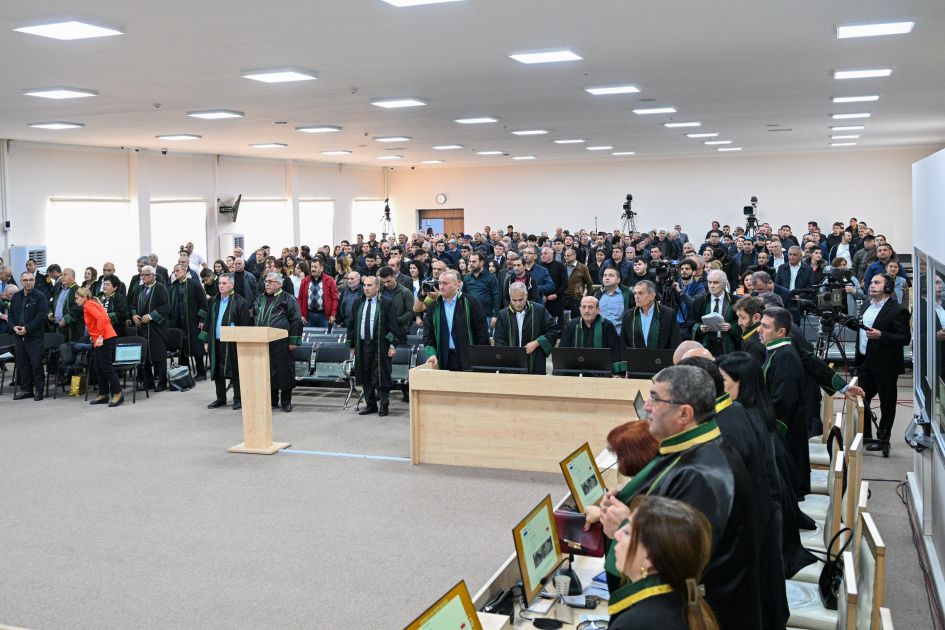
The open court session in the criminal cases against citizens of
the Republic of Armenia – Arayik Harutyunyan, Arkadi Ghukasyan,
Bako Sahakyan, Davit Ishkhanyan, David Babayan, Levon Mnatsakanyan,
and others—accused of committing crimes against peace and humanity,
war crimes, including the preparation and conduct of an aggressive
war, genocide, violation of the laws and customs of war, as well as
terrorism, financing of terrorism, violent seizure of power,
violent retention of power, and numerous other crimes as a result
of Armenia’s military aggression against Azerbaijan, continued on
November 13.
The court session at the Baku Military Court, chaired by Judge
Zeynal Agayev and composed of Jamal Ramazanov and Anar Rzayev (with
reserve judge Gunel Samadova), provided each accused person with an
interpreter in the language they know, as well as defense
lawyers.
The session was attended by the accused persons, their
defenders, some of the victims, their legal successors and
representatives, as well as prosecutors upholding the state
prosecution.
The court session continued with the closing statements of the
prosecutors upholding the state prosecution.
Tughay Rahimli, Assistant to the Prosecutor General on special
assignments, spoke and expressed his position on the
characterization of the criminal acts in the charges brought
against the accused persons.
He noted that UN Security Council Resolutions 822, 853, 874, and
884 confirm that the sovereign territories of the Republic of
Azerbaijan were occupied as a result of Armenia’s military
aggression, thereby confirming that Armenia waged an aggressive war
against Azerbaijan.
The closing statement indicated that the aggressive war waged by
Armenia against Azerbaijan was not factually halted even during
periods when no active military operations were conducted.
During the aggressive war, the Armenian armed forces repeatedly
violated the ceasefire, targeting members of the Armed Forces of
the Republic of Azerbaijan lawfully operating on its territory,
civilians, their property, state facilities for civilian purposes,
religious, educational, scientific, and medical facilities, places
where the sick and wounded were located, as well as objects of
significant strategic importance, including the Baku-Tbilisi-Ceyhan
oil pipeline.
It was also stated that the systematic nature and widespread
geographical scope of the torture inflicted by the Armenian armed
forces prove that the application of torture reflected the policy
of the Armenian state.
It was emphasized that Additional Protocol I to the Geneva
Conventions considers “the transfer by the occupying Power of parts
of its own civilian population into the territory it occupies” a
crime. It was noted that during the court investigation, the
accused Arayik Harutyunyan, Arkadi Ghukasyan, and Bako Sahakyan
confirmed in their statements the transfer of population from
Armenia to the occupied regions of Azerbaijan, particularly to the
Lachin district.
At the same time, these facts were confirmed based on letters
examined during the court investigation, information from Armenian
sources, and data from internet information resources.
It was emphasized that Armenia’s military aggression was not
directed solely at members of the Armed Forces of Azerbaijan but
also targeted areas such as the largest cities and districts –
Ganja, Barda, Agjabedi, Yevlakh, Mingachevir, Zardab, Kurdamir,
Gabala, and others—as objects of attack.
Thus, the evidence examined in court confirmed that Armenia
occupied the sovereign territories of Azerbaijan and committed
crimes against peace and humanity, war crimes, and numerous other
particularly serious crimes during and after the military
aggression against Azerbaijan.
Subsequently, Senior Assistant to the Prosecutor General Vusal
Aliyev and Nasir Bayramov, Head of the Department for Upholding
State Prosecution at the General Prosecutor’s Office, spoke and
voiced the prosecutors’ proposals regarding the punishment to be
imposed for each criminal act of which the accused persons are
charged.
During the speeches, it was also proposed to the court to remove
certain points from the charges brought against the accused persons
and to characterize the acts of the accused persons under a norm of
the criminal law providing for lighter liability compared to some
of the charges brought.
It was emphasized that although the accused Arkadi Ghukasyan,
Bako Sahakyan, and Madat Babayan are charged with committing crimes
providing for life imprisonment, and these charges were proven
during the court investigation, according to the requirements of
the Criminal Code of the Republic of Azerbaijan, life imprisonment
cannot be imposed on them since they reached the age of 65 before
the final court decision, i.e., the verdict, is issued.
It was proposed that Harutyunyan Arayik Vladimiri be found
guilty of committing the crimes provided for in the Criminal Code
of the Republic of Azerbaijan – planning, preparing, initiating,
and conducting an aggressive war; attacking persons entitled to
international protection; genocide; destruction of the population;
slavery; forced transfer of the population; persecution; enforced
disappearance of persons; deprivation of liberty in violation of
international law norms; torture; mercenarism; violation of the
laws and customs of war; violation of international humanitarian
law norms during armed conflict; military plunder; intentional
murder; illegal entrepreneurship; terrorism; financing of
terrorism; creating a criminal association (organization);
illegally acquiring, transferring to another person, selling,
storing, transporting, and carrying weapons, their component parts,
ammunition, explosives, and devices; acts creating a threat to
aviation safety; violent seizure of power and violent retention of
power; violent change of the constitutional order of the state;
creating armed formations and groups not provided for by
legislation—and be finally sentenced to life imprisonment, to be
served in a prison. The start of the sentence shall be calculated
from the date of detention – October 3, 2023.
Regarding Mnatsakanyan Levon Henrikhi, it was proposed that he
be found guilty of committing the crimes provided for in the
Criminal Code of the Republic of Azerbaijan—planning, preparing,
initiating, and conducting an aggressive war; attacking persons
entitled to international protection; destruction of the
population; slavery; forced transfer of the population;
persecution; enforced disappearance of persons; deprivation of
liberty in violation of international law norms; torture;
mercenarism; violation of the laws and customs of war; violation of
international humanitarian law norms during armed conflict;
military plunder; intentional murder; illegal entrepreneurship;
terrorism; financing of terrorism; creating a criminal association
(organization); illegally acquiring, transferring to another
person, selling, storing, transporting, and carrying weapons, their
component parts, ammunition, explosives, and devices; acts creating
a threat to aviation safety; violent seizure of power and violent
retention of power; violent change of the constitutional order of
the state; creating armed formations and groups not provided for by
legislation—and be finally sentenced to life imprisonment, to be
served in a prison. The start of the sentence shall be calculated
from the date of detention – September 29, 2023.
It was proposed that Manukyan David Azati be found guilty of
committing the crimes provided for in the Criminal Code of the
Republic of Azerbaijan—planning, preparing, initiating, and
conducting an aggressive war; attacking persons entitled to
international protection; destruction of the population; slavery;
forced transfer of the population; persecution; enforced
disappearance of persons; deprivation of liberty in violation of
international law norms; torture; mercenarism; violation of the
laws and customs of war; violation of international humanitarian
law norms during armed conflict; military plunder; intentional
murder; illegal entrepreneurship; terrorism; financing of
terrorism; creating a criminal association (organization);
illegally acquiring, transferring to another person, selling,
storing, transporting, and carrying weapons, their component parts,
ammunition, explosives, and devices; acts creating a threat to
aviation safety; violent seizure of power and violent retention of
power; violent change of the constitutional order of the state;
creating armed formations and groups not provided for by
legislation – and be finally sentenced to life imprisonment, to be
served in a prison. The start of the sentence shall be calculated
from the date of detention – September 27, 2023.
Regarding Ishkhanyan Davit Rubeni, the proposal stated that he
be found guilty of committing the crimes provided for in the
Criminal Code of the Republic of Azerbaijan—planning, preparing,
initiating, and conducting an aggressive war; attacking persons
entitled to international protection; genocide; destruction of the
population; slavery; forced transfer of the population;
persecution; enforced disappearance of persons; deprivation of
liberty in violation of international law norms; torture;
mercenarism; violation of the laws and customs of war; violation of
international humanitarian law norms during armed conflict;
military plunder; intentional murder; illegal entrepreneurship;
terrorism; financing of terrorism; creating a criminal association
(organization); illegally acquiring, transferring to another
person, selling, storing, transporting, and carrying weapons, their
component parts, ammunition, explosives, and devices; acts creating
a threat to aviation safety; attempt on the life of a state figure;
violent seizure of power and violent retention of power; violent
change of the constitutional order of the state; creating armed
formations and groups not provided for by legislation – and be
finally sentenced to life imprisonment, to be served in a prison.
The start of the sentence shall be calculated from the date of
detention—October 3, 2023.
Regarding Babayan David Klimi, it was proposed that he be found
guilty of committing the crimes provided for in the Criminal Code
of the Republic of Azerbaijan—planning, preparing, initiating, and
conducting an aggressive war; destruction of the population;
slavery; forced transfer of the population; persecution; enforced
disappearance of persons; deprivation of liberty in violation of
international law norms; torture; mercenarism; violation of the
laws and customs of war; violation of international humanitarian
law norms during armed conflict; military plunder; intentional
murder; illegal entrepreneurship; terrorism; financing of
terrorism; creating a criminal association (organization);
illegally acquiring, transferring to another person, selling,
storing, transporting, and carrying weapons, their component parts,
ammunition, explosives, and devices; acts creating a threat to
aviation safety; violent seizure of power and violent retention of
power; violent change of the constitutional order of the state;
creating armed formations and groups not provided for by
legislation – and be finally sentenced to life imprisonment, to be
served in a prison. The start of the sentence shall be calculated
from the date of detention – September 28, 2023.
It was proposed that Ghukasyan (Ĝukasyan) Arkadi Arshavir* be
found guilty of committing the crimes provided for in the Criminal
Code of the Republic of Azerbaijan—planning, preparing, initiating,
and conducting an aggressive war; attacking persons entitled to
international protection; genocide; destruction of the population;
slavery; forced transfer of the population; persecution; enforced
disappearance of persons; deprivation of liberty in violation of
international law norms; torture; mercenarism; violation of the
laws and customs of war; violation of international humanitarian
law norms during armed conflict; military plunder; intentional
murder; illegal entrepreneurship; terrorism; financing of
terrorism; creating a criminal association (organization);
illegally acquiring, transferring to another person, selling,
storing, transporting, and carrying weapons, their component parts,
ammunition, explosives, and devices; acts creating a threat to
aviation safety; attempt on the life of a state figure; violent
seizure of power and violent retention of power; violent change of
the constitutional order of the state; creating armed formations
and groups not provided for by legislation—and be finally sentenced
to 20 years of imprisonment, with the first 10 years to be served
in a prison and the remaining part in a strict-regime correctional
institution.
The start of the sentence shall be calculated from the date of
detention – October 3, 2023.
Regarding Sahakyan Bako Sahaki, it was proposed that he be found
guilty of committing the crimes provided for in the Criminal Code
of the Republic of Azerbaijan—planning, preparing, initiating, and
conducting an aggressive war; attacking persons entitled to
international protection; genocide; destruction of the population;
slavery; forced transfer of the population; persecution; enforced
disappearance of persons; deprivation of liberty in violation of
international law norms; torture; mercenarism; violation of the
laws and customs of war; violation of international humanitarian
law norms during armed conflict; military plunder; intentional
murder; illegal entrepreneurship; terrorism; financing of
terrorism; creating a criminal association (organization);
illegally acquiring, transferring to another person, selling,
storing, transporting, and carrying weapons, their component parts,
ammunition, explosives, and devices; acts creating a threat to
aviation safety; attempt on the life of a state figure; violent
seizure of power and violent retention of power; violent change of
the constitutional order of the state; creating armed formations
and groups not provided for by legislation—and be finally sentenced
to 20 years of imprisonment, with the first 10 years to be served
in a prison and the remaining part in a strict-regime correctional
institution.
The start of the sentence shall be calculated from the date of
detention – October 3, 2023.
It was proposed that Manukyan David Azati be found guilty of
committing the crimes provided for in the Criminal Code of the
Republic of Azerbaijan—planning, preparing, initiating, and
conducting an aggressive war; attacking persons entitled to
international protection; destruction of the population; slavery;
forced transfer of the population; persecution; enforced
disappearance of persons; deprivation of liberty in violation of
international law norms; torture; mercenarism; violation of the
laws and customs of war; violation of international humanitarian
law norms during armed conflict; military plunder; intentional
murder; illegal entrepreneurship; terrorism; financing of
terrorism; creating a criminal association (organization);
illegally acquiring, transferring to another person, selling,
storing, transporting, and carrying weapons, their component parts,
ammunition, explosives, and devices; acts creating a threat to
aviation safety; violent seizure of power and violent retention of
power; violent change of the constitutional order of the state;
creating armed formations and groups not provided for by
legislation – and be finally sentenced to life imprisonment, to be
served in a prison. The start of the sentence shall be calculated
from the date of detention – September 27, 2023.
Regarding Ishkhanyan Davit Rubeni, the proposal stated that he
be found guilty of committing the crimes provided for in the
Criminal Code of the Republic of Azerbaijan—planning, preparing,
initiating, and conducting an aggressive war; attacking persons
entitled to international protection; genocide; destruction of the
population; slavery; forced transfer of the population;
persecution; enforced disappearance of persons; deprivation of
liberty in violation of international law norms; torture;
mercenarism; violation of the laws and customs of war; violation of
international humanitarian law norms during armed conflict;
military plunder; intentional murder; illegal entrepreneurship;
terrorism; financing of terrorism; creating a criminal association
(organization); illegally acquiring, transferring to another
person, selling, storing, transporting, and carrying weapons, their
component parts, ammunition, explosives, and devices; acts creating
a threat to aviation safety; attempt on the life of a state figure;
violent seizure of power and violent retention of power; violent
change of the constitutional order of the state; creating armed
formations and groups not provided for by legislation – and be
finally sentenced to life imprisonment, to be served in a prison.
The start of the sentence shall be calculated from the date of
detention—October 3, 2023.
Regarding Babayan David Klimi, it was proposed that he be found
guilty of committing the crimes provided for in the Criminal Code
of the Republic of Azerbaijan—planning, preparing, initiating, and
conducting an aggressive war; destruction of the population;
slavery; forced transfer of the population; persecution; enforced
disappearance of persons; deprivation of liberty in violation of
international law norms; torture; mercenarism; violation of the
laws and customs of war; violation of international humanitarian
law norms during armed conflict; military plunder; intentional
murder; illegal entrepreneurship; terrorism; financing of
terrorism; creating a criminal association (organization);
illegally acquiring, transferring to another person, selling,
storing, transporting, and carrying weapons, their component parts,
ammunition, explosives, and devices; acts creating a threat to
aviation safety; violent seizure of power and violent retention of
power; violent change of the constitutional order of the state;
creating armed formations and groups not provided for by
legislation – and be finally sentenced to life imprisonment, to be
served in a prison. The start of the sentence shall be calculated
from the date of detention – September 28, 2023.
It was proposed that Ghukasyan (Ĝukasyan) Arkadi Arshavir* be
found guilty of committing the crimes provided for in the Criminal
Code of the Republic of Azerbaijan—planning, preparing, initiating,
and conducting an aggressive war; attacking persons entitled to
international protection; genocide; destruction of the population;
slavery; forced transfer of the population; persecution; enforced
disappearance of persons; deprivation of liberty in violation of
international law norms; torture; mercenarism; violation of the
laws and customs of war; violation of international humanitarian
law norms during armed conflict; military plunder; intentional
murder; illegal entrepreneurship; terrorism; financing of
terrorism; creating a criminal association (organization);
illegally acquiring, transferring to another person, selling,
storing, transporting, and carrying weapons, their component parts,
ammunition, explosives, and devices; acts creating a threat to
aviation safety; attempt on the life of a state figure; violent
seizure of power and violent retention of power; violent change of
the constitutional order of the state; creating armed formations
and groups not provided for by legislation—and be finally sentenced
to 20 years of imprisonment, with the first 10 years to be served
in a prison and the remaining part in a strict-regime correctional
institution.
The start of the sentence shall be calculated from the date of
detention—October 3, 2023.
Regarding Sahakyan Bako Sahaki, it was proposed that he be found
guilty of committing the crimes provided for in the Criminal Code
of the Republic of Azerbaijan—planning, preparing, initiating, and
conducting an aggressive war; attacking persons entitled to
international protection; genocide; destruction of the population;
slavery; forced transfer of the population; persecution; enforced
disappearance of persons; deprivation of liberty in violation of
international law norms; torture; mercenarism; violation of the
laws and customs of war; violation of international humanitarian
law norms during armed conflict; military plunder; intentional
murder; illegal entrepreneurship; terrorism; financing of
terrorism; creating a criminal association (organization);
illegally acquiring, transferring to another person, selling,
storing, transporting, and carrying weapons, their component parts,
ammunition, explosives, and devices; acts creating a threat to
aviation safety; attempt on the life of a state figure; violent
seizure of power and violent retention of power; violent change of
the constitutional order of the state; creating armed formations
and groups not provided for by legislation—and be finally sentenced
to 20 years of imprisonment, with the first 10 years to be served
in a prison and the remaining part in a strict-regime correctional
institution.
The start of the sentence shall be calculated from the date of
detention – October 3, 2023.
It was proposed that Babayan Madat Arakeli be found guilty of
committing the crimes provided for in the Criminal Code of the
Republic of Azerbaijan—planning, preparing, initiating, and
conducting an aggressive war; attacking persons entitled to
international protection; genocide; destruction of the population;
slavery; forced transfer of the population; persecution; enforced
disappearance of persons; deprivation of liberty in violation of
international law norms; torture; violation of the laws and customs
of war; violation of international humanitarian law norms;
intentional murder; terrorism; creating a criminal association
(organization); illegally acquiring, transferring to another
person, selling, storing, transporting, and carrying weapons, their
component parts, ammunition, explosives, and devices; attempt on
the life of a state figure; violent seizure of power and violent
retention of power; violent change of the constitutional order of
the state; creating armed formations and groups not provided for by
legislation—and be finally sentenced to 20 years of imprisonment,
with the first 10 years to be served in a prison and the remaining
part in a strict-regime correctional institution.
The start of the sentence shall be calculated from the date of
detention – September 21, 2023.
Regarding Pashayan Melikset Vladimiri, the proposal stated that
he be found guilty of committing the crimes provided for in the
Criminal Code of the Republic of Azerbaijan—planning, preparing,
initiating, and conducting an aggressive war; destruction of the
population; slavery; forced transfer of the population;
persecution; enforced disappearance of persons; deprivation of
liberty in violation of international law norms; torture; violation
of the laws and customs of war; violation of international
humanitarian law norms during armed conflict; intentional murder;
terrorism; creating a criminal association (organization);
illegally acquiring, transferring to another person, selling,
storing, transporting, and carrying weapons, their component parts,
ammunition, explosives, and devices; violent seizure of power and
violent retention of power; violent change of the constitutional
order of the state; creating armed formations and groups not
provided for by legislation—and be finally sentenced to 20 years of
imprisonment, with the first 10 years to be served in a prison and
the remaining part in a strict-regime correctional institution.
The start of the sentence shall be calculated from the date of
detention – September 21, 2023.
It was proposed that Martirosyan Garik Grigori be found guilty
of committing the crimes provided for in the Criminal Code of the
Republic of Azerbaijan—planning, preparing, initiating, and
conducting an aggressive war; destruction of the population;
slavery; forced transfer of the population; persecution; enforced
disappearance of persons; deprivation of liberty in violation of
international law norms; torture; violation of the laws and customs
of war; violation of international humanitarian law norms during
armed conflict; intentional murder; terrorism; creating a criminal
association (organization); illegally acquiring, transferring to
another person, selling, storing, transporting, and carrying
weapons, their component parts, ammunition, explosives, and
devices; violent seizure of power and violent retention of power;
violent change of the constitutional order of the state; creating
armed formations and groups not provided for by legislation – and
be finally sentenced to 19 years of imprisonment, with the first 10
years to be served in a prison and the remaining part in a
strict-regime correctional institution.
The start of the sentence shall be calculated from the date of
detention – September 21, 2023.
Regarding Allahverdiyan Davit Nelsoni, the proposal stated that
he be found guilty of committing the crimes provided for in the
Criminal Code of the Republic of Azerbaijan—planning, preparing,
initiating, and conducting an aggressive war; destruction of the
population; forced transfer of the population; persecution;
enforced disappearance of persons; violation of the laws and
customs of war; violation of international humanitarian law norms
during armed conflict; intentional murder; terrorism; creating a
criminal association (organization); illegally acquiring,
transferring to another person, selling, storing, transporting, and
carrying weapons, their component parts, ammunition, explosives,
and devices; violent seizure of power and violent retention of
power; violent change of the constitutional order of the state;
creating armed formations and groups not provided for by
legislation – and be finally sentenced to 18 years of imprisonment,
with the first 10 years to be served in a prison and the remaining
part in a strict-regime correctional institution.
The start of the sentence shall be calculated from the date of
detention – September 21, 2023.
Regarding Balayan Levon Romiki, the proposal stated that he be
found guilty of committing the crimes provided for in the Criminal
Code of the Republic of Azerbaijan—planning, preparing, initiating,
and conducting an aggressive war; destruction of the population;
forced transfer of the population; persecution; enforced
disappearance of persons; violation of the laws and customs of war;
violation of international humanitarian law norms during armed
conflict; intentional murder; terrorism; creating a criminal
association (organization); illegally acquiring, transferring to
another person, selling, storing, transporting, and carrying
weapons, their component parts, ammunition, explosives, and
devices; violent seizure of power and violent retention of power;
violent change of the constitutional order of the state; creating
armed formations and groups not provided for by legislation – and
be finally sentenced to 17 years of imprisonment, with the first 10
years to be served in a prison and the remaining part in a
strict-regime correctional institution.
The start of the sentence shall be calculated from the date of
detention – September 21, 2023.
It was proposed that Beqlaryan Vasili Ivani be found guilty of
committing the crimes provided for in the Criminal Code of the
Republic of Azerbaijan—planning, preparing, initiating, and
conducting an aggressive war; forced transfer of the population;
persecution; violation of the laws and customs of war; violation of
international humanitarian law norms during armed conflict;
military plunder; intentional murder; terrorism; creating a
criminal association (organization); illegally acquiring,
transferring to another person, selling, storing, transporting, and
carrying weapons, their component parts, ammunition, explosives,
and devices; violent seizure of power and violent retention of
power; violent change of the constitutional order of the state;
creating armed formations and groups not provided for by
legislation—and be finally sentenced to 16 years of imprisonment,
with the first 10 years to be served in a prison and the remaining
part in a strict-regime correctional institution.
The start of the sentence shall be calculated from the date of
detention—September 26, 2023.
Regarding Stepanyan Gurgen Homerosi, the proposal stated that he
be found guilty of committing the crimes provided for in the
Criminal Code of the Republic of Azerbaijan – planning, preparing,
initiating, and conducting an aggressive war; destruction of the
population; forced transfer of the population; persecution;
violation of the laws and customs of war; violation of
international humanitarian law norms during armed conflict;
intentional murder; terrorism; creating a criminal association
(organization); illegally acquiring, transferring to another
person, selling, storing, transporting, and carrying weapons, their
component parts, ammunition, explosives, and devices; violent
seizure of power and violent retention of power; violent change of
the constitutional order of the state; creating armed formations
and groups not provided for by legislation – and be finally
sentenced to 16 years of imprisonment, with the first 10 years to
be served in a prison and the remaining part in a strict-regime
correctional institution.
The start of the sentence shall be calculated from the date of
detention – September 21, 2023.
It was proposed that Ghazaryan Erik Roberti be found guilty of
committing the crimes provided for in the Criminal Code of the
Republic of Azerbaijan—planning, preparing, initiating, and
conducting an aggressive war; forced transfer of the population;
persecution; violation of the laws and customs of war; violation of
international humanitarian law norms during armed conflict;
intentional murder; terrorism; creating a criminal association
(organization); illegally acquiring, transferring to another
person, selling, storing, transporting, and carrying weapons, their
component parts, ammunition, explosives, and devices; violent
seizure of power and violent retention of power; violent change of
the constitutional order of the state; creating armed formations
and groups not provided for by legislation—and be finally sentenced
to 16 years of imprisonment, with the first 10 years to be served
in a prison and the remaining part in a strict-regime correctional
institution.
The start of the sentence shall be calculated from the date of
detention – September 27, 2023.
In addition, the court was requested to make a decision
regarding the physical evidence in the criminal case in accordance
with the requirements of the Criminal Procedure Code of the
Republic of Azerbaijan.
The prosecutors upholding the state prosecution requested the
court not to change the preventive measure selected for each of the
accused persons until the verdict enters into legal force.
In addition, the court was requested to make a decision
regarding the physical evidence in the criminal case in accordance
with the requirements of the Criminal Procedure Code of the
Republic of Azerbaijan.
In court, the representatives of the victims stated that the
charges brought against the accused persons were proven by the
evidence examined during the court investigation, which lasted
nearly a year, the materials studied, the testimonies of
interrogated witnesses and victims, as well as expert opinions and
other evidence.
The representatives of the victims expressed their agreement
with the prosecutors’ proposals regarding the punishment and
requested the court panel to issue a verdict accordingly.
The court process will continue on November 27.
Fifteen defendants of Armenian origin are accused in the
criminal case concerning numerous crimes committed during the
aggressive war waged by the Armenian state – including the
aforementioned criminal association – on the territory of
Azerbaijan, in violation of domestic and international legal norms.
These crimes were committed for the purpose of military aggression
against Azerbaijan and were carried out under the direct leadership
and participation of the Armenian state, officials of its state
institutions, its armed forces, and illegal armed formations,
through their written and verbal orders, instructions, and
guidelines; material, technical, and personnel support; centralized
management; as well as under strict control and under the
leadership and direct or indirect participation of Robert Sedraki
Kocharyan, Serzh Azati Sargsyan, Vazgen Mikaeli Manukyan, Vazgen
Zaveni Sargsyan, Samvel Andraniki Babayan, Vitali Mikaeli
Balasanyan, Zori Hayki Balayan, Seyran Musheghi Ohanyan, Arshavir
Surenovich Garamyan, Monte Charles Melkonyan, and others.