‘We’re already living in science fiction’: The neurotech revolution

Are brain implants the tech of the fu…

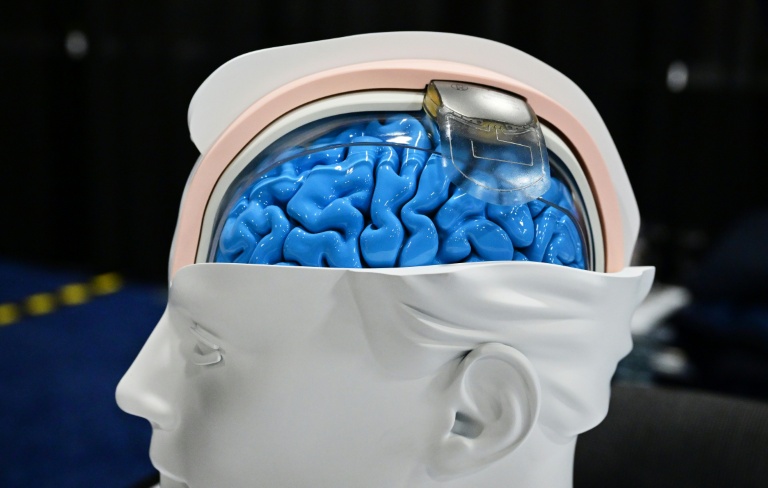
Are brain implants the tech of the future? Some think neurotech could be as revolutionary as AI. (Photo: AFP)

Are brain implants the tech of the future? Some think neurotech could be as revolutionary as AI. (Photo: AFP)

PARIS — From translating thoughts into words to allowing paralysed people to walk, the field of neurotechnology has been quietly surging ahead, raising hopes of medical breakthroughs — and profound ethical concerns.

Some observers even think that neurotech could end up being as revolutionary as the far more hyped rise of artificial intelligence (AI).

“People do not realise how much we’re already living in science fiction,” King’s College London researcher Anne Vanhoestenberghe told Agence France-Presse (AFP).

The scientist leads a laboratory developing electronic devices which are implanted into a person’s nervous system — not just the brain, but also the spinal cord that transmits signals to the rest of the body.

It has been a big couple of years for neurotech research. In June, Californian scientists revealed that a brain implant they developed could translate the thoughts of a man with the neurodegenerative disease ALS into words almost instantly, in just one-fortieth of a second.

Swiss researchers meanwhile have enabled several paralysed people to regain significant control of their body — including walking again — by implanting electrodes into their spinal cords.

These experiments, and other trailblazers in the field, are still far from restoring full capability to patients who have lost the ability to talk or walk.

It also remains to be seen how such technology, some of which requires invasive brain surgery, could be made available to people in need across the world.

But still, “the general public is unaware of what is already out there and changing lives,” Vanhoestenberghe said.

And these devices are becoming more effective at a remarkable rate, she emphasised.

“Previously it took thousands of hours of training before someone could compose several words using their thoughts,” she said. “Now it only takes a couple.”

Musk wants human-AI ‘symbiosis’

Neurotechnology has been propelled by a combination of scientific advances — including growing understanding of the human brain — and technological progress which has shrunk devices down so small they can slot into our skulls.

Algorithms using artificial intelligence have significantly sped things along, helping to interpret and transform the data coming from brains.

Numerous start-ups that have emerged since the late 2000s have raised tens of billions of dollars for research that has only recently started translating into concrete achievements.

The most publicised company is billionaire Elon Musk’s Neuralink, which says that it has now implanted 12 people with its chip.

While Musk has made characteristically lofty claims, experts have remained cautious about his firm’s accomplishments.

“Neuralink is currently just smoke and mirrors, with a lot of hype,” Herve Chneiweiss, a neurologist and expert in ethics at France’s research organisation INSERM, told AFP.

However, “the day they manage to produce commercial products — and it won’t be long — it will be too late to worry about it,” he cautioned.

Many experts are concerned about the ethical implications of neurotechnology — particularly because some companies are looking well beyond healthcare applications, instead hoping to use computers to improve our cognitive abilities.

Musk, for one, has repeatedly said he ultimately wants Neuralink to allow humans to achieve “symbiosis” with AI.

‘Innermost thoughts under threat’

Against this background, the United Nations’ (UN) agency for science and culture Unesco recently approved recommendations for how nations can regulate neurotechnology.

These recommendations — which are not legally binding — are due to come into effect on Wednesday.

The authors, who include Chneiweiss, adopted a broad definition of neurotech. It includes devices already widely available such as smartwatches and headsets that do not directly interact with the brain, but instead measure indicators providing an idea of the user’s mental state.

“Today, the main risk is invasion of privacy: our innermost thoughts are under threat,” Chneiweiss said.

He warned, for example, that neurotech data could “fall into the hands of your boss”, who could then decide that you are not spending enough time thinking about work.

Some have already started trying to address such concerns.

Late last year, the US state of California, a global hub of neurotech research, passed a law protecting the brain data of consumers.

PM supports military response to Cambodian threats

Visits border, mets Thai soldiers injured by latest landmine explosion

PUBLISHED : 12 Nov 2025 at 10:41

Visits border, mets Thai soldiers injured by latest landmine explosion

Prime Minister Anutin Charnvirakul, wearing a territorial defence volunteer uniform, salutes the Thai national flag and then joins in singing the national anthem, at Phu Makua military base on the border in Si Sa Ket province on Tuesday evening. (Photo: Government House)

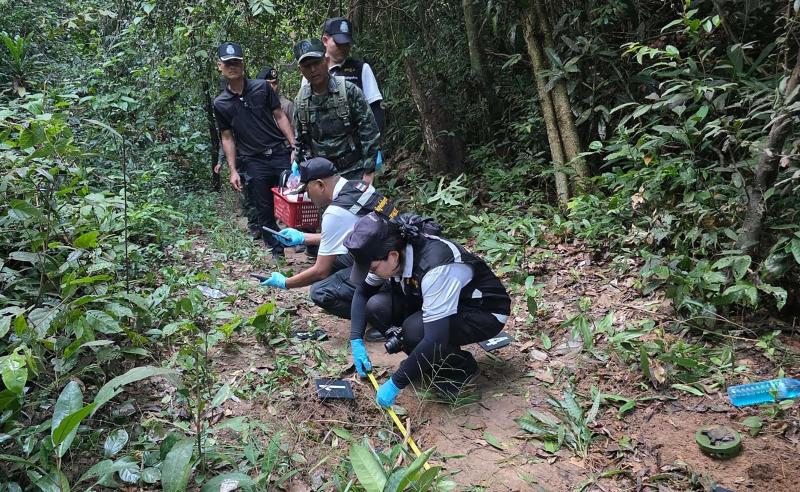
Prime Minister Anutin Charnvirakul said his government supports the armed forces’ response to Cambodia’s laying of more landmines in Thai territory.in breach of the Kuala Lumpur peace agreement.

The prime minister made his support clear when he visited the northeastern province of Si Sa Ket, which borders Cambodia, on  Tuesday evening.

There, he met soldiers who defend Thai territory at the Phu Makua base and visited the four soldiers who were injured by a Cambodian landmine explosion. in Kantharalak district, Si Sa Ket, on Monday. One soldier lost his right foot.

During his visit, security officials told him that four more anti-personnel mines had been laid in Thai territory one day before the explosion. The soil in the area had been freshly disturbed, plant roots freshly severed and concertina wire installed by Thailand taken down.

“We are of the view the agreement for peace is over. From now on, the Thai government will do what is in the best interests of Thailand. This is what Thailand will do, without having to consult with or seek approval from anyone else,” Mr Anutin said.

“It is clear that the agreement party, Cambodia, violated what it should have done,” the Thai prime minister said. The Kuala Lumpur peace agreement called for disarmament along the border, landmine clearance, suppression of cross-border scam operations and the resolution of overlapping territorial claims.

Mr Anutin said he discussed relevant operations with leaders of the armed forces and the Defence Ministry, and they knew what they should do in the interests of national security.

He did not elaborate on this, and asked reporters not to pose questions on the matter. He promised full support for the amed forces’ operations.

Thailand spurns Cambodia peace deal tied to US trade talks

Malaysia's Prime Minister Anwar Ibrahim, left, and US President Donald Trump, right, applaud as Thailand's Prime Minister Anutin Charnvirakul, second left, and Cambodia’s Prime Minister Hun Manet hold up a document during the signing of a ceasefire deal between Cambodia and Thailand on the sidelines of the 47th Association of Southeast Asian Nations (Asean) summit in Kuala Lumpur, Malaysia, on Oct 26, 2025. (Photo: Reuters)
Malaysia’s Prime Minister Anwar Ibrahim, left, and US President Donald Trump, right, applaud as Thailand’s Prime Minister Anutin Charnvirakul, second left, and Cambodia’s Prime Minister Hun Manet hold up a document during the signing of a ceasefire deal between Cambodia and Thailand on the sidelines of the 47th Association of Southeast Asian Nations (Asean) summit in Kuala Lumpur, Malaysia, on Oct 26, 2025. (Photo: Reuters)

Thailand has suspended a peace process with Cambodia that was a condition for tariff negotiations with US President Donald Trump, after Thai soldiers were injured in a land-mine blast near the border.

The suspension will remain in place until the Thai armed forces deem “hostilities” have ceased, Prime Minister Anutin Charnvirakul told reporters after a meeting of the National Security Council on Tuesday. Later in the evening, the prime minister travelled to Si Sa Ket province to visit four soldiers injured earlier this week by what the Thai army said were newly laid mines.

Mr Anutin, also the interior minister and Bhumjaithai Party leader, was visibly emotional as he spoke to the wounded soldiers at their bedside, one of whom had lost an ankle in the blast.

“The agreement to pave the way for peace is over for Thailand,” he told reporters during the visit to the border province. “It’s clear that we will no longer be implementing the terms, and we will determine our own process. The government will fully support the armed forces’ terms and operations.”

Mr Anutin’s move underscores how domestic political sensitivities about the border dispute outweigh economic and diplomatic considerations, at least for now. The blast reignited nationalist anger, leaving the Thai leader little room to appear soft on Cambodia, even at the risk of jeopardising his country’s trade deal with the United States.

A container ship is docked at a port in Bangkok, Thailand. (File photo)

A container ship is docked at a port in Bangkok, Thailand. (File photo)

The Thai government may consider revoking the peace deal altogether unless Cambodia responds to Thailand’s formal protest, according to spokesman Siripong Angkasakulkiat. Mr Anutin has instructed the Defence Ministry to step up military operations to protect Thailand’s sovereignty and secure the border, Mr Siripong said.

“All terms in the joint declaration will be suspended, and the plan to release Cambodian detainees will be terminated,” Defence Minister Nattaphon Narkphanit said earlier on Tuesday, referring to 18 soldiers being held by Thailand.

The blast was the seventh such incident in four months, following a wave of explosions in July that sparked the deadliest border clashes in years before Trump’s intervention.

The US president had earlier threatened to scupper trade deals with both countries unless they halted fighting, and Thai officials have said holding a peace-summit style meeting during his Asia trip last month was a condition for agreeing to trade terms.

Mr Anutin later referenced the peace deal when he made a direct plea to Trump last month for a “better” trade deal.

What Bloomberg Economics says…

“President Donald Trump made the countries’ commitment to the peace process a precondition for their new trade frameworks with Washington. A collapse of those deals — and their lower tariff rates — would pose real risks for both export-dependent economies, likely encouraging restraint and leaving the door open to deescalation.”

The so-called Kuala Lumpur Peace Accords outlined the removal of heavy weapons from border zones between Nov 1 and Dec 31 and a cooperation on land-mine clearances as part of efforts to normalise ties. Thailand also sought Cambodian crackdowns on cyber-scam operations there.

The peace deal had been struck only to placate Trump, who could still use tariffs as a lever to try to get it back on track, said Matthew Wheeler, senior analyst for Southeast Asia at International Crisis Group. But that may be challenging due to political sensitivities in Thailand.

“Thailand’s suspension of implementation reflects just how febrile is popular sentiment on the Cambodian border issue, and how little political space there is for the government to pursue a conciliatory approach,” Wheeler said.

Thai police and army personnel examine fragments of a landmine in Si Sa Ket province along the Cambodia-Thailand border. (Photo: Royal Thai Army)

Thai police and army personnel examine fragments of a landmine in Si Sa Ket province along the Cambodia-Thailand border. (Photo: Royal Thai Army)

Cambodia’s Ministry of National Defence denied the mines were newly laid, adding that they likely were remnants of past conflicts that have not been cleared. The country “remains committed to working closely with Thailand to promote peace and stability” under the Trump-backed peace declaration, a ministry spokeswoman said in a statement on Tuesday.

A joint statement on the US-Thai trade deal last month outlined some preliminary agreements including Thailand’s elimination of tariff barriers on about 99% of US goods, especially industrial, food and agricultural products. In return, the US will impose 19% tariffs on Thailand, with some products that are yet to be identified set to be tariff-free. 

Thai authorities said that the framework is non-binding and detailed talks will follow, with the aim of concluding negotiations by the end of the year.

Elevate PuK falls short in quest for back-to-back Call of Duty Mobile world titles

Michelle Lojo – Philstar.comNovember 12, 2025 | 11:20am

MANILA, Philippines — The country’s top Call of Duty: Mobile (CODM) team, Elevate PuK, fini…

Michelle Lojo – Philstar.com

November 12, 2025 | 11:20am

MANILA, Philippines — The country’s top Call of Duty: Mobile (CODM) team, Elevate PuK, finished as runner-up in the 2025 Call of Duty: Mobile World Championship held offline in Katowice, Poland over the weekend.

The 2024 champion, which also achieved the “Golden Road” by winning all major CODM tournaments last year, had been stumbling this year, finishing second during Season 9 of the Garena Masters 2025. Still, the team was determined to defend its title.

Although Elevate’s group stages campaign started slow, conceding a Hardpoint-Hacienda map to China’s OUG, the all-Filipino squad pulled off a three-consecutive-map win to advance to the winner’s match of Group A.

Against Mexico’s UnMythic Dream, which fields Filipino Jose Anton Lorenzo “WardeN” Padilla as a coach, Elevate PuK secured a three-sweep to book a ticket to the playoffs and seize the top seed in Group A.

The defending champion then opened its playoffs run with a 3-1 win over Brazil’s Street Gaming to set up a battle of former world champions, going up against 2023 winner Wolves Esports.

In a matchup that went the whole five maps, the Filipino squad took victory, 3-2, to relegate Wolves to the lower brackets. Elevate thus advanced to the upper bracket, now against another Chinese team, Qing Jiu Club, which they swept to win last year’s crown.

But this time, the Chinese squad was well prepared, taking down Elevate PuK, 0-3, to drop the Filipinos to the lower brackets against their Garena rival Stalwart Esports.

Elevate PuK wasted no time in dispatching their fellow Filipinos and Southeast Asian brethren in Stalwart Esports, 3-0, to forge a rematch with Qing Jiu Club.

With the upper bracket winners having a 1-0 advantage in the grand finals, Elevate PuK maximized the opening Hardpoint-Apocalypse map to equalize the series. A close grand final that once again went to a decider, Elevate PuK fell to Qing Jiu Club in the final Search and Destroy-Firing range map to settle for a runner-up finish.

Though it suffered back-to-back runner-up finishes, Elevate PuK continues to cement its legacy as the country’s top CODM team, having finished the 2025 season with four podium results: trophies in the Garena Masters Season 8 and Garena Summer Invitational, and silver-medal finishes in the Garena Masters Season 9 and the CODM World Championship.

A syringe for a life: How poor health facilities cost lives

…Victims share heartbreaking stories
About a year ago, what should have been a story of survival turned into a tragedy for Chetachi Kola’s (not his rea…

…Victims share heartbreaking stories

About a year ago, what should have been a story of survival turned into a tragedy for Chetachi Kola’s (not his real name) close friend.

After enduring a 13-hour cancer surgery at a teaching hospital in southern Nigeria, his friend was placed on oxygen to recover. But recovery never came, and the hospital’s oxygen plant suddenly failed. Within minutes, he was gone.

“After 13 hours, my friend died because the oxygen plant suddenly went off. We tried running around to private centers to get oxygen cans, but before we returned, he passed on,” Kola told BusinessDay.

Read also: How Nigeria lost public healthcare crown

In another part of the country, Eleojoh Wada faced a different ordeal. When she visited a federal medical center in northern Nigeria to investigate a persistent discomfort, she discovered the hospital couldn’t run a simple thyroid function test.

“I noticed some discomfort in my body and decided to visit the Federal Medical Center (FMC). They did not have the facilities to run a thyroid function test, so I was referred to a private facility where I paid double of what I was supposed to pay at FMC,” she said.

For this report, BusinessDay visited or made virtual enquiries from at least one public hospital across Nigeria’s six geopolitical zones. The list included the University of Benin Teaching Hospital (UBTH), University of Maiduguri Teaching Hospital (UMTH), Federal Medical Center (FMC) Keffi, a Primary Healthcare Center (PHC) in Kano, National Hospital Abuja, University of Nigeria Teaching Hospital (UNTH) Enugu, Bwari General Hospital Abuja, Ojo PHC Lagos, and Alimosho General Hospital Lagos.

The team witnessed recurring failures – from power outages during surgery and patients dying when ventilators failed, to blood transfusions conducted on bare floors to hours-long waits caused by non-functional automated systems.

The findings point to a public healthcare system on the brink.

Read also: Reps begin probe into $4.6bn health grants to Nigeria

Data reviewed by BusinessDay and other sources show that most public hospitals in rural communities are overstretched and lack even basic diagnostic facilities. Poor sanitation and decaying infrastructure are widespread in these areas.

At Amananta Healh Centre in Ebonyi State, roofs were leaky and windows, broken. Water was lacking as well as facilities for blood pressure and malarial tests. Though women often had babies delivered in the health centre, facilities were either borrowed or hired.

A report by MonITNg, after visiting a general hospital in northwestern Nigeria, described the situation as ‘disheartening.’

“What we saw at this general hospital on the 7th of November, 2025, is disheartening. No one should have this kind of experience,” the report read. “Patients receiving blood transfusions on mats or bare floors because there were no hospital beds enough to accommodate them,” the report added.

A source familiar with operations at a South-South state teaching hospital said the situation was ‘precarious,’ adding that the hospital frequently refers complex cases to UBTH because of inadequate facilities.
“I have used this facility for years, and from my experience, they always refer complex tests to UBTH,” he said. “An investigation should be carried out on the management of funds at this hospital.”

One X user recently wrote about how poor power management disrupted his mother’s life-saving surgery.
“My mother was rescheduled for surgery four times at the University Teaching Hospital in the South-South. Due to poor management and power outage. I had to take her to a private hospital to conclude the surgery,” he said.

BusinessDay’s investigation also revealed that most computed tomography (CT) machines in public hospitals are outdated, many purchased before the COVID-19 era. This has resulted in cases of misdiagnosis, mistreatment, and preventable deaths.

“In some hospitals, they have to schedule surgeries based on the severity of the case and the availability of ventilators at that time,” one medical source explained.

“Sometimes, when you cut a patient open, you realise the ailment has advanced far beyond what was diagnosed, and you have to start all over again,” the source explained.

“Also very few hospitals have gas plants, and sometimes ventilators stop working mid-surgery. You only discover when the patient has passed on,” the source added.

Related News

While some public hospitals in major cities are faring relatively better, many others struggle with malfunctioning machines, grounded ambulances, and failing infrastructure.

Long waiting hours remain a defining feature of care at most public facilities. Poor automation, erratic power supply, and understaffing combine to slow service delivery to a crawl.

“Only very few hospitals in the South-East have modern facilities, and they are mostly private,” one health expert noted. “The few that exist in public hospitals are often marred by poor maintenance culture, so they easily malfunction.”

Read also: Nigeria’s healthcare crisis needs more than government spending, it needs ingenuity

The stories, though from different regions, echo a shared reality that Nigeria’s public hospitals are running out of breath, and too often, so are their patients.

Several experts and insiders who spoke with BusinessDay requested anonymity due to the sensitivity of the information they shared.

State of PHC in a rural area somewhere in Nigeria. (Photo Credit: secondary source)

Implications

Experts warn that Nigeria’s failing health facilities are costing lives and deepening distrust in the system. “Every syringe of injection or treatment given from a misdiagnosis endangers Nigerian lives,” said Kelechi Joshua, a public health analyst, highlighting how outdated equipment turns hospitals into danger zones.

For Taiwo Obindo, president of the Association of Psychiatrists in Nigeria, the collapse of public healthcare has fueled illegitimate practice. “The lack of standard facilities in public hospitals has resulted in non-licensed centers, breeding quackery,” he said.

Stephanie Omoarebun, laboratory scientist, noted that obsolete labs “lead to inaccurate diagnosis, increased treatment failures, erode trust and drive patients toward private or foreign services.”

A senior surgeon described how poor ambulance services and bad roads have become silent killers, forcing doctors to ration care due to scarce equipment.

“The system is just like a dark hole,” said Olabode Karunwi, a health consultant. “It is a total reflection of a healthcare structure on the brink.”

Shocking statistics

Nigeria’s healthcare system is critically under-resourced and dangerously unprepared. According to Dataphyte (2020), “Only one ventilator exists for every 1.2 million Nigerians,” a scenario experts warn could be catastrophic during emergencies or pandemics. Hospital bed capacity is just 0.9 per 1,000 people, below Africa’s average of 1.0 and far beneath the global average of 2.7, the World Health Organization (WHO) said. This leaves millions at risk of being turned away. Nigeria ranks 187th out of 191 countries in the WHO Health Systems Performance Index. Also, out of the 34,076 PHC centers, only 6,815 – about 20 percent – are fully functional, meaning that four out of five centers fail to provide even basic care, according to reports by Sara and her team in an article published in BMJ Global Health.

Government efforts

According to available data, the Nigerian government, working with development partners and the private sector, has intensified efforts to revitalise PHCs nationwide. Since 2017, a renovation programme has upgraded 10,000 PHC facilities, improving essential medicine supplies, equipment, and staffing, with 110 centres strengthened in the first phase. Complementing this, the WHO and the Private Sector Health Alliance of Nigeria (PSHAN) launched the Adopt-A-Healthcare Facility Programme to establish PHC centres of international standards across all 774 local government areas. Recent milestones include commissioning of an MRI centre at the University of Maiduguri Teaching Hospital (UMTH), the African Medical Centre of Excellence in Abuja, and granting of import waivers on medical equipment. Yet critical gaps persist.

Read also: How Nigeria’s fast-casual restaurant brings health-focused African-inspired dining experience to America

(Newly commissioned MRI lab at UMTH)

Where do we go from here?

Experts say Nigeria’s healthcare sector requires a transformative shift from short-term service delivery to sustainable, data-driven systems. “We need to remodel healthcare beyond just service delivery and start building systems heavily reliant on data to ensure accurate decision-making,” said Stephanie. Recommendations include increased funding, transparent monitoring of resources, robust capacity-building, and exchange programmes exposing professionals to local and international best practices. “Encouraging exchange programmes among healthcare professionals is key to tackling this menace,” one analyst noted. Experts also emphasise automation, routine equipment maintenance, safety for rural healthcare workers, and compulsory health insurance. “A compulsory insurance coverage for everyone is key to moving forward,” noted Olabode, earlier quoted. Countries such as Rwanda and Kenya show how digital systems enable virtual appointments, remote minor-case care, and real-time health monitoring.
 

Speaker Dy vows to back anti-dynasty bill despite having many relatives in office

Dominique Nicole Flores – Philstar.comNovember 12, 2025 | 10:58am

MANILA, Philippines — Political dynasties have long dominated Philippine politics…

Dominique Nicole Flores – Philstar.com

November 12, 2025 | 10:58am

MANILA, Philippines — Political dynasties have long dominated Philippine politics, but the issue has once again come under public scrutiny amid anti-corruption protests and investigations into scam infrastructure projects.

Congress itself is largely made up of politicians from entrenched families, many of whom have held power for generations and continue to do so today. While the Constitution outlaws political dynasties, the lack of a law defining them has kept the ban unenforceable.

It has been nearly three decades since the 1987 Constitution was chartered. Despite efforts by some minority lawmakers in past Congresses to pass an anti-political dynasty bill, none have even passed second reading. The proposed measures were simply left to gather dust at the committee level.

House Speaker Bojie Dy himself has 16 relatives in public office, including his son and nephews who serve alongside him in the House of Representatives. Since assuming the speakership — more so when he declared his statement of assets, liabilities and net worth (SALN) — Dy has mostly remained silent about criticisms directed at his family’s decades-long rule in Isabela.

It was only when Congress resumed session on Tuesday, November 12, that Dy publicly addressed the matter, framing his family’s influence as part of a “long-standing tradition of service to the country.”

“Alam ko pong maraming nagtataas ng kilay sa usaping ito at aaminin ko rin alam kong may mga matang nakatuon sa akin dahil sa aking pamilya — gaya ng marami pang iba na mayroon nang mahabang tradisyon na paglilingkod sa ating bayan,” Dy said.  

(I know that many people raise their eyebrows at this issue, and I admit I’m aware that many eyes are on me because of my family — like many others who have a long-standing tradition of serving our country.)

While he did not deny the breadth of his family’s political influence, he said that public service is not “inherited” but “entrusted” by the people.

Still, he mentioned his family to make a point that even he would prioritize the passage of a bill defining and prohibiting political dynasties, as mandated by the Constitution.

“Panahon na upang harapin ang isa pang usapin na matagal nang nakasaad sa ating Konstitusyon: ang pagpapatupad ng batas laban sa political dynasty,” Dy said. (It is time to confront another issue that has long been enshrined in our Constitution: the enforcement of a law against political dynasties.)

He said the measure should not be seen as a barrier for those who wish to run for office, but rather as an opportunity for the government to encourage “more Filipinos to be part of public service.”

“Mga kasama, patunayan po natin, hindi lamang sa salita kundi sa gawa, na bukas at handa tayong makinig sa ating mga kababayan, dahil dito nagmumula ang tunay na direksyon ng ating pamahalaan,” Dy said, addressing the chamber. 

(My colleagues, let us prove, not just in words but in action, that we are open and willing to listen to our fellow Filipinos, for it is from them that the true direction of our government comes.)

In October, Rep. Edgar Erice (Caloocan, 2nd District) delivered an impassioned speech appealing to President Ferdinand Marcos Jr. and Vice President Sara Duterte to back an anti-political dynasty bill, saying genuine reform requires curbing even their own political power.

Several bills seeking to define and prohibit political dynasties have already been filed since the 20th Congress opened, with the current number already reaching nine and are pending committee deliberations. 

The bills differ in how they define a political dynasty. Some propose that no one can run for or hold public office at the same time as a relative within the fourth degree of consanguinity, and even ban succession in the same post.

Others are more lenient, limiting the restriction to relatives within the second degree of consanguinity and even allowing at most two family members to simultaneously hold public office. 

How Congress defines political dynasties may ultimately determine how willing its members are to reform an institution where family ties remain deeply entrenched.


Quezon ousts Gensan, enters MPBL South finals

Philstar.comNovember 12, 2025 | 10:47am

MANILA, Philippines — The Quezon Huskers thwarted the Gensan Warriors’ repeated rallies and prevailed, 95-8…

Philstar.com

November 12, 2025 | 10:47am

MANILA, Philippines — The Quezon Huskers thwarted the Gensan Warriors’ repeated rallies and prevailed, 95-85, on Tuesday to advance to the South Division Finals of the 747 Live presents Maharlika Pilipinas Basketball League 2025 Season at the people-packed, steamy Batangas City Coliseum.

LJay Gonzales, Gab Banal and Alfrancis Tamsi provided the sustaining firepower for the Huskers, who swept the Warriors, 2-0, in the best-of-three semifinal series and would be defending their division crown.

Gonzales fired eight of his 14 points in the fourth quarter, where the Warriors moved to within 82-85 following back-to-back triples by Kyle Tolentino and Jack Corpuz.

Tamsi knocked in a triple and homegrown Emman Tagle drove in, however, to quell Gensan’s final assault.

Unlike in Game 1, which Quezon handily won, 103-75, Gensan came up ready this time, even taking a 20-12 lead in the first quarter through the efforts of Corpuz, Tolentino and Nico Elorde.

Quezon, however, tied the halftime count at 46 behind Will Gozum, Judel Fuentes and RJ Minerva, to the delight of the thousands of fans who endured the heat as the air conditioning system broke down.

The cumulative effect of the warm bodies and the lack of ventilation made the playing court very slippery, prompting Binan to request that its game against Batangas be postponed. Binan was ahead, 13-7, when the game was halted.

MPBL Commissioner Kenneth Duremdes decided that the Binan-Batangas tussle will be held on Friday at a venue yet to be announced. Under FIBA rules, the game will start anew at 0-0.

Gonzales also finished with five rebounds and five assists to clinch Best Player honors over Banal, with 12 points, all from triples, three rebounds and two assists, and Judel Fuentes with 12 points, three rebounds and two assists.

Ximone Sandagon and Vince Magbuhos contributed nine points each for the Huskers, who were cheered on by Quezon Governor and Huskers co-owner Helen Tan.

Gensan got 14 points, five assists and four rebounds from Corpuz; 14 points, six rebounds and three assists from Tolentino; 12 points from Elorde; and 10 points each from Larry Rodriguez and Mark Cruz.

The semifinal round continues on Thursday, with San Juan and Pangasinan disputing the second finals slot in the North Division at the FilOil EcoOil Centre in San Juan.

Pangasinan stunned San Juan, 67-57, in Game 1, while San Juan won Game Two, 83-66, to force the sudden-death. The winner advances to the best-of-five finals against Abra Solid North. 


Quezon ousts Gensan, enters MPBL South finals

Philstar.comNovember 12, 2025 | 10:47am

MANILA, Philippines — The Quezon Huskers thwarted the Gensan Warriors’ repeated rallies and prevailed, 95-8…

Philstar.com

November 12, 2025 | 10:47am

MANILA, Philippines — The Quezon Huskers thwarted the Gensan Warriors’ repeated rallies and prevailed, 95-85, on Tuesday to advance to the South Division Finals of the 747 Live presents Maharlika Pilipinas Basketball League 2025 Season at the people-packed, steamy Batangas City Coliseum.

LJay Gonzales, Gab Banal and Alfrancis Tamsi provided the sustaining firepower for the Huskers, who swept the Warriors, 2-0, in the best-of-three semifinal series and would be defending their division crown.

Gonzales fired eight of his 14 points in the fourth quarter, where the Warriors moved to within 82-85 following back-to-back triples by Kyle Tolentino and Jack Corpuz.

Tamsi knocked in a triple and homegrown Emman Tagle drove in, however, to quell Gensan’s final assault.

Unlike in Game 1, which Quezon handily won, 103-75, Gensan came up ready this time, even taking a 20-12 lead in the first quarter through the efforts of Corpuz, Tolentino and Nico Elorde.

Quezon, however, tied the halftime count at 46 behind Will Gozum, Judel Fuentes and RJ Minerva, to the delight of the thousands of fans who endured the heat as the air conditioning system broke down.

The cumulative effect of the warm bodies and the lack of ventilation made the playing court very slippery, prompting Binan to request that its game against Batangas be postponed. Binan was ahead, 13-7, when the game was halted.

MPBL Commissioner Kenneth Duremdes decided that the Binan-Batangas tussle will be held on Friday at a venue yet to be announced. Under FIBA rules, the game will start anew at 0-0.

Gonzales also finished with five rebounds and five assists to clinch Best Player honors over Banal, with 12 points, all from triples, three rebounds and two assists, and Judel Fuentes with 12 points, three rebounds and two assists.

Ximone Sandagon and Vince Magbuhos contributed nine points each for the Huskers, who were cheered on by Quezon Governor and Huskers co-owner Helen Tan.

Gensan got 14 points, five assists and four rebounds from Corpuz; 14 points, six rebounds and three assists from Tolentino; 12 points from Elorde; and 10 points each from Larry Rodriguez and Mark Cruz.

The semifinal round continues on Thursday, with San Juan and Pangasinan disputing the second finals slot in the North Division at the FilOil EcoOil Centre in San Juan.

Pangasinan stunned San Juan, 67-57, in Game 1, while San Juan won Game Two, 83-66, to force the sudden-death. The winner advances to the best-of-five finals against Abra Solid North. 


Corruption squeezes Nigeria’s healthcare system

The debate over Nigeria’s low health budget is no longer new, but experts say that the real issue lies in how effectively the country manages its exist…

The debate over Nigeria’s low health budget is no longer new, but experts say that the real issue lies in how effectively the country manages its existing resources.

In 2025, Nigeria allocated N2.48 trillion to healthcare, a 58.5 percent increase from the previous year, accounting for just 5.18 percent of the national budget, far below the World Health Organization’s (WHO) 15 percent benchmark.

This issue is not unique to Nigeria alone. Across Africa, only eight of 47 African WHO-member countries spent at least $249 per capita between 2012 and 2020.

For Nigeria, the 2025 allocation amounts to just $7.8 (N11,724) per person, which is about N33 a day, barely enough to meet basic health needs, according to the Development Research and Project Center (DRPC, 2025).

Read also: Nigeria’s healthcare crisis needs more than government spending, it needs ingenuity

Experts say the challenge extends beyond low funding to the inefficient use of existing public and private health resources. Neto Ikpeme, policy analyst and health economist, argued that Nigeria must build systems that make patient spending a functional part of health financing.

“We must allow hospitals to function independently so they can position themselves properly for funding already coming in through patients’ spending, while chanelling it efficiently in a way that supports a large part of the system,” he said. “This will create competition among health facilities and ensure patients get real value for their money.”

Ikpeme added that the government should focus on fair pricing, subsidies, and transparent monitoring systems.

Obisike Maduabuchi, a medical doctor, blamed corruption for some of Nigeria’s healthcare system.

“Sometimes, resources are diverted or misappropriated. The equipment and drugs budgeted for are not supplied to public hospitals appropriately,” he said.

Out-of-pocket spending

A 2017 report by the National Health Accounts revealed that out-of-pocket payments account for 77 percent of total healthcare financing, while the government contributes just 14 percent.

External donors provide 7.5 percent, and corporations and nonprofits contribute less than one percent. Nigerians spent over N3.33 trillion out-of-pocket on healthcare tin 2017—underscoring that the issue is not inadequate funds, but inefficient use of private resources.

Accountability challenges also persist at the subnational level. Out of the N1.32 trillion ($908 million) budgeted for health in 2024, states spent only N816.64 billion, just 61.9 percent , according to BudgIT reports published on October 27, 2025.

“Twelve states spent less than half of their allocations, while Taraba, Cross River, and Zamfara utilised under 30 percent,” the report added.

Read also: How Nigeria lost public healthcare crown

On the contrary, only Yobe, Gombe, Ekiti, Lagos, Edo, Delta, and Bauchi achieved above 80 percent budget implementation. Similarly, just Lagos, Bayelsa, Edo, Abia, Kwara, Niger, and Delta exceeded the N5,000 per capita health spending threshold according to BudgIT.

The report highlights weak transparency and fund tracking across state systems, calling for stronger monitoring and accountability mechanisms.

Corruption galore

At the primary healthcare (PHC) level, corruption and mismanagement further erode trust.

“PHCs make up over 80 percent of health facilities in Nigeria, yet corruption through bribery, drug diversion, ghost workers, and procurement fraud continue to cripple the system,” said Sarah, co-author of a BMJ Global Health article entitled, ‘Strengthening Primary Healthcare in Nigeria: A Means to Achieving Universal Health Coverage.’

“Procurement fraud leads to wastage, inflated contracts, and the illegal sale of essential drugs for personal gain,” she added.

Related News

Such practices, the study noted, weaken the foundation of Nigeria’s healthcare system and compromise service delivery.

As Ikpeme noted, “It’s not just about how much we spend, but how well we manage the resources already flowing into the system.”

Reframing health financing beyond service delivery

Experts further argue that one of Nigeria’s biggest missteps is that health financing is often framed around service delivery rather than system strengthening.

Stephanie Omoarebun, a medical laboratory scientist and secretary-general of the Young Medical Laboratory Scientists Forum, shared this concern with this reporter. “We keep funding hospitals, drugs, and short-term fixes while underfunding diagnostics, data, and workforce systems that actually sustain better health outcomes,” she noted.

Omoarebun stressed that long-term gains will come from investing in the foundational systems that drive diagnostics, workforce training, and data management — not merely in operational costs and drug supplies.

Unlocking health enterprise, traditional medicine potential

Beyond government and patient financing, experts see significant untapped potential in health entrepreneurship by professional bodies, and the integration of traditional medicine into mainstream healthcare.

Mark Oladoja, a public health advocate and health policy specialist, noted that Nigeria can achieve better outcomes by leveraging the liquidity of professional associations and expanding preventive care through traditional medicine integration.

“Professional bodies in various health sectors should continue to advocate for improved health outcomes while pooling together the resources they command in the form of dues and funds to strategically invest it back into the system in a way that it generates revenue for them,” Oladoja said.

He also emphasised the preventive value of integrating traditional medicine.

Read also: Kaduna govt offers bandits education, healthcare instead of cash payments Commissioner

“Traditional medicine, if integrated into the mainstream health system, could improve preventive health coverage, which will in turn reduce patients’ health spending on disease treatment,” he explained.

Facts and figures

Nigeria’s health budget accounts for just 5.18 percent of the national budget, still far below the World Health Organisation (WHO) benchmark of 15 percent.

In 2025, healthcare funding rose by 58.5 percent, from N1.62 trillion in 2024 to N2.56 trillion, yet its dollar value fell by 15.4 percent, from $2.02 billion to $1.7 billion, a DRPC, 2025 report stated.

Per capita spending increased from N7,395 ($9.2) to N11,724 ($7.8), about N33 ($0.02) per person per day, still critically low, according to DRPC (2025).

While several African countries are boosting health spending, only South Africa has met and sustained the Abuja Declaration target of allocating at least 15 percent of the national budget to healthcare, WHO reports.

Nigeria also earmarked N46 billion to tackle health workforce migration, a vital step amid the ongoing brain drain. However, experts warn that fragmented funding remains a major obstacle, as disjointed allocations across non-health MDAs continue to undermine accountability and efficiency in the system.

Expert recommendations on health budget

To improve the efficient use of Nigeria’s health budget, the Development Research and Project Center (DRPC) recommends a centralised allocation of funds to the Ministry of Health, stabilising the exchange rate further to ease inflationary pressure on essential sectors such as healthcare, enhancing stakeholder participation in the budget cycle to strengthen implementation, and prioritising local production of medical supplies to reduce the impact of currency volatility, as stated in its report, ‘Understanding the Nigerian Proposed Budget: The Healthcare Sector in Focus.’

Demand for air con set to triple by 2050, warns UN

PUBLISHED : 12 Nov 2025 at 08:52

  …

UNEP said global demand for cooling systems could more than triple by 2050

UNEP said global demand for cooling systems could more than triple by 2050

GENEVA – Global demand for air conditioning could more than triple by 2050, the United Nations warned on Tuesday, calling for more sustainable cooling solutions.

The UN Environment Programme said demand could surge due to increases in population and wealth around the world, combined with more extreme heat.

Rising demand for more polluting and inefficient cooling systems “would almost double cooling-related greenhouse gas emissions over 2022 levels”, said UNEP.

UNEP launched its Global Cooling Watch 2025 report on the sidelines of the COP30 UN climate summit in Belem in the Brazilian Amazon.

“Installed cooling capacity is on a trajectory to triple by 2050… Yet billions will still lack adequate protection from heat. We must reimagine cooling — not as a source of emissions, but as a cornerstone of heat resilience and sustainable development,” it said.

The most rapid growth in cooling demand is projected in Africa and South Asia.

“As deadly heat waves become more regular and extreme, access to cooling must be treated as essential infrastructure alongside water, energy and sanitation,” UNEP chief Inger Andersen said in a statement.

“But we cannot air condition our way out of the heat crisis, which would drive greenhouse gas emissions higher and raise costs.”

UNEP highlighted so-called “passive cooling” options, including better wall and roof designs, shading, solar off-grid solutions and ventilation.

The potential impact on indoor temperatures from passive cooling strategies range from 0.5 to 8 degrees Celsius.

“Passive, energy efficient and nature-based solutions can help meet our growing cooling needs and keep people, food-chains and economies safe from heat as we pursue global climate goals,” said Andersen.

The Cooling Report suggested adopting such measures could reduce emissions to 64 percent below the levels otherwise expected in 2050.