
Thailand has suspended a peace process with Cambodia that was a condition for tariff negotiations with US President Donald Trump, after Thai soldiers were injured in a land-mine blast near the border.
The suspension will remain in place until the Thai armed forces deem “hostilities” have ceased, Prime Minister Anutin Charnvirakul told reporters after a meeting of the National Security Council on Tuesday. Later in the evening, the prime minister travelled to Si Sa Ket province to visit four soldiers injured earlier this week by what the Thai army said were newly laid mines.
Mr Anutin, also the interior minister and Bhumjaithai Party leader, was visibly emotional as he spoke to the wounded soldiers at their bedside, one of whom had lost an ankle in the blast.
“The agreement to pave the way for peace is over for Thailand,” he told reporters during the visit to the border province. “It’s clear that we will no longer be implementing the terms, and we will determine our own process. The government will fully support the armed forces’ terms and operations.”
Mr Anutin’s move underscores how domestic political sensitivities about the border dispute outweigh economic and diplomatic considerations, at least for now. The blast reignited nationalist anger, leaving the Thai leader little room to appear soft on Cambodia, even at the risk of jeopardising his country’s trade deal with the United States.
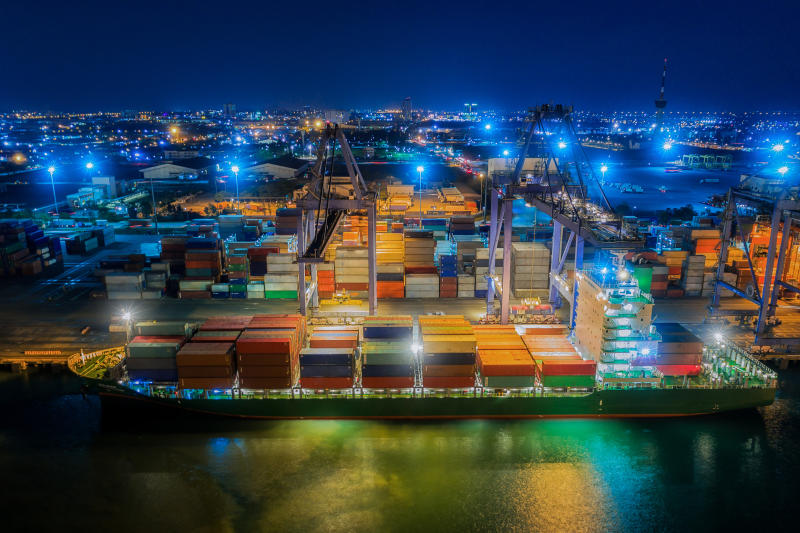
A container ship is docked at a port in Bangkok, Thailand. (File photo)
The Thai government may consider revoking the peace deal altogether unless Cambodia responds to Thailand’s formal protest, according to spokesman Siripong Angkasakulkiat. Mr Anutin has instructed the Defence Ministry to step up military operations to protect Thailand’s sovereignty and secure the border, Mr Siripong said.
“All terms in the joint declaration will be suspended, and the plan to release Cambodian detainees will be terminated,” Defence Minister Nattaphon Narkphanit said earlier on Tuesday, referring to 18 soldiers being held by Thailand.
The blast was the seventh such incident in four months, following a wave of explosions in July that sparked the deadliest border clashes in years before Trump’s intervention.
The US president had earlier threatened to scupper trade deals with both countries unless they halted fighting, and Thai officials have said holding a peace-summit style meeting during his Asia trip last month was a condition for agreeing to trade terms.
Mr Anutin later referenced the peace deal when he made a direct plea to Trump last month for a “better” trade deal.
What Bloomberg Economics says…
“President Donald Trump made the countries’ commitment to the peace process a precondition for their new trade frameworks with Washington. A collapse of those deals — and their lower tariff rates — would pose real risks for both export-dependent economies, likely encouraging restraint and leaving the door open to deescalation.”
The so-called Kuala Lumpur Peace Accords outlined the removal of heavy weapons from border zones between Nov 1 and Dec 31 and a cooperation on land-mine clearances as part of efforts to normalise ties. Thailand also sought Cambodian crackdowns on cyber-scam operations there.
The peace deal had been struck only to placate Trump, who could still use tariffs as a lever to try to get it back on track, said Matthew Wheeler, senior analyst for Southeast Asia at International Crisis Group. But that may be challenging due to political sensitivities in Thailand.
“Thailand’s suspension of implementation reflects just how febrile is popular sentiment on the Cambodian border issue, and how little political space there is for the government to pursue a conciliatory approach,” Wheeler said.
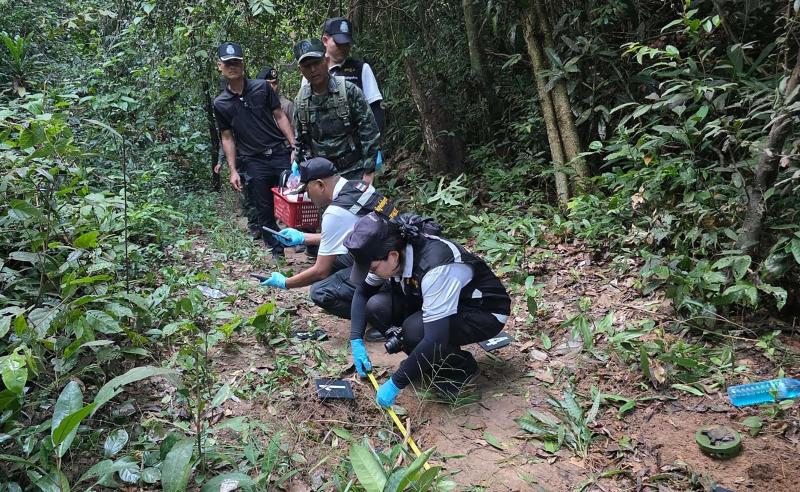
Thai police and army personnel examine fragments of a landmine in Si Sa Ket province along the Cambodia-Thailand border. (Photo: Royal Thai Army)
Cambodia’s Ministry of National Defence denied the mines were newly laid, adding that they likely were remnants of past conflicts that have not been cleared. The country “remains committed to working closely with Thailand to promote peace and stability” under the Trump-backed peace declaration, a ministry spokeswoman said in a statement on Tuesday.
A joint statement on the US-Thai trade deal last month outlined some preliminary agreements including Thailand’s elimination of tariff barriers on about 99% of US goods, especially industrial, food and agricultural products. In return, the US will impose 19% tariffs on Thailand, with some products that are yet to be identified set to be tariff-free.
Thai authorities said that the framework is non-binding and detailed talks will follow, with the aim of concluding negotiations by the end of the year.