Senate confirms Opeyemi Agbaje as new PenCom chairman

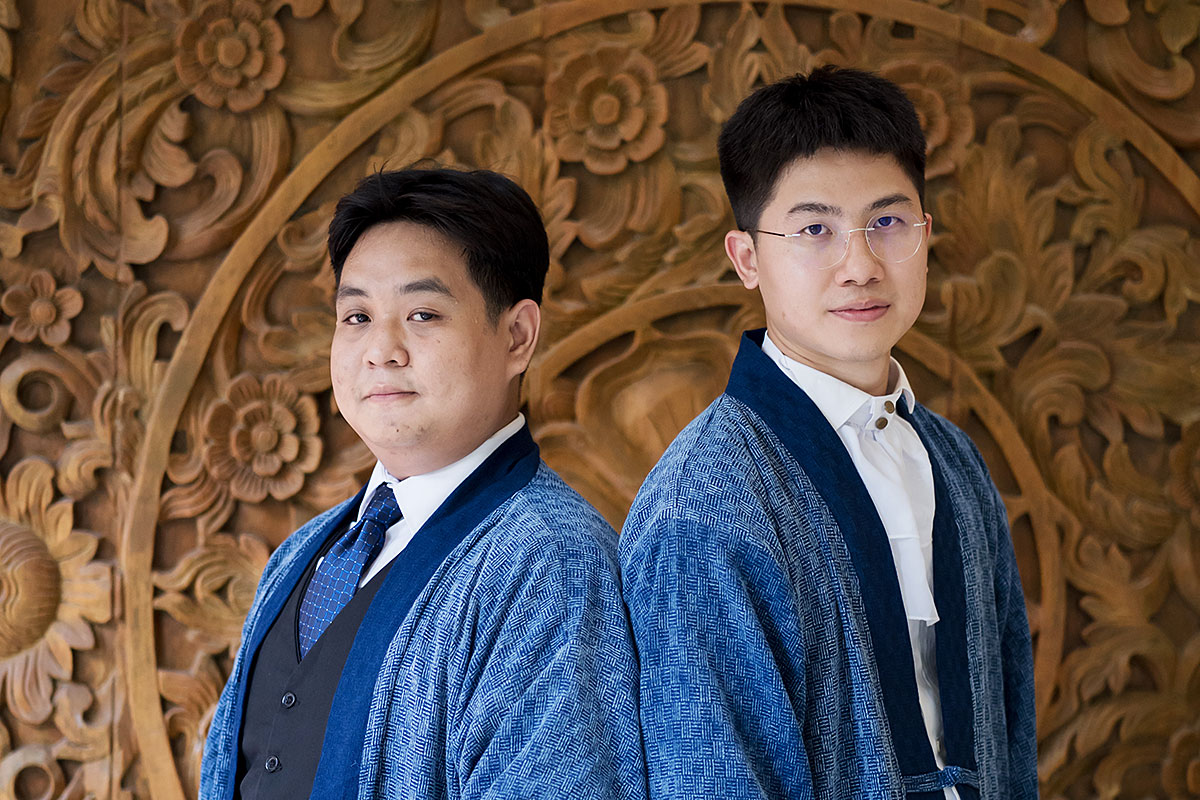
The Senate on Tuesday confirmed Opeyemi Agbaje as chairman of the National Pension Commission (PenCom).
Agbaje was confirmed along with several nominee…

The Senate on Tuesday confirmed Opeyemi Agbaje as chairman of the National Pension Commission (PenCom).

Agbaje was confirmed along with several nominees who will serve as national commissioners on the agency’s newly constituted board.

The confirmation followed the presentation of the nominees’ list during Tuesday’s plenary session, presided over by Deputy Senate President Jibrin Barau. Barau read out the names of Agbaje and the other commissioners before their confirmation.

Read Also: Edun reassures investors, pledges balanced Capital Gains Tax outcomes as NGX lists MREIF

Related News

Those confirmed include Hafiz Mohammed Kawu, commissioner for technical, representing the North-West; Samuel Chigizie Nwandu, commissioner for inspectorate, representing the South-East; Charles Efe Sylvester Emukowate, commissioner for finance, representing the South-South; and Bello Abubakar Malabu, commissioner for administration, representing the North-East.

Cyril Oluwole Fasuyi, chairman of the Senate Committee on Establishment and Public Service, earlier presented the nominees’ report for consideration.

Before his appointment, Agbaje was chief executive officer of RTC Advisory Ltd. A banker and lawyer by training, he also served as chairman of the Ogun State Security Trust Fund.

Agbaje is well known as a newspaper columnist, policy analyst and television presenter on The Policy Council. He is the author of several books and a faculty member at Lagos Business School.

Black box recovered as Türkiye, Georgia and Azerbaijan launch joint inquiry

UPDATED
00:09
The aircraft remained at Ganja Airport for roughly two hours
before departure, according to exclusive information obtained by
“AnewZ”. During this time, the crew carried out necessary technical
maintenance and pre-flight preparations near…

UPDATED

00:09

The aircraft remained at Ganja Airport for roughly two hours
before departure, according to exclusive information obtained by
“AnewZ”. During this time, the crew carried out necessary technical
maintenance and pre-flight preparations near the aircraft. The
report says no third parties were allowed into the area, and all
security protocols were reportedly followed.

The aircraft was transporting members of the Turkish Air Force
who had provided support to the F-16 fighter jets taking part in
the Victory Day military parade in Baku on 8 November, along with
mechanical spare parts for those aircraft. Sources confirm that
there were no explosives on board, and no signs of external
interference or detonation were found in the debris. The same
conclusion is supported by video footage circulating online showing
the moment the aircraft fell, which displays no evidence of an
explosion.

Besides, investigators are considering two primary possible
causes of the crash:

The first relates to the age of the aircraft, which had been in
service for more than 50 years and had last undergone major
maintenance in 2020. Experts note that corrosion or metal fatigue
could have caused a structural failure during flight, similar to
the 2017 crash of a US Marine Corps KC-130, which broke apart in
mid-air after the failure of a propeller blade.

The second possibility concerns the loading process. In
transport aircraft, improperly secured cargo can shift during
flight, disrupting balance and causing vibration, which may damage
the fuselage and lead to structural failure.

Sources told the local media outlets that the aircraft’s black
box was recovered from the crash site. The device will be sent for
decoding, and the findings will be made public once the analysis is
completed. Officials from Türkiye, Georgia, and Azerbaijan are said
to be working closely to identify the precise cause of the
incident.

Investigators have so far found no evidence of an explosion or
sabotage, and initial assessments point to a technical or
mechanical failure. Conclusions will be announced after the flight
recorder data is analysed and the joint investigation report is
published.

16:54

The Turkish Ministry of National Defence announced that a C-130
cargo aircraft flying from Azerbaijan to Türkiye has crashed in
Georgia. Search and rescue operations have begun in coordination
with the Georgian authorities.

On President Ilham Aliyev’s instructions, Prime Minister Ali
Asadov contacted the Georgian Prime Minister regarding the crash of
the Turkish aircraft.
Prime Minister Ali Asadov stated that Azerbaijan is ready to
provide all necessary support for eliminating the consequences of
the crash, conducting search and rescue operations, deploying the
relevant personnel of the Ministry of Emergency Situations of
Azerbaijan to the area, and taking any other required measures.

President Erdoğan noted that Türkiye is working in coordination
with Georgia to locate the remains of the crashed military
transport aircraft.

The soldiers on board were those who had participated in the
parade held in Baku. They were returning to Istanbul.

Military channels report that an American C-130J-30 aircraft was
flying near Tbilisi. It was accompanied by an unidentified drone
and a helicopter. They reportedly remained in the air for about 40
minutes.

Explosion near Pakistan Supreme Court kills at least 12

An explosion rocked the Pakistani capital Islamabad, killing at
least 12 people and injuring 20 others, according to the Pakistan
Institute of Medical Sciences, Azernews reports,
citing local media.
The blast reportedly occur…

An explosion rocked the Pakistani capital Islamabad, killing at
least 12 people and injuring 20 others, according to the Pakistan
Institute of Medical Sciences, Azernews reports,
citing local media.

The blast reportedly occurred in a parking area near the Supreme
Court, with some sources suggesting it may have been a suicide
attack.

No group has yet claimed responsibility for the incident, and
authorities continue to investigate.

Here we are to serve you with news right now. It does not cost much, but worth your attention.

Choose to support open, independent, quality journalism and subscribe on a monthly basis.

By subscribing to our online newspaper, you can have full digital access to all news, analysis, and much more.

Subscribe

You can also follow AzerNEWS on Twitter @AzerNewsAz or Facebook @AzerNewsNewspaper

Thank you!

Explosion near Pakistan Supreme Court kills at least 12

An explosion rocked the Pakistani capital Islamabad, killing at
least 12 people and injuring 20 others, according to the Pakistan
Institute of Medical Sciences, Azernews reports,
citing local media.
The blast reportedly occur…

An explosion rocked the Pakistani capital Islamabad, killing at
least 12 people and injuring 20 others, according to the Pakistan
Institute of Medical Sciences, Azernews reports,
citing local media.

The blast reportedly occurred in a parking area near the Supreme
Court, with some sources suggesting it may have been a suicide
attack.

No group has yet claimed responsibility for the incident, and
authorities continue to investigate.

Here we are to serve you with news right now. It does not cost much, but worth your attention.

Choose to support open, independent, quality journalism and subscribe on a monthly basis.

By subscribing to our online newspaper, you can have full digital access to all news, analysis, and much more.

Subscribe

You can also follow AzerNEWS on Twitter @AzerNewsAz or Facebook @AzerNewsNewspaper

Thank you!

Meta’s Chief AI scientist Yann LeCun reportedly planning departure to launch start-up

Meta Platforms Inc.’s top artificial intelligence scientist,
Yann LeCun, is reportedly planning to leave the company in the
coming months to start his own AI venture,
Azernews reports, citing the Financial Times.
LeCun’s pote…

Meta Platforms Inc.’s top artificial intelligence scientist,
Yann LeCun, is reportedly planning to leave the company in the
coming months to start his own AI venture,
Azernews reports, citing the Financial Times.

LeCun’s potential exit is linked to Meta CEO Mark Zuckerberg’s
efforts to restructure the company’s AI initiatives, reportedly
moving away from the LeCun-led Fundamental AI Research Lab and
bringing in Scale AI’s Alexandr Wang to head a new
“superintelligence team.”

According to the report, LeCun is in discussions to raise
funding for a new company focused on developing “world models”—AI
systems designed to give machines human-level intelligence. Neither
LeCun nor Meta has officially confirmed his departure.

Here we are to serve you with news right now. It does not cost much, but worth your attention.

Choose to support open, independent, quality journalism and subscribe on a monthly basis.

By subscribing to our online newspaper, you can have full digital access to all news, analysis, and much more.

Subscribe

You can also follow AzerNEWS on Twitter @AzerNewsAz or Facebook @AzerNewsNewspaper

Thank you!

Marking time at the COP30 climate summit

Populist parties are already in power in some developed countries and waiting just outside the door in many more. The key trick of populist politicians is to tell the voters what they want to hear, and the voters definitely do not want their lives to b…

Populist parties are already in power in some developed countries and waiting just outside the door in many more. The key trick of populist politicians is to tell the voters what they want to hear, and the voters definitely do not want their lives to be disrupted by global heating, so they are told it is not happening. It’s “the world’s biggest con”, in Donald Trump’s words.

These lies have consequences. On the eve of COP30, the annual climate summit that opened in Brazil on Monday, only one-third of the countries that signed the UN Framework Convention on Climate Change (64 out of 198) had submitted their plans for reducing their greenhouse gas emissions.

Every member is supposed to improve their “Nationally Determined Contributions” to cutting emissions every five years, and new NDCs are due this year, but they are being ignored by most countries this time around. Money is tight, wars are a huge distraction, and climate has become unfashionable, so we’ll just have to wait and hope for better times. That could be a plausible, even a sensible strategy if we were still in the nineties or the noughties, when climate change was still seen as a slow, linear, and above all, predictable process. But we now know that like most natural processes, climate change usually happens in sudden lurches: you cross an invisible threshold, and suddenly you are in a changed world.

It’s not just plain old physics, which gives you nice, smooth curves. With the biosphere, you are dealing with complex systems that can change in abrupt and unforeseen ways. They may also resist attempts to switch them back to the original climate state.

This is the world that today’s climate scientists inhabit: they know that the trend is relentlessly upward in temperature, but they also now know that the warming may accelerate if they cross one of those invisible thresholds. Indeed, that is why the scientists persuaded their political masters back in 2018 to set a “do not exceed” target for average global temperature of 1.5 degrees Celsius above the pre-industrial level (+1.5C). But it turned out they were still being too optimistic.

In 2023, the average global temperature suddenly jumped by about a third of a degree in the single month of June, all the way up to that “do not exceed” level of +1.5C — and it has been around there ever since. The previous assumption was that we wouldn’t get there until the mid-2030s. What happened?

It took a year and a half to figure it out. The warming had crossed an invisible threshold, and suddenly the amount of low-lying cloud over the oceans in the tropics decreased sharply, letting a lot more sunshine reach the Earth’s surface. Sunshine equals warming, and away we all go. It’s called a “feedback”.

Then scientists noticed that the amount of carbon dioxide entering the atmosphere soared in 2023-2024, from an average of 2.6 ppm in the past decade to 3.7 ppm. It doesn’t sound like a lot, but this is the main factor that determines the speed of the warming, and it has grown by a third in two years.

In effect, we are now walking across a minefield. Some other feedbacks we know about, like the potential collapse of the Atlantic Meridional Overturning Circulation (AMOC or “Gulf Stream”), but we don’t know when they will activate. And there are probably others we simply don’t know about at all.

What can we do about this beyond cutting our emissions as fast as possible? Holding the warming down by direct human intervention would be equally useful if the goal is to avoid triggering more feedbacks, but there is a superstitious fear about “geoengineering” even in parts of the scientific community.

Nothing very impressive is likely to come out of COP30 despite the urgency of the situation, and we will continue to mark time until intellectual and political fashions change. If that’s too late, then too bad. We are a species that evolved to live in small groups who were always at war with one another. To build a civilisation, we had to learn to live in groups millions strong and stop the wars, and both are still works in progress. If we can fix those problems, we can probably still solve the climate challenge. If not, then not.

Sala Sudasiri Sobha hosts Lanna opera concert

OLive Music presents “Lanna Opera: Voice Of The North”, a concert that celebrates identity, friendship and the evolving sound of Thai classical music, at Sala Sudasiri Sobha, Lat Phrao 41 yaek 7-2, on Sunday at 4pm. This is an afternoon of musi…

OLive Music presents “Lanna Opera: Voice Of The North”, a concert that celebrates identity, friendship and the evolving sound of Thai classical music, at Sala Sudasiri Sobha, Lat Phrao 41 yaek 7-2, on Sunday at 4pm.

This is an afternoon of music and storytelling with Voci Dal Nord, a Chiang Mai-based opera duo whose passion for classical singing has led to this truly special performance.

It marks not only their Bangkok debut but also the launch of their first album, featuring original operatic works written and performed in Thai as well as songs in the northern Lanna dialect.

Winner of Sala Sudasiri Sobha’s Free Stage programme, Voci Dal Nord — comprising Elden Handojo and Worawee Saikhum — brings fresh energy and local identity to Thailand’s classical scene.

Their music bridges European opera traditions with Thai linguistic and cultural expression, creating something rarely heard before — Thai-language opera with northern roots.

Handojo, originally from Jakarta and raised in Thailand, combines his background in khon drama and classical guitar with a deep love for vocal performance. His artistic path took him from the Chiang Mai College of Dramatic Arts to founding Sama Sama Kafe & Studio, a community space where music, creativity and local culture meet.

A Chiang Mai native, Worawee began as a choir singer before developing into a classically trained tenor under the guidance of respected Thai teachers. His warm tone and expressive phrasing have quickly earned him recognition as a rising voice in Thailand’s operatic landscape.

The two singers met during a masterclass two years ago and immediately connected over their shared dream — to make opera accessible and meaningful for Thai audiences.

Together, they started free choral classes at Sama Sama Kafe & Studio, helping young singers find their voices and discover the joy of classical singing.

Their upcoming concert will highlight this journey — from Chiang Mai’s small stages to Sala Sudasiri Sobha, one of Bangkok’s most beautiful concert halls.

Cheers for the absurd rules

The amended alcohol contr…

Cheers for the absurd rules

The amended alcohol control legislation that imposes fines on individuals who continue drinking alcoholic beverages during restricted hours — particularly between 2pm and 5pm — has left the government in hot water.

Under Section 32 of the amended law, which took effect this week, those who make their last order at 1.55pm are required to empty their glasses within five minutes or less. If not, they face a maximum fine of 10,000 baht. It is the first time the law has begun targeting individuals, including tourists — previously, it punished only shop or restaurant owners who sold alcohol during prohibited hours — and the details of the law go into such minuscule detail that it borders on the nonsensical.

Opposing the law is the Thai Restaurant Association, which is concerned about the adverse impact on businesses already experiencing hardship due to the economic slowdown.

Taopiphop Limjittrakorn, an MP from the opposition People’s Party — which advocates easing alcohol control — has warned that the amended rule is likely to confuse foreign tourists, particularly if they order drinks before the restricted hours but do not finish by the 2pm lunchtime deadline.

As the amendment also involves advertising rules, several agencies have said the provisions remain confusing and difficult to explain with the short scope offered by a print or television advert.

With regard to punishment against slow drinkers, critics argue that the penalty is not proportionate. Needless to say, the 10,000-baht fine is too harsh. A senior health officer, in a bid to calm public concern, ominously stated that the fine is not entirely fixed, but down to the individual discretion of local law enforcement officers.

This does not bode at all well in a country known for its high corruption rates.

The immediate question is how the new law will be properly enforced. Will there be ethics police doing the rounds, checking every glass? More importantly, some netizens have voiced concerns that, as mentioned above, the law could provide an opportunity for authorities to line their pockets by demanding kickbacks.

The original legislation, based on a 1972 junta order, has never enjoyed strong public support. Often referred to as anachronistic and inconsequential, the law bans alcohol sales between 2pm and 5pm and again from midnight until 11am the following morning for most retail outlets, supermarkets and food shops.

A round-the-clock ban applies on major religious days such as Makha Bucha, Visakha Bucha, Lent and the end of Lent. Exempted from the rule are airports serving international flights, licensed entertainment venues, hotels and some tourist outlets — as well as wholesale traders purchasing in bulk.

Strict alcohol control advocates, including the Centre for Alcohol Studies (CAS), often cite drink-driving fatalities to support the ban and other tough measures. However, if they were willing to reconsider, they might recognise that such blanket restrictions do little to make Thailand’s roads safer, as traffic-related deaths remain high. It is reported that this year’s accumulated fatalities have surpassed 10,200 — almost the same as last year.

Indeed, what is needed is efficient enforcement of traffic laws, including robust action against reckless and drink-driving behaviour. Social drinkers who do not drive should not be subjected to impractical measures that serve only as a nuisance.

Nittaya Kai Yang in B30m renovation

Mr Phadej poses with Mrs Raweewan in front of a Nittaya Kai Yang restaurant in Bangkok. He said Thai-Isan cuisine has always been popular, but the market is now more competitive than ever.

Amid economic volatility, maintaining quality at each branch and keeping the essence of the brand are the keys to dealing with fierce competition in the restaurant sector, according to Nittaya Kai Yang, the renowned Thai-Isan restaurant brand.

Raweewan Laksanavisit, founder of Nittaya Kai Yang, said what has driven the brand for 25 years is the desire to share the taste of home and the warmth of Thai hospitality.

The brand’s enduring success, according to Phadej Kantajinda, executive director of Nittaya Kai Yang Group, lies in its ability to evolve without losing its essence.

“Isan cuisine has always been popular, but the market is now more competitive than ever,” he said. “Our strategy is to maintain the soul of our food while modernising the customer experience, from restaurant design to service innovation and delivery channels.”

Mr Phadej said Nittaya Kai Yang’s growth is guided by four core strategies. The first is its winning zone, focusing on everyday comfort food with a universal taste that appeals to all.

The second is craftsmanship and quality, where great taste begins with great ingredients, supported by a central kitchen that ensures consistent flavours across every branch.

The third, building a bond business, emphasises creating strong emotional connections with staff and customers through warm service and memorable dining experiences.

Lastly, its location strategy prioritises selective expansion in high-potential areas to strengthen accessibility and sustain long-term growth.

Mr Phadej said increasing competition has prompted major restaurant chains to diversify their brands and focus on using high-quality ingredients to stand out.

“Maintaining stable prices during economic uncertainty is a key strategy for customer satisfaction. Internal management also plays a crucial role in cost control, allowing us to preserve both quality and reasonable pricing, even as costs climb,” he said.

This year, the company is allocating an investment budget of over 30 million baht to renovate three existing branches, Soi Sailom (Phahon Yothin Soi 8), Rangsit Khlong 2 and Pinklao, to create a more modern and contemporary atmosphere.

Nittaya Kai Yang has expanded beyond Bangkok for the first time this year, with a new branch at Lotus’s Saraburi, with investment of 8 million baht.

The company operates 31 branches, primarily located in Bangkok.

Over the past four years, Nittaya Kai Yang’s revenue has grown steadily, from 628 million baht in 2021 to 986 million baht in 2024.

The company expects to achieve sales of 1 billion baht in 2025.

He said for the next 3-5 years, the economy is expected not to perform well. The key challenge is to maintain the growth of existing branches rather than focus on expansion.

Centre calls on entrepreneurs to develop core competencies

Centre calls on entrepreneurs to develop core competencies

The University of the Thai Chamber of Commerce’s (UTCC) Competitiveness Center is calling on Thai entrepreneurs to build core competencies to ensure sustainable growth and adapt to the rapidly evolving platform economy structure.

This is also required to overcome the challenges stemming from the increase in commission fees being charged by digital platforms.

The recommendation follows the centre’s in-depth analysis in a white paper titled “Thailand’s Platform Economy in the Age of Creative Destruction: Pathways toward Sustainable Entrepreneurship and a Resilient Digital Ecosystem”.

The report connects Thai digital dynamics with two theoretical frameworks that gained recognition by receiving the 2025 Nobel Prize in Economic Sciences, which identify factors for sustainable growth through technological advancement. One is the “creative destruction” theory of Philippe Aghion from Collège de France and Peter Howitt from Brown University, who developed mathematical models explaining the creative destruction process. The model notes when new technologies and business structures replace old models, companies clinging to outdated technologies and business models cannot compete. Innovation thus simultaneously creates new possibilities while destroying existing structures.

Theerakorn Udomratanamanee, vice-dean for administrative affairs at UTCC’s Creative Entrepreneurship School, said the trend of raising fees among the digital platforms reflects a natural transition known as creative destruction. Platforms are moving from the market creation phase focused on massive investment to attract users to value creation, focusing on revenue generation for business sustainability.

With the value of online transactions projected to exceed 1.2 trillion baht in 2024, accounting for 6.5% of GDP, digital platforms have become a core economic infrastructure that entrepreneurs must utilise to full efficiency.

Supasan Preedawiphat, dean of the UTCC’s Creative Entrepreneurship School, said the 2025 “E-Commerce at the Crossroads” report by Blackbox Research indicates that Southeast Asian countries are transitioning from quantitative to qualitative growth.

To thrive in this new environment, entrepreneurs must build four technical competencies described as the “PACE” acronym.

The first competency (P) refers to “platform literacy and digital operations”. This competence requires a deep understanding of platform systems, efficient use of digital tools, and the ability to make data-driven strategic decisions. For instance, a coffee shop might use customer analytics to adjust advertising according to peak ordering times, which increases sales while reducing costs.

The second competency (A) refers to “added-value innovation and service excellence”. Entrepreneurs must have the ability to create product differentiation through innovation that adds value to products and the customer experience.

The third competency (C) refers to “collaborative brand trust with smart data use”, while (E) refers to “expansion readiness and regional integration” or the ability to connect to regional and cross-border markets.

Mr Supasan also cited another theoretical framework honoured with the 2025 Nobel Prize in Economic Sciences, which is the work of Joel Mokyr from Northwestern University. His work demonstrates through historical evidence that technology creates truly sustainable growth only when society has three foundations: advanced knowledge and science; technical proficiency of labour and the business sector; and institutions and rules that facilitate innovation emergence and widespread dissemination.

Mr Supasan said the government therefore has a crucial role in creating a new economic infrastructure. The state must progress from “regulator” to “co-designer of ecosystems”.

For a sustainable positive impact on all stakeholders in the platform ecosystem, the government’s regulatory role should comprise four main dimensions that refer to the “LEAD” acronym, Mr Supasan noted.

L refers to Linkage Creation, an investment in infrastructure and the fostering of linkages between various sectors. Thailand has starting points such as the Personal Data Protection Act but can build further, such as requiring platforms to notify sellers in advance when changing policies affecting stores in order to create transparency and fairness in the platform ecosystem.

E refers to empowerment through competence or continuously developing entrepreneurial skills using integrated training, tools, and tax incentives, while A refers to adaptive governance, creating flexible rules that upgrade product standards, link trade agreements, and build the “Thailand Trusted Source” image.

D represents distributed trust by building confidence through transparent mechanisms. Kittipong Sakornsathien, the centre’s director, said successful implementation of these measures could reverse the declining trajectory of Thailand’s competitiveness ranking.