Bangkok’s Top Vote Lunchtime Non-surgical Facelift

Bangkok’s Top Vote Lunchtime Non-surgical Facelift

The pursuit of timeless beauty no longer requires surgery.

At Nida Esth’ International, a new era of facial rejuvenation has arrived — one defined by science, precision, and intelligent design.

Created by Dr. Sunida Yuthayotin (Dr. Nida), American Board-certified dermatologist and founder of Nida Esth’, the 6D Signature Lunchtime Facelift has rapidly become Bangkok’s most talked-about non-surgical facelift. Recognized by HELLO! Magazine Thailand and Global Health Asia Pacific as a leading innovation in skin-tightening technology, it delivers what modern women truly seek: Lifted, Plump, and Good Skin Quality — all in under 75 minutes.

The Personalized Non-Surgical 6D Signature Lunchtime Facelift at Nida Esth’ International Bangkok, Thailand by Dr. Nida 

 Designed for Real, Measurable, and Natural Youthful Results.

Sofwave + Fotona 6D + Clear Lift by Alma

A 6D Rejuvenation Concept that• Lifts• Plumps• Refines Skin QualityTargeting Every Dimension of Aging from Surface to Deep Tissue

No Surgery. No Downtime.Just a Lifted, Plumped, and Radiantly Youthful Face All Within Your Lunchtime

……………………………

Special Offer for Bangkok Post Readers! 

Add us on Line OA or WhatsApp and enter the code “BKK6D”

Contact Us

Line OA: @Nida_Esth

WhatsApp: +66810102200

Website

 www.nidaskincosmetic.com

www.laserfaceliftbangkok.com

Dr. Nida’s Aging Theory 2026

From Dr. Nida’s perspective, lifting alone is no longer enough. Older technologies often lift the face at the expense of youthful fat, leaving the skin looking dry and worn out. But in the coming 2026, beauty standards have evolved it’s no longer just about a slimmer face. Now, it’s about achieving three key elements: 1. Lifted, 2. Plump, and 3. Healthy Skin.

As we age, facial structure changes due to two main causes: the Descent Effect (sagging) and the Deflation Effect (volume loss), both of which lead to facial imbalance and visible aging.

Recognizing both the growing demand and these specific issues, Dr. Nida created the 6D Signature Lunchtime Facelift  a non-surgical, filler-free, downtime-free lifting program to treat both sagging and volume loss in one session, using only USFDA-cleared technologies that preserve the skin’s youthful fat and ensure safety.

The Science Behind Inside-Out Lifting

Unlike traditional facelifts that pull from the outside, the 6D Signature works from the inside out targeting every layer of the skin with three advanced technologies:

  • Sofwave -> Lift
  • Fotona 6D -> Plump
  • Clear Lift 4D by Alma -> Healthy Skin

Each one plays a distinct role: tightening, volumizing, and rejuvenating all six dimensions of the face without needles or downtime. The treatment’s multi-layer approach ensures patients walk out with firmer skin, smoother texture, and a natural glow not an altered look.


The Three Technologies. Three Ageless Outcomes.

1. Fotona 6D: Lifting from Within

Fotona 6D rejuvenates the face through six distinct laser modes that address every layer of the skin from the oral mucosa to the surface epidermis.

Dr. Nida calls it “The Sandwich Effect,” a layered approach that lifts and restores firmness from both sides of the skin.

Each mode serves a purpose:

  • SmoothLiftin – heats inner cheeks to firm the lower face from within.
  • FRAC3® – refines texture and pores with fractional thermal stimulation.
  • PIANO® – tightens deep skin layers safely, creating lasting firmness.
  • SupErficial Micro-Peel – gives the skin a luminous “pearl finish.”
  • LipLase – naturally plumps and defines the lips.
  • VectorLift® – elevates brows and upper face, enhancing the lifting arc.

Together, these six dimensions of Fotona 6D form the base of structural rejuvenation reversing both sagging and volume loss without fillers or cutting.

2. Sofwave: Ultrasound Energy for True Elasticity

For patients seeking visible lift with zero downtime, Sofwave provides the precision edge.

Using Superb (Synchronous Ultrasound Parallel Beam) technology, Sofwave delivers ultrasound energy precisely 1.5 mm beneath the skin the ideal depth for stimulating collagen and elastin within the SMAS layer, without damaging subcutaneous fat.

The result is immediate tightening across the jawline, cheeks, brows, and neck, followed by progressive improvement over 90–120 days.

Because it preserves youthful fat, the face remains lifted yet naturally soft  never hollow or stiff.

Dr. Nida notes:

“Many old-generation devices over-tighten and flatten the face. Sofwave lifts while preserving volume that’s real anti-aging science.”

3. Clear Lift 4D by Alma: The Finishing Glow

To complete the transformation, Clear Lift 4D by Alma rejuvenates the skin’s surface using Q-Switched Nd:YAG fractional laser technology.

It delivers controlled photo-acoustic energy beneath the skin without ablating the surface, triggering collagen remodeling for brighter, smoother, and more even skin.

This painless treatment enhances tone and texture producing that “glass-skin clarity” patients associate with Korean beauty all within minutes.

Special Offer for Bangkok Post Readers!

Add us on Line OA or WhatsApp and enter the code “BKK6D”

Contact Us

Line OA: @Nida_Esth

WhatsApp: +66810102200

Website

 www.nidaskincosmetic.com

www.laserfaceliftbangkok.com

One Face, One Design — Personalized Lifting by Nida Esth’

At Nida Esth’ International, every treatment begins with a design not a device.

Dr. Nida and Dr. Piya believe that facial rejuvenation is not about following trends, but about creating harmony unique to each individual.

Through AI-assisted facial analysis, Crisalix 3D simulation, and Vectra imaging, every face is evaluated for its own aging pattern — including fat distribution, collagen density, and skin elasticity.
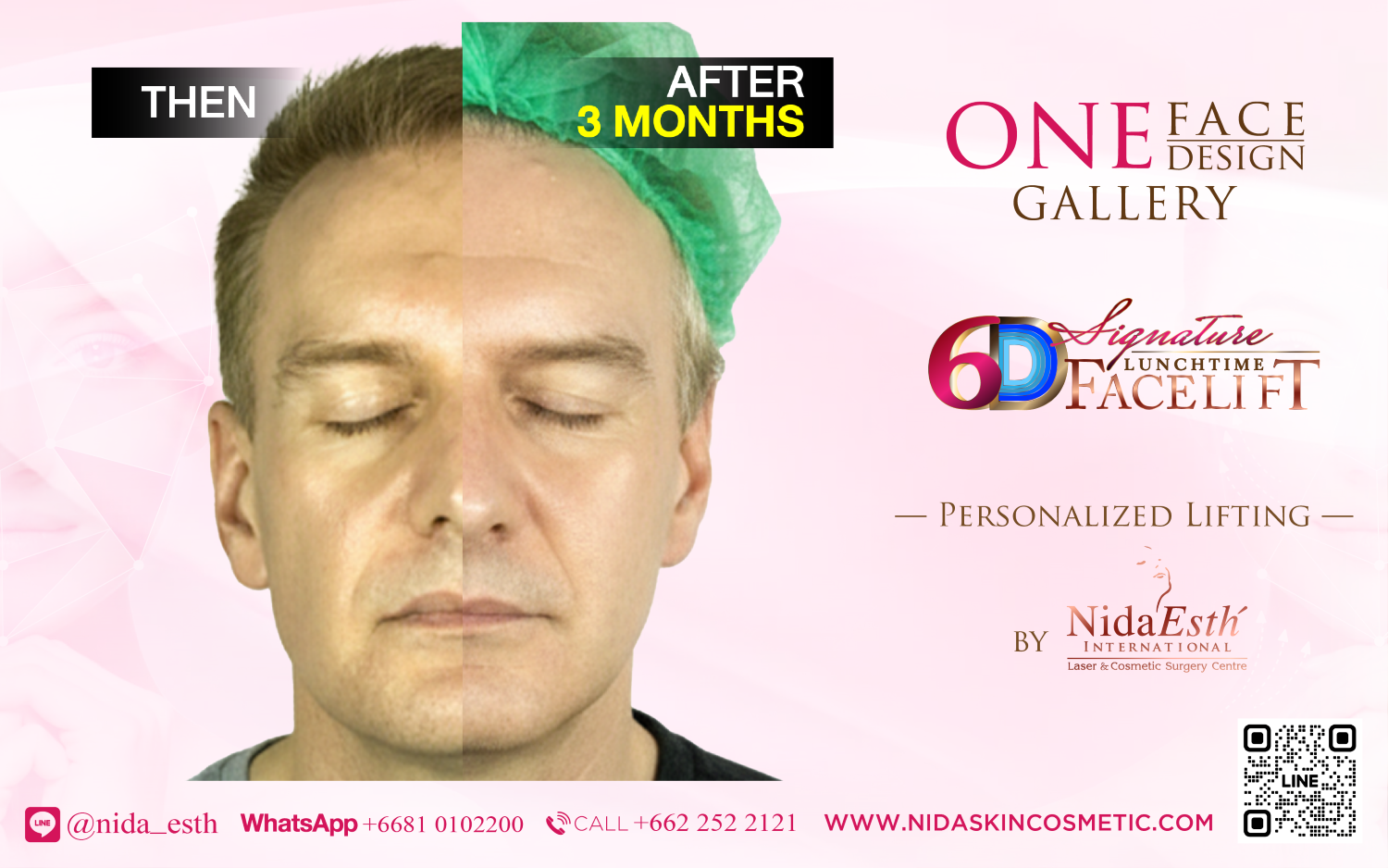
Some patients may benefit most from the 6D Signature Lunchtime Facelift, focusing on inner-layer rejuvenation for lifted, plump, and radiant skin. Others may require the deeper, semi-surgical precision of Trinity Lift X, which defines the jawline and restores structural integrity from within.

And for many, the optimal solution lies in a combination of both Trinity first to sculpt and lift, followed by 6D Signature to refine and revitalize.

Lift. Plump. Healthy Skin. — The 6D Difference

Every treatment begins with 3D A.I. Facial Design, a precision mapping process that analyzes your facial symmetry, proportion, and volume deficit using advanced digital technology

This personalized analysis guides the three-step rejuvenation protocol:

Inside Firming – Fotona 6D SmoothLiftin LaserOutside Lifting – Sofwave 6D Superb TechnologySkin Refinement – Alma ClearLift 4D

The result: a balanced, lifted, and radiant face — achieved in just 60 minutes.

Step-by-Step: 6D Signature Lunchtime Facelift Protocol

Step 1 — Personalized Facial Aging Mapping

High-resolution AI systems analyze skin laxity, volume loss, and wrinkle pattern to design a customized treatment map.

Step 2 — Fotona 6D Laser Rejuvenation (Deflation Target)

All six laser modes are applied to rebuild collagen density, restore contour volume, and strengthen dermal structure.

Step 3 — Sofwave Ultrasound Lift (Descent Target)

Superb™ parallel beams lift sagging tissue at the SMAS depth for long-term tightening and contour correction.

Step 4 — Clear Lift 4D Finishing Touch

Photoacoustic laser pulses enhance radiance, refine pores, and smooth skin tone for the signature “6D glow.”

Step 5 — Cooling & Recovery

Mild cooling masks are applied. Patients can wear makeup and return to work immediately.

Total Time: 60–75 minutes

Why Patients Choose 6D Signature at Nida Esth’

  1. Created by Dr. Nida — American Board-certified dermatologist and pioneer of laser aesthetics in Thailand.
  2. Six-Dimensional Rejuvenation — treats every layer from skin surface to oral cavity.
  3. Pain-Free and Downtime-Free — resume daily life instantly.
  4. Award-Winning Excellence — recognized by HELLO! Magazine and Global Health Aesthetics & Wellness Summit.
  5. Instant Yet Progressive Results — visible improvement after one session, optimal lift in 3 months, lasting 9–12 months.
  6. Filler-Free, Needle-Free, Surgery-Free.

Special Offer for Bangkok Post Readers! 

Add us on Line OA or WhatsApp and enter the code “BKK6D”

Contact Us

Line OA: @Nida_Esth

WhatsApp: +66810102200

Website

 www.nidaskincosmetic.com

www.laserfaceliftbangkok.com

Areas of Treatment

  • Forehead & Brows – elevates drooping brows, smooths fine lines.
  • Eye Zone – reduces crow’s feet and tightens delicate periorbital skin.
  • Cheeks & Mid-Face – restores natural volume and contour definition.
  • Jawline & Jowls – firms lower face, creates youthful V-line.
  • Nasolabial Folds – softens deep smile lines.
  • Neck – improves tone and smoothness, refining neckline profile.

Results & Longevity

Some results are visible immediately after treatment; collagen continues to build over the next three months.

Clinical data and patient experience confirm that results typically last 9 to 12 months.

A yearly session maintains collagen regeneration and keeps skin elasticity consistent.

Ideal Candidates

  • Men and women aged 30–60 with mild to moderate sagging.
  • Those experiencing early wrinkles, dullness, or skin fatigue.
  • Patients seeking filler-free rejuvenation.
  • Anyone wanting visible lift with no downtime.
  • Previous surgical facelift patients seeking maintenance.

What Patients Feel

During the procedure, patients report only gentle warmth beneath the skin — no pain, no anesthesia needed.

There are no wounds or bruises.

Redness, if any, fades within hours. Makeup can be applied right away.

Special Offer for Bangkok Post Readers! 

Add us on Line OA or WhatsApp and enter the code “BKK6D” 

Contact Us

Line OA: @Nida_Esth

WhatsApp: +66810102200 

Website

 www.nidaskincosmetic.com

www.laserfaceliftbangkok.com

Safety & Proven Track Record

Every device used in the 6D Signature Lunchtime Facelift is USFDA-cleared and clinically validated.

Dr. Nida and her team have successfully performed thousands of sessions, monitored through Clear Vision 3D camera imaging, which tracks and compares before-and-after results with precision.

This focus on measurable outcomes ensures every patient receives personalized, evidence-based rejuvenation not just promises.

Frequently Asked Questions

1. How long does it take?Around 60–75 minutes — the perfect “lunchtime lift.”

2. When will I see results?Subtle tightening immediately; full lifting and glow develop within 90–120 days.

3. How long will it last?Typically 9–12 months, depending on age and skincare routine.

4. Is there downtime?None at all — you can return to normal activities instantly.

5. Does it hurt?No pain, just mild warmth. No anesthesia required.

6. Can it replace fillers or surgery?For mild to moderate aging, yes — it restores volume and lift naturally.

7. Can I combine it with other treatments?Yes. It can complement injectables, but spacing sessions 1–2 weeks apart is advised.

8. Any side effects?Minimal. Slight redness may appear briefly but disappears within hours.

The New Definition of Non-Surgical Beauty

In today’s beauty landscape, lifting alone is no longer enough.

The 6D Signature Lunchtime Facelift represents a new philosophy — rejuvenation that preserves softness, enhances structure, and revitalizes skin health at once.

It’s the difference between looking tightened and looking truly renewed.

“Modern beauty is about harmony,” says Dr. Nida. “We lift, we plump, we glow all while keeping the face naturally expressive.”

At Nida Esth’ International, this harmony is achieved not by chance, but by design through advanced science, global recognition, and a deep understanding of individual beauty.

Special Offer for Bangkok Post Readers!

Add us on Line OA or WhatsApp and enter the code “BKK6D”

Contact Us

Line OA: @Nida_Esth

WhatsApp: +66810102200

Website

 www.nidaskincosmetic.com

www.laserfaceliftbangkok.com

Final Thoughts

With the 6D Signature Lunchtime Facelift, facelifting has finally evolved into something intelligent a process of restoration, not alteration.

By lifting sagging structures, replenishing natural volume, and refining skin texture simultaneously, it embodies the essence of modern rejuvenation.

Recognized by HELLO! Magazine Thailand and Global Health Aesthetics & Wellness Summit, this award-winning innovation marks yet another milestone for Dr. Nida — reaffirming her status as a pioneer of personalized, non-surgical beauty in Asia Pacific.

For those ready to look refreshed, radiant, and authentically youthful — all within one lunch break the 6D Signature Lunchtime Facelift offers not just visible change, but confident transformation.

Because at Nida Esth’, beauty isn’t recreated it’s reawakened.

Contact for more information

Tel: +662-252-2121

Line Official: @Nida_Esth

WhatsApp: +66810102200

Website: www.nidaskincosmetic.com, www.laserfaceliftbangkok.com

Follow us for beauty innovations and exclusive privileges:

Facebook: Dr. Nida Nida Esth’

Instagram: @nidaesthcenter

TikTok: @Nida_Esth

YouTube: Nida Esth Medical Center Channel

6th Infantry Division’s new commander assumes post

John Unson – Philstar.comNovember 11, 2025 | 2:50pm

COTABATO CITY — The new commander of Mindanao’s largest Army division, who assumed leadership o…

John Unson – Philstar.com

November 11, 2025 | 2:50pm

COTABATO CITY — The new commander of Mindanao’s largest Army division, who assumed leadership on Tuesday, November 11, will work with leaders of two former Moro secessionist fronts on community programs aimed at sustaining the gains of the national government’s Southern Mindanao peace process.

The chief of the Philippine Army, Lt. Gen. Antonio Nafarrete, officiated on Tuesday morning the assumption of Major Gen. Jose Vladimir Cagara as commander of the 6th Infantry Division at Camp Siongco in Barangay Awang in Datu Odin Sinsuat, Maguindanao del Norte, in the presence of Bangsamoro regional officials and local executives from across Maguindanao del Sur and Maguindanao del Norte provinces.

Cagara replaced Major Donald Gumiran, who was designated last month as chief of the military’s Western Mindanao Command, covering Region 9, parts of Region 12 and all the five provinces and three cities in the Bangsamoro Autonomous Region in Muslim Mindanao.

Naferrete and Gumiran separately told reporters after the event, attended by two provincial governors, Tucao Mastura of Maguindanao del Norte and Ali Midtimbang of Maguindanao del Sur and BARMM’s chief minister, Abdulrauf Macacua, that Cagara would reach out to officials of the Bangsamoro government and leaders of the Moro National Liberation Front and the Moro Islamic Liberation Front and support their peacebuilding activities in Central Mindanao.

Macacua said the MILF will willingly complement the 6th Infantry Division’s civil-military operations by supporting essential programs. These efforts will focus on addressing security issues through multi-sector dialogues in BARMM’s Maguindanao del Norte and Maguindanao del Sur provinces, as well as in the regional capital, Cotabato City.

“Community dialogues to promote interfaith and cultural solidarity among all communities in these two provinces and in Cotabato City are the best means of maintaining law and order in these areas,” Macacua, who is chief of the MILF’s Bangsamoro Islamic Armed Forces, said.

The chairman of the MNLF’s central committee, BARMM Labor and Employment Minister Muslimin Sema, said all of their members in Central Mindanao shall help implement all peace and security programs of the 6th ID, with Cagara at its helm.

“We have a peace agreement with the national government that compels us to do so,” Sema said.

Cagara said he would also seek the support of all local executives in restoring normalcy in areas cleared by the 6th ID, the police and local government units of the now-defunct allies Dawlah Islamiya and Bangsamoro Islamic Freedom Fighters.  Both groups have been implicated in all deadly bombings in Central Mindanao over the past 10 years and are known for fomenting hatred against non-Muslims.

YouTube to use AI to upscale old videos to 1080p clarity

YouTube has announced a major update for its smart TV application aimed at elevating video quality and the overall viewing experience. Central to this overhaul is the “Super Resolution” feature, an AI-powered system designed to upscale lower-re…

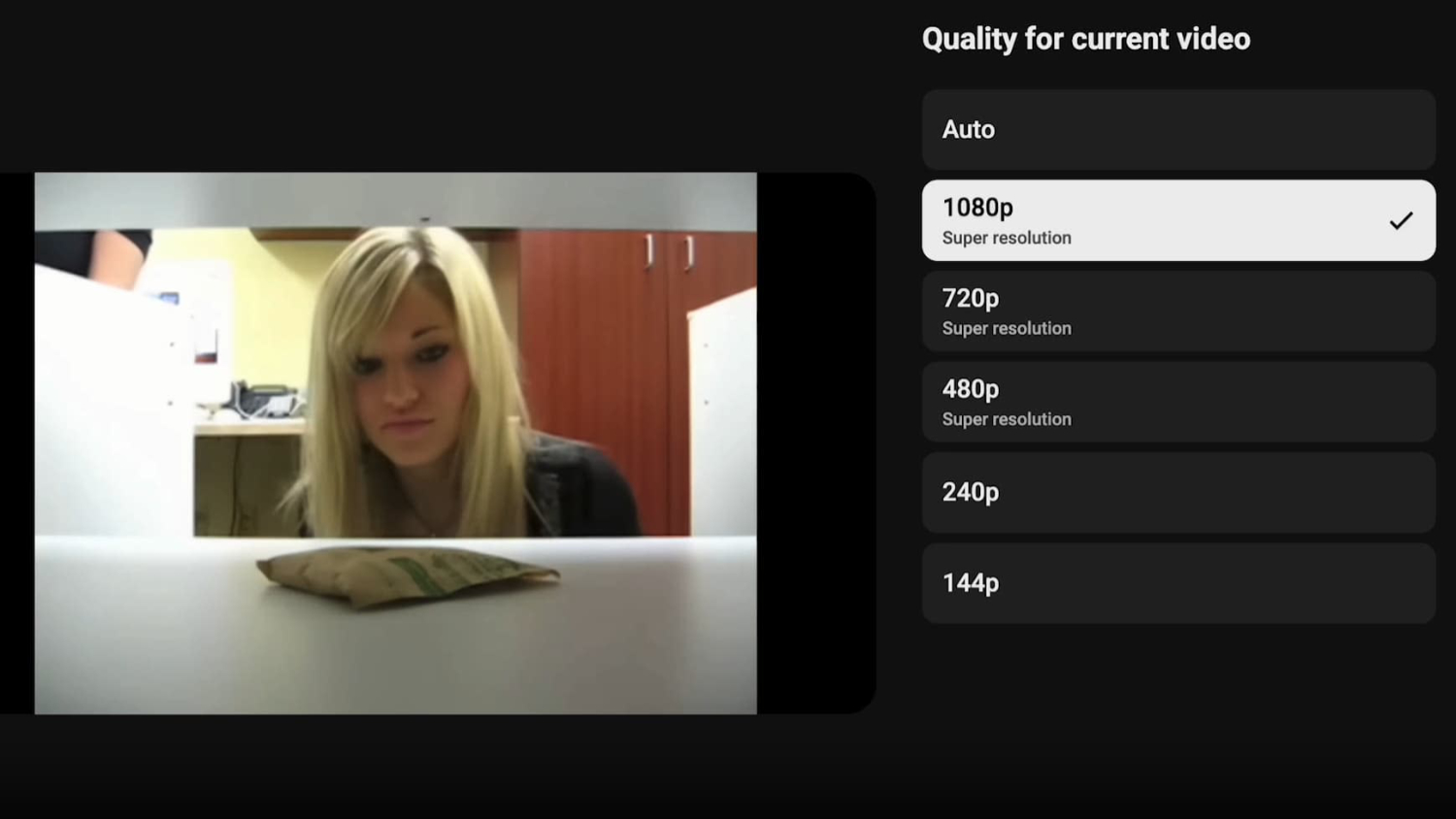
YouTube has announced a major update for its smart TV application aimed at elevating video quality and the overall viewing experience.

Central to this overhaul is the “Super Resolution” feature, an AI-powered system designed to upscale lower-resolution videos, specifically those at 240 pixels and 480p, to High Definition (HD) or 1080p quality. Furthermore, the platform has plans to extend support for this upscaling capability to 4K resolution in the future.

This system operates automatically via artificial intelligence (AI). However, YouTube has assured users that it will retain the original source files and the initial, lower resolution options, allowing users to select their preferred setting as needed. For content creators, there will be the option to disable the Super Resolution feature, as well as an automatic audio adjustment system, for those who prefer YouTube not to directly manage their content processing. The system is currently undergoing testing with a select group of creators before its official public rollout.

Beyond the visual enhancements, YouTube is also increasing the file size limit for video thumbnails from the previous maximum of 2 megabytes to 50 MB. This change is intended to accommodate high-resolution images, including those suited for 4K displays. Additionally, the platform has begun testing the upload of larger video files to support high-quality content comparable to that offered by major streaming services.

engadget.com

engadget.com

On the user experience front, YouTube is introducing Immersive Previews, a feature similar to the preview system found on Netflix. This will allow users to scroll through short previews of videos from their favourite channels directly on the home screen, aiding in their viewing selection decisions. The Contextual Search system is also being refined to prioritise results from channels the user has previously searched, aiming to streamline the discovery process.

Moreover, YouTube is preparing to launch a new tool allowing viewers to scan a quick response (QR) Code displayed within a video to navigate directly to a product page where they can complete a purchase. This initiative is designed to generate additional revenue streams for creators, particularly those focused on product reviews, a segment that collectively garnered over 35 billion viewing hours last year.

Kurt Wilms, Senior Director of Product at YouTube, said that this series of updates reflects the continuous growth trend of YouTube viewership on televisions, which has surpassed mobile viewership in several regions. He framed the investment as crucial for perfecting the viewing experience on large screens, enhancing quality, convenience and entertainment value to an unprecedented degree.

Source: engadget

Palace upbeat on GDP recovery

Jean Mangaluz – Philstar.comNovember 11, 2025 | 1:22pm

MANILA, Philippines — Following a record low, the Palace remained optimistic that the countr…

Jean Mangaluz – Philstar.com

November 11, 2025 | 1:22pm

MANILA, Philippines — Following a record low, the Palace remained optimistic that the country’s gross domestic product (GDP) will improve in the last quarter of 2025. 

The country’s GDP slowed to 4.0% in the third quarter — the lowest since the COVID-19 pandemic. The Department of Economy, Planning, and Development (DEPDev) had affirmed that the economic drag was due to the ongoing flood control corruption scandals. 

Citing the Department of Budget and Management, Palace Press Officer Claire Castro said that the holiday season will spur on spending, as well as a growth in exports. 

Castro said that there will also be an increase in government spending, especially with the P1.307 trillion worth of programmed funds that is set to be released to various government agencies in the final quarter of the year. 

The 1.307 trillion will be divided accordingly for disaster response, social welfare, education and more. 

President Ferdinand Marcos Jr. has ordered the proper use of these funds, Castro said. 

“This will help the business sector see that the government is spending money correctly, and this would boost the economy, consumption, and investments,” Castro said in Filipino. 

Asked if the country can still hit its economic growth target for the year despite the corruption woes and the back to back typhoons, Castro said that the Palace was optimistic. 

“The belief is there. We will be able to do this,” Castro said.

The government’s target for annual GDP growth is at least 5.5%.  

Should the Marcos administration fail to hit its annual growth target, it will be the third year in a row that the government missed its goals. 

DEPDev Arsenio Baliscan had noted that the government must improve the way it spent money, especially amid the massive corruption scandal. The drag in the GDP was exacerbated by the slowdown in public construction, with the Department of Public Works and Highways suspending dozens of projects during the corruption probe. 

Consumer confidence has also been impacted by the flood control probes, with many people opting to postpone purchasing goods.


Excessive rainfall filling up many dams nationwide

Motorists navigate floodwaters about…

Motorists navigate floodwaters about 70cm deep for a second day on Monday, due to the overflowing Chao Phraya River, on the inbound side of Nakhon In Road in Bang Kruai district of Nonthaburi. Photo by Pattarapong Chatpattarasill

Many large dams and reservoirs across Thailand are currently close to or exceeding their full water storage capacities due to continuous rainfall, the Royal Irrigation Department (RID) announced on Monday.

There are among 23 dams and reservoirs nationwide where water storage has reached between 81% and more than 100% capacity, prompting the department to regulate discharges to maintain safety and manage downstream flow.

According to the Meteorological Department, rainfall across northern Thailand has decreased, although some thunderstorms are still expected. Residents are advised to remain on alert, while farmers are urged to take precautions against possible damage to their crops.

Meanwhile, Typhoon Fung-wong, which struck the Philippines on Sunday, was expected to move towards the upper South China Sea and the Taiwan Strait over the next two days and not affect Thailand.

In response to rising water levels, the Chao Phraya Dam in Chai Nat province on Monday increased its discharge rate to 2,900 cubic metres per second, resulting in a noticeable rise in downstream water levels. 

Authorities are closely monitoring the situation.

German arrested for reckless driving found to be wanted criminal

Sukru Yusuf Onganer, a 22-year-old G…

Sukru Yusuf Onganer, a 22-year-old German, drives his motorcycle past another vehicle on a road on Koh Phangan in Surat Thani on Sunday. (Photo: Koh Phangan Tourist Police)

A German man arrested for reckless driving on Koh Phangan has been found to be on a criminal wanted list in his home country, police said.

Police said on Monday that Sukru Yusuf Onganer, 22, was arrested at a motorcycle wash shop on Sunday for riding a bike without a licence plate and causing a public disturbance with excessive noise.

The arrest followed complaints from residents about his dangerous driving, prompting officers to track down the motorbike, which was later found being cleaned at the shop.

Police records revealed that Mr Onganer is wanted by German authorities on extortion charges, though details of the case and the date he entered Thailand remain unclear.

He has been charged with reckless driving at Koh Phangan police station.

Police have contacted German authorities about his extradition.

German arrested for reckless driving found to be wanted criminal

Sukru Yusuf Onganer, a 22-year-old G…

Sukru Yusuf Onganer, a 22-year-old German, drives his motorcycle past another vehicle on a road on Koh Phangan in Surat Thani on Sunday. (Photo: Koh Phangan Tourist Police)

A German man arrested for reckless driving on Koh Phangan has been found to be on a criminal wanted list in his home country, police said.

Police said on Monday that Sukru Yusuf Onganer, 22, was arrested at a motorcycle wash shop on Sunday for riding a bike without a licence plate and causing a public disturbance with excessive noise.

The arrest followed complaints from residents about his dangerous driving, prompting officers to track down the motorbike, which was later found being cleaned at the shop.

Police records revealed that Mr Onganer is wanted by German authorities on extortion charges, though details of the case and the date he entered Thailand remain unclear.

He has been charged with reckless driving at Koh Phangan police station.

Police have contacted German authorities about his extradition.

Cebu floods spark reckoning over hillside projects, poor oversight

Dominique Nicole Flores – Philstar.comNovember 11, 2025 | 7:05am

MANILA, Philippines — Severe floods have recently been blamed on clogged drains and&nb…

Dominique Nicole Flores – Philstar.com

November 11, 2025 | 7:05am

MANILA, Philippines — Severe floods have recently been blamed on clogged drains and substandard flood control projects run by allegedly corrupt officials. But with storms dumping more rain in a short amount of time, Filipinos are beginning to question what’s happening on the mountains and in rivers.

When the Department of Environment and Natural Resources (DENR) launched an investigation into Monterrazas de Cebu — a luxury development on a mountainside in Guadalupe, Cebu City — the public response was quick to ask: who approved it in the first place?

While no evidence has directly linked the Monterrazas project to the floods that hit Cebu during Typhoon Tino, officials and experts say it raises valid questions about whether hillside developments comply with environmental and flood-mitigation rules.

Gaps in oversight

The DENR said the controversy uncovers deeper issues in land-use planning — a gap that Usec. Carlos David described as particularly critical for local governments.

“When we place structures on the natural environment, there are consequences. … There are advantages, but you also generate disadvantages,” David told One News PH’s “The Big Story.”

Climate Change Commissioner Albert Dela Cruz said building structures on natural slopes often involves cutting trees and covering soil with concrete, which prevents water from being absorbed and sends it down to low-lying communities.

“We should not have a concrete road (on these slopes), concrete jungle, because the water absorptive capacity of our land will lessen,” he said in a mix of English and Filipino on “The Big Story.”

David had a similar point, stressing that building structures on areas where water is naturally absorbed or flows through does not make the water disappear. Water from rain or from rivers, he said, would simply go to low-lying communities where there may be no dikes. 

“Every time you constrict, divert, block or alter the natural course of a waterway — a river, for example — you are probably protecting the adjacent communities from flooding, but you’re simply translocating the problem elsewhere,” he said.  

“That is where the disaster will occur — that is precisely what we are seeing in Cebu,” he added, noting that lapses in laws and policies governing floods and natural waterways have likely contributed to the problem of leaving communities more exposed.

What makes the problem even more complex, David said, is that extreme weather events such as Typhoon Tino leave some areas naturally prone to flooding. The decision of whether to invest in dikes or relocate communities falls to the government, especially local authorities.

DPWH coordination overdue

David said the DENR bears part of the responsibility for worsening floods due to weak coordination with the Department of Public Works and Highways (DPWH) and years of poor reforestation.

“It’s like we’ll have to learn our lesson first before working together because in the past, there’s really no coordination,” David said. 

Asked if such coordination was new, David said that, based on what he knows, it is only under the new leadership that the DPWH has begun working closely with the DENR.

Since September, the DPWH has been led by Secretary Vince Dizon, who has been cracking down on allegedly corrupt officials in connection with the flood control scandal.

David said that while Monterrazas is the project currently in focus, it is not the only development under review. “All other types of development” are also being examined for their environmental risks, he added.

Strong storms and deep floods are a recurring reality for Filipinos, with the poorest and most marginalized communities bearing the greatest risks. Decades of logging, mining, and unsafe development have left many areas exposed. As urban planner Jun Palafox puts it, “corruption kills,” and good governance is the key to protecting vulnerable communities.


Bangkok land prices increase

Industrial demand pushes up values

Industrial demand pushes up values

A land plot advertised for sale in Soi Suan Phak in Bangkok's Taling Chan district. (Photo: Chanat Katanyu)
A land plot advertised for sale in Soi Suan Phak in Bangkok’s Taling Chan district. (Photo: Chanat Katanyu)

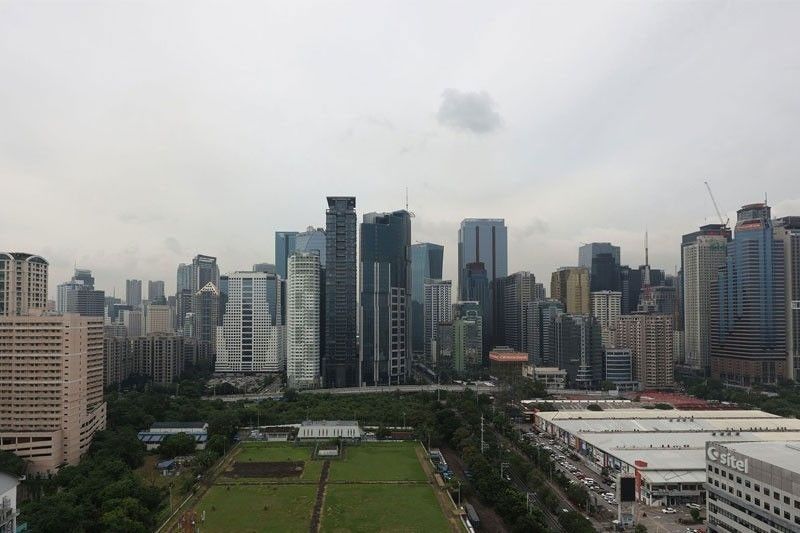
The land price index in Greater Bangkok rose in the third quarter of 2025 despite a sluggish economy, driven by strong demand for industrial and logistics property in eastern areas.

According to the Real Estate Information Center (REIC), the Bang Phli–Bang Bo–Bang Sao Thong area in Samut Prakan led the growth, with a 44% increase year-on-year in the land price index.

This zone continued to expand as a major industrial and logistics hub, supported by ongoing infrastructure development, proximity to the airport, and convenient connections to both inner Bangkok and the Eastern Economic Corridor (EEC).

Nearby areas such as Bang Poo and Bearing also recorded the largest increases among locations along mass transit routes in Greater Bangkok.

Two Green Line extensions, Samut Prakan–Bang Pu and Bearing–Samut Prakan, recorded land price indices of 338.6 and 333.7 points, respectively, rising 26.1% year-on-year.

REIC reported that the overall index for vacant land in Greater Bangkok in the third quarter of 2025 stood at 447.2 points, up 7.7% from the previous quarter and 14.3% year-on-year, marking the first double-digit increase in 10 quarters since early 2023.

The Bang Kruai–Bang Yai–Bang Bua Thong–Sai Noi area in Nonthaburi ranked second with a 26.4% annual rise.

Muang Samut Prakan–Phra Pradaeng–Phra Samut Chedi followed with 26.1%, while Muang Nonthaburi–Pak Kret rose by 22.8%, and Lat Phrao–Bang Kapi–Wang Thonglang–Bueng Kum–Saphan Sung–Khan Na Yao grew by 21.4%.

REIC said the surge in land values across these top areas reflects urban expansion into the metropolitan outskirts, particularly Samut Prakan, where a new city plan took effect on Aug 22, 2025.

The revised plan eases land-use restrictions and reclassifies zoning to allow denser residential and commercial development, significantly enhancing the province’s development potential and land value.

Meanwhile, suburban areas in Bangkok and its vicinity, where land prices remain far lower than in the city’s inner zones, continue to attract low-rise housing suited to local purchasing power.

This sustained demand for affordable housing land has resulted in faster price growth in the outer zones than in central Bangkok.

For vacant land along mass transit routes, REIC found that in the third quarter of 2025, the five routes with the highest year-on-year growth were mainly those with existing or upcoming train operations.

Following the two Green Line extensions in Samut Prakan was the Pink Line between Khae Rai and Min Buri, which saw land prices rise 20.7% year-on-year. This area, which includes Bueng Kum, Muang Nonthaburi and Lak Si, for example, recorded the sharpest increases.

The Purple Line from Bang Yai to Tao Poon ranked third with 19.6% growth, followed by the Brown Line (Khae Rai–Lam Sali) and the Yellow Line (Lat Phrao–Samrong), each with 19.2% growth.

In joint fifth place was the MRT Blue Line and the Dark Red Line (Bang Sue–Hua Lamphong), both up 18.5% year-on-year.

How to give expert advice in transformational times

People rally for climate justice ahe…

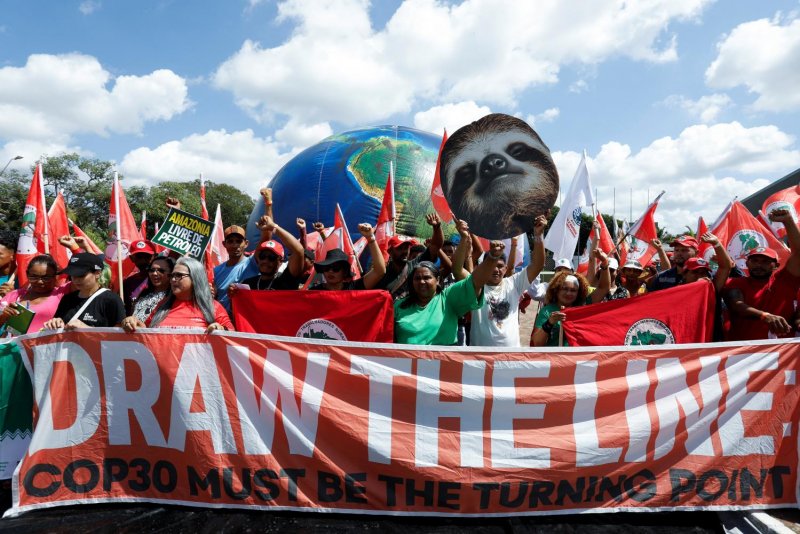
People rally for climate justice ahead of the COP30 climate summit in Brazil on July 23. (Photo: Reuters)

I am a policy analyst. My job is to provide expert information to decision makers and the public to help improve public policy. This job, always hard, has become harder.

Seven decades of global economic growth and relative peace have provided great wealth, liberation and enhanced well-being but have also overrun the Earth’s environmental boundaries, created vast inequalities and spawned disruptive new technologies. Transformational change, for good or bad, is now inevitable.

This creates a paradox for expert policy advice: We need experts more than ever. Unaided intuition will fail us as society leaps into the greater unknown. At the same time, transformational change makes communication among experts, decision makers and the public harder. Experts will be caught by surprise by novel shifts, just like everyone else, and consequential policy decisions will often pose questions they can’t easily answer.

Let me offer an illustrative example. About 15 years ago, I participated in a meeting of the United Nations Intergovernmental Panel on Climate Change (IPCC). The meeting I attended brought together scientific experts from many different countries and academic disciplines to grapple with the coming surge of more extreme weather events. The meeting’s location near Brisbane, Australia, was poignant. Just weeks before, the city had flooded. Several years of unprecedented extreme drought had suddenly given way to days of unprecedented extreme rain.

Extreme events often have the most consequential impacts, so these were what most interested experts like me, who study prevention of and response to climate disasters. But experts who study the physical climate were reluctant to opine on extreme events, which in the past were rare and thus difficult to predict into the future with confidence. The physical climate experts were more comfortable focusing on future changes in averages — increases in average temperature, increases in the intensity of the average storm — for which much more data is available. This was a frustration for me and other experts interested in the best ways to respond to climate risk. From our point of view, the physical climate experts know more about these outlier events than anyone else. While their information is imperfect, it’s better than what we have from any other source.

At the core of this dilemma, ubiquitous when experts seek to inform policy, is a focus on predict-then-act analyses. Predict-then-act policy analysis asks experts to generate a prediction of the future on which all the parties to a decision can agree, such as the likely intensity of future storms. These consensus predictions then inform debate on the pros and cons of alternative decisions one could make. Such analysis is a major channel through which experts communicate and collaborate with decision makers and the public.

Predict-then-act works well when experts seek to inform small changes in systems that behave in expected ways — for instance, how many people will lose medical care if premiums increase a few percentage points. But when we face and seek large changes in complex systems, like Earth’s climate or a society undergoing transformational change, prediction-based analysis can disrupt conversations among experts, policymakers and the public. Policies based on predictions can fail when experts are surprised by novel conditions. Insisting on consensus around expert predictions can promote gridlock as parties to a decision attack the predictions, which are in fact likely to be wrong, rather than search together for robust, evidence-based policies. Finally, uncertainty makes people uncomfortable.

Decision Making under Deep Uncertainty (DMDU) is a rigorous participatory approach to giving expert policy advice that aims to resolve these tensions by focusing on informing good decisions rather than making good predictions. DMDU embraces the idea that experts have vital information but are not all-knowing. DMDU rests on two pillars: collaborative co-design by experts and stakeholders, and analysis that focuses not on prediction but on using multiple models to understand the world, learning and robust solutions.

In 2015, the small town of Sitka, Alaska, suffered a fatal landslide during an intense storm, leaving the community suddenly anxious about its safety during the region’s frequent rainy days. Experts suggested a landslide warning system, but it soon became apparent that landslide science was insufficient to support reliable predictions of when the town should evacuate. The community thus used DMDU to co-design a novel landslide warning system aligned with both the science and community values. Sitka’s online risk dashboard now provides hourly and three-day forecasts of landslide risk. Rather than attempting to direct residents to evacuate on command, the system reduces anxiety by giving people the information they need to make the best possible decisions about whether they should stay or go, even in the face of scientific uncertainty.

DMDU has helped the IPCC to resolve the type of tension that surfaced in the previous meeting on climate extremes. Scientists now clearly distinguish between those processes they understand well and those they understand only poorly. For instance, several factors contribute to rising sea levels in a warming climate. Well-understood processes include how much water expands when it warms. Poorly understood processes include how fast the miles-thick ice sheets covering Greenland and Antarctica will slide into the sea. The poorly understood factors are most important for the worst cases. Thus, the IPCC now offers probabilities for the former (the likelihood that sea level rise will reach one metre by century’s end) but signposts for the latter (the possibility that sea levels can rise close to 2 metres, but if and only if specific future events occur). This information helps decision-makers and disaster prevention experts develop adaptive contingency plans.

Embracing co-design and deep uncertainty can help repair today’s broken conversations among experts and those who might benefit from acting on their information. Practising DMDU encourages humility and relevance, enabling experts to acknowledge a non-dominant role in policy discussions, while giving useful information, without overconfidence.

By encouraging thoughtful action, rather than paralysis or willful ignorance in the face of deep uncertainty, DMDU empowers — aligning actions with science, however imperfect, and with community values. By balancing dynamism and learning with democratic guidance and accountability, DMDU can help make good use of expertise as the world transforms. Zócalo Public Square