Why climate finance is no longer enough

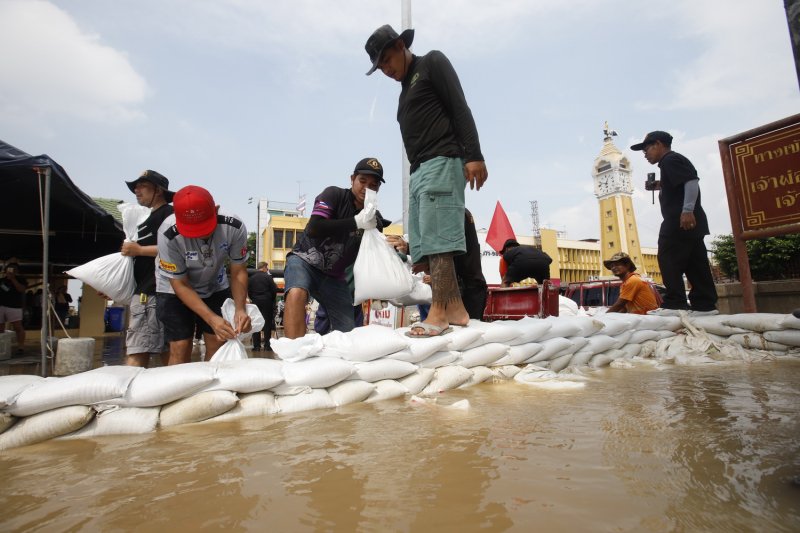
(Photo: Reuters)

(Photo: Reuters)
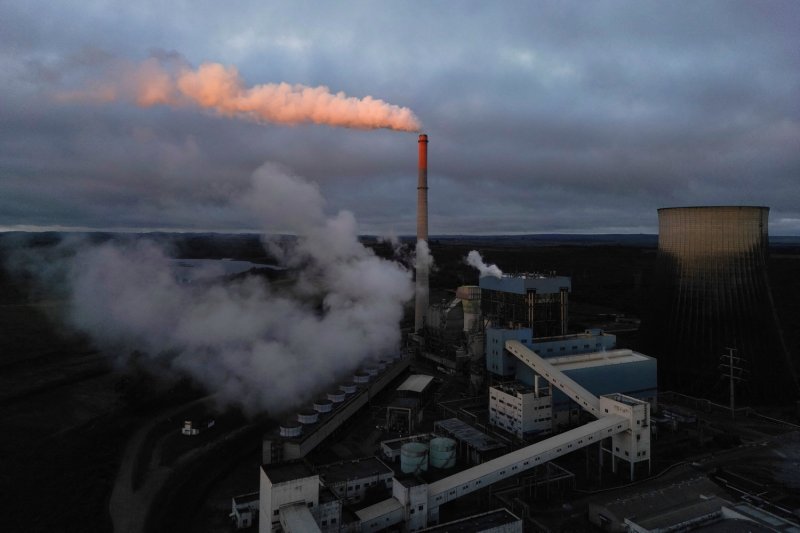
(Photo: Reuters)

With the UN Climate Conference (COP30) in Belém, Brazil, kicking off, it is clear that the world’s widely shared commitment to a just energy transition is falling by the wayside. In the year since governments signed on to the agreement at COP29 to scale up climate finance — with a goal of mobilising $1.3 trillion (42 trillion baht) annually by 2035 — wealthy countries have been retreating from their pledges. Worse, these signs of bad faith are coming just as the costs of climate adaptation and decarbonisation in developing countries are mounting.

This is not an issue that can be deferred. The shift to a green economy is already reproducing the same asymmetries that have long defined global trade. Instead of fostering inclusive development, climate policy is increasingly being shaped by protectionist measures and IP regimes that entrench technological monopolies in the Global North. For example, the European Union’s Carbon Border Adjustment Mechanism (CBAM) may be billed as a safeguard against carbon leakage, but it also illustrates how climate policy can be used to justify protectionist trade measures. Meanwhile, China’s recent complaint against India for its electric-vehicle and battery subsidies shows how green industrial policies are increasingly becoming grounds for trade disputes. Together, these developments signal a growing tension between climate goals and World Trade Organization rules.

At the heart of this issue lies a stark imbalance: larger powers like China, the US, and the EU are producing high-value green technologies, while most developing countries are stuck exporting low-value green commodities — primarily critical minerals. This mirrors the colonial-era division of labour, whereby the Global South supplied raw materials, and the North supplied innovation, monopolised production, and reaped the largest profits.

Data from the World Intellectual Property Organization underscore the depth of this divide. Green patents are overwhelmingly concentrated in a handful of countries, such as China, the US, Japan, and Germany. Between 2000 and 2024, the top 10 economies accounted for nearly 90% of international patent filings in solar and wind technologies. Brazil, despite ranking sixth globally in installed wind capacity, contributed only 0.4% of global wind patents. For solar, its share was a mere 0.19%.

This technological concentration is not accidental. It is the result of a global IP regime that privileges monopoly profits over public goods. Efforts to foster more global coordination, including through the Trade-Related Aspects of Intellectual Property Rights (TRIPS) agreement, have failed to address the fundamental problem. Without access to affordable technologies, the Global South cannot fully participate in the climate transition.

Climate finance is not sufficient to break this cycle. Instead, technology transfers and reforms to the global IP regime must be at the centre of climate negotiations.

Fortunately, there is a precedent for the necessary changes. Back in the 2000s, Brazil played a pivotal role in categorising access to Hiv/Aids medicines as a public good, rather than as a commodity. This shift was driven by a combination of legal, political, and civil-society actions that challenged the global pharmaceutical patent regime and put public health first.

As economist Joseph Stiglitz has argued, such mechanisms are essential to correct market failures and ensure equitable access to innovation. That is why the International Court of Justice, in its recent advisory opinion on climate change, underscored the obligation of all states to cooperate — beyond the provision of finance — on the development and diffusion of green technologies, including by sharing knowledge and engaging in technology transfers.

The Technology Implementation Program (TIP) that was agreed at COP28 offers a means to foster such cooperation. Under Brazil’s leadership at COP30, TIP can become a platform for strengthening national innovation systems, enabling countries to adapt technologies to local contexts and build capacity for climate solutions. The idea is to use a mix of public and private money to support trial projects, and then to scale those that prove effective.

Brazil’s COP30 presidency can rally the Global South behind a vision of TIP that delivers climate justice through innovation. And by helping the rest of the world decarbonise, wealthy countries will be helping themselves. ©2025 Project Synidcate
Building an energy resilient bloc

Utility poles are seen along a rural…

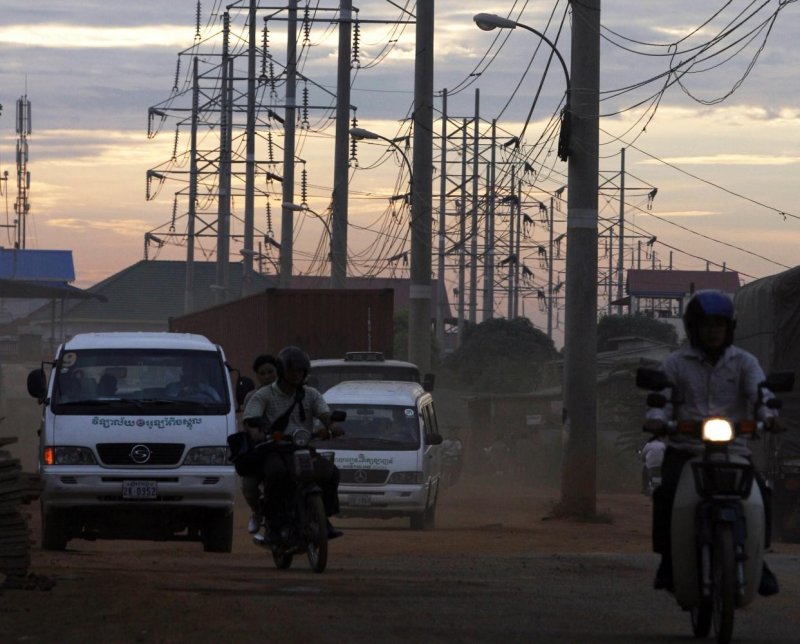
Utility poles are seen along a rural road in Cambodia. (Photo: Reuters)

According to our latest projection, electricity demand in Asean will reach around 173 million tonnes of oil equivalent (Mtoe), or about 2,000 terawatt-hour (TWh), in 2050 — roughly 1.6 times higher than the 2023 level.

Meeting this challenge is not only about building more power plants, but also about building stronger links between countries. Cross-border electricity trade has already proven its value, helping neighbouring countries share resources, balance supply and demand, and strengthen collective energy security. For example, Cambodia imports around a quarter of its electricity needs, or about 1,030MW, from the Lao PDR, Vietnam, and Thailand, due to its limited domestic generation.

However, energy interconnection within the Southeast Asian region is still primarily conducted bilaterally, for instance, the Lao PDR–Myanmar and Sarawak–Brunei Darussalam interconnections.

Bilateral interconnections pose practical obstacles, as disruptions could lead to a decline in energy availability in some regions. Among these, force majeure events such as natural disasters constitute one of the most immediate and unavoidable threats towards grid infrastructure.

Interstate conflict, although not as unpredictable as natural hazards, can also have far-reaching effects on energy security, once triggered.

Thailand and Cambodia, for example, are interconnected through Thailand’s Wattana Nakhon–Aranyaprathet–Poi Pet Industrial Estate 115-kV overhead transmission line, with a maximum transmission capacity of 250MW. This interconnection has helped Cambodia meet its domestic energy demand, with a Power Purchase Agreement (PPA) and a Power Transmission Agreement (PTA) that were signed in the early 2000s. Yet, this cooperation has recently come under strain due to the conflict between the countries. In June, Cambodia halted electricity supply from Thailand at three locations, which prompted Thailand to terminate the PPA.

Additionally, the Electricity Authority of Cambodia (EAC) has instructed two electricity companies to immediately stop issuing invoices in Thai baht, which could affect the baht’s exchange rate if the conflict goes on longer.

What’s more concerning is the vulnerability of grid infrastructure itself. Thailand and Cambodia have built a network of interconnection for limited cross-border electricity trading and load balancing that are at risk of being damaged due to the armed conflict. Although these infrastructures are not massive in scale, they are crucial for regional energy resilience, particularly during periods of peak demand or dry seasons. Thailand’s Provincial Electricity Authority (PEA), for instance, has reported damage to its power distribution facilities along the border, causing multiple outages in some areas.

Beyond that, supply and revenue decline may not only affect investment but also trust between Asean members. In the case of Cambodia and Thailand, it once again serves as a warning signal to the region. If one bilateral dispute can disrupt such a critical lifeline, what does it mean for Asean’s vision of deeper energy integration? This is where the Asean Power Grid (APG) becomes not just a blueprint for cleaner energy but a foundation to build regional energy resilience and cooperation.

Drawing from lessons learned in other regions, wherein energy interconnection has contributed to energy resilience in times of conflict. In the Russia–Ukraine armed conflict, the European Union’s shared grid has helped Ukraine meet its energy demands after it was cut off from Russia’s power grid.

It is clear that Asean needs a proper framework or mechanism to ensure energy security amid political disputes and in the event of future conflicts.

The Asean Agreement on Disaster Management and Emergency Response (AADMER) offers a cooperative framework to protect social, economic, and environmental assets. By recognising energy infrastructure as a vital lifeline, AADMER can serve as a platform to carry out joint risk assessments, develop early warning systems, and launch coordinated responses. However, it remains important to clarify whether AADMER’s scope extends to all forms of force majeure or is limited strictly to natural disasters. Unlike wars, which are politically driven and in principle avoidable, natural disasters are unforeseeable events which lie beyond human control, a distinction that carries implications for how resilience measures are institutionalised in Asean’s disaster preparedness architecture.

Bilateral arrangements alone are insufficient when cross-border infrastructure vulnerabilities and supply stability are at stake. Strengthening existing legal framework provisions on dispute settlement would therefore be more relevant to building a robust Asean-level Dispute Settlement Mechanism (DSM), while ensuring that collective mechanisms respect the sovereignty of member states.

A robust dispute settlement mechanism would build trust in Asean’s frameworks, encouraging countries to rely on regional solutions over ad hoc bilateral negotiations. Lessons from the EU–Ukraine energy integration show that interconnection, paired with strong institutions, can help maintain energy supply during armed conflict.

Beyond protecting infrastructure, such mechanisms are essential for cross-border electricity trading. Ensuring continuity of trade and energy flows underlines the market’s credibility, investability, and long-term sustainability. With adjustments to ensure the mechanism is in line with local laws, we can also integrate the APG within AADMER to strengthen the dispute settlement mechanism. Only then can Asean transform its blueprint for energy integration into a resilient, secure, and pioneering regional system.

Sino-Thai family now new era partners

This file photo, dated Nov 18, 2022,…

This file photo, dated Nov 18, 2022, shows Chinese President Xi Jinping, left, His Majesty King Maha Vajiralongkorn Phra Vajiraklaochaoyuhua, Her Royal Highness Princess Sirivannavari Nariratana Rajakanya, First Lady of China Peng Liyuan and Her Majesty Queen Suthida Bajrasudhabimalalakshana at the Chakri Maha Prasat Throne Hall inside the Grand Palace in Bangkok. (Photo: Royal Household Bureau)

The long-awaited trip to China by His Majesty King Maha Vajiralongkorn Phra Vajiraklaochaoyuhua and Her Majesty Queen Suthida Bajrasudhabimalalakshana is now official, with the state visit scheduled from Thursday to Monday. The historic visit will be the first by a reigning Thai monarch. Both countries, which established diplomatic ties in 1975, are also commemorating the golden jubilee of their friendship.

The trip has been in the making since Chinese President Xi Jinping invited the King. The two met when Xi participated in the Apec leaders’ meeting hosted by Bangkok in November 2022.

The five-day visit comes amid the fast-shifting geopolitical landscape in the region and beyond. It is also an opportunity to redefine what the next 50 years of Thai-Chinese relations would look like. After all, China has become one of the world’s most powerful countries, meaning that Thailand must navigate a more complex world.

For the past decades, the phrase zhong–tai yi jia qin, which means China and Thailand are one family, has been the motto of the relationship. It reflects a special warmth rooted in history, culture and kinship, nurtured by economic and political pragmatism. Given the current global environment, good old sentiment alone is no longer enough. China is a growing global power. Beijing now also has economic and technological influences affecting the nature of its engagement with Thailand and the rest of Southeast Asia.

To sustain a healthy friendship into the next five decades, the relationship must become transformative and anchored in strategy, mutual respect and interest, and a deeper understanding of China’s power dynamics.

China’s rise is unstoppable. Recently, at the 80th United Nations General Assembly, Beijing declared that it would no longer take up trade benefits as a developing country under the World Trade Organization (WTO). In effect, this means that China considers itself a developed country. This is a structural change and the new reality of China, which Thailand has to embrace.

Beijing is no longer a developing power seeking friends. Rather, it is a global actor shaping the rules of trade, technology, and security. Its regional influence is extensive, ranging from the Belt and Road Initiative to cross-border digital infrastructure and green technology. From Thailand’s vantage point, this presents both unprecedented opportunities and important challenges.

Historically, Thai diplomacy has been all about balancing relationships with major powers. During the Cold War, Bangkok was a key US ally while managing pragmatic ties with China. This balancing act preserved national autonomy and benefited the country’s security and economy. But the present US-China rivalry has become more volatile and has intertwined regional politics in all dimensions. It is unavoidable that Thailand must now craft a strategy without swaying towards either camp.

The royal visit to China will thus carry hefty strategic weight. Doubtless, it will reaffirm their historical friendship and adaptive ability to new realities. The next 50 years of Thai–Chinese cooperation must be built around concrete, forward-looking agendas that respond to shared futures and challenges where national security and economic transformation intersect.

At the top of the agenda today are transnational crime and cybersecurity cooperation. The proliferation of online scams, digital fraud networks, and cross-border criminal syndicates operating along the Thai–Myanmar, Thai–Cambodian and Thai–Lao borders have become a major security concern. Many of these criminal groups adeptly use technology and cross-border platforms and existing loopholes, often targeting Thai, Chinese and other global citizens.

It is imperative that the two governments strengthen and institutionalise cooperation between their law enforcement agencies, intelligence networks, and cybersecurity regulators. Both countries have been cooperating on these operations over the past years. Given the present mammoth scale of transnational cybercrime, deeper cooperation and mutual trust are pivotal to setting up mechanisms for data-sharing and frameworks for digital surveillance. These are new areas of security cooperation that will increasingly define Thai-Chinese relations in the new era.

Furthermore, the digital economy and green transition offer fertile ground for collaboration. As both nations invest in next-generation industries, Thailand can leverage China’s technological edge in artificial intelligence, e-commerce, and digital finance.

At the same time, such cooperation must enhance national capacity rather than dependency. Likewise, the electric vehicle (EV) industry, which has already expanded rapidly in Thailand with Chinese investment, should be guided by long-term sustainability goals, local content development, and environmental safeguards.

Both sides could also jointly explore green financing, battery recycling technology, and carbon-reduction mechanisms that align with Asean’s broader sustainability agenda.

Finally, the evolving strategic environment demands that Thailand engage China with open eyes and pragmatic restraint. China’s growing core interests in the South China Sea, Mekong Basin, and global governance institutions indicate that its regional influence continues to expand.

Under the Anutin government, Thai foreign policy is in high gear, especially in its engagement with Beijing. Thailand has also increased its engagement with friends and allies, especially China and the US. To keep ties with Beijing and Washington in balance and beneficial to Thailand, Bangkok needs diplomatic finesse to adapt to meet the future digital and geopolitical challenges.

Furthermore, Thai policymakers must invest in China-related literacy. They must better grasp how Beijing shapes its interests, exerts influence, and negotiates results. Most importantly, they must understand how China has been fighting to preserve its national interest and global narratives.

Future Thai leaders must speak the language of friendship as well as think in terms of strategic interdependence. Comprehending China’s decision-making process is a must. It will help the country to appreciate the Middle Kingdom’s economic statecraft and long-term policies to preserve equilibrium and avoid missteps.

As China rapidly becomes the world’s most powerful country, Thailand’s approach must have strategic clarity.

While nostalgia remains pivotal, the next phase of Thai–Chinese relations should be defined by cooperation in areas that safeguard national interests and address global challenges, especially those related to cyber threats and transnational crime, clean energy and digital innovation.

The current 50th anniversary of diplomatic ties is therefore the beginning of the second golden jubilee — an opportunity to renew their friendship with vision and pragmatism. Together, they can elevate their strategic partnership toward a shared future and shared prosperity, grounded in a clear understanding of the evolving global power dynamics.

Floods a wake-up call

Fears of an epic flood si…

Floods a wake-up call

Fears of an epic flood similar to the catastrophic inundation of 2011 have returned to haunt the public once again.

The reaction is understandable. People are shocked to learn that 23 major dams and reservoirs across the country — except the South — are filled to the brim with water and, as such, might not be able to take in much more.

The revelation has also eroded public trust in the government. Back in August, the Office of the National Water Resources (ONWR) said 15 of these dams would be about 80% full by the end of the rainy season, so it advised relevant government agencies to release water to ensure the dams had enough space to store the excess.

On Sunday, the ONWR said the nation’s dams and reservoirs still had sufficient capacity to accommodate the influx of water from recent storms.

But the situation on the ground paints a totally different picture. The Bhumibol Dam, for instance, is 98.84% full, while the Sirikit Dam is about 97.57% full. The Nong Pla Lai Dam, meanwhile, is no longer able to accommodate much more water, with water levels reaching 103.94% of its total capacity.

In response, the government has ordered officials to increase the discharge rates at the Chao Phraya and Bhumibol dams to free up space for more water. As a result, many areas which lie downstream of these major dams, like Chai Nat and Uthai Thani, are now dealing with widespread flooding.

It is important to remember that many residents living in flood-catchment areas in Ayutthaya and Angthong have had to deal with constant flooding for almost four months now. The release of water from upstream reservoirs will certainly make life worse for them.

While the likelihood of this year’s floods matching the severity of the inundation in 2011 remains small — the volume of flood water is only about 35% of the volume reported in 2011 — the fact of the matter remains that even after a decade and a half, Thailand’s flood management has not improved much.

Various governments have tried to resolve the problem over the years with different approaches, for instance, by forming new agencies such as the ONWR, increasing investments in infrastructure, and implementing a new, early warning system.

But climate change is making rainfall patterns harder to predict. When coupled with land changes which have seen many flood catchment areas turned into commercial developments, the task of managing floods will only get harder as time progresses.

Furthermore, while the ONWR was formed five years ago to improve coordination, the reality is that government agencies are still working independently from one another, making flood management difficult.

Government and state bodies need to change their water management plans. Instead of focusing on rescue, relief and compensation, the ONWR must work closely with relevant agencies such as the Royal Irrigation Department to prevent and mitigate flooding.

Flood warnings must be issued earlier, so those living in high-risk areas have plenty of time to prepare and evacuate. Furthermore, the government must explain to the public why it can’t drain the water from reservoirs. Ultimately, flood management must be fair to all. The government can’t continue using some communities as flood buffer zones.

Without better coordination, flood management will never improve.

EDITORIAL — Just chillin’

The Philippine StarNovember 11, 2025 | 12:00am

The Department of the Interior and Local Government and Malacañang will reportedly investigate sever…

The Philippine Star

November 11, 2025 | 12:00am

The Department of the Interior and Local Government and Malacañang will reportedly investigate several local executives who proceeded with overseas trips as Typhoons Tino and Uwan approached.

Whether the probe will amount to anything remains to be seen. Even the governor of Isabela, who ignored a DILG order to remain in town beginning Nov. 9 when Uwan was forecast to make landfall, appeared to be guilty mostly of “bad taste,” according to the DILG secretary himself, Jonvic Remulla.

Fortunately for those in the path of the super typhoon, Uwan did not wreak as much havoc as Tino did in Cebu and the Negros provinces. Perhaps that was why Remulla, who previously drew flak for his sick sense of humor, appeared amused by Isabela Gov. Rodito Albano telling his constituents to just “chill” since there was nothing they could do about an approaching super typhoon, and they could not build a “Noah’s Ark.”

In fact there’s a lot that can be done, especially with organized and proper supervision by authorities, to minimize the casualties and destruction from any natural calamity. And there are a lot of people in vulnerable communities who need help in confronting a tropical cyclone and flash floods, especially with extreme weather becoming the new normal.

Preparedness includes, among other things, timely evacuation to decent temporary shelters, putting rescue teams and equipment such as rubber boats in place, and readying food packs and emergency health services.

Tino called for all hands on deck. In several parts of Cebu, however, residents were trapped on their house rooftops for up to a day, and it took a few more days to find the bodies of the dead. Weather scientists said they issued sufficient warnings about the expected impact of Tino.

While the flash flood was unusual and its possible causes now under investigation, better preparedness could have helped bring down the steep death toll.

Disaster preparedness and mitigation, however, cannot be prioritized by local executives whose minds are on foreign trips. Seven town mayors of Cebu, including the mayor of Tino-battered Liloan, plus a provincial board member reportedly proceeded with trips to Europe before the typhoon struck.

Albano left for Germany to attend an agricultural fair, ignoring the cancellation of all leaves by the DILG, but promised to return home on the first available flight, according to Remulla.

When local government officials and the Cabinet member with supervision over them see humor in natural calamities that claim hundreds of lives and destroy billions worth of property and crops, you can see why the nation is in such a disastrous state.

Flexing

FIRST PERSON – Alex Magno – The Philippine StarNovember 11, 2025 | 12:00am

After the calamities, it is back to the streets.

The influential Iglesi…

FIRST PERSONAlex Magno – The Philippine Star

November 11, 2025 | 12:00am

After the calamities, it is back to the streets.

The influential Iglesia ni Cristo (INC) is not missing a beat. The religious sect is mobilizing for three days of protest next week. The planned protests will likely include other religious groups that have lately moved closer to its center of gravity.

Earlier this year, the INC held a million-person rally to express its objections to the impeachment proceedings initiated against Vice President Sara Duterte. The impeachment proceedings were rather sloppily put together at the House of Representatives. The Supreme Court eventually ruled that the impeachment effort violated constitutional rules.

When the INC mobilized against the Sara impeachment, it made clear that the sect would have no part in the political games orchestrated by the ruling faction. The leadership of the sect made no secret of its distaste for the agenda of dynastic continuity that animated the sloppy impeachment proceedings.

The shelving of the impeachment in the face of the High Court’s ruling is a win for the INC. In addition to the shelving of the impeachment, the INC also saw its political stocks rise in the midterm elections. Despite heavy partisan spending on various cash assistance programs, the pro-Marcos candidates fared poorly.

Meanwhile, epic looting of infrastructure funds produced the biggest corruption scandal to date. The administration, along with its closest allies in Congress, were set back by the sheer magnitude of the corruption scandal. It does not seem likely that the House of Representatives would bother to initiate further moves against the Vice President. The political climate has changed dramatically.

The Marcos administration is obviously not happy with the INC’s reentry into the arena of protests. The President thinks the corruption scandal should be depoliticized. He prefers the process to be an entirely legal one, confined to quiet investigations, subpoenas and the filing of charges.

The administration was quite content with protest actions undertaken by civil society organizations that have bent over backwards to avoid issuing calls for the President to resign. A great number of the groups involved in these other protest activities would rather see Marcos remain in power than toy with the political possibilities of more militant political demands. These groups are avoiding a scenario where heightened protest activities see the rise to power of Sara Duterte.

The tame political positioning of the conservative civil society groups works well enough to Marcos’ favor. Their political slogans fall far short of the public anger over the wholesale looting that happened.

There is, to be sure, much political anger to go around. The past few weeks, statements over the slow pace of the investigation and the apparent exclusion from rigorous scrutiny of Marcos’ closest allies emanated from business community groups.

Some outspoken groups are increasingly convinced a cover-up is in progress. The scale of the public works scandal ought to have provided impetus for a sweeping reform of government processes to finally come to grips with the corruption problem.

It is clearly not enough to bring some of the looters to court. People expect nothing less than an unremitting overhaul of government processes, beginning from the manner politicians have carved an outsized role for themselves in identifying, funding and extracting kickbacks from public works projects.

As things stand, with a deficient instrument such as the Independent Commission for Infrastructure (ICI), the matter could deteriorate into a long drone of legal suits that leaves the corrupt role of the political elite in the budgeting process largely intact.

The INC and like-minded groups will not have the patience for this. They want urgent reforms to be undertaken. They want the omissions of the current administration exposed and ruthlessly criticized.

The INC leader has words of foreboding. Their community, he said, will no longer be silent.

There has been some speculation about the political role the sect assigns itself in the current political turbulence. Some surmise that the sect is flexing its new power to influence the course of events in the life of this nation. To be sure, this community of faith can no longer be content in its traditional role of merely endorsing candidates without laying out an agenda for the nation.

It is likely that the INC has found a more assertive role for itself. Its entry into the field of mass protests will influence the configuration of forces. The administration can no longer presume that the anti-corruption protests will long remain within the domain of the more politically timid groups – those who would prefer to tolerate the sitting presidency because of fear of an outcome beyond anybody’s control.

The tone and tempo of protest actions will change palpably because of the INC’s decision to reenter the arena of mass protest. The sect sees itself as a more assertive alternative to the constellation of politically timid groups.

There is enough indignation to go around in the midst of the corruption crisis. There will be a far more diverse range of voices in the field as a result of this decision to participate more assertively in the protest arena.

Nothing immediately dramatic is expected to happen because of this reentry. Over the longer term, the articulate voice of the INC will provide the diversity so lacking in the conservative protest actions of the past few months.

As the INC flexes its influence, it gains political influence.

Frenchman arrested for alleged thefts at Don Mueang airport

The suspect is seen in CCTV footage …

The suspect is seen in CCTV footage from Don Mueang airport. (Police photo)

Police have arrested a 35-year-old Frenchman in Bangkok’s Phra Khanong district for allegedly stealing valuables from passengers at Don Mueang airport on multiple occasions.

Police said the man was arrested in front of a hotel on Sukhumvit 97 Road on Saturday night.

Following several complaints of theft at the airport in September and October, investigators identified the man from security camera footage.

According to police, the man regularly travelled to the airport via the Red Line, targeted unattended belongings, placed his own bag nearby, and then left with all the bags before taking the train back.

He reportedly sold the stolen items at second-hand shops and exchanged the proceeds for euros. He has denied all charges.

Drinkers face steep fines under new alcohol rules

A worker enjoys an afternoon drink n…

A worker enjoys an afternoon drink near the parliament complex in Dusit district, Bangkok. (Photo: Pornprom Satrabhaya)

People in Thailand enjoying an afternoon drink risk large fines from Saturday under amended alcohol control rules that strengthen enforcement.

Alcohol sales in Thailand have been banned at most retail outlets and supermarkets between the hours of 2pm and 5pm since 1972, but changes to the Alcoholic Beverage Control Act that took effect on Saturday now mean individuals can be fined 10,000 baht or more for drinking or being served alcoholic beverages during prohibited times or in prohibited places.

Although there are exemptions for licensed entertainment venues, hotels, certified establishments in tourist areas and airports offering international flights, the onus has been shifted to consumers.

The new rules will have an adverse effect on restaurants because it is the customer that is now “restricted” by the stipulated sale hours, the Thai Restaurant Association said.

If an establishment sells a bottle of beer to a customer at 1.59pm, for example, but they sit and drink on the premises until 2.05pm, that person could be fined. This will impede the growth of the restaurant industry, the association said.

Along Khao San Road, an area in Bangkok known as a backpacker hub, one business said they are operating as a hybrid bar and restaurant from 11am to 2 am. Alcohol sales are loosely controlled considering customers can and do order drinks between the officially prohibited hours.

With the possibility of drinkers themselves being fined, sales of alcohol may halve during those times, an assistant manager said.

There is also concern the stricter laws present an opportunity for officials to enforce fines on customers, restaurants — or both — for personal gain.

They also risk confusing foreign tourists who may order a drink before the restricted hours but consume it afterward, he said.

Is Takaichi Sanae the ‘Iron Lady’ of Japan?

Japan’s new Prime Minister Sanae Tak…

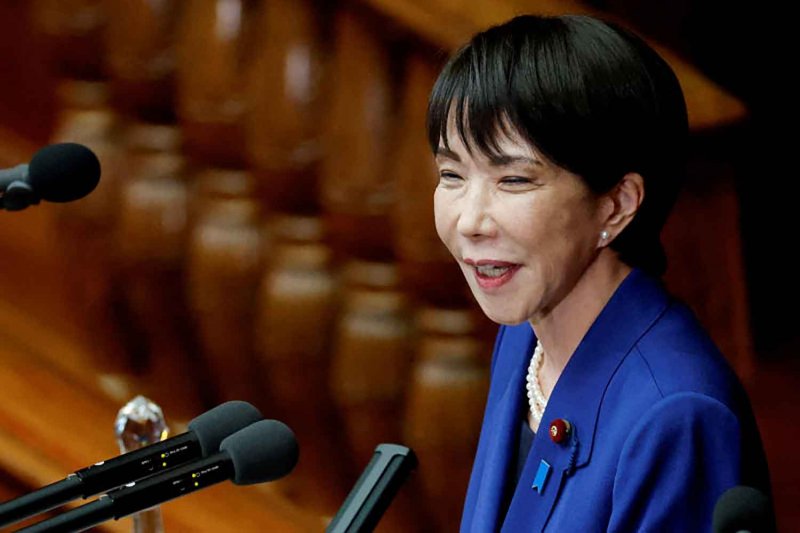
Japan's new Prime Minister Sanae Takaichi delivers her first policy speech in parliament, in Tokyo, Japan, October 24, 2025. (Photo: Reuters)
Japan’s new Prime Minister Sanae Takaichi delivers her first policy speech in parliament, in Tokyo, Japan, October 24, 2025. (Photo: Reuters)

For the first time in its history, Japan’s parliament has selected a woman, Takaichi Sanae of the Liberal Democratic Party, to be prime minister. In this sense, Ms Takaichi has already followed in the footsteps of her political idol, Margaret Thatcher — the UK’s first female PM. But whether she is remembered as Japan’s own “Iron Lady” will depend on her ability to manage three key challenges: inflation, low female labour-force participation and a fraught geopolitical environment.

A protégé of former PM Abe Shinzo, who was assassinated in 2022, Ms Takaichi has promised to revive his economic-policy approach which used monetary and fiscal expansion to lift Japan out of decades of deflation and recession. But the situation Abe confronted in 2012 was very different from the one Ms Takaichi faces today. Back then, an overvalued yen had triggered deflation and was fuelling underemployment, so aggressive monetary easing was vital to stem currency appreciation.

Today, by contrast, Japan is experiencing its first bout of inflation in decades. Yen depreciation is causing Japan’s terms of trade to deteriorate, with lower export prices reducing revenues, and higher import costs squeezing Japanese households. Moreover, as of September 2025, the jobs-to-applicants ratio was 1.2, indicating that, far from an unemployment problem, Japan is now grappling with a labour shortage. And while the stock market appears strong, there is a risk of a bubble, which could harm investors in the event of a collapse.

Far from Abenomics-style monetary expansion, current conditions dictate that the Bank of Japan should raise the short-term policy rate. BoJ governor Kazuo Ueda is well aware of this imperative, but he is hesitating to act on it. The last thing he wants is a repeat of the stock-market turmoil in September 2023, after he floated the idea of hiking short-term interest rates.

But that reaction simply reflected how accustomed to low interest rates Japanese investors have become; it did not mean that the policy was misguided. Mr Ueda must now find the courage to do what he failed to do in 2023: raise the policy rate, and keep it raised. While there may be some short-term pain, it will soon become clear that reining in inflation is much easier than escaping deflation, as Japan did under Mr Ueda’s predecessor.

On the second challenge, Ms Takaichi might seem like the ideal candidate to drive progress, given her success in shattering Japan’s political glass ceiling. And she did make some encouraging pledges during her campaign, such as tax breaks for companies that provide in-house childcare services and expanded women’s health services. She also vowed to increase the number of women in Japan’s cabinet to close to 50%.

At the same time, however, Ms Takaichi is a genuine conservative, who has long advocated traditional gender roles. For example, she has opposed legislation allowing married women to keep their maiden names. And she has so far appointed only two women ministers to her cabinet. Fortunately, one of them is Finance Minister Satsuki Katayama, who could remove one key barrier to women joining the workforce: the additional tax burdens dual-income households face if the second partner’s income exceeds 1.5 million yen (about 313,000 baht) per year.

The third challenge may be where Ms Takaichi is best-suited to shine. Like Abe, she takes a tough-minded approach to security, reflected in her calls to ease restrictions on the country’s Self-Defense Forces, which are prohibited from developing offensive capabilities, and accelerate a military buildup.

Given Japan’s proximity to China and North Korea, this stance may be more justifiable than the pacifism to which most Japanese still cling. While there is no place for antagonism, Japan must be able to stand its ground. At her recent meeting with Chinese President Xi Jinping in Gyeongju, Ms Takaichi signalled that she was prepared to do just that, coming across as confident and resolute.

As for the US, Ms Takaichi’s conservative nationalism has ingratiated her with President Donald Trump, who lavished her with praise on his recent trip to Tokyo. But Ms Takaichi must remain vigilant in her dealings with the erratic, transactional Trump. The bilateral trade deal Ms Takaichi and Mr Trump signed at their meeting is likely to undermine the Japanese people’s welfare. She should also embrace Abe’s vision of a “Free and Open Indo-Pacific”, to navigate a world shaped by the US-China rivalry.

Thatcher’s legacy reflects not only her iron will, but also her oft-forgotten policy flexibility and realism. If Ms Takaichi is to be the leader Japan needs, she must deliver on both fronts. ©2025 Project Syndicate

Is Takaichi Sanae the ‘Iron Lady’ of Japan?

Japan’s new Prime Minister Sanae Tak…

Japan's new Prime Minister Sanae Takaichi delivers her first policy speech in parliament, in Tokyo, Japan, October 24, 2025. (Photo: Reuters)
Japan’s new Prime Minister Sanae Takaichi delivers her first policy speech in parliament, in Tokyo, Japan, October 24, 2025. (Photo: Reuters)

For the first time in its history, Japan’s parliament has selected a woman, Takaichi Sanae of the Liberal Democratic Party, to be prime minister. In this sense, Ms Takaichi has already followed in the footsteps of her political idol, Margaret Thatcher — the UK’s first female PM. But whether she is remembered as Japan’s own “Iron Lady” will depend on her ability to manage three key challenges: inflation, low female labour-force participation and a fraught geopolitical environment.

A protégé of former PM Abe Shinzo, who was assassinated in 2022, Ms Takaichi has promised to revive his economic-policy approach which used monetary and fiscal expansion to lift Japan out of decades of deflation and recession. But the situation Abe confronted in 2012 was very different from the one Ms Takaichi faces today. Back then, an overvalued yen had triggered deflation and was fuelling underemployment, so aggressive monetary easing was vital to stem currency appreciation.

Today, by contrast, Japan is experiencing its first bout of inflation in decades. Yen depreciation is causing Japan’s terms of trade to deteriorate, with lower export prices reducing revenues, and higher import costs squeezing Japanese households. Moreover, as of September 2025, the jobs-to-applicants ratio was 1.2, indicating that, far from an unemployment problem, Japan is now grappling with a labour shortage. And while the stock market appears strong, there is a risk of a bubble, which could harm investors in the event of a collapse.

Far from Abenomics-style monetary expansion, current conditions dictate that the Bank of Japan should raise the short-term policy rate. BoJ governor Kazuo Ueda is well aware of this imperative, but he is hesitating to act on it. The last thing he wants is a repeat of the stock-market turmoil in September 2023, after he floated the idea of hiking short-term interest rates.

But that reaction simply reflected how accustomed to low interest rates Japanese investors have become; it did not mean that the policy was misguided. Mr Ueda must now find the courage to do what he failed to do in 2023: raise the policy rate, and keep it raised. While there may be some short-term pain, it will soon become clear that reining in inflation is much easier than escaping deflation, as Japan did under Mr Ueda’s predecessor.

On the second challenge, Ms Takaichi might seem like the ideal candidate to drive progress, given her success in shattering Japan’s political glass ceiling. And she did make some encouraging pledges during her campaign, such as tax breaks for companies that provide in-house childcare services and expanded women’s health services. She also vowed to increase the number of women in Japan’s cabinet to close to 50%.

At the same time, however, Ms Takaichi is a genuine conservative, who has long advocated traditional gender roles. For example, she has opposed legislation allowing married women to keep their maiden names. And she has so far appointed only two women ministers to her cabinet. Fortunately, one of them is Finance Minister Satsuki Katayama, who could remove one key barrier to women joining the workforce: the additional tax burdens dual-income households face if the second partner’s income exceeds 1.5 million yen (about 313,000 baht) per year.

The third challenge may be where Ms Takaichi is best-suited to shine. Like Abe, she takes a tough-minded approach to security, reflected in her calls to ease restrictions on the country’s Self-Defense Forces, which are prohibited from developing offensive capabilities, and accelerate a military buildup.

Given Japan’s proximity to China and North Korea, this stance may be more justifiable than the pacifism to which most Japanese still cling. While there is no place for antagonism, Japan must be able to stand its ground. At her recent meeting with Chinese President Xi Jinping in Gyeongju, Ms Takaichi signalled that she was prepared to do just that, coming across as confident and resolute.

As for the US, Ms Takaichi’s conservative nationalism has ingratiated her with President Donald Trump, who lavished her with praise on his recent trip to Tokyo. But Ms Takaichi must remain vigilant in her dealings with the erratic, transactional Trump. The bilateral trade deal Ms Takaichi and Mr Trump signed at their meeting is likely to undermine the Japanese people’s welfare. She should also embrace Abe’s vision of a “Free and Open Indo-Pacific”, to navigate a world shaped by the US-China rivalry.

Thatcher’s legacy reflects not only her iron will, but also her oft-forgotten policy flexibility and realism. If Ms Takaichi is to be the leader Japan needs, she must deliver on both fronts. ©2025 Project Syndicate