Auction house Sotheby’s says Mexican artist Frida Kahlo’s “El Sueno (La cama)” has sold for $54.6 million, a new record for a woman’s painting. (Photo: AFP)
NEW YORK – A self-portrait by celebrated Mexican artist Frida Kahlo sold for $54.66 million in New York on Thursday, setting a record for the price of a painting by a woman, the auction house Sotheby’s said.
The sale of Kahlo’s 1940 artwork, titled “El sueno (La cama)” — which translates to “The dream (The bed)” — broke the previous record set by American artist Georgia O’Keeffe, whose 1932 painting “Jimson Weed/White Flower No. 1” sold for $44.4 million in 2014.
Kahlo’s painting is “the most valuable work by a woman artist ever sold at auction,” Sotheby’s said in a post on social media platform X.
The artwork depicts Kahlo sleeping in a bed that appears to float through the sky, beneath a skeleton with its legs wrapped in sticks of dynamite.
The work was painted during a pivotal decade in Kahlo’s career, marked by her turbulent relationship with Mexican painter Diego Rivera, the auction house said on X.
The painting went on the auction block with an estimated price range of $40 million to $60 million.
The buyer’s name was not disclosed.
The work is a “very personal” painting, in which Kahlo “merges folkloric motifs from Mexican culture with European surrealism,” Anna Di Stasi, the head of Latin American art at Sotheby’s, told AFP.
The Mexican artist, who died in 1954 at the age of 47, “did not completely agree” with her work being associated with the surrealist movement, Di Stasi said.
However, “given this magnificent iconography, it seems entirely appropriate to include it,” she said.
Kahlo struggled with fragile health throughout her life due to childhood illness, polio and a serious bus accident in 1925, and pain and death were central to her work.
The skeleton depicted in the painting echoed the papier-mache version that hung above Kahlo’s bed, according to Sotheby’s.
-Women under-represented-
None of the 162 pieces of art that had previously sold for more than $50 million were by women, according to an AFP tally.
Less than one percent of the 468 works sold for more than $30 million are by women artists.
The record-setting sale of Kahlo’s self-portrait came two nights after Sotheby’s made another record sale, with a painting by Austrian artist Gustav Klimt fetching $236.4 million — the second-most expensive artwork ever sold at auction.
Klimt’s “Portrait of Elisabeth Lederer,” which he painted between 1914 and 1916, depicts the daughter of his main patron standing in front of a blue tapestry.
The most expensive painting ever sold at auction remains the “Salvator Mundi,” (Savior of the World), a Renaissance work attributed to Leonardo da Vinci, which was bought for $450 million in 2017.
Female artists whose works have fetched the highest sale prices are primarily prominent 20th century figures.
The third-highest sale price, after O’Keeffe’s White Flower No. 1,” was for a huge spider sculpture by French visual artist Louise Bourgeois, which sold for $32.5 million in 2023.
Kahlo’s self-portrait “Diego y yo” (“Diego and I”, 1949) fetched $34.9 million in 2021 and “Portrait of Marjorie Ferry” (1932) by the Polish painter Tamara de Lempicka was sold for $21.2 million in 2020.
President of the Dangote Group, Aliko Dangote, has attributed the North’s sluggish economic growth and rising insecurity to decades of inconsistent gov…
President of the Dangote Group, Aliko Dangote, has attributed the North’s sluggish economic growth and rising insecurity to decades of inconsistent government policies and prolonged electricity shortages, warning that the region risks deeper crises unless leaders urgently reset its development path.
Speaking at the Arewa Consultative Forum (ACF) Silver Jubilee Dinner and Award Night in Kaduna, Dangote said repeated attempts to industrialise the North collapsed largely because government policies shifted without warning, eroding investor confidence and stalling long-term projects.
He recalled commissioning Arthur Andersen — now part of KPMG — to examine why once-prominent northern industrialists, including top textile operators, failed despite their strong early performance. The findings, he said, pointed squarely to policy inconsistency.
“Imagine you are about to score a goal and someone suddenly tells you the goalpost is behind your back. That is how unpredictable government policy has been,” he said, adding that such uncertainty crippled industries that could have anchored northern growth.
Dangote identified the power crisis as the second major constraint. He said the Dangote Group avoids connecting any of its Nigerian plants to the national grid because electricity supply remains unreliable and inadequate for industrial operations.
“The only two countries where we connect to public power are South Africa and Ethiopia. Without electricity, you cannot have growth, no matter how hard you try,” he said, describing power shortages as one of the biggest barriers to reviving manufacturing in the region.
He added that rising interest rates and the high cost of capital have further weakened the manufacturing sector, noting that industrial ventures in Nigeria are almost impossible without significant self-funding — a reality that limits new entrants.
Related News
Dangote urged northern political leaders to craft a coherent, long-term economic plan built around three pillars — education, industry and agriculture — aligning with a strategy earlier proposed by former Vice President Atiku Abubakar.
He said the North has enough land and population strength to become West Africa’s agricultural hub but remains far from that potential because of poor planning and inconsistent investment.
According to him, insecurity across the region — including banditry, youth unemployment and economic displacement — is the cumulative result of years of neglect.
“All the issues we are facing today would not be happening if we had done the right things. Every one of us shares the blame, myself included,” he said.
Dangote called on political and business leaders to confront the region’s challenges collectively, saying northern Nigeria must urgently prioritise industrial growth if it intends to tackle insecurity and create sustainable jobs.
He noted that while the ACF’s 25th anniversary was a milestone worth marking, the moment should also serve as a sober reflection of the crossroads the region faces.
“If we don’t resolve these issues, they will consume every one of us, whether we are guilty or not,” he warned.
The Katsina State Government has ordered the immediate closure of all public schools across the state following worsening security threats and a fresh …
The Katsina State Government has ordered the immediate closure of all public schools across the state following worsening security threats and a fresh wave of bandit attacks in several communities.
Commissioner for Basic and Secondary Education, Yusuf Sulaiman Jibia, announced the directive on Friday while briefing journalists in Katsina. He said the decision was taken as a precautionary measure to protect students and teachers while security agencies roll out a new statewide school-safety plan.
Jibia acknowledged that students are currently sitting examinations but stressed that safeguarding lives remains the government’s foremost priority.
That the move comes amid heightened tension in the North-West, triggered by recent abductions of secondary school students in Kebbi and Niger states. The incidents have renewed fears among parents and officials over the vulnerability of schools to bandit attacks.
“The state government assures citizens that normal academic activities will resume soon after security assessments are concluded and adequate protection measures are put in place,” Jibia said.
He added that authorities are working closely with security agencies to ensure that the new protective framework is implemented swiftly across all affected areas.
The Federal Government has ordered the immediate closure of 41 Federal Unity Colleges across the country following heightened security concerns and the…
The Federal Government has ordered the immediate closure of 41 Federal Unity Colleges across the country following heightened security concerns and the need to forestall potential threats to students and staff.
The directive, issued by Tunji Alausa, Minister of Education, mandates principals of all affected schools to shut down operations without delay. The order was conveyed through a circular signed by Binta Abdulkadir, Director of Senior Secondary Education, on behalf of the Minister.
According to the circular, the decision follows recent security challenges in parts of the country and is aimed at preventing any breaches that could endanger school communities.
The ministry listed the affected institutions, which span several states across the federation, including colleges in Sokoto, Zamfara, Kaduna, Niger, Kogi, Yobe, Jigawa, Gombe, Ekiti, and others.
Principals of the affected schools have been directed to enforce an immediate shutdown, while the Ministry reassured stakeholders of its commitment to safeguarding the lives of students and staff across all federal institutions.
The Ministry urged full compliance from school heads.
“CLOSURE OF FORTY-ONE (41) FEDERAL UNITY COLLEGES;
“Sequel to the recent security challenges in some parts of the country and the need to prevent any security breaches, the Honourable Minister of Education has approved the immediate closure of the listed Federal Unity Colleges (FUCs) with immediate effect.
“Principals of affected Colleges are to ensure strict compliance. Please, accept the warm regards of the Honourable Minister,” the circular read.
This comes amid rising wave of attacks on schools in northern Nigeria, heightening fears about student safety and reigniting calls for stronger protection of learning environments, especially in rural communities.
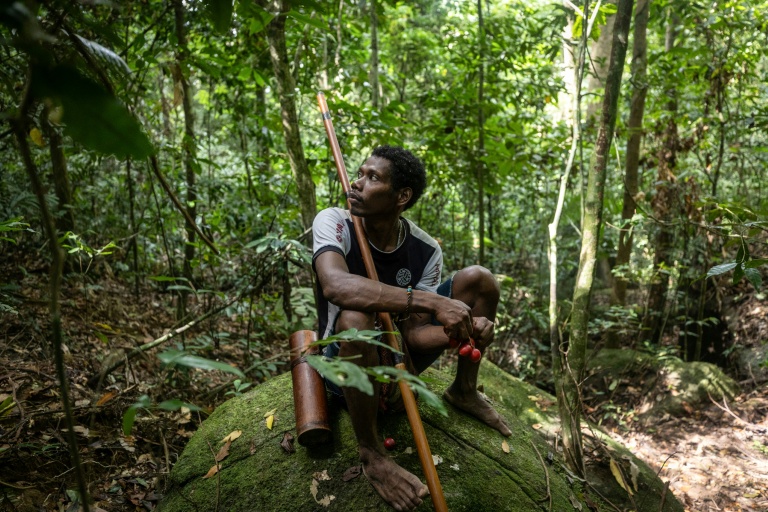
The Maniq in Thailand are demanding ownership rights to land they say has effectively been theirs for generations. (Photo: AFP)
PA BON (THAILAND) – Deep in a Thai forest a young man sprints through the undergrowth, blowpipe in hand, before pumping a poisoned dart at a monkey.
The group closes in, shouting out to each other, and the animal falls to the ground.
The kill was in keeping with centuries of tradition for the Maniq, one of Thailand’s smallest ethnic minorities, who were the country’s last hunter-gatherers.
But the lures of a settled home, among them education and healthcare, mean their way of life is changing.
The Maniq are now demanding ownership rights to land they say has effectively been theirs for generations, but is today protected by Thai law.
As the youngest of the Maniq hunters, still learning the ways of the jungle, Dan Rakpabon, 18, carried the kill back to the thap –- seven leaf-covered bamboo shelters in a clearing in Pa Bon.
Singeing the animal over a fire to burn off the fur, he carefully butchered it and divided the meat among the community, with the largest families receiving the biggest shares.
“I feel happy every time we hunt. This is our food,” he said.
But wildlife is protected in Thailand’s conservation zones, making the kill illegal.
It is a predicament faced by many Indigenous people globally, under pressure to abandon traditional lifestyles and fighting for rights to land they have long called home.
In many cases, they are effectively the victims of environmental conservation efforts, despite studies showing the low-intensity forest use associated with Indigenous peoples often protects biodiversity.
It is a point some officials in Thailand recognise.
“We are not concerned about the Maniq’s traditional way of life,” said Chutiphong Phonwat, head of the Khao Banthat Wildlife Sanctuary.
“They do not destroy the forest.”
– ‘I can write my name’ –
For centuries the Maniq, part of the wider Negrito ethnic lineage, lived as hunter-gatherers, roaming the rainforests of the Malay Peninsula, moving with the seasons in search of food.
Just 415 Maniq remain, according to the Indigenous Peoples’ Foundation for Education and Environment, scattered across southern Thailand’s Banthat mountains.
Most have abandoned the nomad lifestyle of their ancestors and settled on the edges of forests, drawn by access to education for their children and healthcare, as in Pa Bon, in Phatthalung province.
The change comes with challenges: living in the modern world requires cash, so men work on rubber plantations for $3-8 a day, while women make pandanus leaf bags to sell.
Some have smartphones and the community’s children live in a village 10 kilometres (six miles) away during the week for school.
“One day, my child came to me and said, ‘Today I can write my name.’ Just hearing that made me proud,” said mother Jeab Rakpabon, who weaves for a living.
Hunting has become an occasional activity rather than a source of daily sustenance.
“I grew up following my father into the forest to hunt and forage,” said Tom Rakpabon, leader of the 40-strong community — all of whom were given the same surname by officials when they obtained identity cards.
“Now we have to buy rice, meat and vegetables from the market,” he added.
Caught between their old traditions and modern lives, the Maniq and their supporters want ownership rights in perpetuity over protected forest to provide them with settled livelihoods.
“We want proper houses, land to grow our own vegetables,” said Jeab adding that, “leaf shelters like this are only temporary”.
– Title deed –
The forest is now classified as a conservation zone where Thai law bars private landownership and puts strict limits on resource use.
“Not only the Maniq people, but everyone must obey the law equally,” said Chalerm Phummai, director of Thailand’s Wildlife Conservation Office.
Under Thai regulations, established Indigenous communities on protected land can request 20-year usage permits — and several have been issued.
But critics say the process reduces Indigenous groups to temporary occupants of their ancestral forests.
One Maniq community have lived for more than 30 years in Plai Khlong Tong in Trang province, establishing their own rubber plantations and permanent but sparsely-furnished wooden and concrete houses among the forest’s towering resin trees.
But it is not easy.
“It’s frustrating to live like this,” said Thawatchai Paksi, whose mother’s marriage to a Thai rubber-grower was the catalyst for the transition. “We need permission for almost everything — even cutting down a tree or building a house.”
Living without title deeds leaves the community in a precarious position, explained local leader Sakda Paksi.
“If the Maniq had land, we could stand on our own feet.”
– Hard lessons –
The situation has created real hardship for some.
Some Maniq in Satun province have been reduced to begging because they cannot find work.
“If nobody gives us food, it’s difficult,” said their leader Jin Sri Thung Wa.
The group travels several kilometres from their forest shelter to beg on a roadside.
“There’s nothing left in the forest here, and no work we can do,” she said.
The Maniq also face discrimination.
Kritsada Inchalerm, a Thai who stopped to give them food and money, said they reminded him of a film, Sagai United –- a title that incorporated a Malay word for slave used as a derogatory term for the minority.
“The Maniq are not savages,” said Tao Khai, leader of another community. “We are people who live in the forest.”
The owners of a resort and rubber plantation allow his group to live on their property, but they have no fields to cultivate and survive on daily wage work in the area, supplemented by hunting.
Every morning a plantation staffer drives Duan Srimanang, 13, and dozens of other children from several local Maniq communities to school.
She has been put into second grade according to her abilities and learns alongside seven-year-olds, but can now write her name and is learning to read.
“When I grow up, I want to have a job and earn money so I can take care of my mother and make her comfortable and happy,” she said.
– Land security –
A new Thai law in September introduced “protected ethnic areas” for Indigenous groups, with a more flexible regulatory regime.
“The Maniq will not be granted land ownership, but they will receive rights to use the land in accordance with their traditional way of life,” said anthropologist Apinan Thammasena.
“Land security does not necessarily have to come in the form of ownership. It can come in the form of guaranteed, permanent rights to use the land,” he added.
But MP Laofang Bundidterdsakul, who helped draft the bill and is from the Hmong hill tribe, said existing environmental rules were left in place, potentially undermining the new measure’s impact.
“Land rights remain largely unchanged,” he said. “For example, land matters remain under the same forestry law. Road construction, access to electricity and water still require permission from the Forestry Department.”
At the rubber plantation, where Duan and her friends did their homework under the glow of headtorches, Tao Khai returned home from a hunt.
“This land was given to us only temporarily,” he said. “The Maniq want a home where we can live forever.”
This story is a collaboration between AFP and HaRDstories, with support from the Pulitzer Center.
The Plateau State Universal Basic Education Board (PSUBEB) has ordered the immediate shutdown of all basic schools across the state as part of urgent p…
The Plateau State Universal Basic Education Board (PSUBEB) has ordered the immediate shutdown of all basic schools across the state as part of urgent preventive measures aimed at safeguarding pupils and communities.
The directive, signed by Richard Nanpon Jonah, the Public Relation Officer (PRO) on behalf of the management of the board, made available to Journalists on Friday in Jos said it affects Government Junior Model Secondary Schools (GJMSSs), primary schools and day schools.
According to PSUBEB, Government Junior Model Secondary Schools are to close effective Saturday, 22 November 2025, while all primary and day schools will shut down beginning Monday, 24 November 2025.
“The Plateau State Universal Basic Education Board (PSUBEB) has directed the immediate closure of schools across the state as follows: Government Junior Model Secondary Schools (GJMSSs) will close effective Saturday, 22 November 2025. Primary and Day Schools will close effective Monday, 24 November 2025”; the statement said.
The Board described the action as a “temporary but necessary step” taken to forestall potential threats.
Related News
The Board assured parents, guardians, and stakeholders that the safety and wellbeing of learners remain the government’s top priority. It noted that although the closure may cause inconvenience, it is a proactive measure intended to calm anxieties and strengthen community confidence.
PSUBEB further urged Local Government Education Authorities, school administrators and community leaders to comply fully with the directive.
“The Board calls on all Local Government Education Authorities, school administrators, and community leaders to cooperate fully with this directive and remain vigilant”.
The Board also appealed for heightened vigilance during the period of closure to ensure that emerging risks are promptly reported and addressed.
It emphasised that the decision underscores the government’s commitment to protecting children and preserving the learning environment.
The PSUBEB assured that updates on the reopening of schools would be communicated in due course.
By Alimat Aliyeva
Uber announced on Thursday that it will partner with Starship
Technologies to introduce autonomous robot deliveries in the UK
starting in December, with plans to expand to additional European
markets next year and the United States in…
By Alimat Aliyeva
Uber announced on Thursday that it will partner with Starship
Technologies to introduce autonomous robot deliveries in the UK
starting in December, with plans to expand to additional European
markets next year and the United States in 2027, Azernews reports, citing foreign media.
Initially, Uber Eats customers in the Leeds and Sheffield areas
will be able to receive deliveries from Starship’s robots, the
company said.
This partnership is the latest in a series of collaborations
Uber has established with autonomous vehicle and robotics companies
as it increasingly focuses on automating its services to drive
growth and efficiency. In the United States, Uber already works
with Avride and Serve Robotics to provide robotic food
deliveries.
Starship, based in San Francisco, will deploy robots operating
at Level 4 autonomy, meaning they can navigate and complete
deliveries within a designated area without human intervention. The
robots are equipped with advanced sensors, cameras, and AI systems
to safely avoid obstacles, interact with pedestrians, and ensure
timely deliveries.
Experts suggest that this move could significantly reduce
delivery costs, speed up service in congested urban areas, and
provide a glimpse of the future of “last-mile” logistics.
Interestingly, some of Starship’s robots are designed to carry
multiple orders simultaneously, and users can track the robots in
real time via the Uber Eats app, making the experience interactive
and futuristic.
With the rise of autonomous technology, partnerships like Uber
and Starship’s signal a shift in the delivery industry, where smart
robotics and AI could become as commonplace as traditional couriers
within a few years.
The governor of Japan’s Niigata Prefecture announced on Friday that he would allow the partial restart of the Kashiwazaki-Kariwa nuclear power pl…
The governor of Japan’s Niigata Prefecture announced on Friday that he would allow the partial restart of the Kashiwazaki-Kariwa nuclear power plant, the world’s largest, as part of Japan’s efforts to revive its nuclear industry and reduce reliance on fossil fuel imports, Azernews reports.
Access to paid information is limited
Find the plan that suits you best.
1 month subscription
Full digital access to all news for 1 month
3 months subscription
Full digital access to all news for 3 months
2.00₼
Select
-33%
6 months subscription
Full digital access to all news for 6 months
3.84₼
Select
-36%
1 year subscription
Full digital access to all news for 1 year
7.10₼
Select
-41%
Here we are to serve you with news right now. It does not cost much, but worth your attention.
Choose to support open, independent, quality journalism and subscribe on a monthly basis.
By subscribing to our online newspaper, you can have full digital access to all news, analysis, and much more.
[unable to retrieve full-text content]BISSAU – Caramba Souare focuses on cleaning the car in front of him despite a din of surrounding festivities on the last day of presidential campaigning in Guinea-Bissau.
[unable to retrieve full-text content]
BISSAU – Caramba Souare focuses on cleaning the car in front of him despite a din of surrounding festivities on the last day of presidential campaigning in Guinea-Bissau.
By Alimat Aliyeva
OpenAI has officially rolled out the ChatGPT group chat feature
globally for all users, including those on the free plan as well as
Go, Plus, and Pro subscriptions. The launch follows a week of pilot
testing in selected regions, inclu…
By Alimat Aliyeva
OpenAI has officially rolled out the ChatGPT group chat feature
globally for all users, including those on the free plan as well as
Go, Plus, and Pro subscriptions. The launch follows a week of pilot
testing in selected regions, including Japan and New Zealand, Azernews reports.
According to a report from TechCrunch, the new feature allows
multiple users to have shared conversations with ChatGPT in a
single chat thread.
OpenAI representatives note that this update transforms ChatGPT
from a personal assistant into a collaborative tool where friends,
colleagues, or family members can plan activities, create content,
and make decisions together. At the same time, the AI can assist by
searching for information, summarizing data, and comparing
different options to help groups reach informed decisions.
Up to 20 participants can join a single group chat after
accepting an invitation. Each participant’s personal settings and
memory remain private. To start a group chat, users simply click on
the people icon and add participants directly or via a link. All
invited members must complete a short profile with their name,
username, and avatar. When a new participant joins an existing
chat, a separate copy of the conversation is created, leaving the
original thread unchanged.
ChatGPT is designed to recognize when it should contribute to
the conversation and when it is better to stay silent. Users can
also tag the AI using the ChatGPT mention to prompt a response. In
addition, the AI can react with emojis and even reference
participants’ avatars, adding a playful and interactive dimension
to group discussions.
The introduction of group chats comes less than two weeks after
the release of the GPT-5.1 model, which includes Instant and
Thinking modes, offering faster responses and enhanced reasoning
capabilities.
Interestingly, this new feature could transform how people
collaborate online. Beyond casual chats, it opens opportunities for
team brainstorming, study groups, family planning, and even
creative projects. Experts suggest that by blending social
interaction with AI assistance, group chats may redefine
collaborative work and make ChatGPT an integral part of everyday
teamwork.