In one of his primary school years at Benchamarachuthit Chanthaburi School, Ratchanon Sukcharoen participated in the Honor Scout Corps Club. That was the first time he tried his hand at volunteering under the network of His Majesty King Vajiravudh and …
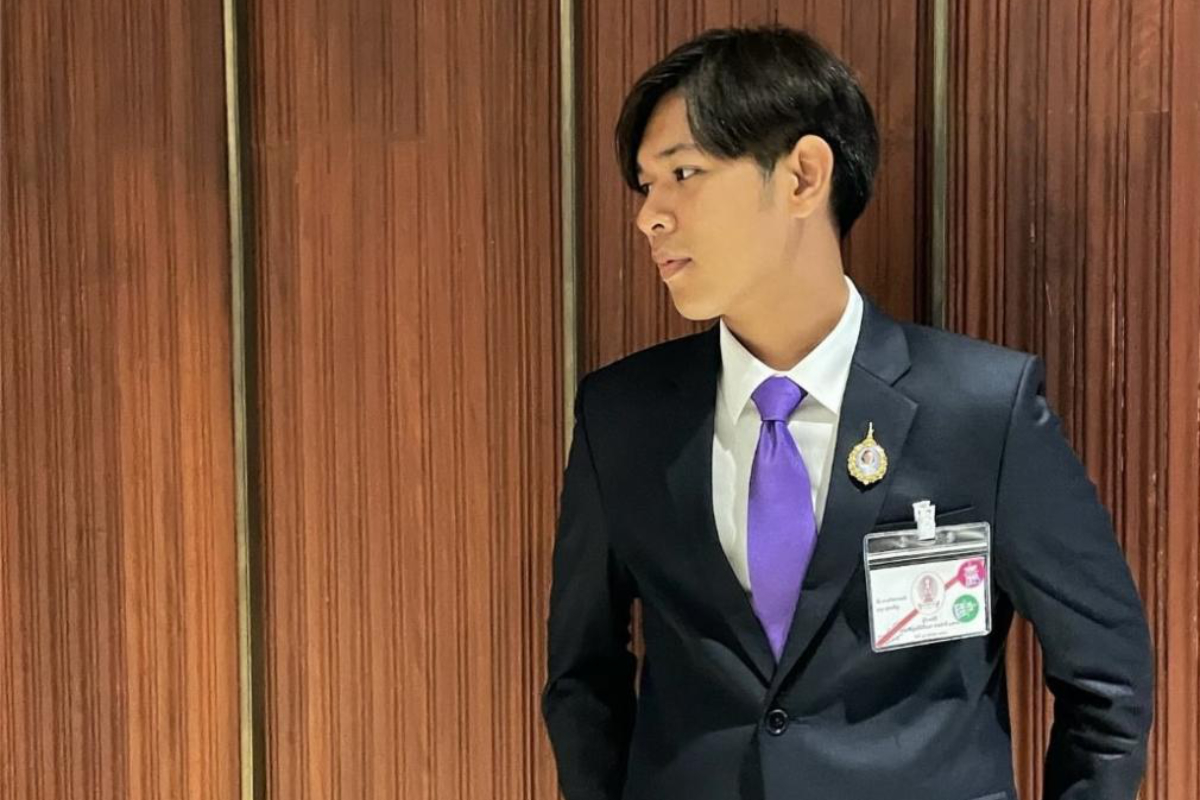
In one of his primary school years at Benchamarachuthit Chanthaburi School, Ratchanon Sukcharoen participated in the Honor Scout Corps Club. That was the first time he tried his hand at volunteering under the network of His Majesty King Vajiravudh and HRH Princess Bejaratana Rajasuda, the only child of King Vajiravudh.
“I saw the seniors wearing [scout] uniforms. I thought it looked so cool,” he recounted.
Later, the young Ratchanon discovered there is more to scouting than just wearing tidy outfits.
“The scouts we knew were different from reality. Volunteering there taught me how to be helpful to others,” he said. At the club, Ratchanon participated in activities that children could do such as being a teaching assistant, helping the elderly and cleaning.
Ratchanon is currently a senior at Mahidol University’s Faculty of Public Health. He admitted that the teachings and spirit of King Vajiravudh greatly affected the way he now lives his life. Outside university, he also works as a guide volunteer for the King Vajiravudh Memorial Foundation under Royal Patronage and Bejaratana-Suvadhana Foundation at Ruen Rudee Palace.
The now 21-year-old will be joining Thai people in honouring the 100th anniversary of the passing of King Vajiravudh on Nov 25, and also celebrating the 100th anniversary of the birthday of Princess Bejaratana Rajasuda on Nov 24.
Although it’s been 100 years, Ratchanon admitted that the solid determination of the late king has been carried on by the younger generation.
Ratchanon was first invited by the King Vajiravudh Memorial Foundation under Royal Patronage to work as a volunteer guide at Vajiravudhanusorn of Thailand’s National Library, serving as a storyteller about King Rama VI with wax figures as visual aids.
“He [King Vajiravudh] had a contemporary mindset,” Ratchanon said. “That was why people of that era did not quite understand him.”
King Rama VI tried to use media as a strategy to educate people, which explained why he graciously allocated a huge budget towards media development. Ratchanon also said King Rama VI established Chulalongkorn University despite opposition from the royal court, as they feared educated people from the next generation would take over the throne.
King Rama VI, on the other hand, focusing on the development of the nation rather than securing the throne.
In addition to being a volunteer guide, Ratchanon also worked as an assistant to the King Vajiravudh Memorial Foundation.
“Keep walking. Time and tide wait for no man,” he said, referring to one of King Vajiravudh’s speeches.
Thailand National Artist Somtow Sucharitkul announced that opera productions, concerts and all other activities of Opera Siam and its many ensembles will be dedicated to the memory of Her Majesty the Queen Mother for a period of one year. Her M…
Thailand National Artist Somtow Sucharitkul announced that opera productions, concerts and all other activities of Opera Siam and its many ensembles will be dedicated to the memory of Her Majesty the Queen Mother for a period of one year.
Her Majesty was an avid devotee of classical music and as a young woman studied to be a concert pianist before she fell in love with the young king of Thailand and devoted her entire life to him and to her country, leaving an unparalleled legacy of elegance and culture which totally changed how Thailand was perceived in the international community.
“I feel that the best way to honour Her Majesty’s memory over the year-long mourning period is to fill that year with as much beautiful music as we can. In particular, we will be programming works connected with Her Majesty in each event, including composers Her Majesty told me herself were among her favourites,” said Somtow.
Opera Siam will open its year of tribute with a concert in the state-of-the-art Great Hall of King’s International School Bangkok, initiating an exciting new relationship that will position this venue as a new performing arts mecca. The concert will open with the music of Rachmaninov, the beautiful vocals sung by one of Thailand’s leading sopranos, Barbara Zion. After some music from Star Wars, the concert will conclude with four choirs and four international soloists joining in that great hymn to universal brotherhood, Beethoven’s Ninth Symphony.
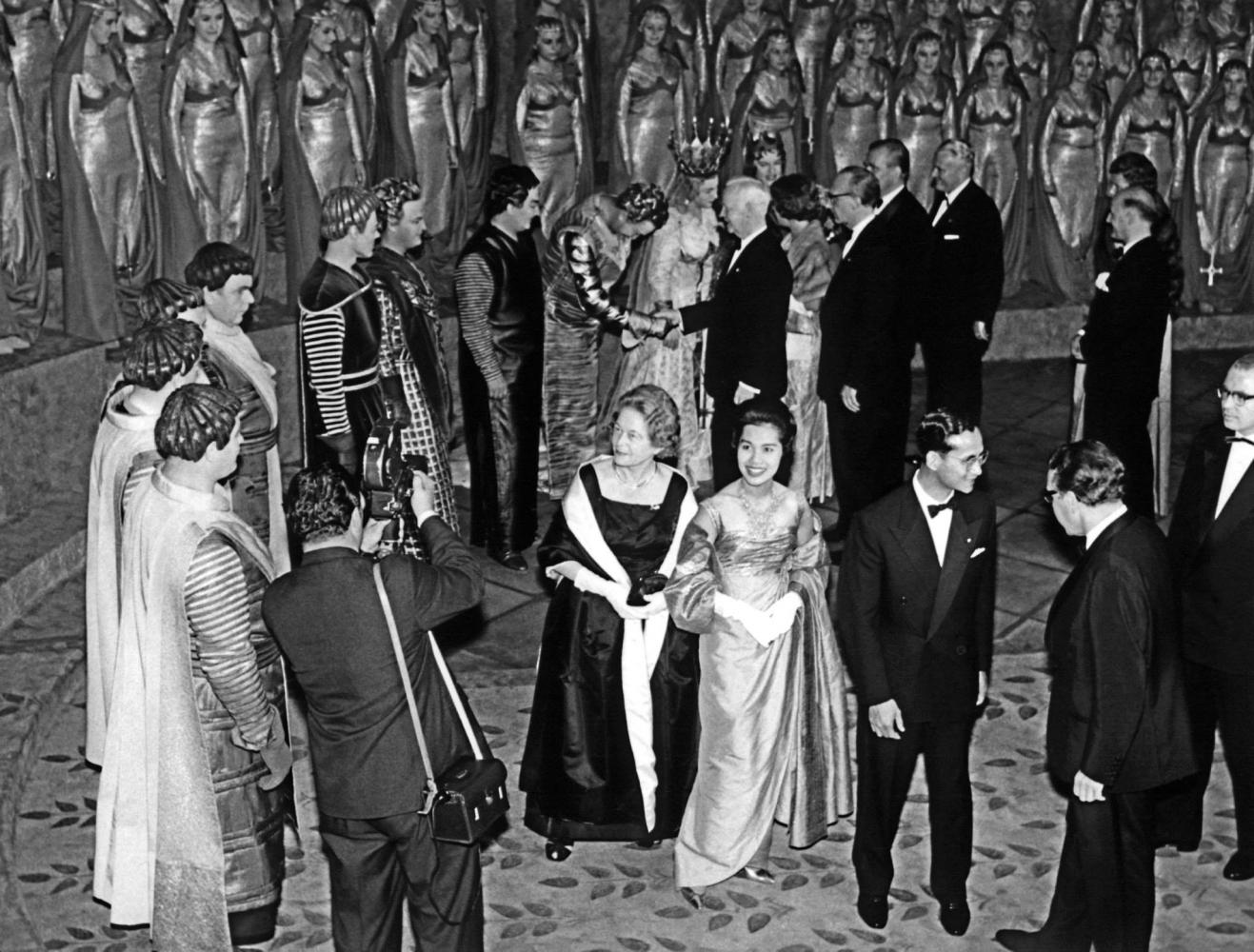
Their Majesties with the cast of Wagner’s Lohengrin at the Bayreuth Festival in Germany. photo:
Over the course of the year performances at King’s will feature operas, including Somtow’s The Silent Prince and Gluck’s Orfeo, fully staged ballets like Petrushka, Thai premieres of major symphonic works, and special events for young people.
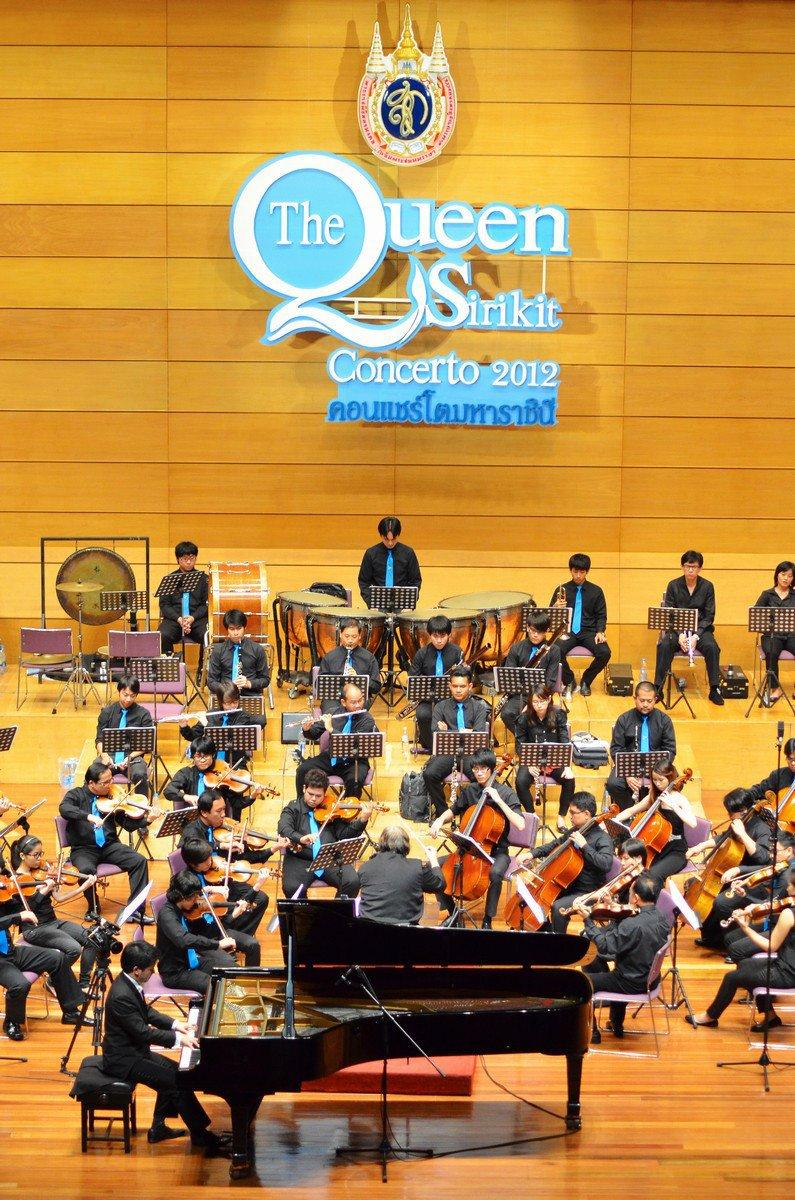
On a larger scale, February will see a revival of Somtow’s most popular opera, Mae Naak, at the Thailand Cultural Centre, as well as a performance of his Queen Sirikit Concerto, which was commissioned by HRH Princess Galyani Vadhana to celebrate HM Queen Sirikit’s Sixth Cycle.
“Mae Naak, a ghost story, and Orfeo, an ancient myth, are both stories of love transcending death,” said Somtow. “Her Majesty graciously attended and encouraged our opera performances over the years.
“Other performances planned also revolve around themes of love, womanhood and Thainess. But whether it’s a small evening of song or a massive opera production, we plan to celebrate the memories and dream for a hopeful future. The Thai royal family had a huge influence on the appreciation of music in this country. Although the Queen Mother has passed, her influence lives on.”
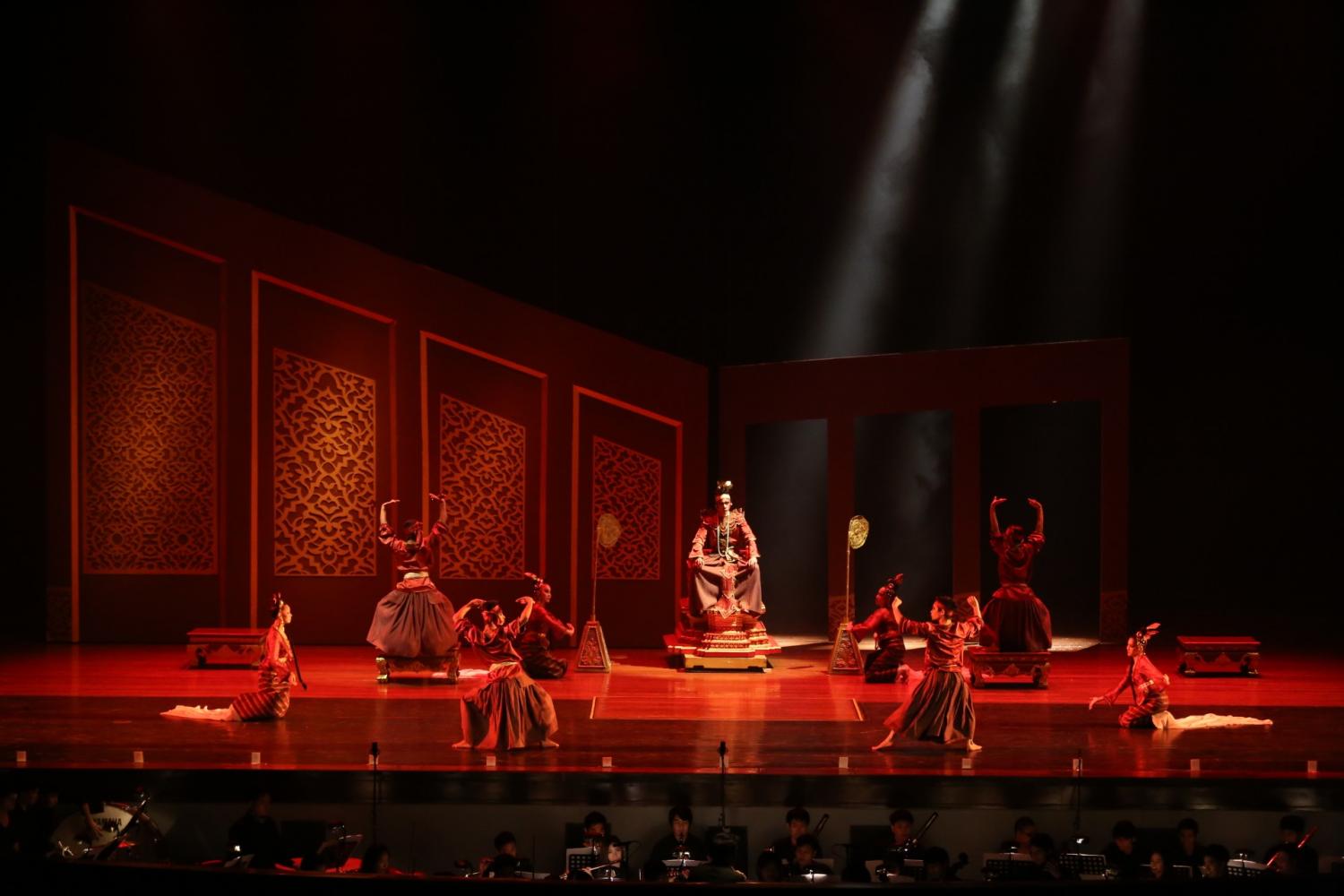
A scene from Suriyothai, the ballet opera composed by Somtow and dedicated to HM Queen Sirikit. photo:
There is a particular kind of modern Bangkokian who wakes up inside a split screen. Before breakfast, they’ve already moved between two different digital climates: the English-speaking internet with its global aesthetics and algorithmic calm, and the T…
There is a particular kind of modern Bangkokian who wakes up inside a split screen. Before breakfast, they’ve already moved between two different digital climates: the English-speaking internet with its global aesthetics and algorithmic calm, and the Thai internet with its chaos, humour and emotional shorthand. These worlds sit side by side on the same phone, but they might as well belong to different planets.
This isn’t just about language. Bilingual societies have always toggled between two tongues. What’s happening in Bangkok now is something deeper: a generation learning to live in two simultaneous realities, each with its own emotional rules, values and ways of being.
The English internet carries global expectations. It teaches vocabulary like “quiet luxury”, “boundaries”, “intentional living” and “romanticise your life”. It rewards minimalism, clarity, personal branding and the soft, neutral tone that’s become the lingua franca of aspirational modernity. It frames identity as a curated project — something honed through discipline and choice.
The Thai internet, by contrast, rewards participation, expressiveness and humour that never survives translation. It’s communal, dramatic, fast-moving. Here is where condo politics play out, where neghbourhood gossip spreads, where a video taken mid-traffic stop becomes a national joke, and where a single sticker communicates more emotional nuance than an English paragraph. It frames identity relationally: grounded in context, obligation, warmth and reading the room. These aren’t just two languages — they’re two emotional operating systems.
What makes Bangkok fascinating right now is how fluently its young middle class moves between them. There is no whiplash, no sense of having to choose. Instead, the switching becomes instinctive. In English, voices become cooler, more composed, more structured. In Thai, tone softens instantly — rounder, funnier, warmer. The swap is more emotional calibration than “English proficiency”.
Digital life shows this split well. One moment you’re absorbing global design references, self-help language and a Western influencer’s tutorial on a “simple” recipe requiring ingredients you can only find at Villa. The next, you’re in a Line group negotiating a delivery order, or laughing at a sticker that only works because you understand the cultural timing. There are even international creators in the online space who move to Thailand and eventually reflect this split. They arrive producing content in English, but slowly their feeds become bilingual. They pick up Thai slang, reply to Thai comments, and learn how to shift tone depending on their audience. Bangkok teaches dual fluency simply by being itself.
But the real story isn’t how these internets differ — it’s what living inside both does to identity.
The English internet teaches articulation while Thai teaches intuition. If English is self-assertion, Thai balances with softness and negotiation. English rewards the individual, where Thai rewards the collective.
Moving between these systems forces Bangkokians to become careful editors of their own identity; not in a fake, performative way, but in the sense of knowing which parts of themselves serve which context. Rather than fracturing identity, this duality expands it. We are able to take what resonates and leave what doesn’t.
This is where the old clichés about globalisation making everyone the same fall apart. What Bangkok shows is the opposite: the more global influence flows in, the more deliberate and conscious Thainess becomes.
Bangkok is not passively absorbing global culture, but filtering it — crafting a new Thainess unbound by nostalgia, nor defined by insecurity or imitation. It’s a Thainess shaped by choice and confident enough to adopt global ideas without needing to replicate global personality, remaining grounded in relationship, generosity and the greng jai mentality, even as the city evolves.
In many cities, global influence flattens local culture. In Bangkok, it folds into it. The English internet teaches one mode of living; the Thai internet teaches another. The Bangkokian holds both without contradiction. They can scroll in two directions and still end up anchored.
Increasingly, this dual fluency is becoming one of the most valuable cultural skills of the generation. It creates a kind of identity agility — an ability to shift registsers, translate meaning and find coherence in complexity, forming relationships and bonds across different cultures. It produces a person who can operate globally but remain emotionall local. Someone who can participate in international culture without losing the texture that makes them Thai.
This quietly, is the new cultural identity forming beneath the city’s surface. Not “Westernised Thai”, nor “Traditional Thai”. Someone hybrid, dexterous, and confident. Someone who isn’t split by duality but shaped by it, carrying global input in one hand and Thai intuition in the other.
Two internets haven’t split us. They’ve clarified how much room modern Thai identity has to evolve — and how naturally we’re already expanding it.
Like Proteus, paper can change its shape, form and role. It is a medium for transmitting knowledge and a substrate that new ideas feed and grow on. It is a creature with fibrous anatomy. Such preoccupation with how paper can be anything but a rectangul…
Like Proteus, paper can change its shape, form and role. It is a medium for transmitting knowledge and a substrate that new ideas feed and grow on. It is a creature with fibrous anatomy. Such preoccupation with how paper can be anything but a rectangular sheet sets the tone for the exhibition titled “Forms Of Encounter” at Central Chidlom.
“I have brought together a range of works which I think defy expectations of what print can potentially mean,” said John Tung, an independent curator, at a press preview.
Running until the end of this month, the exhibition is held to mark the 60th anniversary of diplomatic ties between Singapore and Thailand. It also coincides with the city-state’s 60th anniversary of independence. A collaboration between the Singapore Tyler Print Institute (STPI) and the Embassy of Singapore in Thailand, the exhibition brings together three Thai artists, Rirkrit Tiravanija, Natee Utarit, and Pinaree Sanpitak, and three Singaporean artists, Charles Lim Yi Yong, Heman Chong and Suzann Victor.
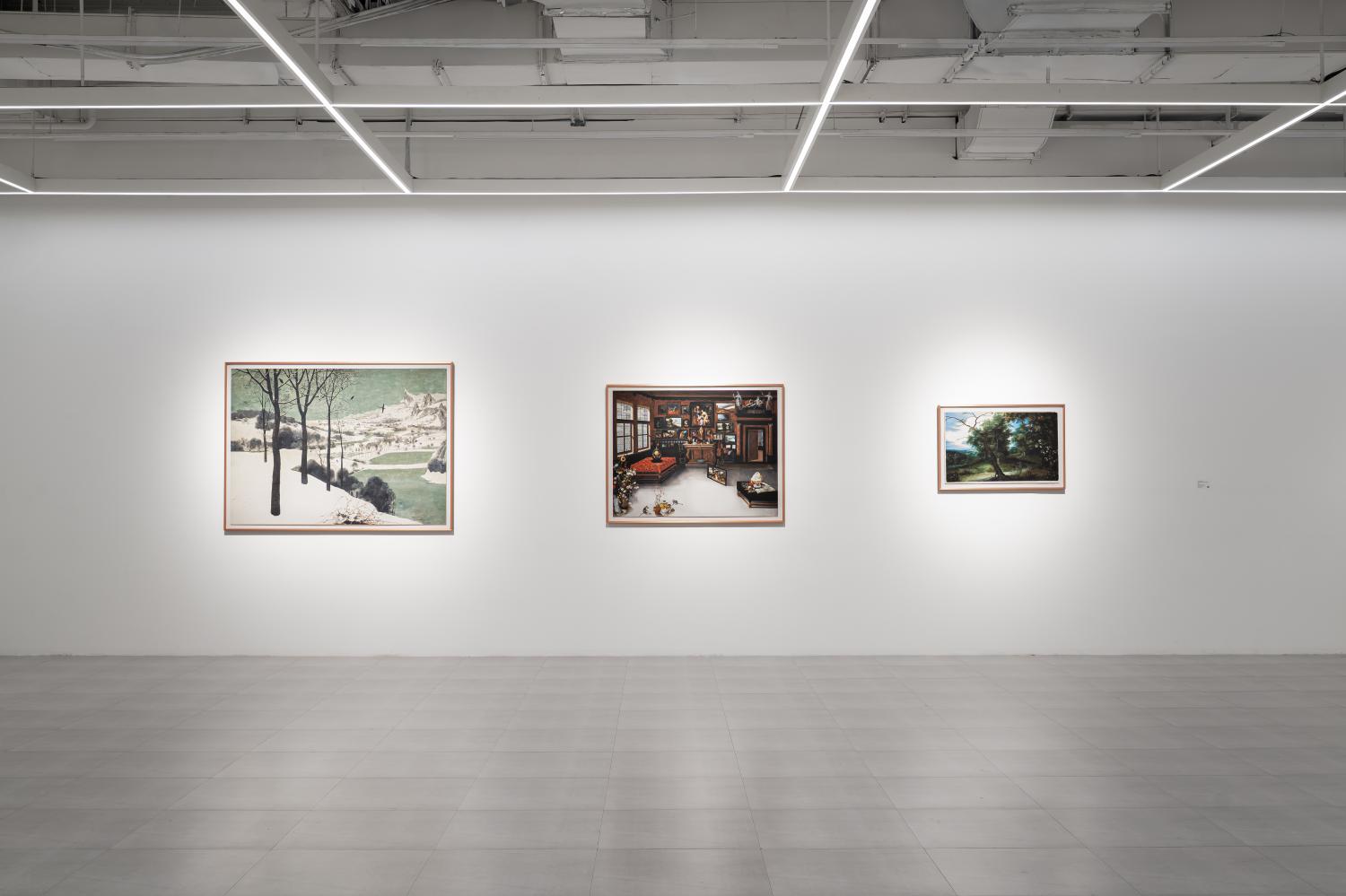
And the exhibition lives up to its claim. Rirkrit and Lim call into question the stability of records on paper. Tung used an ultraviolet flashlight to reveal some secrets in Rirkrit’s trio on the wall near the gallery entrance. Known for relational artworks, ranging from serving food on ceramics to handing out T-shirts, he extends an invitation to look for something missing in his thermochromic prints. With effort from a flashlight or a warm hand, Untitled 2020 (Paradise Regained I) shows an endangered arctic fox walking through a snow-laden valley. Meanwhile, a leopard and birds are seen in two other pieces and a spectral presence highlights the far-reaching impact of human activities on the environment.
Rirkrit Tiravanija’s thermochromic trio.
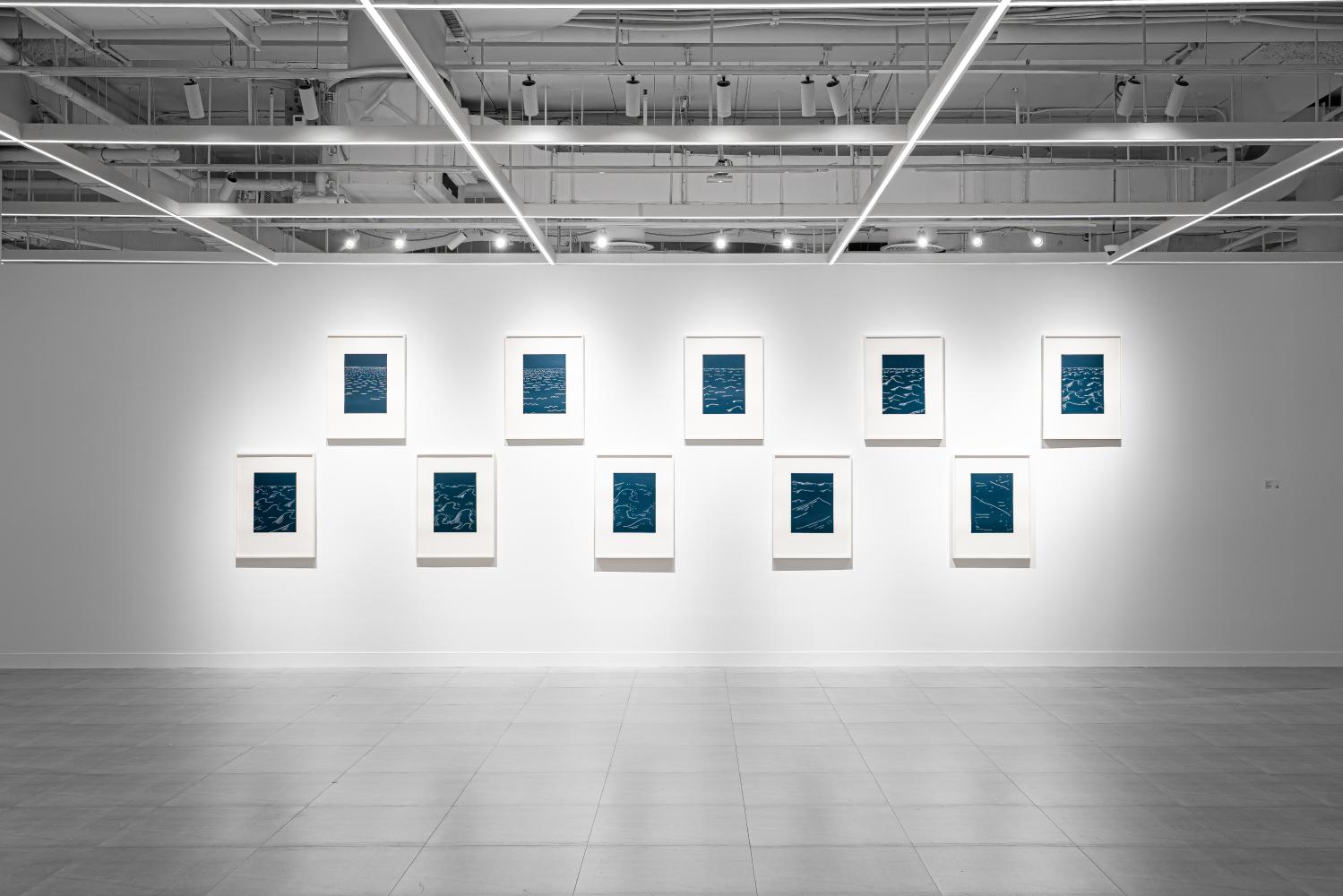
Opposite, Lim’s SEASTATE 9 presents a collection of six laser-cut paper models of Singapore’s shifting coastlines. His experience in professional sailing informs his artistic engagement with the impact of capitalism on the sea. Each island model differs in shape and size and looks like a jigsaw. It draws attention to Singapore’s land reclamation that joins smaller islands together, for example, Jurong Island and Sentosa, and its impact on local communities. From a distance, his work evokes a map of islands reefs, and shoals in the vast ocean. Lim’s SEASTATE 029 is also a collection of relief prints of changing wave patterns. Viewed from top left to bottom right, they turn into cinematic scenes, showing the fluidity of images on paper.
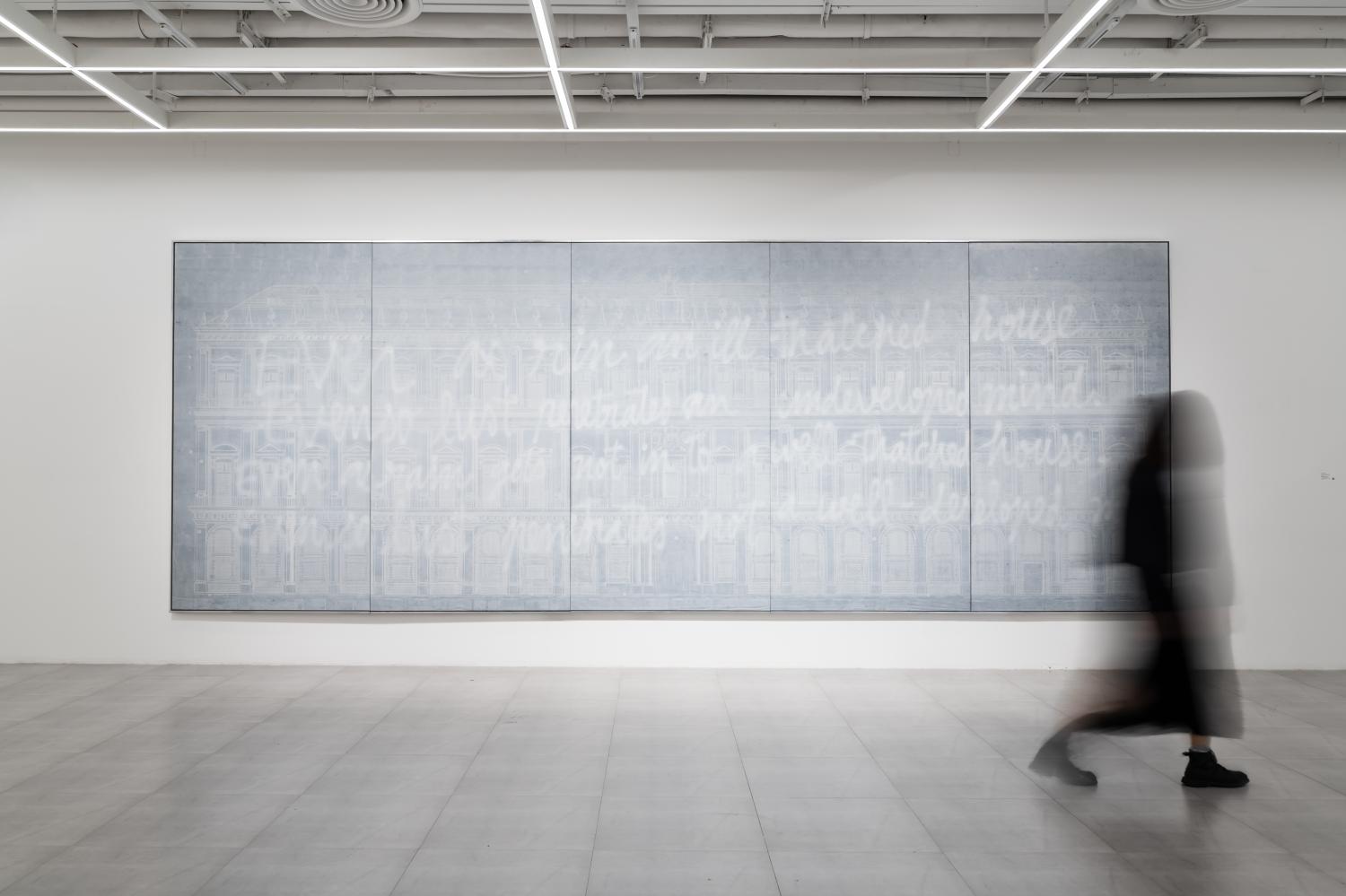
Meanwhile, Natee and Chong challenge print medium as the source of truth. Known for questioning the canonical status of Western art, Natee expresses his concern in BUDDHA PALAZZO (A.M.). Evoking a mural painting, this five-panel artwork marks the conclusion of his decade-long project titled “Déjà vu: Buddha Is Hiding”, where he imagines Buddha’s journey to the West. A velvety texture from flocking draws attention to its own status. A combination of a palatial building in Italy with Buddhist iconography highlights cultural hybridity. Nearby, Archetype (Green) is a stone-like statue made from papier mâché. It came to his mind when he accidentally dropped his Gandara Buddha statue. Given its cultural syncretism between Classical Greek culture and Buddhism, shattered pieces of the whole statue raise the issue of ownership of cultural heritage.
Charles Lim Yi Yong’s SEASTATE 029.
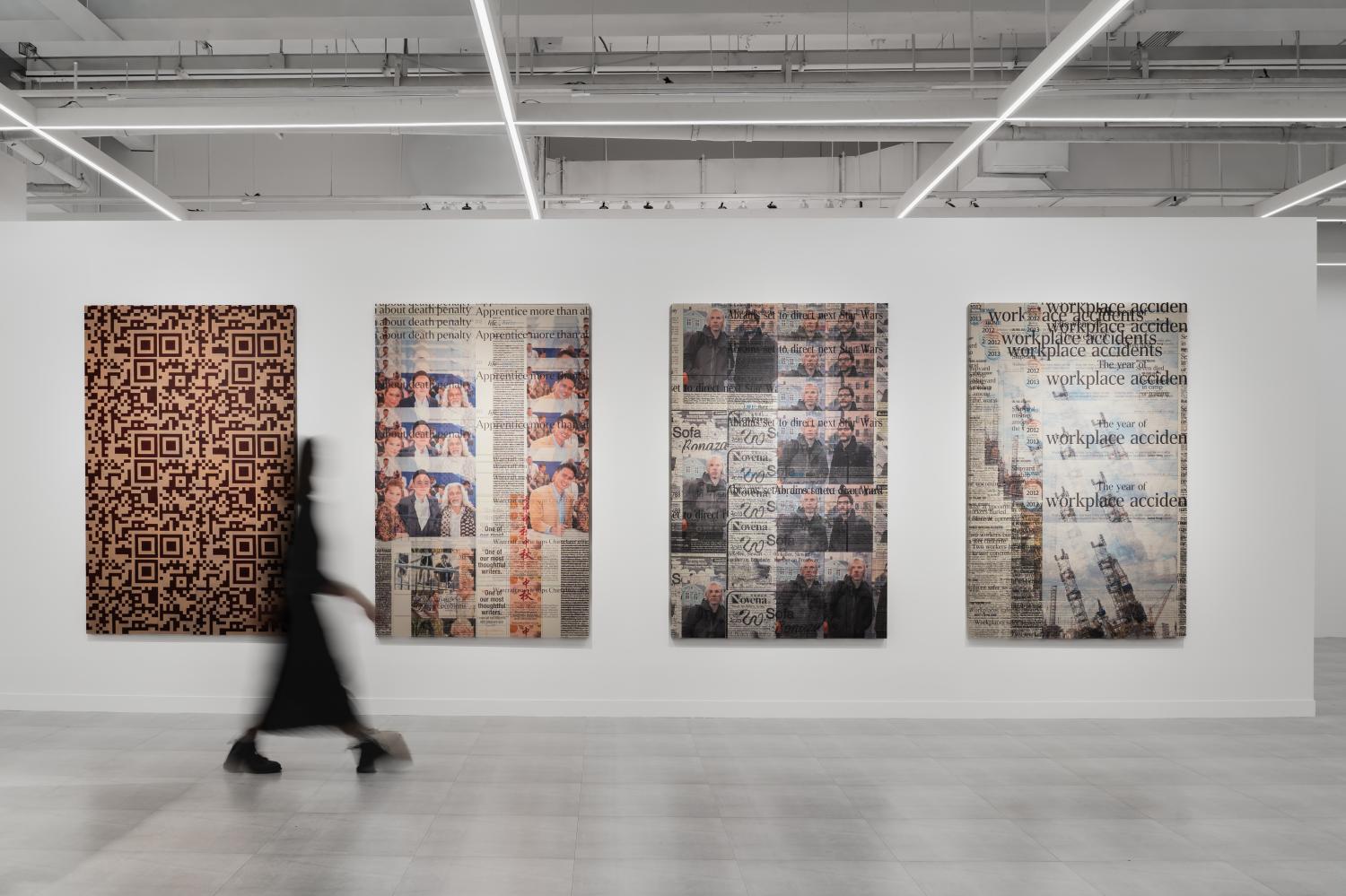
Nearby, Chong sustains his investigation of infrastructures that underpin contemporary life. In Safe Entry V.2.5, he creates acrylic paintings of QR codes for contact tracing during Covid-19 to draw attention to surveillance technology. Evoking his collection Calendars (2020-2096) in his solo exhibition, Circuit Breaker Paintings chronicles each day of Singapore’s partial lockdown by marking X (hazard tape for social-distancing caution). Chong painted the motif and posted it on social media to cope with pandemic-induced anxiety. His three other pieces are palimpsests of newspaper sheets from The Straits Times. Intentional glitches from techniques, particularly repetition and overlap, express tendencies towards reflexivity, challenging journalistic pursuit of objectivity and truth in its service.
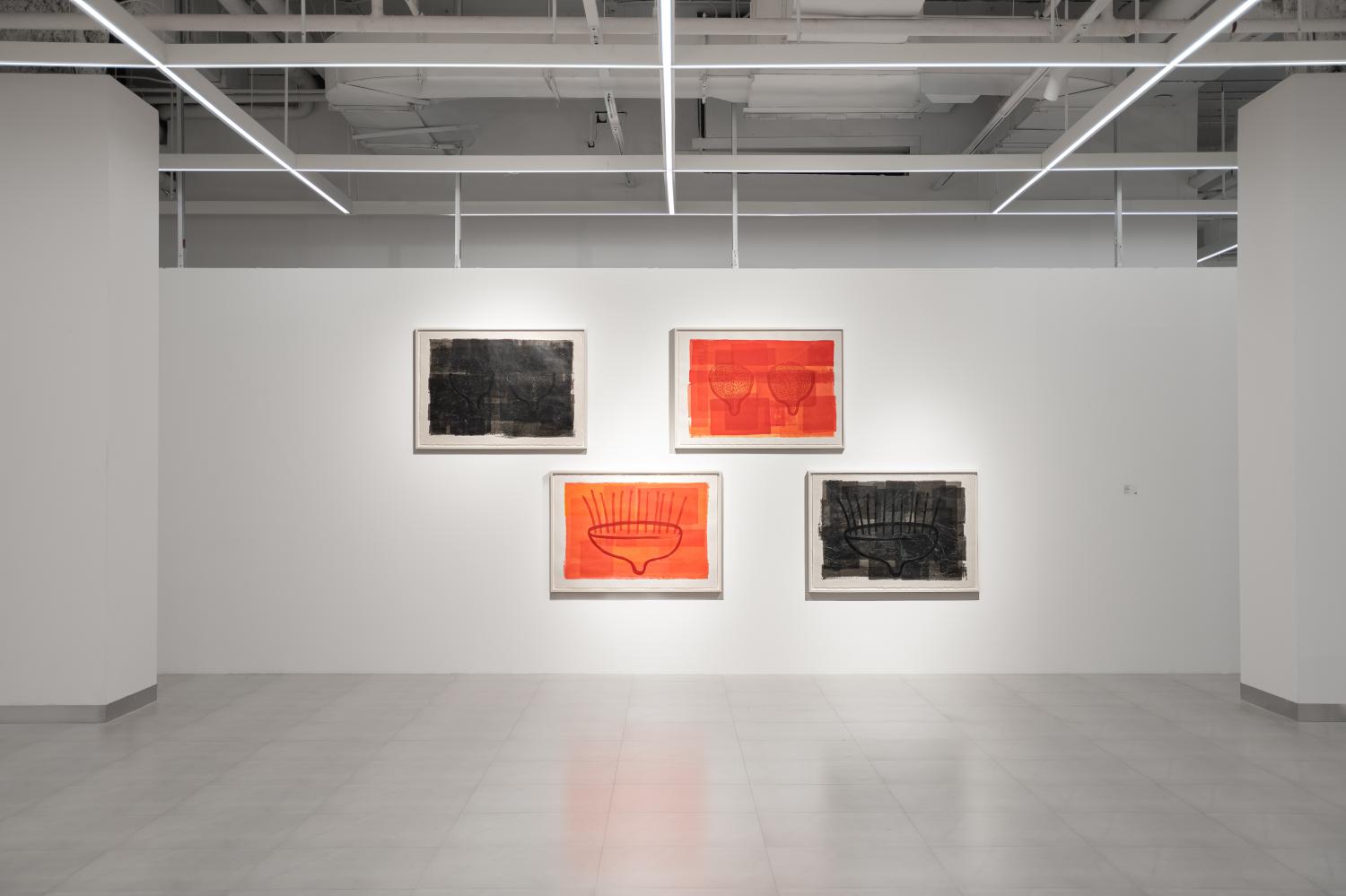
The exhibition concludes, or begins, depending on the point of entry, with two female artists, who give expressions to the body of paper. Known for distilling women’s body parts into objects, Pinaree’s fascination with the breast stupa motif is reflected in her images currently on view. Multiple printing techniques, including relief, scratching and etching, create subtle textures to foster intimacy. Her depiction fluidly moves between breasts, everyday objects and stupas, blurring the spectrum of profanity and sacredness. For example, three pieces in Breast Vessel II look like women’s breasts, a comb or an incense burner, depending on perspective.
Natee Utarit’s BUDDHA PALAZZO (A.M.).
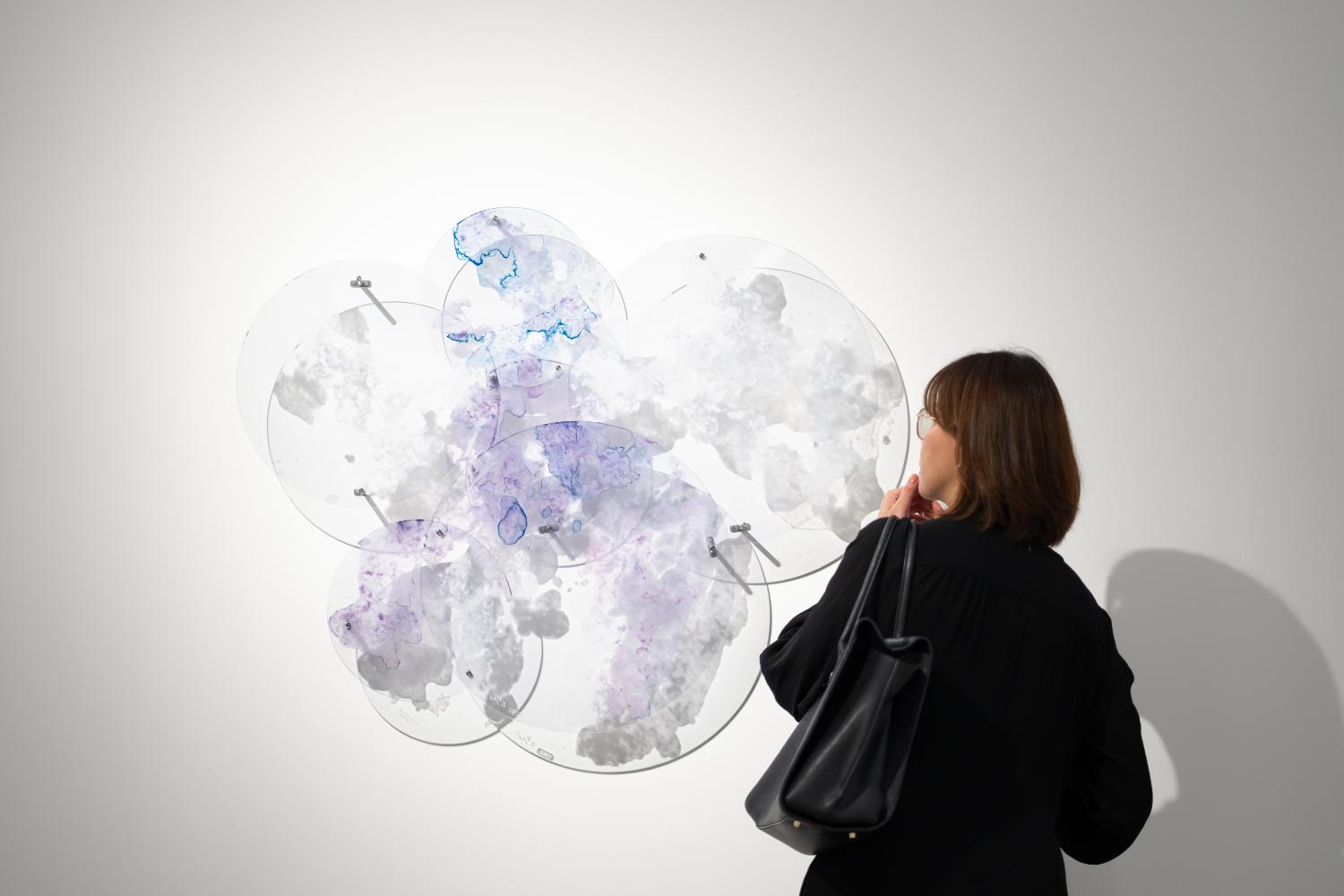
Familiar with examining human perception, Victor draws attention to “something invisible to the eye” — the inside of paper. In Pondification I, she creates blue paper pulp using decollage to address flooding in Singapore. Nearby, four pieces, Cloud Of Innocence 2, Cloud Camelia, Rose Galaxy and Cloud Galactic, are stacked circular discs with colourful paper pulp. It is a paradox that by placing paper on transparent polycarbonate sheets, viewers can see fibrous cells inside the material. Her engagement with absence in turn creates visible presence, showing that paper is more than a flat sheet, but something fleshy like the living organism.
As the curator said, “Forms Of Encounter” does not have an overarching theme. It simply allows six artists to pursue their own interests. Still, they are united by the innovative use of paper. Its materiality apparently comes to the fore in the digital age, where everything appears on a glossy screen. It is a counterpoint to dematerialisation, which characterises content in today’s digital media.
Heman Chong’s Safe Entry V.2.5, left, and three images from from The Straits Times.
“All of these artists had residencies at different times. It is interesting that STPI provides space for artists across the region to challenge and develop new works,” said Tung. “This exhibition is built on the premise that as much as their ideas might not have interacted during their residencies, their attitude towards paper is the same. Bold and challenging.”
Suzann Victor’s Cloud Of Innocence 2.
Pinaree Santipak’s works with breast stupa motifs.
Like Proteus, paper can change its shape, form and role. It is a medium for transmitting knowledge and a substrate that new ideas feed and grow on. It is a creature with fibrous anatomy. Such preoccupation with how paper can be anything but a rectangul…
Like Proteus, paper can change its shape, form and role. It is a medium for transmitting knowledge and a substrate that new ideas feed and grow on. It is a creature with fibrous anatomy. Such preoccupation with how paper can be anything but a rectangular sheet sets the tone for the exhibition titled “Forms Of Encounter” at Central Chidlom.
“I have brought together a range of works which I think defy expectations of what print can potentially mean,” said John Tung, an independent curator, at a press preview.
Running until the end of this month, the exhibition is held to mark the 60th anniversary of diplomatic ties between Singapore and Thailand. It also coincides with the city-state’s 60th anniversary of independence. A collaboration between the Singapore Tyler Print Institute (STPI) and the Embassy of Singapore in Thailand, the exhibition brings together three Thai artists, Rirkrit Tiravanija, Natee Utarit, and Pinaree Sanpitak, and three Singaporean artists, Charles Lim Yi Yong, Heman Chong and Suzann Victor.
And the exhibition lives up to its claim. Rirkrit and Lim call into question the stability of records on paper. Tung used an ultraviolet flashlight to reveal some secrets in Rirkrit’s trio on the wall near the gallery entrance. Known for relational artworks, ranging from serving food on ceramics to handing out T-shirts, he extends an invitation to look for something missing in his thermochromic prints. With effort from a flashlight or a warm hand, Untitled 2020 (Paradise Regained I) shows an endangered arctic fox walking through a snow-laden valley. Meanwhile, a leopard and birds are seen in two other pieces and a spectral presence highlights the far-reaching impact of human activities on the environment.
Rirkrit Tiravanija’s thermochromic trio.
Opposite, Lim’s SEASTATE 9 presents a collection of six laser-cut paper models of Singapore’s shifting coastlines. His experience in professional sailing informs his artistic engagement with the impact of capitalism on the sea. Each island model differs in shape and size and looks like a jigsaw. It draws attention to Singapore’s land reclamation that joins smaller islands together, for example, Jurong Island and Sentosa, and its impact on local communities. From a distance, his work evokes a map of islands reefs, and shoals in the vast ocean. Lim’s SEASTATE 029 is also a collection of relief prints of changing wave patterns. Viewed from top left to bottom right, they turn into cinematic scenes, showing the fluidity of images on paper.
Meanwhile, Natee and Chong challenge print medium as the source of truth. Known for questioning the canonical status of Western art, Natee expresses his concern in BUDDHA PALAZZO (A.M.). Evoking a mural painting, this five-panel artwork marks the conclusion of his decade-long project titled “Déjà vu: Buddha Is Hiding”, where he imagines Buddha’s journey to the West. A velvety texture from flocking draws attention to its own status. A combination of a palatial building in Italy with Buddhist iconography highlights cultural hybridity. Nearby, Archetype (Green) is a stone-like statue made from papier mâché. It came to his mind when he accidentally dropped his Gandara Buddha statue. Given its cultural syncretism between Classical Greek culture and Buddhism, shattered pieces of the whole statue raise the issue of ownership of cultural heritage.
Charles Lim Yi Yong’s SEASTATE 029.
Nearby, Chong sustains his investigation of infrastructures that underpin contemporary life. In Safe Entry V.2.5, he creates acrylic paintings of QR codes for contact tracing during Covid-19 to draw attention to surveillance technology. Evoking his collection Calendars (2020-2096) in his solo exhibition, Circuit Breaker Paintings chronicles each day of Singapore’s partial lockdown by marking X (hazard tape for social-distancing caution). Chong painted the motif and posted it on social media to cope with pandemic-induced anxiety. His three other pieces are palimpsests of newspaper sheets from The Straits Times. Intentional glitches from techniques, particularly repetition and overlap, express tendencies towards reflexivity, challenging journalistic pursuit of objectivity and truth in its service.
The exhibition concludes, or begins, depending on the point of entry, with two female artists, who give expressions to the body of paper. Known for distilling women’s body parts into objects, Pinaree’s fascination with the breast stupa motif is reflected in her images currently on view. Multiple printing techniques, including relief, scratching and etching, create subtle textures to foster intimacy. Her depiction fluidly moves between breasts, everyday objects and stupas, blurring the spectrum of profanity and sacredness. For example, three pieces in Breast Vessel II look like women’s breasts, a comb or an incense burner, depending on perspective.
Natee Utarit’s BUDDHA PALAZZO (A.M.).
Familiar with examining human perception, Victor draws attention to “something invisible to the eye” — the inside of paper. In Pondification I, she creates blue paper pulp using decollage to address flooding in Singapore. Nearby, four pieces, Cloud Of Innocence 2, Cloud Camelia, Rose Galaxy and Cloud Galactic, are stacked circular discs with colourful paper pulp. It is a paradox that by placing paper on transparent polycarbonate sheets, viewers can see fibrous cells inside the material. Her engagement with absence in turn creates visible presence, showing that paper is more than a flat sheet, but something fleshy like the living organism.
As the curator said, “Forms Of Encounter” does not have an overarching theme. It simply allows six artists to pursue their own interests. Still, they are united by the innovative use of paper. Its materiality apparently comes to the fore in the digital age, where everything appears on a glossy screen. It is a counterpoint to dematerialisation, which characterises content in today’s digital media.
Heman Chong’s Safe Entry V.2.5, left, and three images from from The Straits Times.
“All of these artists had residencies at different times. It is interesting that STPI provides space for artists across the region to challenge and develop new works,” said Tung. “This exhibition is built on the premise that as much as their ideas might not have interacted during their residencies, their attitude towards paper is the same. Bold and challenging.”
Suzann Victor’s Cloud Of Innocence 2.
Pinaree Santipak’s works with breast stupa motifs.
In one of his primary school years at Benchamarachuthit Chanthaburi School, Ratchanon Sukcharoen participated in the Honor Scout Corps Club. That was the first time he tried his hand at volunteering under the network of His Majesty King Vajiravudh and …
In one of his primary school years at Benchamarachuthit Chanthaburi School, Ratchanon Sukcharoen participated in the Honor Scout Corps Club. That was the first time he tried his hand at volunteering under the network of His Majesty King Vajiravudh and HRH Princess Bejaratana Rajasuda, the only child of King Vajiravudh.
“I saw the seniors wearing [scout] uniforms. I thought it looked so cool,” he recounted.
Later, the young Ratchanon discovered there is more to scouting than just wearing tidy outfits.
“The scouts we knew were different from reality. Volunteering there taught me how to be helpful to others,” he said. At the club, Ratchanon participated in activities that children could do such as being a teaching assistant, helping the elderly and cleaning.
Ratchanon is currently a senior at Mahidol University’s Faculty of Public Health. He admitted that the teachings and spirit of King Vajiravudh greatly affected the way he now lives his life. Outside university, he also works as a guide volunteer for the King Vajiravudh Memorial Foundation under Royal Patronage and Bejaratana-Suvadhana Foundation at Ruen Rudee Palace.
The now 21-year-old will be joining Thai people in honouring the 100th anniversary of the passing of King Vajiravudh on Nov 25, and also celebrating the 100th anniversary of the birthday of Princess Bejaratana Rajasuda on Nov 24.
Although it’s been 100 years, Ratchanon admitted that the solid determination of the late king has been carried on by the younger generation.
Ratchanon was first invited by the King Vajiravudh Memorial Foundation under Royal Patronage to work as a volunteer guide at Vajiravudhanusorn of Thailand’s National Library, serving as a storyteller about King Rama VI with wax figures as visual aids.
“He [King Vajiravudh] had a contemporary mindset,” Ratchanon said. “That was why people of that era did not quite understand him.”
King Rama VI tried to use media as a strategy to educate people, which explained why he graciously allocated a huge budget towards media development. Ratchanon also said King Rama VI established Chulalongkorn University despite opposition from the royal court, as they feared educated people from the next generation would take over the throne.
King Rama VI, on the other hand, focusing on the development of the nation rather than securing the throne.
In addition to being a volunteer guide, Ratchanon also worked as an assistant to the King Vajiravudh Memorial Foundation.
“Keep walking. Time and tide wait for no man,” he said, referring to one of King Vajiravudh’s speeches.
The founder of independent music label Analog Africa, Samy Ben Redjeb, had a dilemma when he was compiling the label’s latest compilation Super Disco Pirata – De Tepito Para E Mundo 1965-1980 (released in November 2024). All of the 23 tracks were pirat…
The founder of independent music label Analog Africa, Samy Ben Redjeb, had a dilemma when he was compiling the label’s latest compilation Super Disco Pirata – De Tepito Para E Mundo 1965-1980 (released in November 2024). All of the 23 tracks were pirated copies of tropical music hits — often Colombian cumbias but also hits from other countries in the region.
These bootlegged songs (pirata in Spanish) were taken by mobile sound system operators called sonideros, who boosted the high frequencies in keeping with the cumbia sound, edited out bits or just looped riffs and grooves of songs they liked; sometimes they slowed the rhythms to cater to Mexican music fans tastes.
The bootleg compilations were then taken a pressing plant where they would use recycled vinyl and press just 300-500 copies; they were cheap and locals snapped them up.
The fascinating liner notes to the compilation tell the story of how sonideros began in the late 1950s, early 1960s, when people started hiring amateur sonideros decked out with a turntable, amp and set of speakers. This was much cheaper than hiring a band and so during the 1980s and 1990s, a lively pirata scene developed, originally in the northern parts of Mexico City. By the end of the 1980s, there were hundreds of pirata labels with names like Discos Galaxia 77, Roadrunner, Discos Medelin, Suntan and Discos Bengala.
The album kicks off with a belter, an Ecuadorian track, Afro Oriental (the pirated version was renamed Cumbia Afro), which features an irresistible strident piano, driven relentlessly by Cumbian rhythms and percussion.
Compiler Redjeb notes that this particular track was difficult to reproduce so they used the bootleg to recreate the master you hear on the album.
This track pairs perfectly with other ones that feature heavy piano and sparkling percussion like my favourites Palenque by Carlos Haayen Y Su Piano Candeloso (a terrific name for a band) and Ramon Ropain’s Malinga. Indeed, Redjeb said that one of the main inspirations was that classical piano meets African percussion sound that features so strongly in Colombian (and Cuban) music.
There are some quirky novelties as well. Somehow the Bee Gees ended up on Cumbia De Los Bee Gees and Beethoven on Enrique Lynch’s bizarre Le Quinta Sinfonia De Beethoven. Other odd tracks like Eduardo Vurita’s La 3a De Los Toquecitos started off life as a medley but the pirate producers simply lopped the first section twice — perhaps they liked it so much they just repeated it.
But there are plenty of great dancefloor fillers, after all sonideros were created to host parties. You can’t go wrong with Eso Es Con Velas by Orquesta Rafalo, Alexa Acosta Y Su Orquesta’s standout Cumbia Del Amor and the chicha-like sound of Te Gusta Como Azucar by Orientales de Paramonga.
This is a wonderful compilation, brought to life by Redjeb’s liner notes and Carlos Tropicaza’s excellent essay on the history of sonideros and discos pirata. It is beautifully illustrated with a bibliography for those who want to find out more about this colourful chapter in Mexico’s musical history. I was in Mexico City in the early 1980s but was completely unaware of the sound system culture that was popular at the time, so this collection, available as a CD, download or vinyl, is a revelation for me. Highly recommended.
The founder of independent music label Analog Africa, Samy Ben Redjeb, had a dilemma when he was compiling the label’s latest compilation Super Disco Pirata – De Tepito Para E Mundo 1965-1980 (released in November 2024). All of the 23 tracks were pirat…
The founder of independent music label Analog Africa, Samy Ben Redjeb, had a dilemma when he was compiling the label’s latest compilation Super Disco Pirata – De Tepito Para E Mundo 1965-1980 (released in November 2024). All of the 23 tracks were pirated copies of tropical music hits — often Colombian cumbias but also hits from other countries in the region.
These bootlegged songs (pirata in Spanish) were taken by mobile sound system operators called sonideros, who boosted the high frequencies in keeping with the cumbia sound, edited out bits or just looped riffs and grooves of songs they liked; sometimes they slowed the rhythms to cater to Mexican music fans tastes.
The bootleg compilations were then taken a pressing plant where they would use recycled vinyl and press just 300-500 copies; they were cheap and locals snapped them up.
The fascinating liner notes to the compilation tell the story of how sonideros began in the late 1950s, early 1960s, when people started hiring amateur sonideros decked out with a turntable, amp and set of speakers. This was much cheaper than hiring a band and so during the 1980s and 1990s, a lively pirata scene developed, originally in the northern parts of Mexico City. By the end of the 1980s, there were hundreds of pirata labels with names like Discos Galaxia 77, Roadrunner, Discos Medelin, Suntan and Discos Bengala.
The album kicks off with a belter, an Ecuadorian track, Afro Oriental (the pirated version was renamed Cumbia Afro), which features an irresistible strident piano, driven relentlessly by Cumbian rhythms and percussion.
Compiler Redjeb notes that this particular track was difficult to reproduce so they used the bootleg to recreate the master you hear on the album.
This track pairs perfectly with other ones that feature heavy piano and sparkling percussion like my favourites Palenque by Carlos Haayen Y Su Piano Candeloso (a terrific name for a band) and Ramon Ropain’s Malinga. Indeed, Redjeb said that one of the main inspirations was that classical piano meets African percussion sound that features so strongly in Colombian (and Cuban) music.
There are some quirky novelties as well. Somehow the Bee Gees ended up on Cumbia De Los Bee Gees and Beethoven on Enrique Lynch’s bizarre Le Quinta Sinfonia De Beethoven. Other odd tracks like Eduardo Vurita’s La 3a De Los Toquecitos started off life as a medley but the pirate producers simply lopped the first section twice — perhaps they liked it so much they just repeated it.
But there are plenty of great dancefloor fillers, after all sonideros were created to host parties. You can’t go wrong with Eso Es Con Velas by Orquesta Rafalo, Alexa Acosta Y Su Orquesta’s standout Cumbia Del Amor and the chicha-like sound of Te Gusta Como Azucar by Orientales de Paramonga.
This is a wonderful compilation, brought to life by Redjeb’s liner notes and Carlos Tropicaza’s excellent essay on the history of sonideros and discos pirata. It is beautifully illustrated with a bibliography for those who want to find out more about this colourful chapter in Mexico’s musical history. I was in Mexico City in the early 1980s but was completely unaware of the sound system culture that was popular at the time, so this collection, available as a CD, download or vinyl, is a revelation for me. Highly recommended.
The Stock Exchange of Thailand (SET) swung with global bourses this week, facing a sell-off prompted by worries about an artificial intelligence (AI) bubble, before an earnings surprise by Nvidia, which beat already high expectations, triggered buying again.
Along with positive earnings guidance for the chipmaker, Nvidia chief executive Jensen Huang said it is premature to think about an AI bubble. He sees rising demand from real orders amid the biggest computer infrastructure transition in decades, as all industries are developing AI models and consistently require enormous processing power.
We also believe the “super cycle” for tech plays will persist through next year as a fresh round of development kicks in, starting with hardware and large language models, which will then turn into applications that will ignite changes in technology and global lifestyles. Therefore, we see trading opportunities in tech plays throughout next year.
We believe market consolidation amid bubble fears towards year-end provides opportunities to accumulate global tech stocks. For the Thai market, other than DELTA, which is in the hardware phase, we expect other sectors such as utilities (water, power and internet) to take their cues. The coming week is a fine time to collect related stocks and we recommend WHAUP, which has a high dividend yield at 6% to cushion any price volatility.
We expect Thai shares to be rangebound, with the SET index trading between 1,260 and 1,320 points next week, but rising volatility from big-cap DELTA could trigger excessive movement. As the market has shown signs it can sustain momentum during a consolidation phase (the 1,250 support held last week), we think institutional investors will have the courage to rotate stocks.
We are focusing on key sectors that can absorb flows of stock rotation such as hotels, airlines, refineries, agri-food and commerce. We prioritise stocks with potential near-term catalysts such as AOT (duty-free saga ends, focus shifts to higher passenger service charges) and CENTEL, which will thrive on revitalised tourism.
EARNINGS OPTIMISM
A positive factor for the Thai market was solid third-quarter earnings growth, up 30% year-on-year but down 24% quarter-on-quarter, beating the consensus by 6.8% and beating our forecast by 5.6%. Key drivers were revenues from mobile-internet services and contributions from additional capacity for GULF.
Sectors pressured by the global economy such as upstream energy and petrochemicals continued to register losses, while falling meat prices hit some agribusiness shares, and property demand remains sluggish.
Excluding extra items, core earnings grew 1% year-on-year (but fell 7% quarter-on-quarter) as expected, for stocks covered by Bualuang Securities. Sectors with positive year-on-year core earnings growth were led by:
Telcos: Mobile-internet revenue growth;
Energy/power: Wider refining margins, GULF seeing a bigger contribution from ADVANC as softer energy prices pressure upstream energy plays;
Finance: Title loan business bolstered by loan growth and stable bad debt, hire-purchase business sees slow asset quality recovery while asset managers are pressured by weak cash collections;
Retail: IT retailers register solid growth from Apple sales, rental-based department stores see higher rental revenues, CPALL grows on greater profitability and higher contribution of ready-to-eat food and beverages, while stiffer competition for Lotus’s weighs on CPAXT despite solid growth in the Makro wholesale business, building materials stores see same-store sales contraction;
Hotels: Lower interest expense boosts MINT’s profitability, solid growth in the food business pushes CENTEL earnings despite losses from new hotel in the Maldives.
As listed firms are conducting analysts’ meetings around this time, we see positive signals from the agricultural sector. TFG, CPF and BTG will benefit from signs of a swine price recovery while costs continue to drop. Leasing firms will likely benefit from the declining trend of credit costs and asset quality improvement.
Among negative factors, revisions to forecasts could signal earnings risk in the fourth quarter despite the cautious optimism that followed third-quarter results.
Analysts continue to revise down earnings forecasts on a broader basis, with more companies cut than raised. Both domestic and global plays have suffered earnings cuts, including retail, healthcare, energy-petrochemicals and electronics.
Investors study stock prices on an electronic board displaying indices at a stock brokerage house in Bangkok.(Photo: Pattarapong Chatpattarasill)
RECAP: Asian shares extended a global rout on Friday as much-anticipated US jobs data failed to provide clarity on the near-term outlook for interest rates, with investors dumping risk assets even after dazzling earnings from Nvidia.
The Thai bourse tumbled 2.14% on Friday to its lowest since August, partly due to rising political uncertainty as House dissolution as early as Dec 12 now appears possible.
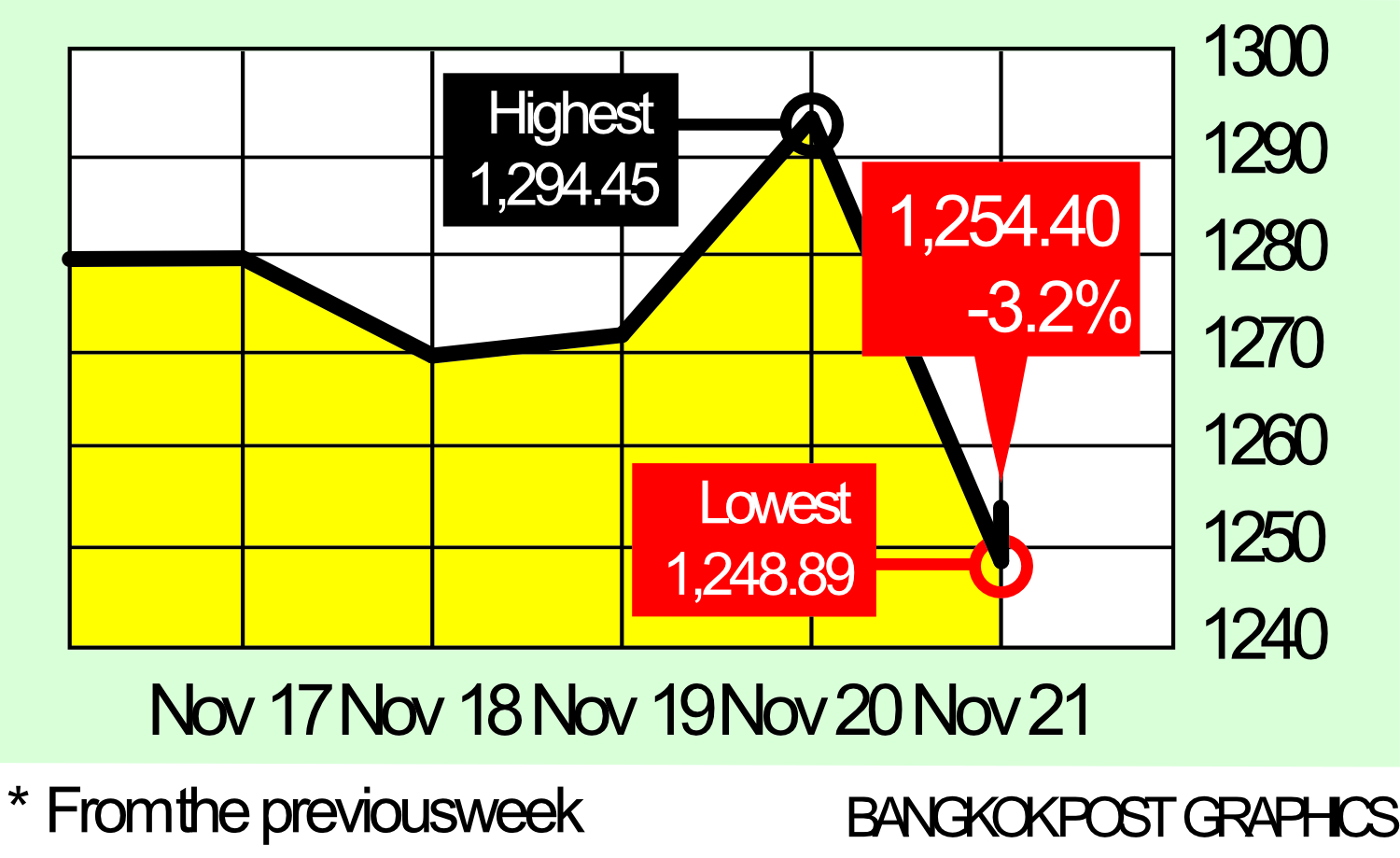
The SET index moved in a range of 1,248.89 and 1,294.45 points this week, before closing on Friday at 1,254.40, down 3.2% from the previous week, with daily turnover averaging 33.93 billion baht.
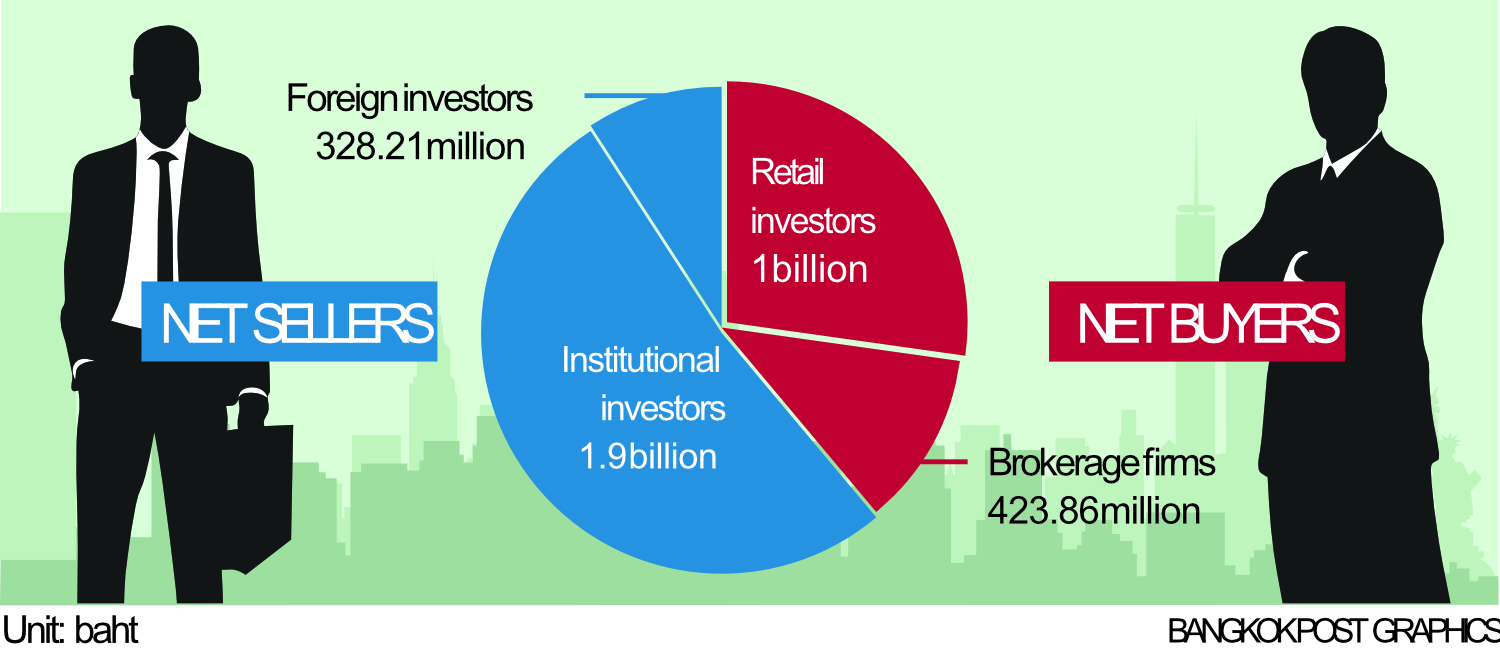
Retail investors were net buyers of 1 billion baht, followed by brokerage firms at 423.86 million. Institutional investors were net sellers of 1.9 billion baht, followed by foreign investors at 328.21 million.
NEWSMAKERS: The US reported stronger than expected jobs growth of 119,000 in September, after a decline of 4,000 in August, according to a survey delayed by the government shutdown. But the unemployment rate rose to a four-year high of 4.4%, indicating a fragile labour market. Jobless claims also rose by more than expected.
Federal Reserve officials were at odds during their October meeting over cutting interest rates, debating whether a stalling labour market or stubborn inflation were bigger economic threats, minutes released on Wednesday showed.
The CME FedWatch Tool now assigns a 55.4% probability that the Fed will leave its policy rate unchanged at its December meeting, up from 37.6% a week earlier.
Nvidia’s third-quarter results topped forecasts with revenue soaring 62% year-on-year to $57 billion, prompting a sigh of relief in the market amid growing concerns about an AI bubble. The chip giant posted profits of $31.9 billion, up 65%.
Japan’s cabinet approved a stimulus package totalling ¥21.3 trillion ($135.5 billion), as Prime Minister Sanae Takaichi seeks to boost the slowing economy and offer support to inflation-hit consumers.
Japan’s economy shrank 1.8% in the three months through September, the first contraction in six quarters. That compared with growth of 2.3% in the previous three months, but was better than analysts’ forecast of a 2.5% contraction.
The US trade deficit shrank 24% to $59.6 billion in August as exports edged up 0.1% to $281 billion. Imports fell 5.1% to $340 billion.
Japan logged a trade deficit for the fourth straight month in October, though it narrowed 53.6% from a year before to ¥231.8 billion.
Bitcoin dropped 2.1% to below $86,000 for the first time since April, as the market struggled to find new buyers and the momentum that had supported digital assets earlier in the year evaporated.
The People’s Bank of China kept its one-year loan prime rate unchanged for the sixth straight month at 3% as expected. The five-year LPR, the benchmark for mortgages, was kept at 3.5%.
UK consumer confidence tumbled in November, as almost 60% of Britons expect the economy to worsen over the next three months, while only about one-in-seven expect a pickup. The net score of minus 44 was the worst since April.
Warren Buffett’s Berkshire Hathaway said that it acquired Alphabet shares worth $4.3 billion in the third quarter, making the Google parent Berkshire’s tenth largest stock holding. Berkshire reduced its shareholding in Apple by 15% to $60 billion.
According to the World Bank, Thailand has slipped into third place among the economies of Southeast Asia, based on actual 2024 GDP, at $526 billion. Indonesia tops the table at $1.4 trillion, followed by Singapore at $547 billion.
Softer factory output and tourist arrivals slowed Thailand’s economy more than expected in the third quarter, with year-on-year growth of 1.2%, down from 2.8% in the previous quarter. But GDP shrank 0.6% from the second quarter, the first such drop since the end of 2022.
Finance Minister Ekniti Nitithanprapas said Thailand may srtart gradually raising the value-added tax (VAT) rate, from 7.0% now to 8.5% in 2028 and 10% in 2030, if GDP growth reaches its potential.
Thailand’s budget deficit in the 2027 fiscal year is expected to shrink by 8.4% to 788 billion baht, the government said on Tuesday. The budget for fiscal 2026 is 3.78 trillion baht with a deficit of 860 billion.
The Bank of Thailand said overall bank lending contracted in the third quarter by 1%, the fifth consecutive quarterly drop, driven by a 4% decrease in loans to SMEs and a drop in consumer loans. Non-performing loans stood at 2.94%, up from 2.89% at the end of June.
The Thai Industries Sentiment Index in October dropped to 87.3 points, remaining below the 100-point growth threshold and extending a 13-month streak of volatility.
PTT Plc is considering offloading its stake in an EV joint venture with Taiwan-based Foxconn as it seeks to improve cash flow and brace for a sluggish Thai and global economy next year. The energy conglomerate expects to raise 100 billion baht from its asset monetisation programme in 2025-26.
Siam Cement plans to invest another $500 million at its $5.6-billion Long Son petrochemical plant in Vietnam as Thailand’s largest industrial conglomerate ramps up operations abroad to arrest an earnings slump.
SC Asset Corp is adapting to a sluggish housing market, offering rent-to-own options for buyers struggling to secure mortgages, and selling show units from the start of project launches.
The Ministry of Finance said phase 2 of the Khon La Khrueng Plus co-payment stimulus programme would begin in January. The size is expected to be similar to phase 1 at 40 billion baht.
COMING UP: Germany releases its business expectations survey on Monday followed by quarterly GDP on Tuesday. Also on Tuesday, the US publishes core retail sales, producer prices and consumer confidence index, and New Zealand decides on interest rates. On Wednesday, the US releases quarterly GDP, core personal consumption expenditure index and new home sales. On Thursday, Japan reports Tokyo monthly industrial production. On Friday, Germany reports monthly inflation.
Locally, InnovestX Securities and Bualuang Securities on Tuesday discuss listed-company performance and the 2026 market outlook. On Thursday, the SEC hosts the OECD-Asia Roundtable on Corporate Governance 2025.
STOCKS TO WATCH: Asia Plus Securities notes worsening tensions between China and Japan have prompted Beijing to cancel 500,000 flight tickets to Japan. This could redirect some Chinese tourists to Thailand. Potential beneficiaries include AOT, THAI, CENTEL, ERW, MINT, AAV and BA.
InnovestX Securities believes Thailand–US trade negotiations will progress without being disrupted by the ongoing border dispute with Cambodia. On the downside, domestic political uncertainty is rising, and the government may dissolve parliament earlier than anticipated. Recommended stocks include KTB, OR and BH.
TECHNICAL VIEW: ASL Securities sees support at 1,250 points and resistance at 1,280. InnovesX Securities sees support at 1,230 and resistance at 1,300.