ECLIPSED BY TIME Families of media workers killed in the massacre in Ampatuan town, Maguindanao del Sur, on Nov. 23, 2009, visit the site of the mass murder at Sitio Masalay, Barangay Salman in Ampatuan in this file photo taken in …
ECLIPSED BY TIME Families of media workers killed in the massacre in Ampatuan town, Maguindanao del Sur, on Nov. 23, 2009, visit the site of the mass murder at Sitio Masalay, Barangay Salman in Ampatuan in this file photo taken in November 2024, lamenting they are now forgotten or even ignored by personalities, including their lawyers, who used to help them. | INQUIRER file photo / GERMELINA LACORTE
MANILA, Philippines — Sixteen years later, victims of the Maguindanao massacre, considered the deadliest event for media workers in history, are still reeling from the pain and struggling to find justice, particularly in recognizing the final victim of the killings.
The non-profit Center for International Law (CenterLaw) on Saturday said it will seek an urgent motion before the Court of Appeals (CA) to resolve the pending appeals in the Maguindanao massacre cases and to judicially recognize journalist Reynaldo Momay, the 58th victim in the killings.
Lawyer Gilbert Andres, CenterLaw’s executive director and legal counsel for 19 massacre victims, said his clients are “growing tired” of the unresolved matters pending before the CA.
However, there was one resolution where the appellate court denied the motion by former Maguindanao Gov. Zaldy Ampatuan, who asked to present additional evidence after one witness recanted his statement, according to Andres.
The second part of the motion involved another accused, police officer Bahnarin Kamaong, one of the officers who ordered the provision of firearms, filing a motion to admit bail, “but it was also denied, fortunately, by the CA,” Andres said.
The third part involved one accused, whom he did not identify, who only withdrew an appeal.
“That was the last resolution to date by the CA; I think it was March of 2025. But as of now, the appeals have not yet been deemed submitted for resolution, so we are still waiting for the decision of the appeal,” Andres said at a Zoom meeting with the National Union of Journalists of the Philippines (NUJP), a clip of which was posted on the latter’s Facebook page.
“It’s very clear that the families we represent are still suffering from the traumas… especially now that we’ve entered the Ber months. They want a resolution from the CA already, regardless of what decision they come up with, as long as there will be closure because justice has yet to be served,” he explained.
Maguindanao massacre
The Dec. 19, 2019 decision by the Quezon City Regional Trial Court (RTC) Branch 221, which handled the entire case for years, was actually “not full justice” for the families of the victims, Andres pointed out.
This prompted the families to seek help from journalist groups, including the NUJP, to aid them in their “final push for justice.”
“The families have been saying that regardless of the decision, they want [the CA] to finally decide on the case because they want closure,” Andres said.
As for Momay, Andres said they have a pending motion seeking the victim’s recognition “straight from the court.”
“This is like a double whammy for his family since he was already a victim and he was not even recognized as a victim because the case against him was dismissed by the December 2019 consolidated partial decision [of the Quezon City RTC],” he said.
“In fact, it was a triple whammy because his remains had not been found,” Andres added.
Andres also called on the Philippine government to provide the long-delayed financial compensation to the families of all Maguindanao massacre victims, which he said is the country’s obligation under international law.
“Sixteen years is far too long. Sixteen years is an unconscionable burden on families who have already lost so much,” he said in a statement on Saturday. “Full justice must not only be promised — it must finally be delivered for the Maguindanao massacre victims.”
Your subscription could not be saved. Please try again.
Your subscription has been successful.
Read Next
Disclaimer: The comments uploaded on this site do not necessarily represent or reflect the views of management and owner of Cebudailynews. We reserve the right to exclude comments that we deem to be inconsistent with our editorial standards.
AC Bonifacio. Image: Sanho Mansion via Instagram/@acbonifacio
AC Bonifacio might’ve departed from the upcoming K-pop thriller “Perfect Girl” due to a freak accident, but she is nonetheless grateful for the opportunity to be chosen for an interna…
AC Bonifacio. Image: Sanho Mansion via Instagram/@acbonifacio
AC Bonifacio might’ve departed from the upcoming K-pop thriller “Perfect Girl” due to a freak accident, but she is nonetheless grateful for the opportunity to be chosen for an international film.
Bonifacio exited the production of “Perfect Girl” after her involvement in a motorcycle accident in Bangkok, Thailand, which came weeks after she was confirmed to be part of the film.
In an Instagram post on Saturday, November 24, she said that she is currently focusing on her recovery while expressing her gratitude to be considered.
Article continues after this advertisement
“Blessed to have been chosen to be a part of an international film with such a powerhouse all-Asian cast. Unfortunately, life doesn’t always pan out the way we want it to,” she said.
FEATURED STORIES
ENTERTAINMENT
ENTERTAINMENT
ENTERTAINMENT
“I was so excited to finally announce ‘Perfect Girl’. I did my auditions, booked the part and had been shooting in Bangkok already. Freak accidents happen and it’s unfortunately forced me to take a rest and focus on healing and getting better,” she continued.
Despite the accident, Bonifacio said she has been “surrounded by so much love,” as she was taken care of by her loved ones and “gained a new family” in her castmates.
“But even in such a tough moment, I was surrounded by so much love. I gained a new family in this project. People took care of me, checked up on me, and made memories with me that I’ll always treasure. So grateful for every single one of them. Will always be thankful for this journey I had with them,” she said.
The actress assured her supporters that she “will not give up” in spite of her accident. She also jokingly asked if there are “any one-arm dance trends” that she can do at the moment.
Article continues after this advertisement
“I’m very thankful for everyone who’s supported me through all of this. My journey doesn’t stop here — I will continue to work hard and not give up. Everything happens for a reason,” she said. “Buti nalang left side ang angle ko let me know if there are any one-arm dance trends, I gotchu guys. I love you guys, thank you for everything.”
Bonifacio received messages of support from her castmates Arden Cho and Nancy McDonie, as well as her boyfriend Harvey Bautista, Maki, and Kai Montinola in the comments.
Article continues after this advertisement
Image: Screengrab from Instagram/@acbonifacio
The “Pinoy Big Brother” alum was confirmed as a cast member of the Hong Won-ki-helmed film last October, which also stars Cho, McDonie, and May Hong.
Other stars include Billlie’s Siyoon, Cherry Bullet’s Chaerin, Jeon Somi, Peter Lee Jae Yoon, Samantha Cochran, Ally, Adeline Rudolph, and John Kim.
Your subscription could not be saved. Please try again.
Your subscription has been successful.
“Perfect Girl,” which will feature six original songs, tells the story of a K-pop group currently on the hunt for their final member ahead of their debut. However, the introduction of a mysterious girl leads to the members getting “hunted and attacked one by one.” Further details on the film’s release date and plot are yet to be announced. /edv
Police officers visit the residence of Department of Public Works and Highways’ Bureau of Maintenance director Gene Ryan Alurin Altea in Daraga, Albay on Saturday, November 23, 2025, to serve him an arrest warrant in connection with flood control …
Police officers visit the residence of Department of Public Works and Highways’ Bureau of Maintenance director Gene Ryan Alurin Altea in Daraga, Albay on Saturday, November 23, 2025, to serve him an arrest warrant in connection with flood control project anomalies in Oriental Mindoro. — Photo from Daraga Municipal Police Station/Facebook
MANILA, Philippines — Another Department of Public Works and Highways (DPWH) official implicated in the alleged flood control anomalies in Oriental Mindoro was not found when Albay police attempted to serve a warrant of arrest on Saturday.
Former DPWH Region IV-B assistant regional director and now DPWH Bureau of Maintenance director Gene Ryan Alurin Altea is charged with malversation and graft alongside 14 others due to their alleged involvement in an alleged anomalous P289.5-million road dike project in Naujan, Oriental Mindoro.
The Daraga, Albay police went to his residence at around 3:56 p.m. on Saturday but he was not present.
According to the Daraga police, his family said “they have no knowledge about his current whereabouts.”
Among 14 of his co-accused, five were also not served their warrants for not being present at their respective addresses, particularly:
Former Ako-Bicol party-list Rep. Elizaldy Co
DPWH IV-B Construction Division Chief Dominic Gregorio Serrano
DPWH IV-B Bids and Awards Committee accountant Lerma Dotado Cayco
DPWH IV-B Material engineer Timojen Adiong Sacar
Sunwest board member Anthony Ngo
Their warrants were issued on November 21 by three divisions of the Sandiganbayan after the Office of the Ombudsman filed charges on November 18. /das
Miss Universe 2025 Fatima Bosch. Image: Miss Universe Organization
Miss Universe 2025 Fatima Bosch echoed the line of the global pageant organization that her victory is destiny, adding that her coronation was a moment destined by God, while expr…
Miss Universe 2025 Fatima Bosch. Image: Miss Universe Organization
Miss Universe 2025 Fatima Bosch echoed the line of the global pageant organization that her victory is destiny, adding that her coronation was a moment destined by God, while expressing her gratitude for her recent milestone.
Bosch took to her Instagram page on Saturday, Nov. 22, to say her win is proof of God orchestrating moments that won’t be stopped by “envy or destiny.”
“Today I reaffirmed that what God has destined for you, neither envy stops it, nor destiny aborts it, nor luck changes it. Long live Christ the King,” she wrote in Spanish.
Bosch’s remarks echoes the praise of the Miss Universe Organization (MUO), which also stated that the Mexican beauty queen couldn’t be stopped by “envy or fate.”
FEATURED STORIES
ENTERTAINMENT
ENTERTAINMENT
ENTERTAINMENT
“What God has destined for you, no envy can stop it, no fate can undo it, and no luck can change it,” the post read.
Bosch is the fourth Mexican woman to bring home the Miss Universe crown after Andrea Meza, Ximena Navarrete, and Lupita Jones. Prior to the coronation, she caught the attention of pageant fans and observers after getting into a spat with VP for Asiana Nawat Itsaragrisil during a sashing ceremony.
Article continues after this advertisement
Her win, however, was mired in controversy after she was accused of being a “fake winner” by French–Lebanese musician Omar Harfourch, who resigned from his judging post prior to the coronation as he “couldn’t handle” the alleged rigging orchestrated by MUO. According to Harfouch, Bosch was already the pre-determined winner before the coronation took place.
Half of the MUO is owned by Mexican business mogul Raul Rocha, while Meza was one of the members of the judging panel. /edv
Your subscription could not be saved. Please try again.
Disputed President Samia Suluhu Hassan has pledged to launch an official inquiry into post-election clashes, but opposition groups want this investigation to be independentImage: Tanzania State press
Normally, the Namanga One-Stop Border Post is…
Disputed President Samia Suluhu Hassan has pledged to launch an official inquiry into post-election clashes, but opposition groups want this investigation to be independentImage: Tanzania State press
Normally, the Namanga One-Stop Border Post is a place of commerce, a busy artery connecting the ports of Mombasa, Kenya, and Dar es Salaam, Tanzania. But in the days following the recent disputed election in Tanzania, it became the flashpoint of a regional democratic crisis.
As protests erupted over the exclusion of opposition candidates in the polls amid allegations of vote-rigging, young activists from neighboring Kenya attempted to cross the border — not with goods, but with a message of solidarity.
That attempt, however, led to a violent stand-off: “Police have shot us with tear gas. They have shot the Kenyans across the border. The day has been bad,” one Tanzanian youth protesting in the border area said.
At least two Kenyan nationals meanwhile were reported to have died in the ensuing clashes — on top of hundreds of Tanzanian victims.
Digital solidarity bypasses the blackout
This physical standoff serves as a powerful metaphor for a new reality in Africa: the struggle for democracy in the civic space in one country can no longer be contained within its territorial limits.
Young protestors not only take inspiration from each other but also join forces in hopes of creating a better future for all.
Tanzanian authorities meanwhile seem to resort to their well-documented playbook for stifling such post-election dissent, throttling internet bandwidth and cutting access to social media giants like WhatsApp, TikTok Live, and Instagram Live, effectively imposing an information blackout.
But even in digital darkness, young protestors manage to seek out and connect with likeminded individuals; in fact, this is where Kenyan civil society and individual digital users stepped in:
Article continues after this advertisement
Operating from Nairobi, Kenyan media outlets and activists became the external press corps for dissidents in neighboring Tanzania, amplifying suppressed voices and sharing graphic images and videos that the Tanzanian government tried hard to conceal.
Neighbors in the fight for democracy
Veteran Kenyan journalist Yassin Juma, based in Nairobi, explains the critical role of Kenyan activists as follows:
“While violence was ongoing in Tanzania, Kenyan activists managed to organize themselves in Nairobi where they were meeting to tell the world what was happening in Tanzania, given that media in the country was not speaking about the incidents and the internet was totally blocked.”
Kenyan-based amplification was crucial in maintaining global awareness about the goings-on in Tanzania, ensuring that the narrative of alleged human rights abuses — including reports of security forces shooting protesters and concealing their dead bodies — did not vanish into the void of the digital shutdown.
The institutional push for EAC accountability
This cross-border solidarity is not only felt on the street or social media; it’s also reflected at institutional levels.
Kenyan Civil Society Organizations (CSOs), such as the Kenya Human Rights Commission (KHRC), have been relentless in lobbying regional bodies like the African Union (AU) and the East African Community (EAC) to invoke their protocols on good governance and human rights and hold Tanzanian President Samia Suluhu Hassan’s government accountable.
This pressure is vital because the EAC treaty explicitly calls for adherence to “universally acceptable principles of good governance, democracy, the rule of law, observance of human rights and social justice” as a key consideration for membership in the bloc.
This type of advocacy work shifts Tanzania’s democratic challenges from being a domestic issue to a matter of regional accountability, forcing East African governments to confront those who hold power and control in Dodoma.
Seasoned politician, lawyer and activist Martha Karua has been particularly vocal about the recent developments, denouncing what she calls “an unholy alliance of the East African rulers.”
“We are staring at a regional crisis. Not economic crisis. Not a crisis of trade, but of democracy itself. To the leaders of the EAC, you cannot speak of unity while jailing, abducting and torturing your own citizens, and criminalizing free movement of people, who are the very reasons why the Jumuiya (the Community) exists,” she stated.
The high cost of cross-border activism
Still, such acts of cross-border solidarity comes at a high cost, which perhaps is best illustrated by the harrowing accounts of those who dared to venture into Tanzanian territory.
Kenyan activist and photojournalist Boniface Mwangi traveled to Dar es Salaam alongside Ugandan activist Agather Atuhaire to observe the treason trial of opposition leader Tundu Lissu.
They were subsequently detained and allegedly beaten and tortured before being dumped separately at their respective borders.
The allegations they raise against authorities in Tanzania, which include accounts of sexual assault, point to the chilling reality that political repression is equally transnational.
In fact, there are mounting reports and allegations that security agencies are now coordinating repressive operations across borders to silence critics and deter regional solidarity.
Intelligence agencies quelling dissent together
Kenyan activist Bob Njagi, who was himself abducted in Uganda, shared his experience after returning to Nairobi:
“We realized that the three governments are collaborating between [Ugandan president] Museveni, our president [William] Ruto, and [Tanzanian president] Samia Suluhu. Our arrest was coordinated.” Njagi said to DW.
With former Kenyan Chief Justice Willy Mutunga and politician Martha Karua also detained in Tanzania and then deported for attempting to observe a trial, the message from the Tanzanian state is that Kenya is no longer a safe base for its critics.
Even self-exiled Tanzanian activist Maria Sarungi only managed to narrowly escape her abduction in Nairobi by people believed to be from the security apparatus.
A new era of borderless dissent
The Kenyan response to the Tanzanian crisis also underscores a profound shift in East African politics. The region is witnessing a “democratic re-awakening,” driven largely by a young, digitally-native generation that sees human rights violations anywhere in the community as a threat everywhere else.
As Tanzanian Gen-Z protestors plan another mass protest in mid-December, Kenyan activists have already announced their solidarity with them.
Your subscription could not be saved. Please try again.
Your subscription has been successful.
Activist Njagi pledged to provide regional support: “On December 9, they have declared it an independence day. We, also, in Kenya are declaring the total shutdown. We are going to stand in solidarity with our brothers in Tanzania. We are going to shut our borders in Kenya with our solidarity with Tanzania.”
However, the ultimate question is perhaps whether these forces of solidarity can prevail against coordinated state repression, as this battle for democracy and accountability is bound to define the future not just of Tanzania, but of nations across East Africa and beyond. /dl
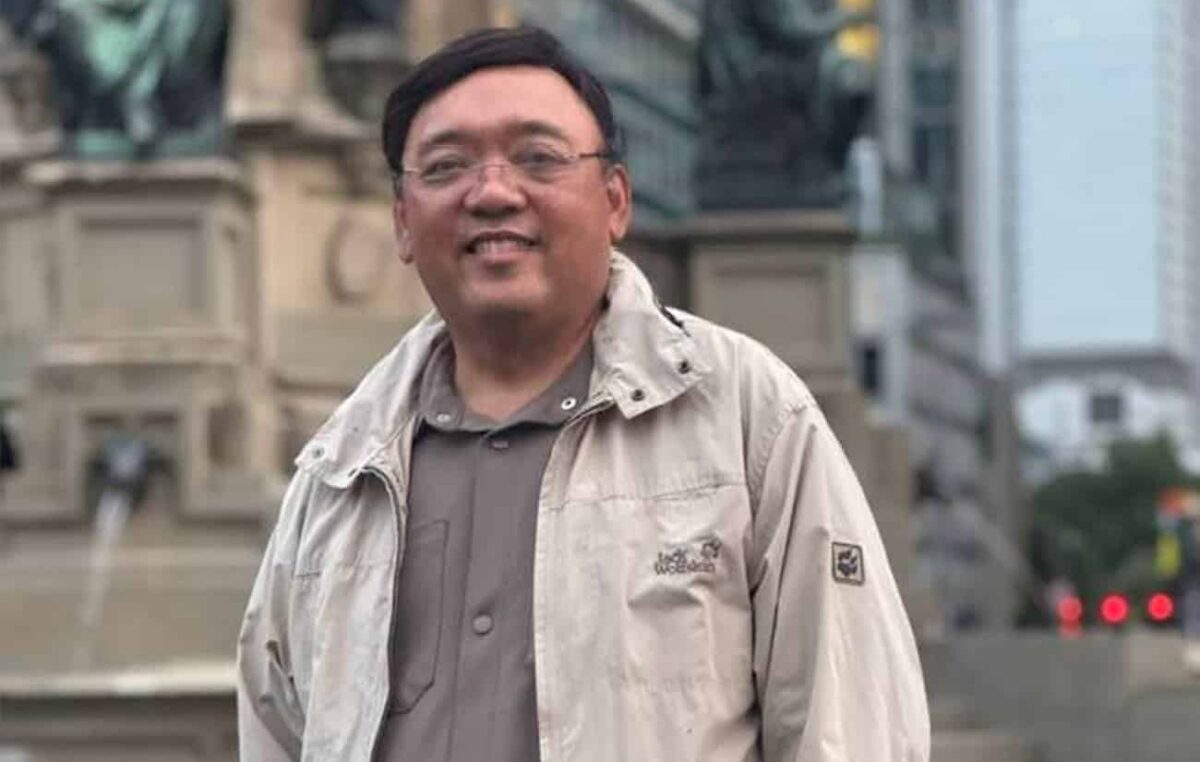
Harry Roque poses for a photo with the caption ‘Touchdown Frankfurt’ posted on his official Facebook page on June 16, 2025.
MANILA, Philippines — The government has requested a red notice from the International Criminal Police Organization (In…
Harry Roque poses for a photo with the caption ‘Touchdown Frankfurt’ posted on his official Facebook page on June 16, 2025.
MANILA, Philippines — The government has requested a red notice from the International Criminal Police Organization (Interpol) against former presidential spokesperson Harry Roque, Presidential Anti-Organized Crime Commission (PAOCC) spokesperson Dr. Winston Casio revealed on Sunday.
“The Philippine government has already submitted a request for a red notice, an international arrest warrant, for Mr. Roque. It’s a bit difficult because he is projecting that he is allegedly a victim of political persecution,” Casio said in an interview with dzBB.
According to the Interpol, a red notice is a “request to law enforcement worldwide to locate and provisionally arrest a person pending extradition, surrender, or similar legal action. It is based on an arrest warrant or court order issued by the judicial authorities in the requesting country.”
Roque is facing charges of qualified human trafficking in relation to the alleged scam hub in Pampanga run by the Philippine Offshore Gaming Operator (Pogo) Lucky South 99.
He was accused of wrongdoing in his capacity as legal counsel for Whirlwind Corporation, the same company that leased land to the supposed illegal Pogo.
Also charged with the qualified trafficking are Lucky South 99 representative Katherine Cassandra Li Ong, and 48 others.
Since being charged, Roque has attempted to seek asylum from different countries on grounds of “political persecution;” however, the Department of Justice earlier claimed that the Netherlands has denied Roque’s request.
According to Casio, an Interpol red notice was already issued to Ong, who was last seen in Japan.
Article continues after this advertisement
“If I’m not mistaken, her warrant has already been issued in France and our government has received it. Then it will be distributed so there will be a meeting to find Cassandra Li Ong with Ronelyn Baterna.”
Baterna was the corporate secretary of Lucky Star 99, who claimed during a congressional hearing that she issued checks as high as P500,000 to clients of the firm under Ong’s chequing account. /das
Your subscription could not be saved. Please try again.
LAPU-LAPU CITY, Cebu — Kharl Filkevin Tongco, 24, who was once listed among Cebu Province’s “most wanted persons” in 2023, got cleared of parricide and frustrated murder charges last year, and now he’s applying for his final year of shipboa…
LAPU-LAPU CITY, Cebu — Kharl Filkevin Tongco, 24, who was once listed among Cebu Province’s “most wanted persons” in 2023, got cleared of parricide and frustrated murder charges last year, and now he’s applying for his final year of shipboard training to finish his maritime degree.
As he moves forward with his dreams, he still remembers walking with his family to their favorite puto maya (sticky rice) spot in the Lapu-Lapu City Public Market.
They always went to the market around midnight when his father arrived home from work. It was a simple routine, but for Kharl, it became one of his happiest memories with his family, especially of his father, who was caring and present.
Kharl is a resident of Sitio Libertad in Barangay Tingo in Olango Island, but during his younger years, their family lived in Barangay Gun-ob on mainland Lapu-Lapu City.
“Okay kaayo akong growing up,” Kharl said. “Si Papa buutan, happy-going, maayo kaayo siya namo.”
(“We were okay growing up. Papa was so kind, happy-going, very loving toward us.”)
On the night of September 26, 2022, while walking past his favorite puto maya spot at the pubic market, Kharl received a call, telling him that his father had been shot.
At the time, he was a second-year BS Marine Transportation student heading home from school.
He didn’t know whether his father survived or not, so he thought about going to Angasil Port, where his father had been transported to be transferred to another hospital.
But his mother urged him not to go, worried he might be blamed for the shooting.
The next day, he saw posts online saying his father had died. At first, he didn’t believe it. Only when he saw the picture of his father in a coffin did it become real to him.
A broken family
For Kharl, his father had always been a good man. He was happy, easygoing, and someone who cared for his children.
His childhood had been mostly fine until they discovered his father had another woman.
At first, he and his siblings didn’t know what to make of it. But over time, his father’s infidelity changed their family. Fights erupted on their side and on his father’s side. The arguments sometimes turned physical.
In 2018, after years of conflict, they finally asked their father to choose between them and the other woman. However, he chose the latter.
It hurt everyone in the family, especially his younger sister, who had been very close to their father. Kharl has three siblings, and he is the middle child.
READ: NBI files parricide raps vs son who killed, placed inside storage box his own mom
“Most wanted”
He was accused of killing his father and injuring a relative in Barangay Talima, Olango Island. To this day, he believes he was singled out because of his outspoken nature.
“Akoy pinakabulgar, pinakaisog sa among mag-igsuon,” he admitted. “Mosukol gyud ko nila [relatives]. Naa sad mi conversations ni Papa nga nag-away mi.”
(“Of all my siblings, I am the loudest and bravest. I fight against my relatives. I also had quarrels with my father.”)
But on the night of the murder, he wasn’t in Olango. Kharl said he was on campus, surrounded by classmates and even his professor — witnesses ready to testify he was in school at around 8 p.m.
Meanwhile, his father was shot around 7 pm.
The arrest
Early in 2023, a couple of plainclothesmen with an arrest warrant arrived at his campus. They did not storm the room or handcuff him, even though the Olango Police classified him as “one of the most wanted persons at the provincial level.”
Instead, a working student was sent to call him to the Maritime Office.
The cops quietly escorted Kharl on a motorcycle to the Sta. Rosa Police Station. He was then transferred to BJMP in Sitio Soong, Barangay Mactan.
He told himself to stay calm. He told himself the truth would eventually surface. However, he still spent around one year and five months in detention.
The first month was the hardest. He says, “Kuyaw, guol, hadlok.” (“Fear, sadness, terror.”). But he held on to the belief that he would be cleared.
“Wala gyud koy sala. Makagawas ra gyud ko. Pero dili lang ko mag-expect ug maayo kay masakitan ra.”
(“I am innocent. I know I will be free. But I am afraid I will only get hurt if I expect too much.”)
His family visited him regularly, and he could call them from time to time. This emotional support kept him from breaking.
Case dismissed
On June 10, 2024, the Regional Trial Court in Lapu-Lapu City, Branch 69, presided by Judge Ruelo Saladaga, issued its decision:
“The charges of frustrated murder and parricide are dismissed due to insufficient evidence, as the prosecution failed to establish conspiracy beyond a reasonable doubt.”
His record was cleared, and he was finally free.
He went back to school and finished his three-year academic phase in January 2025. He is now applying for his final year of training to complete his program.
To this day, Kharl still has mixed emotions. Anger and sadness remain, but he still feels care and love for his father, saying, “Bisan og naa koy kalagot, dili gyud ko kapungot kay amahan man na. Ang kalagot, opposite ana, care man na nimo.”
(“Even if I hold a grudge at him, he is still my father. I know that my anger only means the opposite: I care for him.”)
His goal now is pursue his dreams to prove to everyone he can keep going on with his life despite everything that had happened.///
Your subscription could not be saved. Please try again.
Angola’s Lobito Corridor is seen as a Western counterweight to China’s influence in the regionImage: Guilherme Correia da Silva/DW
On November 24-25, some 47 heads of state and government are due to gather in Angola’s capital Luanda for the seve…
Angola’s Lobito Corridor is seen as a Western counterweight to China’s influence in the regionImage: Guilherme Correia da Silva/DW
On November 24-25, some 47 heads of state and government are due to gather in Angola’s capital Luanda for the seventh African Union — European Union Summit, aiming to deepen cooperation.
It comes after German President Frank-Walter Steinmeier paid a visit to Angola just weeks ago to sound out investment opportunities — with Germany seeking to broaden its partnerships in Africa after turning away from Russian oil and gas in the wake of the full-scale invasion of Ukraine.
With Angola being an energy giant and logistics hub, Steinmeier could barely mince any of his words during his trip:
Article continues after this advertisement
“[Angola] is not only of interest to the world as a supplier of oil and gas, but in recent years, it has also signaled that it wants to diversify its own economy,” Steinmeier said during his visit, throwing Germany’s proverbial hat in the ring in vying for influence on the African state.
Following Steinmeier’s visit to the African nation, high-level visits to Luanda continued, with dignitaries from around the world flying in on November 11 to join Angola’s 50th independence anniversary celebrations.
“One of the key priorities of President Joao Lourenco’s leadership as acting president of the African Union is infrastructure financing. This is critical,” says Angola’s transport minister, Ricardo Viegas D’Abreu, pointing at a Angola’s need for more cash injections — in return for whatever favors might be tabled by its partners.
European Council President Costa and European Commission President von der Leyen will meet their African counterparts in Luanda next weekImage: HENRY NICHOLLS/AP/ via Getty Images
These days, any talk of infrastructure in Angola inevitably turns to the Lobito Corridor, the country’s flagship infrastructure project.
Article continues after this advertisement
The main artery of the transport corridor is a 1,300-kilometer rail link between Angola, the Democratic Republic of Congo, and — in future — Zambia, aiming to connect Africa’s mineral-rich interior directly to the Atlantic port city of Lobito.
Trains are already running on the much-coveted corridor, transporting mostly copper from DRC mines to Lobito, from where the cargo is shipped to Europe and the United States; on their return trips into Africa’s interior, the train wagons carry sulphur back to the DRC, which is essential for mining operations.
Article continues after this advertisement
Lobito: Growth at a snail’s pace
At first glance, the railway itself may not look impressive: for the most part, it’s run on a single track with no fencing around or other protective structures around.
The freight trains can only run at a maximum speed of 45 kilometers per hour; on some stretches, this is reduced to only 30 kilometers per hour — barely faster than the top speeds of an average bicycle.
But the trains themselves aren’t the only lethargic feature of the $1 billion-project: Bureaucratic procedures associated with customs clearance are also causing significant delays in moving goods from one part of the African continent to the next, as observed in an OECD report published on the state of the corridor earlier this year.
The whole Lobito corridor system is rather unassuming from beginning to end; even in places like Huambo and nearby Caala, whose municipalities put together are inching closer to featuring a population of a million people, there are relatively small stations along the way.
Nonetheless, the ambitious project offers a series of significant competitive advantages, notes Anna Hoffmann-Kwanga, head of the Namibia and Angola office of the Konrad Adenauer Stiftung — a political foundation linked to Germany’s conservative Christian-Democrats (CDU) party.
“This railway is practically competing with a corridor from the DRC that leads south to Durban,” Hoffmann-Kwanga stressed, highlighting that this rivalling railroad needs a full month to move goods and resources from the DRC to the South African port city, “whereas the distance to Lobito would only take eight days in a best-case scenario.”
Even with the worst of delays, Hoffmann-Kwanga says that the Lobito pathway is on average at least twice as fast than the alternative route.
Angola’s dependence on China
Many of the infrastructural delays on the railway are due to the fact that it dates back to the early 20th century.
Built during the Portuguese colonial era, the Lobito corridor was heavily damaged during Angola’s war of independence and the civil war that followed — a period of conflict and instability that spanned over 40 years starting in the early 1960s.
Destroyed parts of the rail link were later rebuilt — with help from China. In fact, Beijing only agreed to finance the reconstruction of the Lobito project using Angola’s oil as collateral.
Applying the same rationale to many other infrastructure projects supported by China after the official end of animosities in 2002, Angola eventually became China’s largest borrower in Africa, owing an estimated total of $46 billion, according to data compiled by Boston University.
Cobalt and copper from the Democratic Republic of the Congo are essential ingredients for the global shift to renewable energiesImage: EMMET LIVINGSTONE/AFP/Getty Images
From China to US to EU: Angola’s balancing act
Now, Angola is trying to balance this over-reliance on China by seeking other partners.
Since taking office in 2017, Angolan President Joao Lourenco has courted Western partners — with considerable success.
Both the European Union and the US have pledged billions to the Lobito Corridor project; the railway itself is now operated by a European consortium, and both partners have shifted their narrative to one of genuine “partnership” rather than a perpetuation of economic dependency, Beijing-style.
“Europe has a very different offer. The Lobito Corridor breaks with the extractive logic of other corridors, both colonial and current,” says Anna Hoffmann-Kwanga of the Konrad Adenauer Foundation, emphasizing in particular China’s current policy.
The Lobito Corridor project, she explains, will improve living conditions for all communities along the route.
Local communities last to profit
That vision, however, is still far-removed from today’s reality. So far, people living along the corridor only watch on as the trains pass by, remarks Angolan economist Heitor de Carvalho.
The corridor cuts through an area that is predominantly agricultural; locals cannot contribute anything that could even begin to compete with the riches that are being transported on the railway, especially not with their current output levels.
De Carvalho highlights that the region also lacks the infrastructure required to help local farmers sell their products to other regions using the Lobito railway: Road networks need improvement, storage facilities need to be built next to the train stations, business strategies need to be introduced on a massive scale, and production rates need to be ramped up significantly:
“I’m talking about an exponential increase in production — not 3%, but 300%,” says de Carvalho.
Communities along the Lobito Corridor are merely watching the trains pass by, say critics, barely benefitting economicallyImage: Borralho Ndomba/DW
At the same time, de Carvalho stresses that while a positive trickle-down effect on rural farmers situated along the corridor may take long to truly take root, the overall sense of competition between European and US American state investors is welcome:
“This interest has a lot to do with the fact that Angola’s political leadership has opted for a pro-Western approach rather than continuing its traditional ties to Russia and China,” de Carvalho summarizes.
What can a summit accomplish?
Still, Angola continues to rely heavily on its oil sector rather than reaping the full potential of the Lobito project.
Meanwhile, both the public and foreign investors fear that President Lourenco has failed to fully address the nation’s corruption problems alongside its performance in democratic governance repeatedly facing challenges as well.
Angolan President Joao Lourenco is the current chairperson of the African UnionImage: Carlos Costa/AFP
That is why Angolan agribusiness entrepreneur Amílcar Armando does not expect much to come out of the two-day AU-EU summit: “These summits … often feel like begging for money for certain projects and risk feeding corruption. We should focus on building our own infrastructure.”
Your subscription could not be saved. Please try again.
Your subscription has been successful.
The country, he argues, should do its basic homework, putting people’s immediate needs first rather than hosting lavish summits. /dl
Katherine Cassandra Ong attends a hearing of the Senate committee on women on Tuesday, September 24, 2024. — Photo by Noy Morcoso/INQUIRER.net
MANILA, Philippines — The Philippine National Police (PNP) has intensified its ef…
Katherine Cassandra Ong attends a hearing of the Senate committee on women on Tuesday, September 24, 2024. — Photo by Noy Morcoso/INQUIRER.net
MANILA, Philippines — The Philippine National Police (PNP) has intensified its efforts to track down Katherine Cassandra Ong — the alleged business partner of former Bamban Mayor Alice Guo, recently life sentenced — who is accused of qualified human trafficking in an illegal Philippine offshore gaming operator (Pogo) in Pampanga.
In a police statement on Sunday, acting PNP Chief Lt. Gen. Jose Melencio Nartatez said they are already coordinating with foreign law enforcement agencies to track down Ong so she may face the charges against her.
Nartatez also said the PNP will be working with the International Criminal Police Organization (Interpol) following the issuance of a red notice for both Ong and her fellow accused, former presidential spokesperson Harry Roque.
“The PNP is committed to delivering justice to the victims of illegal Pogo hubs. Those involved in these illegal operations must face the consequences of their actions,” Nartatez said as quoted in the statement.
Despite an active arrest warrant for qualified human trafficking in the alleged scam operations at Lucky South 99, “authorities earlier reported that Ong fled to Japan early this year after her release from detention.”
Ong was initially detained in the House of Representatives during the congressional probe of Pogos, but was released during the transition into the 20th Congress before a case was filed against her.
During the Senate hearing where Ong was revealed to be at large, Sen. Sherwin Gatchalian feared that the accused may use the same “back door” used by the recently convicted Guo.
On November 20, Guo and three of her cohorts were sentenced to life imprisonment and imposed a P2 million fine after they were found guilty of qualified trafficking over the alleged criminal activities discovered in an illegal Pogo hub in Bamban. /das
Your subscription could not be saved. Please try again.
Your subscription has been successful.
Read Next
Disclaimer: The comments uploaded on this site do not necessarily represent or reflect the views of management and owner of Cebudailynews. We reserve the right to exclude comments that we deem to be inconsistent with our editorial standards.
File photo of the 2025 national budget signing last year. Photo by MARIANNE BERMUDEZ
MANILA, Philippines — Another civil society group has urged the Senate to make major adjustments in the draft 2026 national budget in favor…
File photo of the 2025 national budget signing last year. Photo by MARIANNE BERMUDEZ
MANILA, Philippines — Another civil society group has urged the Senate to make major adjustments in the draft 2026 national budget in favor of social services while also questioning several allocations in the current version of the General Appropriations Bill.
Social Watch Philippines (SWP), one of the organizations accredited by Congress to observe the 2026 budget process, proposed an additional P233.2 billion for the Universal Health Care (UHC) Program under the Department of Health (DOH), programs for marginalized learners, child protection and mental health, and support for persons with disabilities, among other items.
They are the second budget watchdog, after another accredited group People’s Budget Coalition, to call on Congress to pare down allocations for pet assistance programs, confidential and intelligence funds, unprogrammed appropriations, and the National Task Force to End Local Communist Armed Conflict (NTF-Elcac).
For the health sector, SWP warned that the UHC program remained “underfunded.” The Philippine Health Insurance Corp. (PhilHealth) earlier asked for P242 billion but was allocated only P113 billion, sourced from the original P53 billion in the National Expenditure Program and P60 billion from the budget cut from the Department of Public Works and Highways (DPWH).
The group also sought an additional P28 billion for inclusive education programs, such as the Indigenous Peoples Education, Special Needs Education, Madrasah Education, and the Alternative Learning System (ALS). Currently, these programs constitute merely 2 percent of the total Department of Education (DepEd) budget, SWP noted.
This is despite increases in subsidies for private schools, the group said, which could further “widen educational inequalities.”
SWP also recommended an additional P122 million for 38 DOH hospitals with Women and Children Protection Units, which provide medical and psychosocial care especially for child victims of violence and sexual abuse.
The group stressed the need for additional funding in this area as it noted that, in 2022 alone, a total of 471,416 children in the country were trafficked and exploited to produce pornographic materials.
Of the 92,000 reports of online sexual abuse filed that year, a staggering 94.5 percent involved child pornography, it added.
SWP also pushed for a P2,000 monthly allowance for persons with severe disabilities to help cover therapy, assistive devices, home modifications, and transportation costs, as well as an additional P23.582 million to promote Filipino Sign Language (FSL) inclusion for Deaf persons by strengthening the FSL unit in the Komisyon sa Wikang Filipino.
To be able to fund these programs, SWP suggested reallocating portions of the P10.5 billion that the House of Representatives appropriated for itself; P10 billion from the presidential assistance to farmers and fisherfolk program; P16.8 billion from farm-to-market road projects; and the P49.2 billion allocated to the DOH’s Medical Assistance to Indigent and Financially Incapacitated Patients Program (Maifip) program.
The group also proposed removing P14.8 billion from the Department of Social Welfare and Development’s (DSWD) Tulong Pangkabuhayan sa Ating Disadvantaged Workers (Tupad); P32 billion from the DSWD’s Assistance to Individuals in Crisis Situations (AICS); and P132.3 billion from the DPWH’s Sustainable Infrastructure Projects Alleviating Gaps (Sipag) projects.
The recommendations were made as the Senate began deliberating last week on the 2026 budget, amid growing pressure to avoid repeating the controversies that marked the 2025 General Appropriations Act (GAA).
One of them was the recent allegation made by the former House appropriations committee chair, resigned Ako Bicol Rep. Elizaldy Co, who accused President Marcos and then Speaker Martin Romualdez of getting P56 billion in kickbacks from at least P100 billion worth of insertions in the 2025 GAA.
Malacañang and the former House leader dismissed Co’s claim as hearsay and without basis.
Your subscription could not be saved. Please try again.
Your subscription has been successful.
Read Next
Disclaimer: The comments uploaded on this site do not necessarily represent or reflect the views of management and owner of Cebudailynews. We reserve the right to exclude comments that we deem to be inconsistent with our editorial standards.