PH to tighten monitoring of firms with conglomerate ties 

Photo by Ted ALJIBE / AFP

A central bank-led government group tasked with shielding the financial system from market shocks will step up monitoring of banks and other firms with conglomerate ties next year, aiming to nip early signs of stress that c…

Photo by Ted ALJIBE / AFP

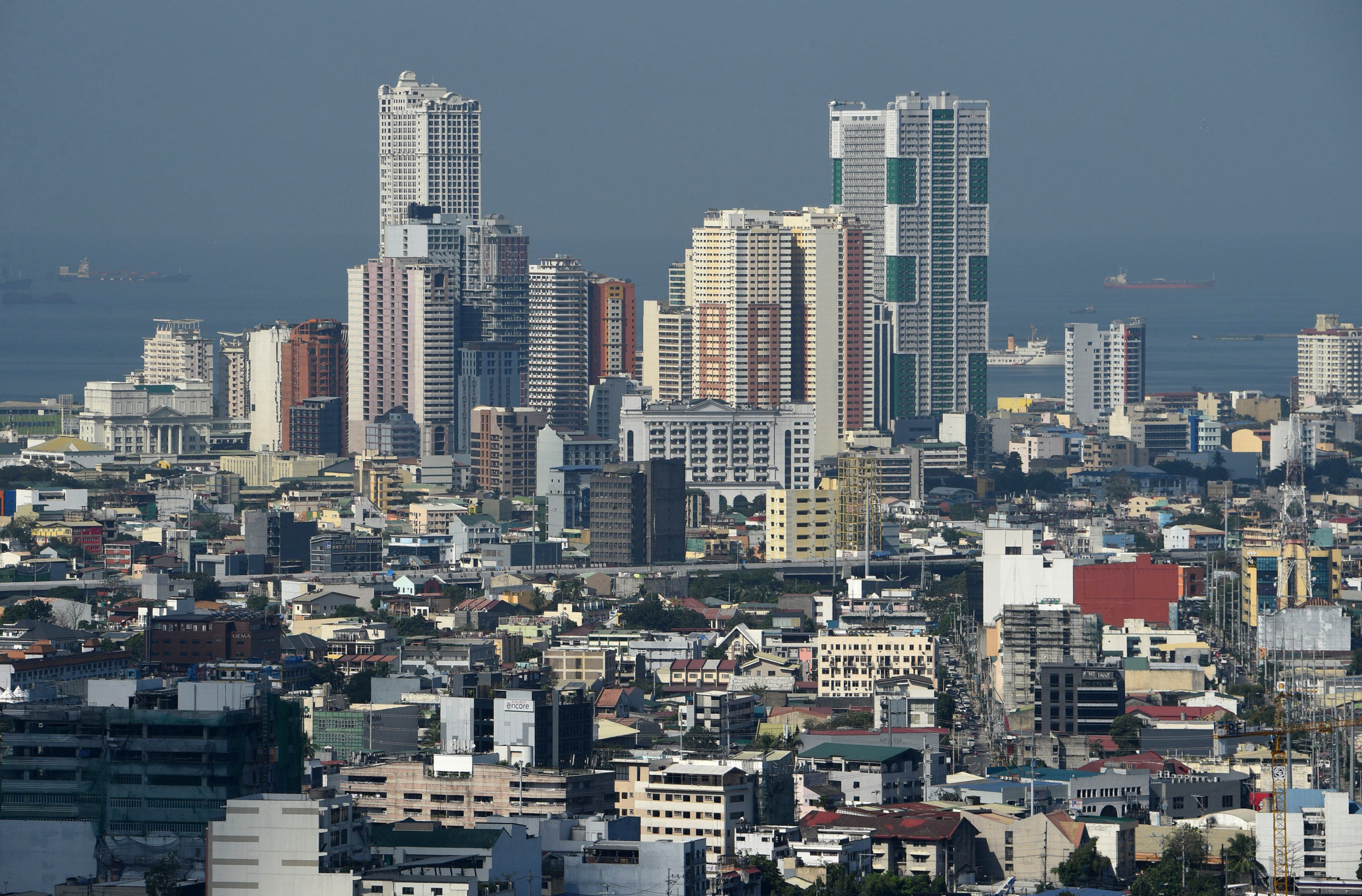
A central bank-led government group tasked with shielding the financial system from market shocks will step up monitoring of banks and other firms with conglomerate ties next year, aiming to nip early signs of stress that could ripple through the country’s broader financial sector.

During its 43rd Executive Committee Meeting, members of the Financial Stability Coordination Council (FSCC) said a comprehensive mapping of corporate linkages in the Philippines would be a priority initiative for 2026.

The council noted that connections between nonfinancial corporations and the financial system have deepened in recent years, with risks shaped largely by housing market trends and high levels of debt in both corporate and household sectors.

Article continues after this advertisement

To support this, the FSCC is also developing an “interagency coordinated response protocol” to address systemic risks.

FEATURED STORIES

“The FSCC’s top priority is to stay ahead of emerging risks and respond as one cohesive front,” said FSCC chair and Bangko Sentral ng Pilipinas (BSP) Governor Eli Remolona Jr.

“By improving system-wide monitoring and coordination, the FSCC aims to safeguard the stability of the Philippine financial system,” Remolona added.

The FSCC also includes the Department of Finance, Insurance Commission, Philippine Deposit Insurance Corporation and Securities and Exchange Commission. It is the venue for financial market authorities to identify, monitor, manage and mitigate the buildup of systemic risks.

Already, institutions like the International Monetary Fund had said that while overall systemic financial risks remained moderate in the Philippines, the “strong bank interconnectedness with complex conglomerate structures” needed close monitoring.

Article continues after this advertisement

Last June, Moody’s Ratings said that while conglomerate shareholders boosted the balance sheet and loan portfolio of banks via capital and lending opportunities, such a tight relationship also increased related-party risks.

Moody’s also noted the high dependence on banks funding in the absence of a deep capital market. This is seen to become a problem during economic downturns.

Article continues after this advertisement

Overall, the FSCC said the banking sector remained resilient, backed by robust capital, healthy liquidity and ample allowance for credit losses.

Stress tests likewise indicated that postshock capital adequacy ratios stayed comfortably above regulatory thresholds.


Your subscription could not be saved. Please try again.


Your subscription has been successful.

Even so, the council said it would continue efforts to deepen the local capital market to reduce the country’s reliance on banks for funding. Measures include establishing a standardized bond-pricing convention and refining open market operations for greater efficiency. —IAN NICOLAS P. CIGARAL INQ


Philippine stocks: buy, sell or hold?

The Philippine Stock Exchange Index (PSEi) has been highly volatile this month—falling as much as 5.8 percent before rebounding to almost 6,000.

Given this backdrop, it’s understandable that investors are unsure about what to do. Is the recent rebou…

The Philippine Stock Exchange Index (PSEi) has been highly volatile this month—falling as much as 5.8 percent before rebounding to almost 6,000.

Given this backdrop, it’s understandable that investors are unsure about what to do. Is the recent rebound of Philippine stocks a sign that the worst is over? Or is it an opportunity to trim exposure?

The answer depends on the kind of investor you are.

Article continues after this advertisement

If you are a trader looking for quick short-term gains, this is not the environment for you. Fundamentals have not improved—and may even weaken—making a sustained rally unlikely. In this case, it may be wise to use the current bounce to take profits or reduce exposure.

FEATURED STORIES

Third-quarter gross domestic product grew just 4 percent, far below expectations, as government spending slowed sharply amid the corruption probe and household consumption rose only 4.1 percent, its weakest since early 2021. 

Corporate earnings reflected the same sluggishness: most companies missed analyst estimates, while median growth was less than 5 percent, dragged by telcos, consumer firms, power companies and gaming operators.

External risks are rising too. US economic indicators are weakening, with serious auto and credit-card delinquencies climbing to 5 percent and 12.4 percent respectively—levels last seen during the global financial crisis. 

Layoffs have also surged, while payroll growth has softened. 

Article continues after this advertisement

Finally, stress in private credit is increasing as recent high-profile bankruptcies at First Brand, Tricolor and Renovo are leading to massive losses among shadow banks. This, in turn, is expected to lead to heightened risk aversion among investors.

Concerns about a potential artificial intelligence (AI) bubble are also building. Big Tech continues to pour hundreds of billions into data centers and other AI infrastructure despite limited real-world adoption. 

Article continues after this advertisement

A recent MIT study found 95 percent of firms saw no measurable returns from AI, while losses of OpenAI (ChatGPT’s owner) widened to an estimated $7.8 billion in the first half of 2025 despite higher revenues. 

With the S&P 500 trading well above its historical average valuation—and the “Magnificent 7” now accounting for 40 percent of the S&P 500—any reversal in sentiment could trigger a sharp correction that would spill over to emerging markets, including the Philippines.

If, on the other hand, you are a long-term investor building wealth for retirement or for your children, then staying invested makes sense. Economies move in cycles, and today’s challenges will eventually pass.

Valuations also offer a strong argument for staying invested. The PSEi is trading at just 8.8x forward earnings, a level that’s close to the trough reached during the 2008 global financial crisis. 

In fact, before the recent rebound, the index had fallen back to near-pandemic lows even though the economic backdrop is not as bad.

Many blue-chip stocks led by property and consumer stocks are also priced below their 10-year lows. This is despite earning higher profits today. 

At the same time, a number of companies offer dividend yields that exceed those of government bonds, making them appealing sources of passive income. These yields also give investors a cushion, making it easier to stay patient while waiting for prices to recover.

While we cannot predict what catalyst will drive the next sustainable bull market, buying stocks while they are cheap ensures you won’t be left behind when the recovery finally happens.

That said, long-term investing works best when you size your exposure properly. Avoid using margin or leverage and keep only an amount in equities that you are sure you won’t need anytime soon. The market is very volatile right now and cheap stocks can still get cheaper. Holding too many stocks in a volatile environment can cloud your judgment—turning opportunity into panic if prices fall further.


Your subscription could not be saved. Please try again.


Your subscription has been successful.

It may also be prudent to raise some cash. With the US economy and markets showing signs of strain, conditions could worsen before they improve. Having liquidity gives you the flexibility to take advantage of any irrational selling should the Philippine market be dragged lower by global contagion. INQ

E-commerce barriers remain high–study

Online shopping /INQUIRER.net Stock Photo

Trust in online shopping and digital payments in the Philippines is among the strongest in Southeast Asia, but logistics barriers and uneven regulatory enforcement are hampering the growth of small businesse…

Holiday online shopping fraud ‘alarmingly high’ in PH
Online shopping /INQUIRER.net Stock Photo

Trust in online shopping and digital payments in the Philippines is among the strongest in Southeast Asia, but logistics barriers and uneven regulatory enforcement are hampering the growth of small businesses, a regional study found.

A report by Singapore-based Blackbox Research said three in four Filipino e-commerce leaders view the country as ahead of its neighbors in digital payment maturity and consumer confidence.

However, they warned that inefficiencies in delivery, infrastructure and regulation are acting as a “hidden tax” on micro, small and medium enterprises (MSMEs).

Article continues after this advertisement

“Filipino consumers have shown remarkable trust in the digital economy, but the systems supporting that trust have yet to reach full maturity,” said David Black, founder and CEO of Blackbox Research.

FEATURED STORIES

“The opportunity now lies in closing those structural gaps so that MSMEs can scale alongside consumer demand,” he added.

Barriers

The study interviewed 46 e-commerce leaders and experts across Southeast Asia.

Regulatory inconsistencies were cited as a major barrier in e-commerce industries, with 87 percent of respondents saying uneven enforcement allows some cross-border sellers to evade taxes and product certification requirements.

In the Philippines, logistical gaps remain one of the biggest hurdles. The cost of shipping accounts for 20 percent to 30 percent of the order value, double that of those in mature markets.

Article continues after this advertisement

The 7,641 islands in the archipelago further complicate shipping. Delivery timelines vary from 24 to 48 hours in Metro Manila to as long as seven to 14 days for remote provinces.

And while investment into e-commerce technologies is high, the report said this focused primarily on visibility and customer acquisition instead of reliability, returns processing and customer support.

Article continues after this advertisement

Optimistic

Despite these challenges, the Philippines recorded an e-commerce optimism score of 7.93 out of 10 for the next three years, among the highest ratings in Southeast Asia.

“If logistics bottlenecks and compliance burdens can be tackled, the country is well placed to convert digital confidence into inclusive, nationwide growth,” the report said.

To maximize the country’s potential, the study called for greater public-private investment in MSMEs, expanded regional logistics hubs and simpler compliance processes.

“For the Philippines, the task is clear: strengthen the systems that sustain consumer confidence and ensure MSMEs are not just participants but beneficiaries of the region’s digital transformation,” the market research firm said.


Your subscription could not be saved. Please try again.


Your subscription has been successful.

“Without decisive collaboration on logistics, regulation and innovation, the very trust that fuels growth today could become its greatest constraint tomorrow,” it added. INQ

P44.5-B fund eyed for education infrastructure in 2026

PHOTO: LEAH AGONOY

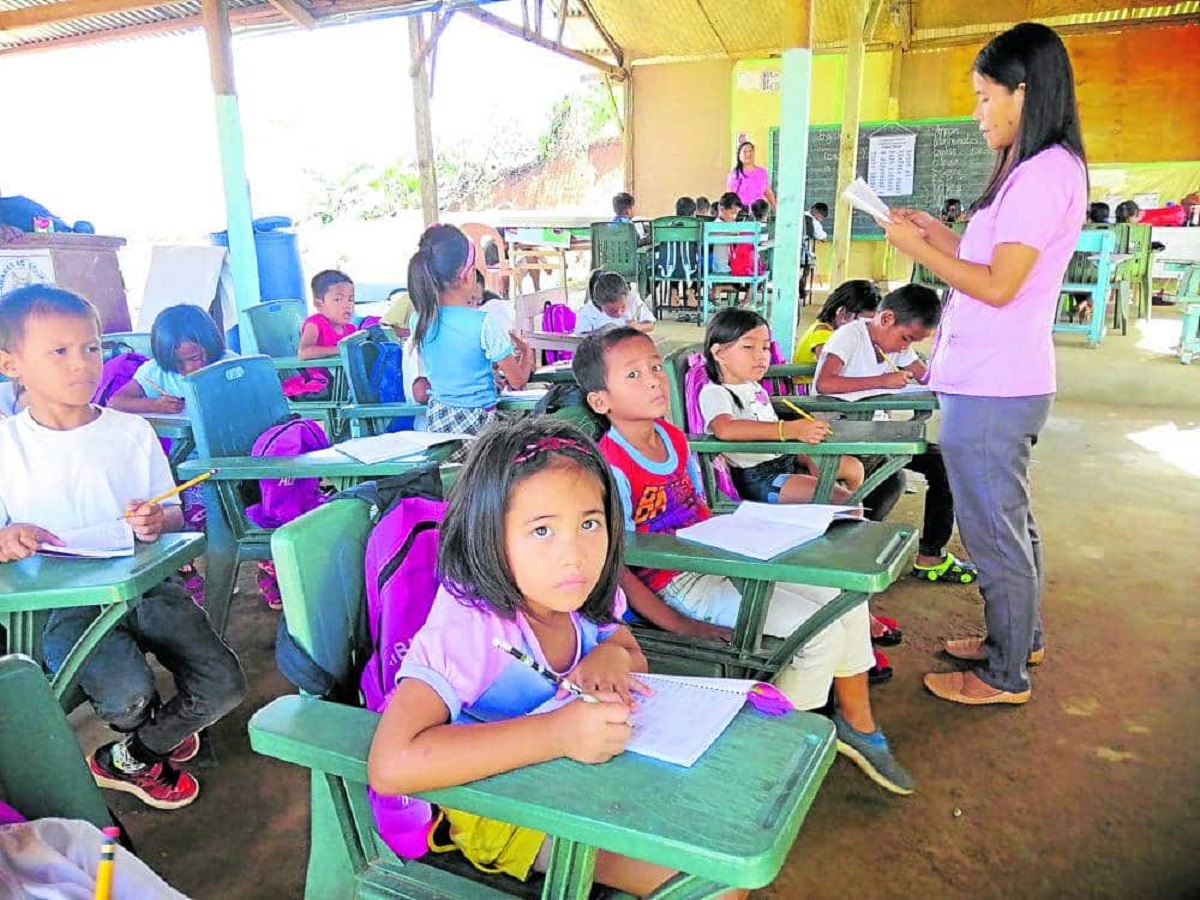
The Marcos administration is eyeing a P44.58-billion allocation in 2026 for education infrastructure to address the country’s classroom backlog and develop innovative, climate-adaptive learning spaces.

Rolly Toledo, officer in …

PHOTO: LEAH AGONOY

The Marcos administration is eyeing a P44.58-billion allocation in 2026 for education infrastructure to address the country’s classroom backlog and develop innovative, climate-adaptive learning spaces.

Rolly Toledo, officer in charge at the Department of Budget and Management (DBM), said funds for education infrastructure is “at the heart” of the record-high proposed education budget of P1.38 trillion for 2026. 

Of this total, the Department of Education is set to get P928.5 billion. That is based on the National Expenditures Program (NEP) that Malacañang, through the DBM, submitted to Congress for deliberation.

Article continues after this advertisement

“With the DBM and the Government Procurement Policy Board operationalizing the National Government Procurement Act, we are ushering in procurement strategies that will deliver classrooms faster, more efficiently and with greater transparency and accountability,” Toledo said.

FEATURED STORIES

According to Toledo, the bulk of the funding will create 4,900 new classrooms and repair more than 9,400 nationwide.

Also, the 2026 NEP proposes to restore over a hundred heritage Gabaldon school buildings, or those built during the American colonial period, for P1.134 billion.

Meanwhile, P3 billion will fund the construction of 200 new “last mile” schools in geographically isolated and underserved areas, each equipped with solar power, water and sanitation facilities, and appropriate furniture.

About P9.39 billion will be used to rehabilitate, retrofit and rebuild 1,300 disaster-affected schools—totaling more than 13,000 classrooms—under the Infrastructure for Safer and Resilient Schools Project.

Article continues after this advertisement

Further, the proposed national budget provides furniture for 18,000 classrooms; electrification for over 400 schools and 300 new health and sanitation facilities.

“These investments ensure that learning environments are not only structurally sound but also holistic, functional and conducive to student well-being,” Toledo said. 

Article continues after this advertisement

He described the proposed 2026 national budget as the “true education budget.” Its allocation for education represents 4 percent of gross domestic product, the largest-ever allocation for the sector.

“Together with DepEd, we are promoting more flexible and innovative ways of building classrooms. We will not rely on a single implementing agency. We will empower LGUs, civil society organizations and partners closest to the communities,” he said. 


Your subscription could not be saved. Please try again.


Your subscription has been successful.

“This is how we make every peso count. Every classroom we build is a statement of hope. Every repaired structure is a promise kept. Every safe, dignified learning space is a legacy we give our children,” he added. INQ

BPI rolls out cash benefit plan for critical illnesses

The Bank of the Philippine Islands (BPI) and its insurance arm have launched a critical illness plan offering a lump-sum cash benefit. This is aimed at reducing treatment delays due to patients’ financial hardship.

Called “BPI Kaya Care critical…

The Bank of the Philippine Islands (BPI) and its insurance arm have launched a critical illness plan offering a lump-sum cash benefit. This is aimed at reducing treatment delays due to patients’ financial hardship.

Called “BPI Kaya Care critical illness insurance,” the plan offers a cash payout upon diagnosis. Early-stage cases could receive 50 percent of the benefit and late-stage or major diagnoses receive the full amount.

Premiums start at P859 per year, depending on age and coverage.

Article continues after this advertisement

According to BPI, the plan was designed to offer immediate cash support that policyholders can use for medical procedures, medication or daily expenses following a diagnosis. The benefit may be claimed as long as the insured survives for at least seven days after diagnosis.

FEATURED STORIES

BPI MS president and CEO Noriyuki Kobayashi said this offering is a “vital and affordable protection to the core and middle markets.”

“The silent crisis of underinsurance, coupled with surging medical costs, creates an urgent need for simple, accessible insurance solutions,” Kobayashi said.

The rollout comes as Filipino households continue to shoulder a significant portion of their own medical costs, even as the government has been spending more on health than ever in the past decade.

Five years after the enactment of the universal health care law, out-of-pocket spending by households still rose by 11.8 percent in 2024, reaching P615.16 billion.

Article continues after this advertisement

A survey from the WTW Global Medical Trends also showed that medical insurance costs in the country are expected to increase by 18.4 percent this year, making it the second-highest growth among markets in the Asia Pacific.

Filipinos are most prone to critical illnesses, according to the Department of Health. The Philippine Statistics Authority reported that heart diseases, neoplasms and cerebrovascular diseases are still the leading causes of death in the Philippines in 2024.

Article continues after this advertisement

“For too long, critical illness insurance has felt complex and out of reach. We wanted to change that. BPI Kaya Care is more than a policy—it’s a partner that helps families focus on recovery without financial strain, support that truly matters when it matters most,” said Maria Cristina Go, consumer banking head of BPI. —Nyah Genelle C. De Leon INQ


Your subscription could not be saved. Please try again.


Your subscription has been successful.

2 dead, 2 hurt in dynamite explosion in Sulu

INQUIRER FILES

PAGADIAN CITY, Zamboanga del Sur – Two men died while two others were injured after a dynamite exploded inside a house in Barangay Tulay of Jolo, Sulu on Saturday evening (Nov 22). 

Jolo local police identified the fatali…

INQUIRER FILES

PAGADIAN CITY, Zamboanga del Sur – Two men died while two others were injured after a dynamite exploded inside a house in Barangay Tulay of Jolo, Sulu on Saturday evening (Nov 22). 

Jolo local police identified the fatalities as Abdul Tiri Basang, 70, and Indal Pascual, 40.

Initial investigation showed that the two were allegedly assembling inside Pascual’s home dynamites for fishing. They did not expect that one of the devices would explode.

Police are still investigating what caused the sudden explosion.

One of those hurt was identified as 40-year old fisherman Tulli Mislani who, together with a still unidentified woman, happened to be near the area when the blast occurred.

The female victim was rushed to the Integrated Provincial Health Office (IPHO) -Sulu for immediate medical attention.

The Jolo police said they had coordinated with the Sulu Forensic Unit for crime scene processing. 

Jolo Mayor Hji. Edsir Tan, in a statement, has instructed municipal disaster response officials to maintain close coordination with all responding agencies to ensure timely updates and to determine any additional support needed for those affected. /jpv

Iligan City journos remember fallen colleagues in Maguindanao massacre

NUJP members remember colleagues lost in the 2009 Maguindanao massacre. RICHEL V. UMEL

ILIGAN CITY – Officers and members of the National Union of Journalists of the Philippines (NUJP) Iligan – Lanao del Norte chapter light candles and offe…

NUJP members remember colleagues lost in the 2009 Maguindanao massacre. RICHEL V. UMEL

ILIGAN CITY – Officers and members of the National Union of Journalists of the Philippines (NUJP) Iligan – Lanao del Norte chapter light candles and offered prayers and flowers on Sunday to commemorate the 16th year since the massacre of colleagues in Ampatuan town, Maguindanao.

The simple commemoration rite was held at the Saint Michael Cathedral grounds starting at 4 p.m.

The Maguindanao massacre on November 23, 2009 claimed the lives of 58 people, 32 of whom were journalists.

The massacre, the single most deadly attack on the press, sent a chilling effect to journalists and its search for justice became a rallying cry in the fight against a culture of impunity on media killings in the country.

In Cagayan de Oro City, members of the NUJP and the local press club had set commemoration rites on Monday.

“We must insist — loudly, persistently — that freedom of expression is not a luxury but a foundation. We must insist that press freedom is not negotiable but necessary,” read a statement from the Cagayan de Oro Press Club on Sunday. /jpv