As Azerbaijan pushes forward with its peace agenda and
reconstruction efforts, recently, a striking imbalance has recently
emerged in the international response, particularly from Europe.
During the years of occupation, the European Union and various
European organisations regularly introduced peacebuilding programs,
civil society initiatives, and grant-based projects, many of which
ultimately helped maintain the existing status quo rather than
resolve the conflict. Yet now, in a period when Azerbaijan has
restored its sovereignty, opened the path for normalisation with
Armenia, and is addressing the immense humanitarian and
infrastructural consequences of occupation, Europe’s involvement
has sharply declined.
Azerbaijan today finances almost the entirety of its demining
operations alone, despite more than 20 per cent of its territory
being left in ruins and heavily contaminated with landmines and
unexploded ordnance. Only a handful of states, such as Uzbekistan
and Pakistan, have provided meaningful assistance. Europe, which
once showed sustained interest and even competition in peace
initiatives during the conflict, now demonstrates near-total
passivity. This is particularly evident when contrasted with the
EU’s vigorous political, financial, humanitarian, and
reconstruction support for Ukraine.
Azerbaijan, despite this discrepancy, has not withheld its own
assistance to Ukraine, raising questions about why Europe applies a
selective, asymmetric standard in its approach to post-conflict
recovery. While the EU invests heavily in Ukrainian reconstruction
and mine clearance, it has not initiated even a single substantial
reconstruction or demining project in Azerbaijan. This selective
engagement not only undermines Europe’s credibility but also
reinforces doubts about its intentions and priorities in the South
Caucasus.
The current reality invites discussion on whether Europe has
strategically distanced itself from a peace process in which
Azerbaijan now holds the initiative, and whether this withdrawal
risks weakening regional stability. At the same time, new regional
platforms, such as the Zangazur corridor and broader connectivity
projects, present opportunities for meaningful support in energy,
transport, reconstruction, and humanitarian fields. Yet Europe
remains detached, prompting sharper questions about its future
role, its geopolitical principles, and its long-term vision for the
region.
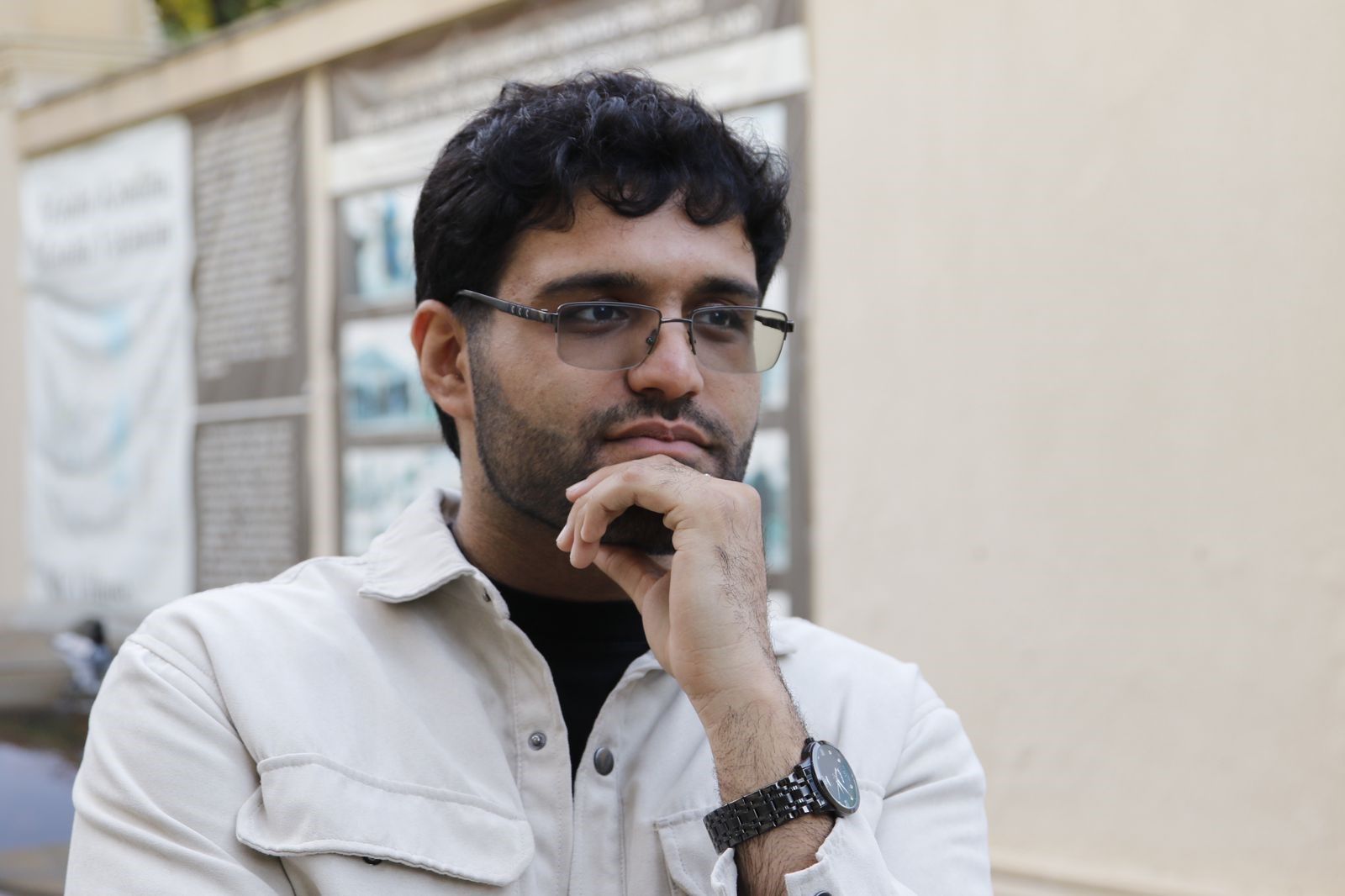
“Europe has abandoned the South Caucasus at the very moment when
real peace became possible,” British political scientist Neil
Watson told Azernews, before outlining his
assessment:
“To regain credibility and relevance in the South Caucasus, the
EU should establish a dedicated EU Recovery and Demining Fund for
the Azerbaijani region of Garabagh, focusing on rebuilding critical
infrastructure, schools, and agriculture in the liberated
territories, thereby making a public and symbolic commitment. The
EU should support the Zangazur Corridor, also known as the Trump
International Corridor for Peace and Prosperity (TRIPP), not just
as a transport route, but as a blueprint for regional connectivity,
energy diversification away from Russia, and a path towards a
stable and interconnected South Caucasus, which has the potential
to become essential in the New World Order. The EU must appoint a
Special Envoy for the South Caucasus, embedding the region into the
EU’s strategic agenda, rather than treating it as a peripheral
issue. Brussels should invest in the digital and green
transformation of the region before China, Türkiye, or the Gulf
states dominate this space. It is also important to launch a
Brussels-Garabagh Dialogue Platform involving Armenian and
Azerbaijani civil society, moderated by EU institutions, thereby
playing a moral and diplomatic balancing role.”
Watson continued:
“EU foreign policy is more about inertia and optics than
principle. Armenia was seen as the so-called ‘victim’ as it fitted
the EU’s preferred narrative of a fragile Christian democracy
needing support. When Azerbaijan regained control of its
internationally recognised territories, it ceased to be the
underdog and used the Russian expansionist mentality to its
advantage. Europe struggles to engage with strong, assertive
partners who don’t follow its playbook. Geopolitical bias played a
role — especially under pressure from Armenocentric France, which
heavily influenced the policy stance in Brussels.”
He added, and in the conclusion, warned that the EU has a
choice:
“The EU only supports peace when it’s convenient and beneficial
to it. EU neutrality is selective. It doesn’t protect principles;
it protects narratives. This has undermined the EU’s image as a
reliable peacebroker and shifted trust toward alternative power
centres like Türkiye. The ultimate message is dangerous: ‘Strength
and sovereignty won’t be rewarded, unless they align with EU
preferences. Europe has a choice: reclaim its influence by being
bold and fair, or remain a spectator in a region moving toward new
alliances. Azerbaijan has played its hand. The South Caucasus is
united and independent of Russian domination for the first
time.”