Israeli strike hits Beirut, aiming at Hezbollah chief of staff

An Israeli airstrike has struck Lebanon’s capital, Beirut, for
the first time in months.
Israel’s military said it targeted Hezbollah’s chief of
staff.
Benjamin Netanyahu’s office said: “A short while ago, in the
heart of Bei…

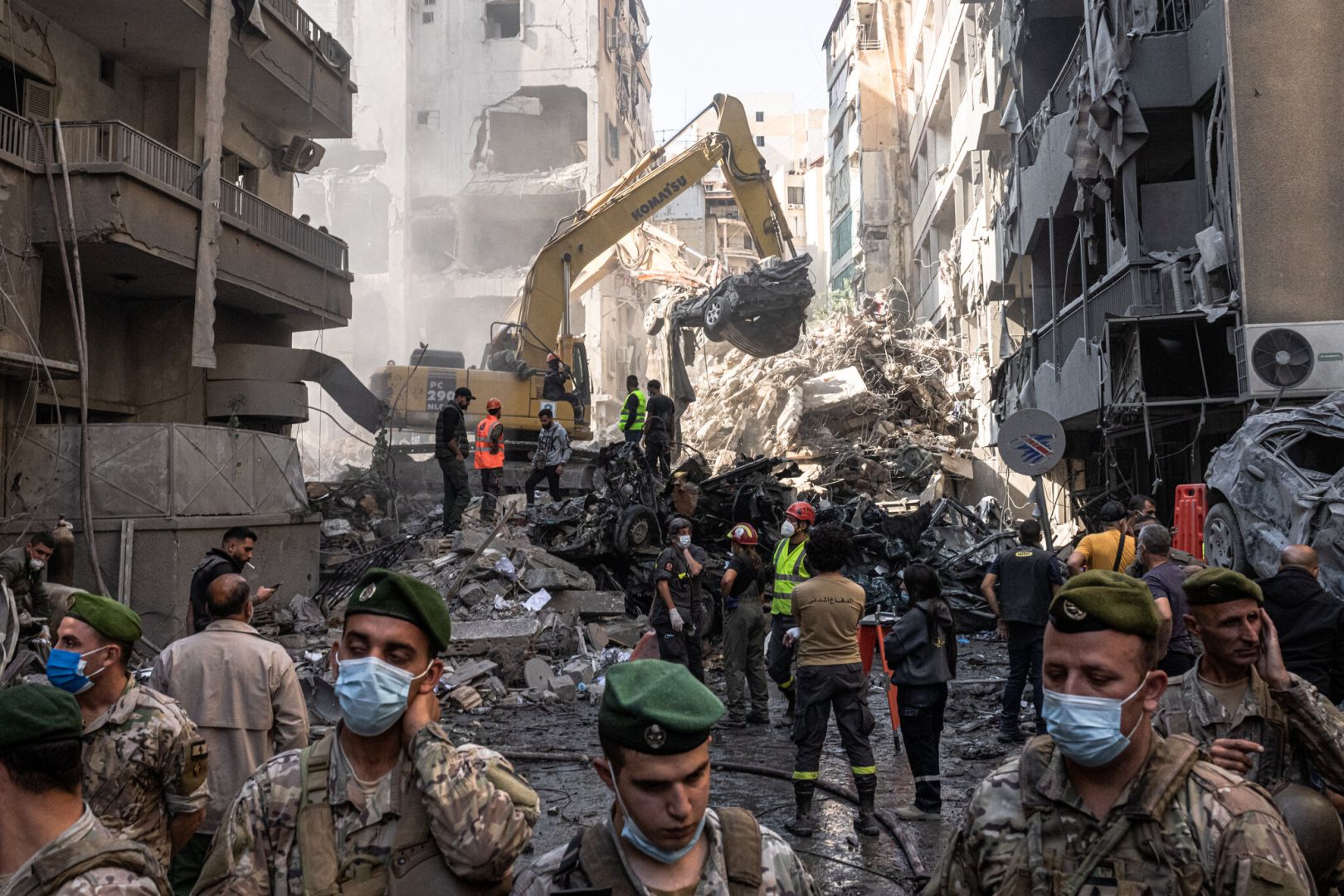
An Israeli airstrike has struck Lebanon’s capital, Beirut, for
the first time in months.

Israel’s military said it targeted Hezbollah’s chief of
staff.

Benjamin Netanyahu’s office said: “A short while ago, in the
heart of Beirut, the IDF attacked the Hezbollah Chief of Staff, who
had been leading the terrorist organisation’s build-up and
rearmament.

“Prime Minister Netanyahu ordered the attack upon the
recommendation of the defence minister and the IDF chief of
staff.

“Israel is determined to act to achieve its objectives
everywhere and at all times.”

Hezbollah has yet to comment.

Smoke could be seen in the busy Haret Hreik neighbourhood, with
one video circulated on social media showing dozens of people
crowded around the area of the strike, which appeared to be on an
apartment building.

It is the first Israeli airstrike on Beirut since June.

There was no immediate word on casualties.

Here we are to serve you with news right now. It does not cost much, but worth your attention.

Choose to support open, independent, quality journalism and subscribe on a monthly basis.

By subscribing to our online newspaper, you can have full digital access to all news, analysis, and much more.

Subscribe

You can also follow AzerNEWS on Twitter @AzerNewsAz or Facebook @AzerNewsNewspaper

Thank you!

US boycotts G20 Summit in South Africa, leaving presidency handover in limbo

The G20 in South Africa has ended with the glaring absence of
the United States – the next country to lead the bloc – after the
Trump administration boycotted the two days of talks involving
leaders of the world’s richest and…

The G20 in South Africa has ended with the glaring absence of
the United States – the next country to lead the bloc – after the
Trump administration boycotted the two days of talks involving
leaders of the world’s richest and top developing economies.

South African President Cyril Ramaphosa declared the summit in
Johannesburg closed on Sunday by banging a wooden gavel on a block,
in a G20 tradition. The gavel would normally be handed over to the
leader of the next country to hold the rotating presidency, but no
US official was there to receive it.

The world’s biggest economy boycotted a summit meant to bring
rich and developing nations together over President Donald Trump’s
claims that South Africa is violently persecuting its Afrikaner
white minority.

The White House said it intended in a last-minute decision for
an official from its embassy in South Africa to attend the G20
handover. But South Africa refused that, saying it was an insult
for Mr Ramaphosa to hand over to a junior embassy official.

Here we are to serve you with news right now. It does not cost much, but worth your attention.

Choose to support open, independent, quality journalism and subscribe on a monthly basis.

By subscribing to our online newspaper, you can have full digital access to all news, analysis, and much more.

Subscribe

You can also follow AzerNEWS on Twitter @AzerNewsAz or Facebook @AzerNewsNewspaper

Thank you!

Baku Music Academy revives Verdi’s “Il trovatore” in stunning production

Giuseppe Verdi’s Il trovatore (The Troubadour)
was staged at the Opera Studio of the Uzeyir Hajibeyli Baku Music
Academy.
As Azernews reports, the production completes
the great composer’s renowned trilogy alongside La
traviata and Rigoletto. The opera…

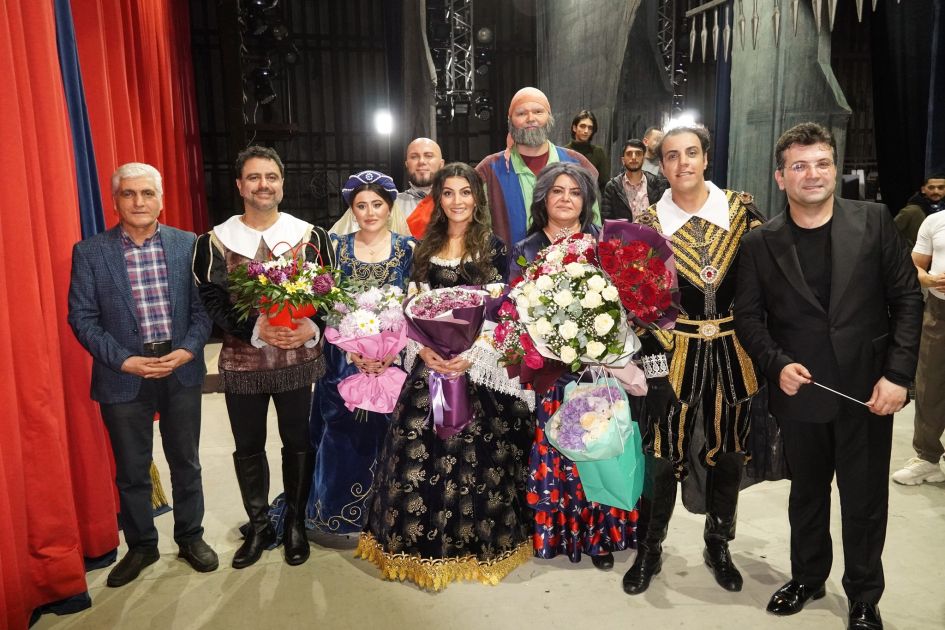
Giuseppe Verdi’s Il trovatore (The Troubadour)
was staged at the Opera Studio of the Uzeyir Hajibeyli Baku Music
Academy.

As Azernews reports, the production completes
the great composer’s renowned trilogy alongside La
traviata
and Rigoletto. The opera, celebrated for its
unrelenting dramatic intensity across four acts, has remained a
jewel of the world operatic repertoire for more than 170 years,
captivating audiences and drawing full houses with every
performance.

The passionate Italian drama last appeared on a Baku stage
several years ago. This latest production once again brought to
life a story of bitter enmity, unwavering devotion, emotional
clashes and powerful human passions.

The evening, held to a packed auditorium, featured some of the
most iconic numbers in the global opera canon: the “Miserere”
chorus, the gypsy chorus punctuated by the echoing hammer blows of
the anvil, Leonora’s cavatina “Tacea la notte placida”, Manrico’s
famous aria “Di quella pira”, and Count di Luna’s beloved aria “Il
balen del suo sorriso”. The performance also showcased Azucena’s
dramatic highlights such as “Stride la vampa” and “Sol, son tuo
figlio?”, along with the Manrico–Leonora duet that drew frequent
cries of “Bravo!” from the enthusiastic audience.

Leading roles were performed by distinguished Azerbaijani
vocalists. Honoured Artist Afaq Abbasova delivered a compelling
portrayal of Leonora, while Honoured Artist Farid Aliyev embodied
Manrico with skill and passion. Talented baritone Taleh Yakhyayev
captured the full emotional breadth of Count di Luna. Honoured
Artist Anton Fershtandt took on the role of Ferrando, the captain
of the guard. Honoured Artist Sabina Asadova appeared as Azucena,
impressing audiences with her deep and resonant mezzo-soprano in
one of the opera’s most demanding roles. The cast also included
soloists Sema Həmzayeva as Ines, Leonora’s confidante, and Igor
Yadrov as the old gypsy.

The Symphony Orchestra of the Azerbaijan State Academic Opera
and Ballet Theatre performed under the baton of Honoured Artist
Ayyub Guliyev.

Staged in Italian, the production left a lasting mark on the
cultural life of the capital with its dramatic narrative and
virtuosic performances, a fact affirmed by the audience’s prolonged
applause.

The production was directed by Honoured Artist Hafiz Guliyev,
with Honoured Artist Sevil Hajiyeva serving as chorus master.

Malaysia plans social media ban for under-16s from next year

Malaysia has announced plans to implement a comprehensive social
media ban for children under 16 beginning next year, as part of a
broader initiative to enhance online safety for young users across
the country.
Communications Minister Fahmi Fadzil conf…

Malaysia has announced plans to implement a comprehensive social
media ban for children under 16 beginning next year, as part of a
broader initiative to enhance online safety for young users across
the country.

Communications Minister Fahmi Fadzil confirmed the government’s
intention to prohibit social media access for minors under 16,
requiring platform providers to implement electronic know your
customer (eKYC) identity verification systems by the target
implementation date. “We expect all platform providers to be ready
to implement the measures by next year,” Fadzil stated during a
media briefing following an educational seminar.

International Precedents and Monitoring
The minister acknowledged Australia’s pioneering move to establish
age restrictions on social media platforms starting December 10,
making it the first nation to prohibit users aged 16 and under from
accessing major platforms including Facebook, Instagram, TikTok, X,
and YouTube. Malaysian authorities will closely observe the
implementation and outcomes of Australia’s approach as they develop
their own regulatory framework.

Comprehensive Online Safety Legislation
The social media age restriction forms part of Malaysia’s wider
Online Safety Act, scheduled to take effect on January 1, 2026.
This legislative package represents the government’s comprehensive
approach to addressing digital risks facing young internet users.
The Cabinet had previously decided in October to raise the minimum
age for social media access to 16, formalizing this protective
measure.

Parental Guidance and Alternative Activities
Minister Fadzil emphasized the importance of parental involvement
in children’s digital habits, encouraging families to promote
outdoor activities and reduce screen time for younger children. He
stressed that parental supervision of device usage remains crucial
even as the government implements regulatory measures to create
safer online environments for Malaysia’s youth population.

President Erdogan plans to meet his Russian counterpart to discuss Ukraine

Turkish President Recep Tayyip Erdogan on Sunday said he will
call his Russian counterpart Vladimir Putin on Monday to discuss
the revival of Black Sea grain corridor.
Speaking to the press on the margins of the G20 leaders’ summit
in Johannesburg, Sou…

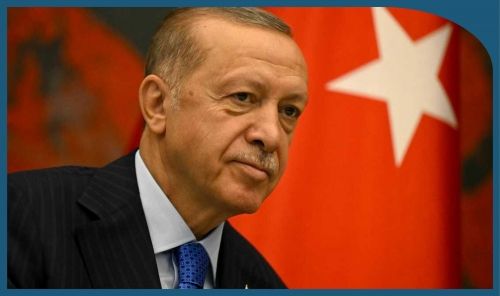
Turkish President Recep Tayyip Erdogan on Sunday said he will
call his Russian counterpart Vladimir Putin on Monday to discuss
the revival of Black Sea grain corridor.

Speaking to the press on the margins of the G20 leaders’ summit
in Johannesburg, South Africa, Erdogan said, “Our efforts regarding
the grain corridor were, in fact, intended to open the path towards
peace.”

“I believe that, if we can set this process in motion, it would
be highly beneficial,” he added.

Ankara first arranged Russia-Ukraine talks in 2022, and later
brokered the Black Sea grain deal to facilitate the export of grain
and fertilizers from Ukrainian ports amid the war. Russia suspended
its participation in July 2023.

On the Sudan conflict, the Turkish president said the Sudanese
people want Ankara to play role in resolving issue, vowing:
“Wherever there is trouble, we will be there.”

“Whether in Gulf, Sudan, or Somalia, we have been part of these
efforts, from now on, we will continue rushing everywhere for
peace,” Erdogan added.

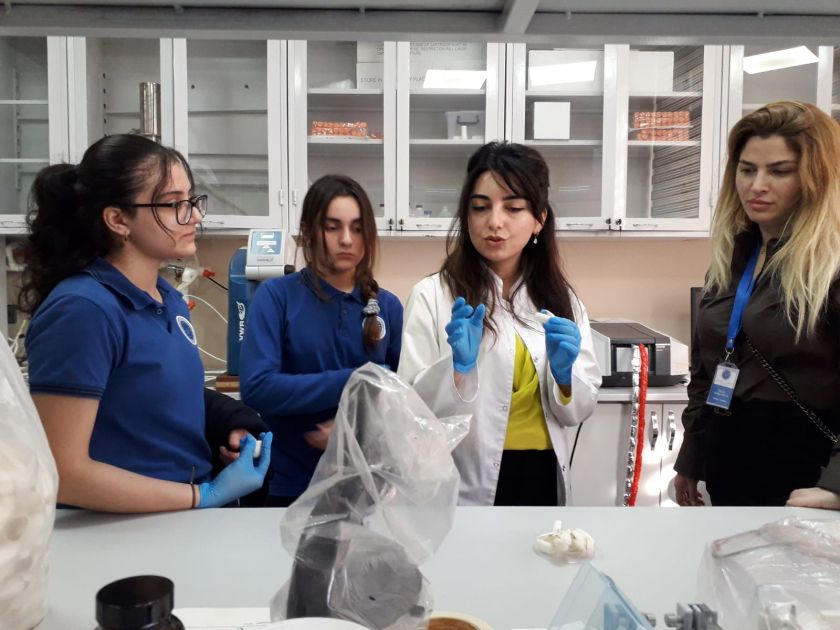
Biophysics Institute opens its labs to eighth-graders for hands-on science visit

8th-grade students of the European Turkish Lyceum visited the
Institute of Biophysics.
Azernews reports, citing Azertag, that the
purpose of the visit was for schoolchildren to connect the
theoretical knowledge they gained in biology classes with the r…

8th-grade students of the European Turkish Lyceum visited the
Institute of Biophysics.

Azernews reports, citing Azertag, that the
purpose of the visit was for schoolchildren to connect the
theoretical knowledge they gained in biology classes with the real
research process, as well as to form a broader understanding of
biomolecular and medical research.

During the tour of the Institute’s “Molecular and Cellular
Biochemistry” laboratory, the students were explained the process
of studying cell surface receptors and signaling proteins involved
in the development of cancer diseases – including lung, breast, and
colon carcinomas. In this context, stages such as gene isolation,
cloning into plasmid vectors, and transformation into E. coli
cells, and the extraction of total RNA from healthy and diseased
tissues with TRIzol and other reagents was demonstrated. The
students also observed how the process of studying proteins such as
HER1, HER2, and RAS in signaling pathways was carried out.

Then, the students visited the “Structure, Dynamics and Function
of Biomolecules” laboratory. Here, they were informed about the
formation of amyloid by proteins during neurodegenerative diseases,
the kinetic characteristics of this process, factors that slow down
the formation of amyloid, and the mechanisms of decomposition of
the formed structures. At the same time, the development of a
classification model for the diagnosis of lung cancer based on the
Fourier Transform Infrared (FTIR) spectra of human blood plasma
using artificial intelligence technologies and the possibilities of
applying this direction for future wide screening were explained to
the students.

The trip was important in terms of introducing the students to a
real scientific environment, closely observing laboratory
processes, and increasing their interest in biology. The students
not only strengthened their theoretical knowledge, but also had the
opportunity to see more clearly the role of biomolecular research
in medical diagnostics and scientific development.

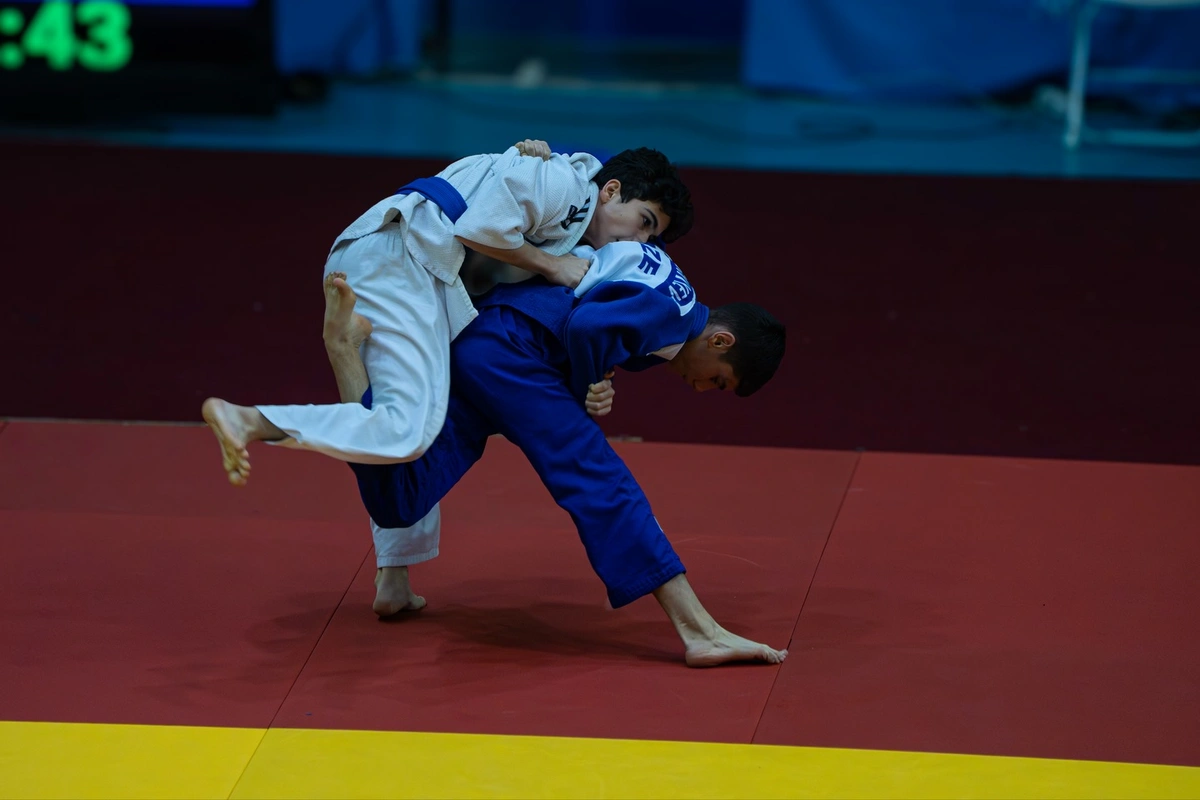
Baku hosts U4 judo league finals with 485 young athletes competing

The league tournament for judokas under the age of 14, held in
Baku, has concluded.
According to the Azerbaijan Judo Federation, cited by
Azernews, the final day of competition at
the Absheron Olympic Sports Complex saw medal winners determined in
nine…

The league tournament for judokas under the age of 14, held in
Baku, has concluded.

According to the Azerbaijan Judo Federation, cited by
Azernews, the final day of competition at
the Absheron Olympic Sports Complex saw medal winners determined in
nine additional weight categories.

Boys

42 kg

Ali Gurbanli (Baku City School No. 13 IOEUGIM PHŞ)

Ayhan Musazade (Baku City School No. 13 IOEUGIM PHŞ)

Raul Huseynli (Baku City School No. 10 UGIM PHŞ), Sultan Hajiyev
(Guneshli Club)

50 kg

Imran Salahov (Baku City School No. 2 RIOEUGIM PHŞ)

Nicat Aliyev (Baku City School No. 2 RIOEUGIM PHŞ)

Maharram Bayramli (Sumgayit City School No. 1 IOEUGISM), Eldar
Khalilov (Goranboy OSK)

60 kg

Kenan Ismayilov (Sumgayit City School No. 1 IOEUGISM)

Ismayil Shukurli (Nakhchivan UGIM)

Fakhri Yusifov (Baku City School No. 8 IOEUGIM PHŞ), Ayxan
Huseynov (MES Sports Club)

73 kg

Yusif Agakishiyev (RKIM)

Nihat Mammadov (Baku City School No. 13 IOEUGIM PHŞ)

Karim Mammadov (Ramana IM), Ibrahim Aliyev (Guneshli Club)

+73 kg

Bakhish Ahmadov (Baku City School No. 13 IOEUGIM PHŞ)

Tofiq Cumayev (Zaqatala UGIM)

Rasul Gasimov (ACF), Mikhail Tarusov (Kanokan-TT Club)

Girls

40 kg

Zeynab Isgandarli (Sumgayit City School No. 2 UGISM)

Fatimeyizahrahanim Mammadzade (Baku City School No. 10 UGIM
PHŞ)

Nargiz Farzaliyeva (Ismayilli RKIM), Nuray Hasanli (Baku City
School No. 10 UGIM PHŞ)

48 kg

Malak Valiyeva (Qadiroglu Club)

Aysel Ismayilova (Baku City School No. 13 IOEUGIM PHŞ)

Ilknur Rahimli (Sumgayit IOEUGIM), Fidan Heydarova (ACF)

57 kg

Sunay Macidova (Baku City School No. 13 IOEUGIM PHŞ)

Afsana Salmanli (Army Sports Club)

Aysun Orucova (Kanokan-TT Club), Zehra Madatzade (Yevlakh)

70 kg

Aytac Rustamova (Goranboy UGIM)

Zeynab Mehti (Turan Club)

Esnad Ilyasova (Lokomotiv Club)

At the conclusion of the event, the athletes’ ranking list was
compiled. The two-day competition brought together 485 young
judokas—392 boys and 93 girls—from 88 clubs and sports
societies.

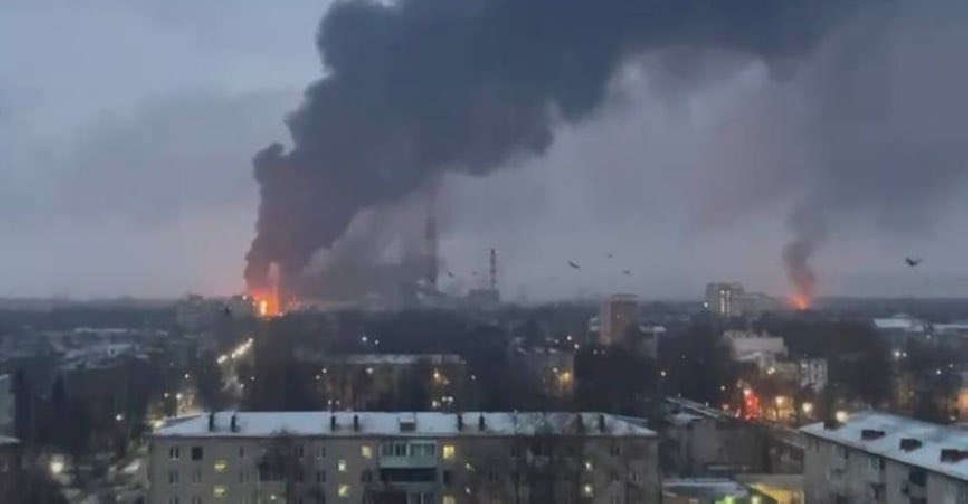
Kyiv launches deep strike inside Russia, hits Shatura Heat and Power Plant

Ukrainian drones launched one of Kyiv’s most significant attacks
deep inside Russia on Sunday, striking a heat and power station in
the Moscow region. The assault triggered a major fire and
reportedly cut off heating for thou…

Ukrainian drones launched one of Kyiv’s most significant attacks
deep inside Russia on Sunday, striking a heat and power station in
the Moscow region. The assault triggered a major fire and
reportedly cut off heating for thousands of residents.

This marks a notable shift in tactics during the fourth year of
Europe’s deadliest conflict since the Second World War. While
Russia has consistently targeted Ukraine’s electricity and heating
infrastructure, Kyiv has predominantly focused on Russian oil
refineries and terminals until now.

The Shatura Power Station, located approximately 120 km (75
miles) east of the Kremlin, was hit early on Sunday, Moscow region
governor Andrei Vorobyov confirmed.

Here we are to serve you with news right now. It does not cost much, but worth your attention.

Choose to support open, independent, quality journalism and subscribe on a monthly basis.

By subscribing to our online newspaper, you can have full digital access to all news, analysis, and much more.

Subscribe

You can also follow AzerNEWS on Twitter @AzerNewsAz or Facebook @AzerNewsNewspaper

Thank you!

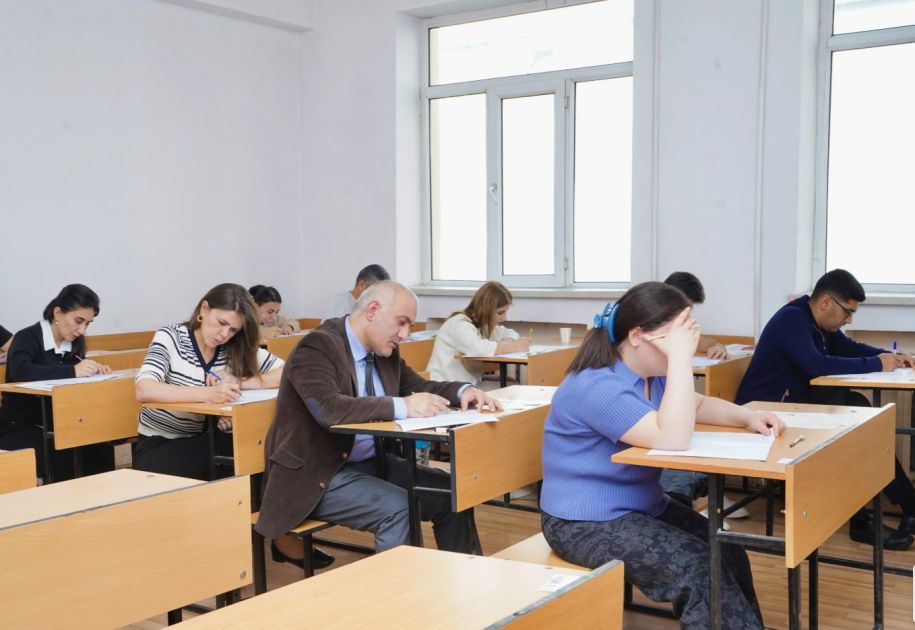
Azerbaijan holds foreign-language PhD exams in Baku and Nakhchivan

The State Examination Centre has held the foreign-language PhD
examination for doctoral candidates, dissertation researchers and
adjuncts currently studying or already graduated in Baku and
Nakhchivan.
Azernews reports via Azertag that the exam was adm…

The State Examination Centre has held the foreign-language PhD
examination for doctoral candidates, dissertation researchers and
adjuncts currently studying or already graduated in Baku and
Nakhchivan.

Azernews reports via Azertag that the exam was administered
across two exam centres, involving three exam managers, two chief
supervisors, 19 invigilators and three security staff.

Results will be announced two weeks after the Speaking component
is completed.

The exam held on 23 November covered four sections: listening
comprehension, reading comprehension, language use
(lexical-grammatical tasks) and writing. Candidates who did not
take this first part will not be allowed to sit the Speaking test,
scheduled for 24 November at 11:00. Those sitting the Speaking test
can print their admission slips online. Candidates who miss the
Speaking exam will not receive a certificate, even if they score 30
or more points in the first four sections.

For both the foreign-language PhD exam and the
Azerbaijani-language PhD exam for foreign nationals and stateless
applicants, each correct test answer is worth one point, with no
penalty for incorrect answers. Writing and speaking tasks are
evaluated on a 10-point scale. The maximum achievable score is
50.

Candidates must obtain at least 20% in each section and score a
minimum of 30 points overall in the foreign-language exam — or at
least 25 points in the Azerbaijani-language PhD exam for foreigners
— to be considered successful.

The Azerbaijani-language PhD exam and its Speaking component for
foreign and stateless applicants will be held on 1 December.

Armenia faces its moment of truth on constitutional reform

There is a saying that people are born the same, yet over time,
desire and temptation can mould a person into something quite
different, even reshaping their characte…

Elnur Enveroglu

There is a saying that people are born the same, yet over time,
desire and temptation can mould a person into something quite
different, even reshaping their character. Countries, too, undergo
such transformations; once freed from the levers of empires, they
often experience a period of distortion before rediscovering who
they truly are.

After the collapse of the Soviet Union, Armenia in 1990–91,
declared both sovereignty and independence. But those who held
power at the time succumbed to their own ambitions and to the false
nationalist fantasies seeded into public consciousness, making a
path that led the nation towards a dead end. Today, it is Armenia’s
constitution that stands as the
principal barrier to peace in the South Caucasus.

It is no coincidence that, at the very moment Armenia finds
itself staring into the abyss, Prime Minister Nikol Pashinyan now
openly admits that the country needs a new constitution. This need
has existed for many years, but previous political elites, and a
society shaped by decades of misguided ideological propaganda, were
unwilling to face the truth. Time, however, has a habit of
separating illusion from reality. The same authorities that once
occupied Garabagh consoled their public with fantasies of borders
stretching to the seas. Yet these delusions left Armenia isolated
for more than three decades.

As the old saying goes, “Time is the best healer.” Armenia now
recognises that the structures and governance it inherited were
fundamentally flawed. Progress cannot be built on conquest or
mythmaking, but on mutual respect and constructive relations with
neighbours. Even senior American officials have acknowledged this
shift. As US Special Envoy Steve Witkoff put it so pointedly, he
praised President Ilham Aliyev for liberating Garabagh without
pushing into Armenian territory, “though he could have. Aliyev
acted with restraint, demonstrating a magnanimity that few leaders
in such a moment would have shown,” he said at one of his
meetings.

Indeed, if Azerbaijan had wished, Yerevan, Göycha, even Zangazur
could have been taken by force. But that was never Baku’s agenda.
Instead, Azerbaijan repeatedly urged Armenia to embrace a peace
agenda, warning it that the geopolitical chessboard of the South
Caucasus was shifting fast. Armenia may have been blind to the
checkmate awaiting it, but its former patron, Russia, and the far
more perceptive West saw it clearly. Today’s Armenian leadership,
its illusions finally stripped away, is beginning to confront
realities it long dismissed.

This wider awakening forms the essential backdrop to the current
constitutional debate in Yerevan. Pashinyan’s argument is that the
existing constitution, drafted in 1995 and amended twice since, is
viewed by many Armenians as the legacy of discredited regimes. It
lacks organic legitimacy and fails to reflect the citizen as the
true sovereign. His government argues that a new constitution could
create a unified national identity within the boundaries the world
actually recognises, not those that Armenian nationalism once
imagined.

But the constitutional debate is not simply a matter of national
introspection. It sits at the heart of the peace process with
Azerbaijan. Baku has long maintained that Armenia’s constitution,
through references to the 1990 Declaration of Independence,
implicitly asserts territorial claims on Azerbaijan. Pashinyan has
cautiously acknowledged this, signalling his readiness to remove
ambiguity that undermines the peace treaty both sides say they
want.

He has also tied constitutional reform to long-overdue changes
in the justice system. By his own admission, Armenia’s courts
operate in a bubble, detached from public confidence. The
introduction of jury trials is one of several innovations being
considered, a sign that this constitutional debate is also about
modernising the state itself.

A referendum is planned, with a draft expected by 2026 and a
nationwide vote pencilled in for 2027. Yet as with any attempt to
shake up entrenched systems, fierce opposition has emerged. Critics
accuse Pashinyan of capitulation to Azerbaijani demands, while
others see an attempt to consolidate power under the guise of
reform. For now, Armenia’s Justice Minister, Srbuhi Galyan, has
confirmed that work on the draft is underway.

Armenia stands at a crossroads. It can cling to the outdated
narratives that brought it isolation, war, and economic stagnation.
Or it can embrace a constitutional transformation that reflects
geopolitical reality and opens the door to lasting peace. Change is
seldom easy, and there will always be those who prefer to live in
the past. But the writing is on the wall: only through political
maturity and constitutional clarity can Armenia hope to secure a
future defined not by conflict, but by stability, growth, and
genuine sovereignty.