Modernizing land policy to accelerate Azerbaijan’s clean energy push

Azerbaijan is preparing legal changes that could transform large areas of agricultural land into sites for renewable energy while keeping those lands’ existing category and primary use. The amendment, highlighted in the newly published Nationally Determined Contribution 3.0 report, would enable the deployment of utility-scale solar and onshore wind on farmland without requiring land reclassification or restricting farming activities. This measure is part of a wider package that the government sees as essential for modernizing the power system and meeting growing electrification needs.

The planned amendments to the Land Code and the Law on the Use of Renewable Energy Sources in Electricity Generation remove a legal barrier that has limited large renewable installations on agricultural parcels. By permitting renewable facilities to co-exist with the land’s agricultural designation, policymakers expect to accelerate permitting, reduce land use conflicts, and unlock new private investment in distributed and utility-scale projects. The official update is presented as part of NDC 3.0, which frames these changes as necessary to avoid a growing emissions gap as electrification of transport, buildings, and industry increases electricity demand.

The NDC 3.0 report makes clear why this matters. The energy sector remains Azerbaijan’s largest source of greenhouse gas emissions at around 21 percent of the national total. While the country benefited from switching from fuel oil to gas and from having no coal power generation, the report stresses that efficiency improvements, network modernization, and expansion of solar and wind capacity are central to avoiding increases in emissions as the economy electrifies. Key measures through 2035 include smart grid rollouts, strengthening overhead lines and substations, wide deployment of solar and onshore wind, and introduction of long-duration energy storage systems for large-scale renewables.

What similar policies look like in exemplary countries?

Across Europe and in Trkiye, policy makers and utilities have encouraged a mix of rooftop, agrivoltaic and utility scale solar to boost energy independence and encourage household-level self-generation.

SolarPower Europe reported that residential rooftop systems accounted for a substantial share of the market in recent years, although that share showed signs of shifting in 2024. In the EU market outlook for 2024-2028, residential rooftop solar represented about 20 percent of installations in the previous year, down from higher shares in earlier years, reflecting shifting subsidy regimes and market dynamics.

Trkiye has experienced rapid growth in solar capacity and retains a very large rooftop potential. Ember and other analysts estimate that rooftop PV potential in Trkiye could expand by roughly 120 gigawatts, potentially covering as much as 45 percent of the country’s electricity consumption if fully deployed.

Trkiye’s solar capacity nearly doubled in a short period and reached roughly 19.6 gigawatts by the end of 2024, showing how fast deployment can progress when policy and market conditions align. Those examples highlight both the opportunity and policy choices facing Azerbaijan as it seeks to expand renewables while maintaining agricultural production.

Where aggressive support for residential solar and small-scale renewables has been offered, many households achieved meaningful electricity self-supply and reduced bills. For example, in parts of southern Europe, a large share of homeowners have adopted rooftop panels, and in Spain, over one-fifth of household owners either have solar panels or are in the process of installation, according to industry group UNEF. At the same time, the EU is experiencing changing dynamics in 2025 as subsidy reductions and policy shifts slowed the expansion of rooftop installations in some markets. These international lessons suggest that policy design matters: incentives, grid rules and compensation schemes shape how many households can meaningfully reduce dependence on the central grid.

How the amendments fit into Azerbaijan’s energy strategy?

The amendments are timed to support the NDC 3.0 vision of a modernized electricity system capable of integrating large volumes of intermittent renewables. The report explicitly identifies several priority interventions through 2035:

modernize transmission and distribution networks and build new substations to reduce technical losses and improve resilience;

digitalize grid management and introduce smart grid features to better integrate distributed generation;

expand solar and onshore wind capacity as primary renewable sources;

deploy long-duration energy storage systems to stabilize supply as renewable shares rise;

replace older open-cycle gas turbines with more efficient steam gas plants to reduce emissions intensity while maintaining supply security

If adopted, the legal changes on agricultural lands would help both utility developers and farmers. Agrivoltaic approaches that combine crops with elevated solar panels are already attracting attention globally because they allow dual land use, provide farmers with additional income streams, and can improve microclimates for certain crops. Allowing renewables without recategorizing land may also reduce administrative costs and speed the deployment timeline for larger farms and cooperative projects.

There are practical benefits for rural households and local economies. Wider access to on-site generation may reduce household electricity bills, support local employment through construction and maintenance, and enable community energy models where cooperatives or local authorities manage shared assets. Schemes in Europe and Trkiye also show that when households and farmers can become prosumers, they often gain financial resilience and a degree of independence from central supply shocks.

However, careful regulation is required. Potential risks include loss of productive land if projects are poorly sited, visual and environmental impacts, and inequitable distribution of benefits if project tenders favour large investors over local farmers. The NDC emphasizes that expansion of renewables must be accompanied by network upgrades, storage, and social safeguards to ensure the transition is just and resilient.

Scaling photovoltaics and wind at meaningful levels will require capital, improved permitting and new business models. The NDC anticipates both public investment in grids and incentives to mobilize private finance for generation and storage. Integrating large-scale renewables without adding instability will also require long-duration energy storage solutions that remain commercially viable at scale. Azerbaijan’s existing gas-fired plants can provide short-term balancing, but to realize deep decarbonization and allow for mass electrification of transport and industry, long-duration storage and flexible generation systems are essential.

Experience from other countries shows that the same technology yields very different social outcomes depending on policy. Spain and parts of the EU saw rapid household adoption when incentives and favourable net metering were present. Trkiye’s rooftop potential remains huge but is underexploited in some segments because of subsidy structures and payback period concerns. Azerbaijan can capture the benefits by designing incentives for agrivoltaic pilots, clear land use rules, streamlined permitting and supportive grid investment. These steps will determine whether renewables on agricultural lands become a tool for rural development or simply another source of large-scale generation.

The proposed amendments to the Land Code and renewables law are pragmatic and potentially high-impact. By allowing agricultural land to host renewable energy without recategorization, Azerbaijan lowers a legal hurdle that has constrained large-scale deployment. When paired with network modernization, storage deployment and social safeguards outlined in NDC 3.0, the move could accelerate clean energy growth, reduce emissions, and provide new income streams for farmers.

International examples show both the upside and the pitfalls. If Azerbaijan aligns incentives, protects farming interests and invests in grids and storage, the policy could help the country meet its NDC goals and provide households with greater energy security. The success of the reform will depend on regulatory clarity, quality of implementation and careful integration of local communities into the new energy economy.


Heydar Aliyev Foundation VP Leyla Aliyeva attends opening of new park in Garadagh [PHOTOS]

Leyla Aliyeva, Vice President of the Heydar Aliyev Foundation and founder and head of the IDEA Public Union, attended the opening of a new park in the Gobustan settlement of the Garadag district, Azernews reports.

The new recreational area, located at the 60th kilometer of the Baku-Gazakh highway in front of residential houses, covers a total area of 10,350 square meters. The park was designed to provide Gobustan residents with a healthy and high-quality leisure space and to further improve the local living environment. Extensive landscaping works have been carried out, including the planting of various trees, shrubs, and flowers, as well as the installation of lawns. For the comfort of residents, especially children, the park features gazebos, playgrounds, benches, lighting, and trash bins.

As part of the opening ceremony, a special tree-planting event was held. Leyla Aliyeva, together with IDEA volunteers, planted cypress trees in different areas of the park.

Following the planting, Leyla Aliyeva presented children in the park with toys and took commemorative photos with them.

Azerbaijan secures high rankings at international ARMYTHON cyber challenge [PHOTOS]

On November 20, 2025, Jordan hosted the ‘ARMYTHON’ international cybersecurity competition, bringing together the armed forces and security agencies of multiple countries to test their capabilities in cybersecurity and applied cryptography.

Azernews reports that the ‘ARMYTHON’ competition – featuring 37 selected teams from 28 countries – is considered the most prestigious cybersecurity contest in the Eurasia-Africa region. Participants are required to demonstrate advanced knowledge, experience, and professionalism in addressing complex cyberattack and cyber-defense scenarios, as well as tasks aligned with contemporary challenges in applied cryptography.

Azerbaijan was represented in the competition by two teams, both of which achieved strong results. The ‘Land of Fire’ team of the State Security Service’s National Cybersecurity Center distinguished itself among international competitors, securing second place. The ‘Iron Fist’ national team, composed of experts from other relevant Azerbaijani state institutions, ranked sixth.

These achievements reaffirm the rapid growth of Azerbaijan’s cybersecurity capabilities and the increasing global competitiveness of its national specialists.

Nearly 200 anti-personnel mines found in Azerbaijan’s freed territories

Weekly data on mine-clearance operations conducted in the liberated territories has been released for the period 17-23 November 2025.

According to the information provided to Azernews by the Azerbaijan Mine Action Agency (ANAMA), a total of 199 anti-personnel mines, 35 anti-tank mines, and 2,464 pieces of unexploded ordnance (UXO) were detected across Tartar, Aghdam, Aghdara, Lachin, Fuzuli, Shusha, Khojaly, Khankendi, Kalbajar, Khojavand, Jabrayil, Gubadli, and Zangilan. Clearance work was also carried out in the recently liberated villages of Baghanis Ayrim, Ashagi Askipara, Kheyrimli, and Gizilhajili in the Gazakh district.

In total, 1,527.4 hectares of land were cleared of mines and unexploded military munitions during the reporting period.

Azerbaijan remains one of the world’s most mine-contaminated countries, a legacy of decades of conflict with Armenia. Rough estimates suggest that about 1.5 million landmines and unexploded ordnance (UXO) remain scattered across former conflict zones.

Minefields cover a substantial portion of Azerbaijani territory, the United Nations estimates contamination across roughly 11,258 km², though only a fraction has been cleared so far. During the occupation periods, mines were deliberately placed not only in military zones but also in civilian infrastructure: roads, power lines, cemeteries, homes, and even cultural sites. During the occupation periods, mines were deliberately placed not only in military zones but also in civilian infrastructure: roads, power lines, cemeteries, homes, and even cultural sites.

The human toll has been heavy. Over 3,400 Azerbaijanis, including hundreds of children and women, have been harmed by mine explosions since the start of the conflict. Since the 2020 war, dozens more have died or suffered severe injuries. Clearing these mines is a massive and ongoing challenge. Azerbaijan’s national Mine Action Agency (ANAMA) leads demining efforts, often using advanced methods like drone surveys and remote sensing. According to recent data, around 746 km² of hazardous areas had been released by March 2023, but that accounts for only about 9% of the total suspected contamination.

A major obstacle is the lack of detailed minefield maps. Armenia has not fully shared data on where mines were laid, complicating demining efforts and raising safety risks. The mine issue also slows post-war development and delays the return of displaced Azerbaijans. In response, Azerbaijan has made humanitarian demining a high national priority, even declaring it the 18th National Sustainable Development Goal.

Azerbaijani justice minister attends international conference in Saudi Arabia

A delegation led by Justice Minister Farid Ahmadov participated in the second International Justice Conference held in Riyadh, the capital of Saudi Arabia, Azernews reports, citing the Ministry of Justice.

During the conference, Minister Ahmadov met with Saudi Justice Minister Walid bin Muhammad bin Saleh Al-Samni, where both sides expressed satisfaction with the development of friendly and cooperative relations between Azerbaijan and Saudi Arabia, particularly in the field of law and justice. They emphasized the importance of expanding mutual visits and exchanging experience.

The ministers also signed a Cooperation Program aimed at strengthening institutional foundations in the justice sector. The program includes organizing meetings for registration, notary, and other justice bodies, studying best practices, and holding joint events between educational institutions.

The conference, held on November 23-24, brought together high-ranking officials, representatives of international organizations, experts, and scholars from over 40 countries. Discussions focused on the future of technology in justice systems, digital transformation, the use of artificial intelligence, modern legislative approaches, alternative dispute resolution mechanisms, and other key topics in the legal field.

Qarabag land in Naples for key Champions League encounter

Qarabag have arrived in Italy ahead of their clash with Napoli
in the main round of the UEFA Champions League.
The Azerbaijani champions are scheduled to hold their final
pre-match training session tomorrow, Azernews
reports….

Qarabag have arrived in Italy ahead of their clash with Napoli
in the main round of the UEFA Champions League.

The Azerbaijani champions are scheduled to hold their final
pre-match training session tomorrow, Azernews
reports.

The Napoli–Qarabag match will take place at the Diego Armando
Maradona Stadium overnight from November 25 to 26, with kick-off
set for 00:00 Baku time.

Polish FIFA referee Szymon Marciniak has been appointed to
officiate the game. He will be assisted by Tomasz Listkiewicz and
Adam Kupsik, while Wojciech Mick will serve as the fourth official.
VAR duties will be handled by Dutch official Paul van Bokel, with
Croatian referee Ivan Bebek acting as AVAR.

Here we are to serve you with news right now. It does not cost much, but worth your attention.

Choose to support open, independent, quality journalism and subscribe on a monthly basis.

By subscribing to our online newspaper, you can have full digital access to all news, analysis, and much more.

Subscribe

You can also follow AzerNEWS on Twitter @AzerNewsAz or Facebook @AzerNewsNewspaper

Thank you!

Europe’s top firms boost transparency on AI governance, study finds

Europe’s largest companies are markedly expanding the level of detail they disclose about their use and governance of artificial intelligence, ac…

Europe’s top firms boost transparency on AI governance, study finds

Europe’s largest companies are markedly expanding the level of detail they disclose about their use and governance of artificial intelligence, according to a new report that says transparency and accountability have “significantly improved” over the past year.

Find the plan that suits you best.

1 month subscription

Full digital access to all news for 1 month

3 months subscription

Full digital access to all news for 3 months

2.00

Select

-33%

6 months subscription

Full digital access to all news for 6 months

3.84

Select

-36%

1 year subscription

Full digital access to all news for 1 year

7.10

Select

-41%

Here we are to serve you with news right now. It does not cost much, but worth your attention.

Choose to support open, independent, quality journalism and subscribe on a monthly basis.

By subscribing to our online newspaper, you can have full digital access to all news, analysis, and much more.

Subscribe

You can also follow AzerNEWS on Twitter @AzerNewsAz or Facebook @AzerNewsNewspaper

Thank you!

Face-covering headgear banned in Manila’s streets

The Philippine capital of Manila has instituted a comprehensive
ban on face-concealing headwear in public spaces, marking a
significant shift in urban security policy across the metropolitan
area.
According to the Manila Public Information Office, the

The Philippine capital of Manila has instituted a comprehensive
ban on face-concealing headwear in public spaces, marking a
significant shift in urban security policy across the metropolitan
area.

According to the Manila Public Information Office, the
prohibition covers helmets, face masks, balaclavas, caps, hooded
garments, and tinted visors within government facilities,
commercial establishments, and all public areas. The restriction
applies equally to both pedestrians and vehicle occupants,
requiring the removal of such headgear when not actively operating
motorcycles in public spaces, including streets, sidewalks,
markets, parks, and parking facilities.

Law enforcement personnel, barangay officials, security guards,
and other authorized government representatives may require
individuals to remove prohibited headgear, with refusal potentially
resulting in penalties. The city has established a three-tier fine
system starting at 1,000 Philippine pesos (approximately $17) for
initial violations, increasing to 3,000 pesos for second offenses,
and 5,000 pesos for third and subsequent infractions. Repeat
offenders may also face up to fifteen days of imprisonment and
potential driver’s license revocation.

The regulation includes specific exemptions for several groups,
including healthcare workers, law enforcement officers, and
motorcycle riders while their vehicles are in motion. Additionally,
individuals wearing turbans or other religious head coverings are
exempt from the ban, acknowledging cultural and religious diversity
within the capital city.

The Manila city government announced the policy through social
media channels on Saturday, indicating that enforcement had already
commenced. The measure represents one of the most comprehensive
urban security initiatives recently implemented in the Philippine
capital, aimed at increasing visibility and identification
capabilities in public spaces while balancing religious and
occupational necessities.

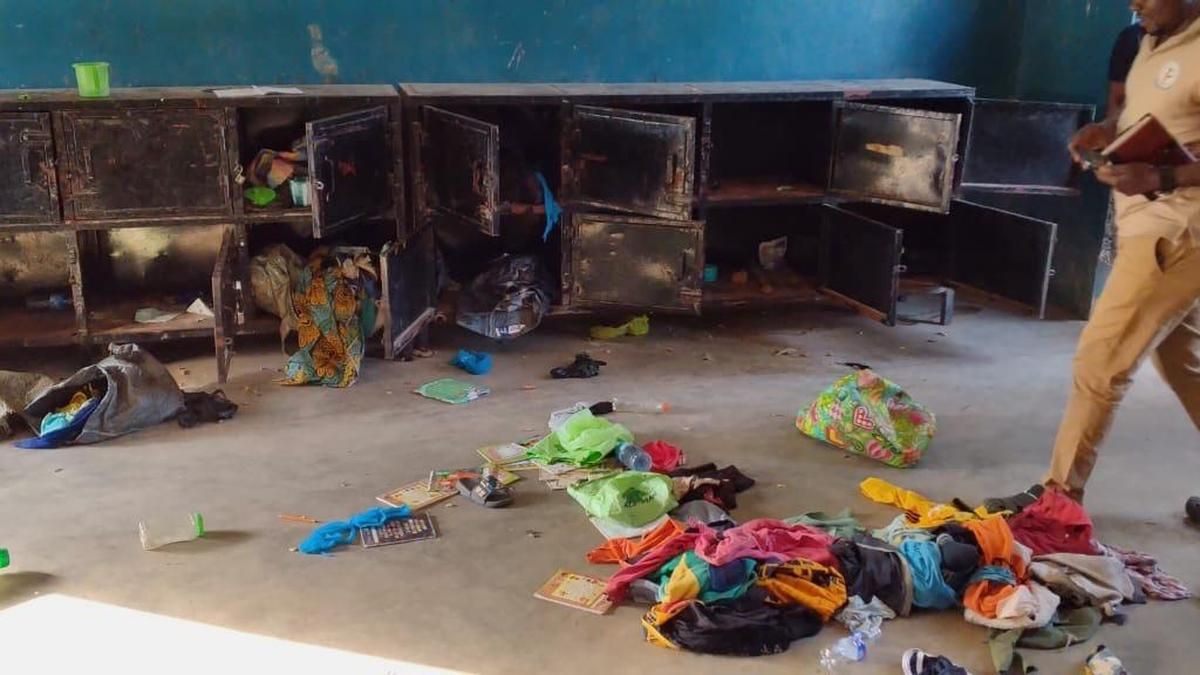
Dozens of children escape gunmen after 315 Abducted in Nigeria

At least 50 of the more than 300 students abducted by gunmen
from a Catholic school in Nigeria have escaped their captors, a
Christian group tracking the incident says.
The gunmen raided Saint Mary’s Catholic School in north-central
Nigeria’s Niger Sta…

At least 50 of the more than 300 students abducted by gunmen
from a Catholic school in Nigeria have escaped their captors, a
Christian group tracking the incident says.

The gunmen raided Saint Mary’s Catholic School in north-central
Nigeria’s Niger State on Friday, taking 303 children and 12
teachers in one of the country’s largest mass kidnappings.

In a statement on Sunday, the Christian Association of Nigeria
(CAN) said the 50 pupils were safe and had been reunited with their
families after they escaped between Friday and Saturday.

“As much as we receive the return of these 50 children that
escaped with some sigh of relief, I urge you all to continue in
your prayers for the rescue and safe return of the remaining
victims,” CAN’s chairman in Niger State, Reverend Bulus Dauwa
Yohanna, said in the statement.

The Catholic school abduction came just four days after armed
men stormed a secondary school in northwestern Nigeria, kidnapping
25 schoolgirls and killing the school’s vice-principal.

Monday’s attack took place in similar circumstances in
neighbouring Kebbi State’s Maga town, some 170km (106 miles) away.
At least one girl has since escaped and returned safely, but 24
others are still missing.

The identity of the attackers remains unclear in both cases, and
no group has claimed responsibility so far.

Regional authorities and security agencies have launched
search-and-rescue operations in surrounding forests and along
escape routes, with police, military and even local hunters
deployed to help.

US President claims he is underappreciated, says Ukraine lacks gratitude

Donald Trump has slammed Ukraine’s leadership for not thanking
him for his efforts to end the war with Russia.
The US President has accused Ukraine of having ‘zero gratitude’
in a post on his Truth Social profile.
He wrote: ‘UKRAINE ‘LEADERSHIP’ HAS EX…

Donald Trump has slammed Ukraine’s leadership for not thanking
him for his efforts to end the war with Russia.

The US President has accused Ukraine of having ‘zero gratitude’
in a post on his Truth Social profile.

He wrote: ‘UKRAINE ‘LEADERSHIP’ HAS EXPRESSED ZERO GRATITUDE FOR
OUR EFFORTS, AND EUROPE CONTINUES TO BUY OIL FROM RUSSIA.’

‘I INHERITED A WAR THAT SHOULD HAVE NEVER HAPPENED, A WAR THAT
IS A LOSER FOR EVERYONE, ESPECIALLY THE MILLIONS OF PEOPLE THAT
HAVE SO NEEDLESSLY DIED.’

He repeated his accusation that Vladimir Putin seized his chance
to invade as ‘Sleepy Joe’ Biden was in the White House.

Trump ukraine post (Picture: Truth Social)

It came as a widely leaked 28-point US-backed peace plan
acquiesces to many Russian demands that Ukrainian President
Volodymyr Zelensky has categorically rejected on dozens of
occasions, including giving up large pieces of territory.

It prompted fears it was entirely drafted by the Kremlin but
Secretary of State Marco Rubio denied the accusation saying it took
a month of negotiation.

He wrote on X: ‘The peace proposal was authored by the US. It is
offered as a strong framework for ongoing negotiations.
‘It is based on input from the Russian side. But it is also based
on previous and ongoing input from Ukraine.’

Nevertheless, Trump says he wants Ukraine to accept the plan by
late next week.

Seemingly in response, Ukraine’s top security official, Rustem
Umerov said: ‘We appreciate our American partners working closely
with us to understand our concerns to reach this critical point and
we expect to make more progress today.’

Zelensky says there is now an understanding that the US-proposed
peace plan may take into account ‘a number of elements that are
based on the Ukrainian vision and are critical to Ukraine’s
national interests’.

He adds that further work is ongoing to ensure that ‘all
elements are truly effective in achieving the main goal – to
finally put an end to the bloodshed and war’.