Artificial intelligence and social media are reshaping how Thais learn and think — and not always for the better. Researchers in Thailand and around the world warn that heavy reliance on artificial intelligence chatbots and endless scrolling through short videos may be eroding cognitive skills, fuelling what many now call “brain rot”.
A professor at the Wharton School of the University of Pennsylvania evaluated how technology influences writing. She asked 250 people to share advice on living a healthier lifestyle. Some used traditional Google searches, while others relied on AI-generated summaries. The results were stark: those using AI produced bland, generic tips, while Google users offered nuanced guidance on physical, mental and emotional health.
Many technology companies promise that AI tools will supercharge productivity and creativity. But studies, such as those mentioned above, suggest the opposite. People who lean heavily on AI chatbots for essays and research often perform worse than those who do not.
The term “brain rot” — Oxford’s word of the year in 2024 — captures this growing concern. Originally linked to the addictive short videos of TikTok and Instagram, it now extends to AI-driven content that turns active learning into passive consumption. The fear is that these tools, designed to simplify life, may be hollowing out critical thinking, by doing most of the thinking-demanding work of humans.
Evidently, reading scores among Thai children have plunged much lower compared to before the rise of social media and AI in Thailand, according to a Suan Dusit University research study. Researchers point to a potent link between cognitive decline and screen time, amplified by AI and social media. A recent study led by US paediatricians found that children who spent hours on social platforms scored significantly lower on reading, memory and language tests than peers who avoided them.
AI’s impact on memory is equally troubling. At Massachusetts Institute of Technology, scientists tracked brain activity as students drafted essays with and without ChatGPT. Those using the chatbot showed the lowest engagement — and minutes later, 83% could not recall a single sentence they had written.
“If you don’t remember what you wrote, you don’t feel ownership,” said Nataliya Kosmyna, who led the study. “Do you even care?”
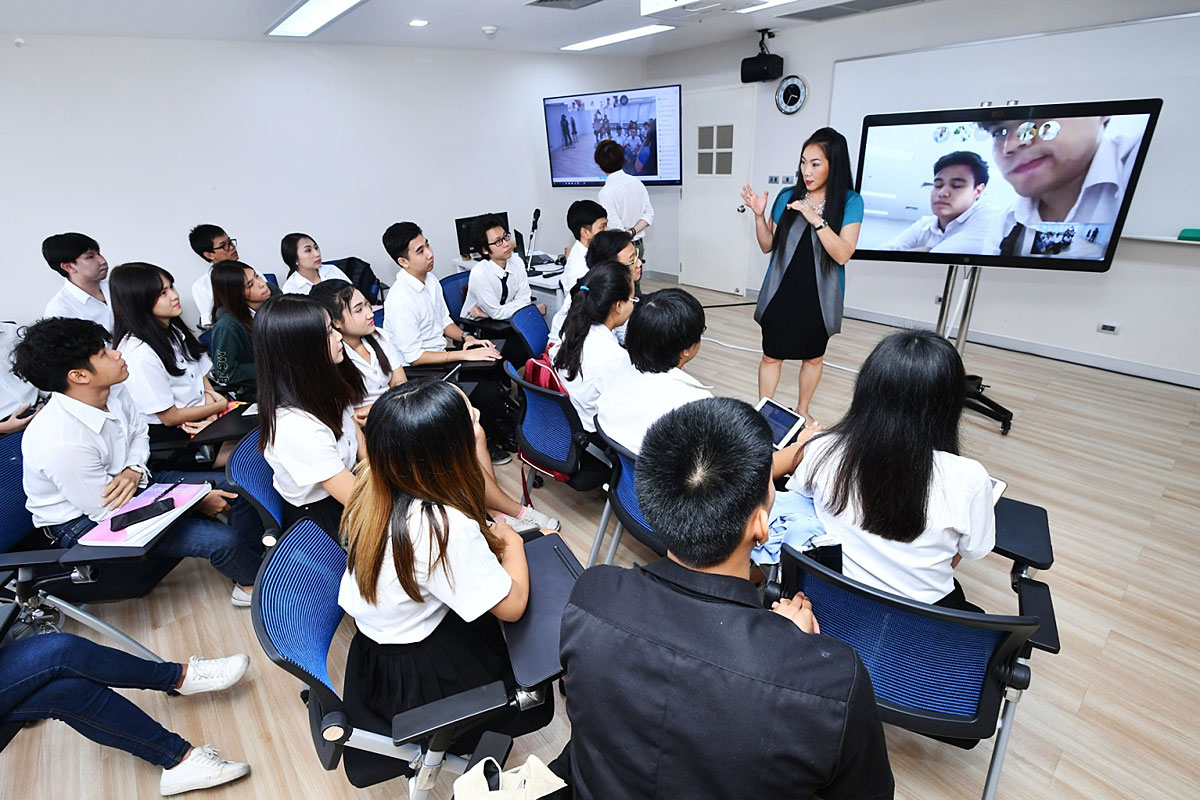
Bans on mobile phones, tech gadgets and social media in Thai classrooms are getting more popular, as teachers fight distractions. As a father of 2 girls, whenever I talk to my kids’ teachers they often mention banning phones in classrooms altogether. Yet many experts say the real challenge is balance.
So what’s the solution? Researchers suggest starting tasks without AI, then using it later for refinement — much like checking maths with a calculator after working out the problem by hand. Parents can enforce screen-free zones at home, while students should treat chatbots as tools for quick answers, not full-scale research. For deeper learning, nothing beats reading a book.
Technology can empower, but only if we use it mindfully. Otherwise, the promise of smarter living may come at the cost of our ability to think.