According to our latest projection, electricity demand in Asean will reach around 173 million tonnes of oil equivalent (Mtoe), or about 2,000 terawatt-hour (TWh), in 2050 — roughly 1.6 times higher than the 2023 level.
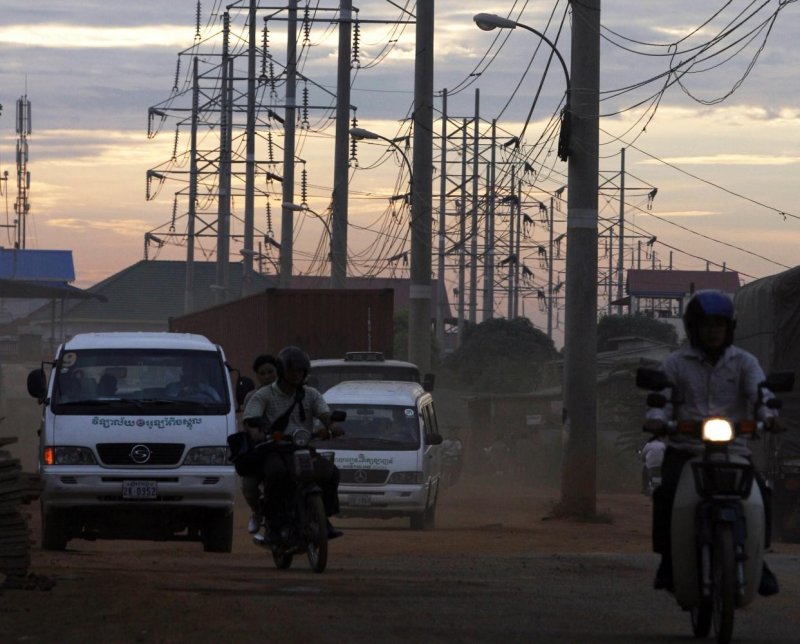
Meeting this challenge is not only about building more power plants, but also about building stronger links between countries. Cross-border electricity trade has already proven its value, helping neighbouring countries share resources, balance supply and demand, and strengthen collective energy security. For example, Cambodia imports around a quarter of its electricity needs, or about 1,030MW, from the Lao PDR, Vietnam, and Thailand, due to its limited domestic generation.
However, energy interconnection within the Southeast Asian region is still primarily conducted bilaterally, for instance, the Lao PDR–Myanmar and Sarawak–Brunei Darussalam interconnections.
Bilateral interconnections pose practical obstacles, as disruptions could lead to a decline in energy availability in some regions. Among these, force majeure events such as natural disasters constitute one of the most immediate and unavoidable threats towards grid infrastructure.
Interstate conflict, although not as unpredictable as natural hazards, can also have far-reaching effects on energy security, once triggered.
Thailand and Cambodia, for example, are interconnected through Thailand’s Wattana Nakhon–Aranyaprathet–Poi Pet Industrial Estate 115-kV overhead transmission line, with a maximum transmission capacity of 250MW. This interconnection has helped Cambodia meet its domestic energy demand, with a Power Purchase Agreement (PPA) and a Power Transmission Agreement (PTA) that were signed in the early 2000s. Yet, this cooperation has recently come under strain due to the conflict between the countries. In June, Cambodia halted electricity supply from Thailand at three locations, which prompted Thailand to terminate the PPA.
Additionally, the Electricity Authority of Cambodia (EAC) has instructed two electricity companies to immediately stop issuing invoices in Thai baht, which could affect the baht’s exchange rate if the conflict goes on longer.
What’s more concerning is the vulnerability of grid infrastructure itself. Thailand and Cambodia have built a network of interconnection for limited cross-border electricity trading and load balancing that are at risk of being damaged due to the armed conflict. Although these infrastructures are not massive in scale, they are crucial for regional energy resilience, particularly during periods of peak demand or dry seasons. Thailand’s Provincial Electricity Authority (PEA), for instance, has reported damage to its power distribution facilities along the border, causing multiple outages in some areas.
Beyond that, supply and revenue decline may not only affect investment but also trust between Asean members. In the case of Cambodia and Thailand, it once again serves as a warning signal to the region. If one bilateral dispute can disrupt such a critical lifeline, what does it mean for Asean’s vision of deeper energy integration? This is where the Asean Power Grid (APG) becomes not just a blueprint for cleaner energy but a foundation to build regional energy resilience and cooperation.
Drawing from lessons learned in other regions, wherein energy interconnection has contributed to energy resilience in times of conflict. In the Russia–Ukraine armed conflict, the European Union’s shared grid has helped Ukraine meet its energy demands after it was cut off from Russia’s power grid.
It is clear that Asean needs a proper framework or mechanism to ensure energy security amid political disputes and in the event of future conflicts.
The Asean Agreement on Disaster Management and Emergency Response (AADMER) offers a cooperative framework to protect social, economic, and environmental assets. By recognising energy infrastructure as a vital lifeline, AADMER can serve as a platform to carry out joint risk assessments, develop early warning systems, and launch coordinated responses. However, it remains important to clarify whether AADMER’s scope extends to all forms of force majeure or is limited strictly to natural disasters. Unlike wars, which are politically driven and in principle avoidable, natural disasters are unforeseeable events which lie beyond human control, a distinction that carries implications for how resilience measures are institutionalised in Asean’s disaster preparedness architecture.
Bilateral arrangements alone are insufficient when cross-border infrastructure vulnerabilities and supply stability are at stake. Strengthening existing legal framework provisions on dispute settlement would therefore be more relevant to building a robust Asean-level Dispute Settlement Mechanism (DSM), while ensuring that collective mechanisms respect the sovereignty of member states.
A robust dispute settlement mechanism would build trust in Asean’s frameworks, encouraging countries to rely on regional solutions over ad hoc bilateral negotiations. Lessons from the EU–Ukraine energy integration show that interconnection, paired with strong institutions, can help maintain energy supply during armed conflict.
Beyond protecting infrastructure, such mechanisms are essential for cross-border electricity trading. Ensuring continuity of trade and energy flows underlines the market’s credibility, investability, and long-term sustainability. With adjustments to ensure the mechanism is in line with local laws, we can also integrate the APG within AADMER to strengthen the dispute settlement mechanism. Only then can Asean transform its blueprint for energy integration into a resilient, secure, and pioneering regional system.