The Crystal Cuckoo is Netflix’s new limited series from Spain — a country that has steadily delivered some of the platform’s most reliably gripping thrillers over the years.
Consisting of six episodes, this crime drama keeps you guessing until the very end, or at least until the major reveal arrives. It’s dark, twisted and unsettling. The central crime is genuinely disturbing, and its depiction of violence against women will be difficult for many viewers to stomach. At times the narrative moves with a slow-burn rhythm, but at its core, the show presents a compelling mystery that draws you in.
I’ve never read the novel the series is adapted from, but I imagine fans of author Javier Castillo will be pleased with how this screen version unfolds.
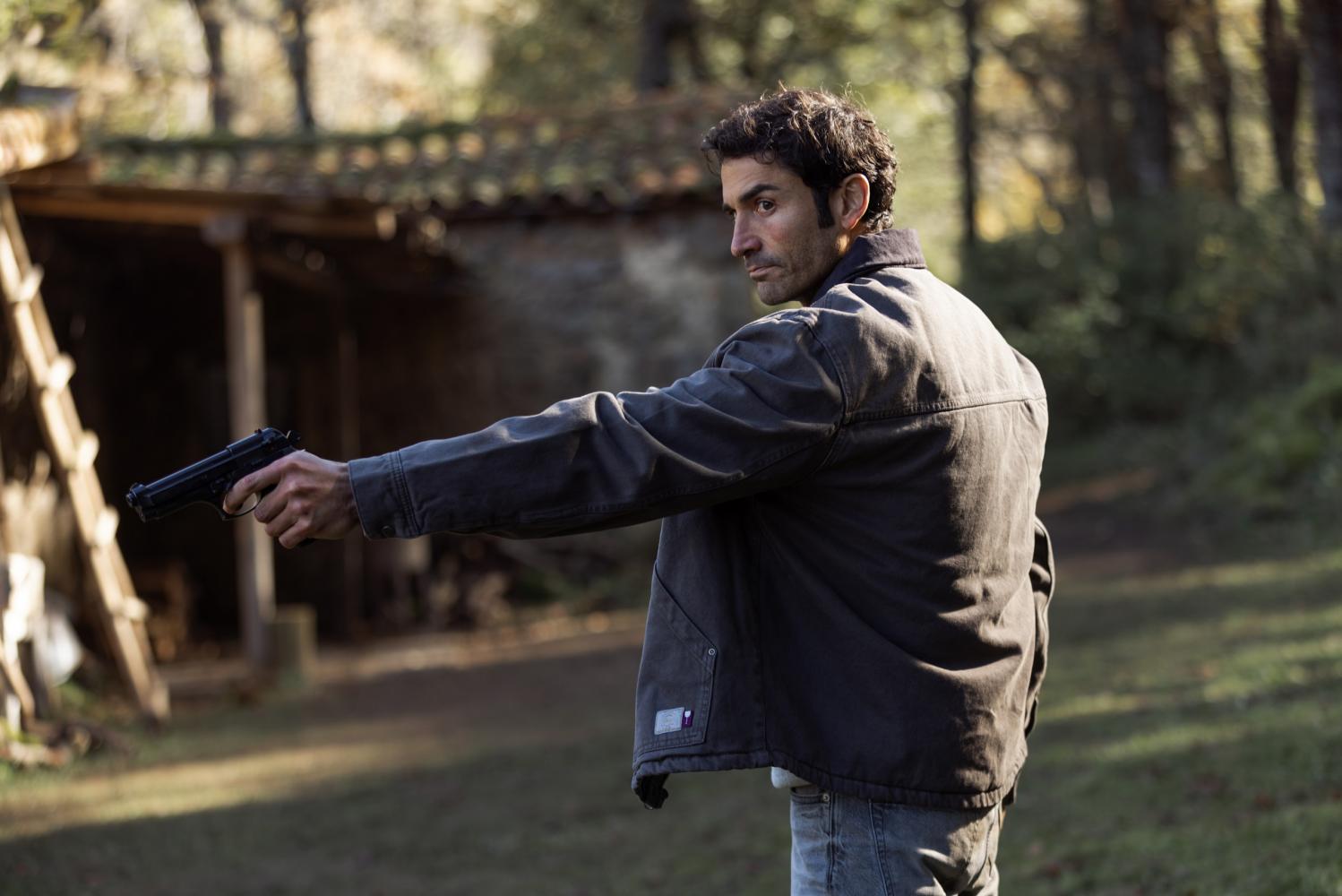
A scene from The Crystal Cuckoo.
The Crystal Cuckoo follows Clara Merlo, played by Catalina Sopelana, a first-year medical resident who suffers a sudden and massive heart attack.
Her subsequent transplant gives her a second chance at life — yet it also awakens an unshakeable instinct she cannot ignore. She needs to uncover the identity of her donor. This search leads Clara to a small, enigmatic town, where she eventually learns that the heart now beating inside her belonged to a young man whose death is tied to an unresolved tragedy. Her arrival triggers a chain of events that unravels a past many residents believed was buried forever.
The concept initially feels familiar. Stories about organ recipients seeking information about their donors have appeared in films and series before — sometimes even veering into supernatural territory with visions and premonitions guiding the protagonist. What I appreciated here is The Crystal Cuckoo avoids that angle.
Instead, the heart becomes the narrative thread linking a series of mysterious disappearances, and the story leans heavily into the classic trope of a remote, tightly knit community hiding dark secrets.
The town itself is small, isolated and steeped in tradition. One of its strangest customs is an annual parade dedicated to honouring the people who have gone missing in the surrounding forest — a detail that is both intriguing and unnerving.
The imagery of townspeople dressed in elaborate, slightly eerie animal costumes adds to the atmosphere, creating visuals that are memorable precisely because of their strangeness. All of this builds a setting that feels drenched in sorrow and heaviness.
What stands out most in the town’s uneasy aura is the undefined sadness that lingers over everything. It’s visible in the main characters we follow and even in the small, incidental interactions with townspeople.
So many residents appear shaped — or damaged — by the community’s mysterious past. The series also captures the haunting, almost desolate beauty of the Spanish countryside, using its isolation as a thematic extension of the characters’ experiences.
However, this is a series that requires constant attention. The narrative jumps between multiple timelines throughout, and although these shifts eventually make sense, the execution is frequently jarring.
I found the structure somewhat clumsy: instead of allowing significant stretches of one timeline to play out before shifting to another, the show repeatedly cuts back and forth in short bursts. For a six-episode series, this rhythm undercuts the momentum it builds, creating disorientation rather than elegant complexity.
The pacing as a whole is uneven. The show begins slowly, then gathers real energy midway, only to lose that drive again as it approaches the finale. A major reveal arrives in Episode 4, and while this twist isn’t ineffective, the remaining two episodes struggle to maintain tension.
I don’t mean the entire final stretch is dull — there are still pockets of urgency, including pursuit sequences that generate genuine suspense. But the consistency of that tension dissipates. Instead, we get one episode that functions almost entirely as a flashback, followed by the conclusion.
The flashback does offer necessary context behind the earlier reveal, but it also attempts to reframe a character’s motivations in a way that feels questionable. I understand the narrative impulse to humanise or complicate a villain, but in this case, the attempt walks a fine line between explanation and justification.
I personally feel that certain actions remain inexcusable, no matter what hardships a character endured. The series seems torn between condemning the character’s choices and softening them, and that ambivalence weakens the emotional impact.
The constant time-jumping does allow the dual plotlines to develop in parallel, but the result is a rhythm that feels both uneven and occasionally frustrating. The performances themselves work — they create a mix of sympathetic figures, suspicious personalities, and morally murky characters — but the writing’s attempt to offer emotional understanding to one particular figure felt, to me, misplaced.
The ending is another area where the show falters. Ambiguity in an ending can be powerful, but here it feels less like deliberate design and more like a missed opportunity. What the show chooses not to depict in the final moments feels like a decision made to seem profound rather than to serve the story.
Another curious choice is the shifting focus of the narrative. Although Clara is positioned as the lead, the investigator Miguel — operating in the past timeline — emerges as the true driving force. His determination to solve the case becomes the emotional backbone of the series, which occasionally overshadows Clara’s arc in a way that seems structurally unintended.
Overall, The Crystal Cuckoo presents a premise with genuinely intriguing potential but delivers it with inconsistent execution. Its biggest reveal arrives too early, leaving the final episodes scrambling to maintain the momentum.
While there are moments of intensity, visually striking sequences and some well-crafted suspense, the series ultimately lands in a place that feels safe, expected and not quite as memorable as it could have been.
- The Crystal Cuckoo
- Starring Itziar Ituño, Catalina Sopelana, Alfons Nieto
- Created by Laura Alvea and Juan Miguel del Castillo
- Now streaming on Netflix