Like Proteus, paper can change its shape, form and role. It is a medium for transmitting knowledge and a substrate that new ideas feed and grow on. It is a creature with fibrous anatomy. Such preoccupation with how paper can be anything but a rectangular sheet sets the tone for the exhibition titled “Forms Of Encounter” at Central Chidlom.
“I have brought together a range of works which I think defy expectations of what print can potentially mean,” said John Tung, an independent curator, at a press preview.
Running until the end of this month, the exhibition is held to mark the 60th anniversary of diplomatic ties between Singapore and Thailand. It also coincides with the city-state’s 60th anniversary of independence. A collaboration between the Singapore Tyler Print Institute (STPI) and the Embassy of Singapore in Thailand, the exhibition brings together three Thai artists, Rirkrit Tiravanija, Natee Utarit, and Pinaree Sanpitak, and three Singaporean artists, Charles Lim Yi Yong, Heman Chong and Suzann Victor.
And the exhibition lives up to its claim. Rirkrit and Lim call into question the stability of records on paper. Tung used an ultraviolet flashlight to reveal some secrets in Rirkrit’s trio on the wall near the gallery entrance. Known for relational artworks, ranging from serving food on ceramics to handing out T-shirts, he extends an invitation to look for something missing in his thermochromic prints. With effort from a flashlight or a warm hand, Untitled 2020 (Paradise Regained I) shows an endangered arctic fox walking through a snow-laden valley. Meanwhile, a leopard and birds are seen in two other pieces and a spectral presence highlights the far-reaching impact of human activities on the environment.
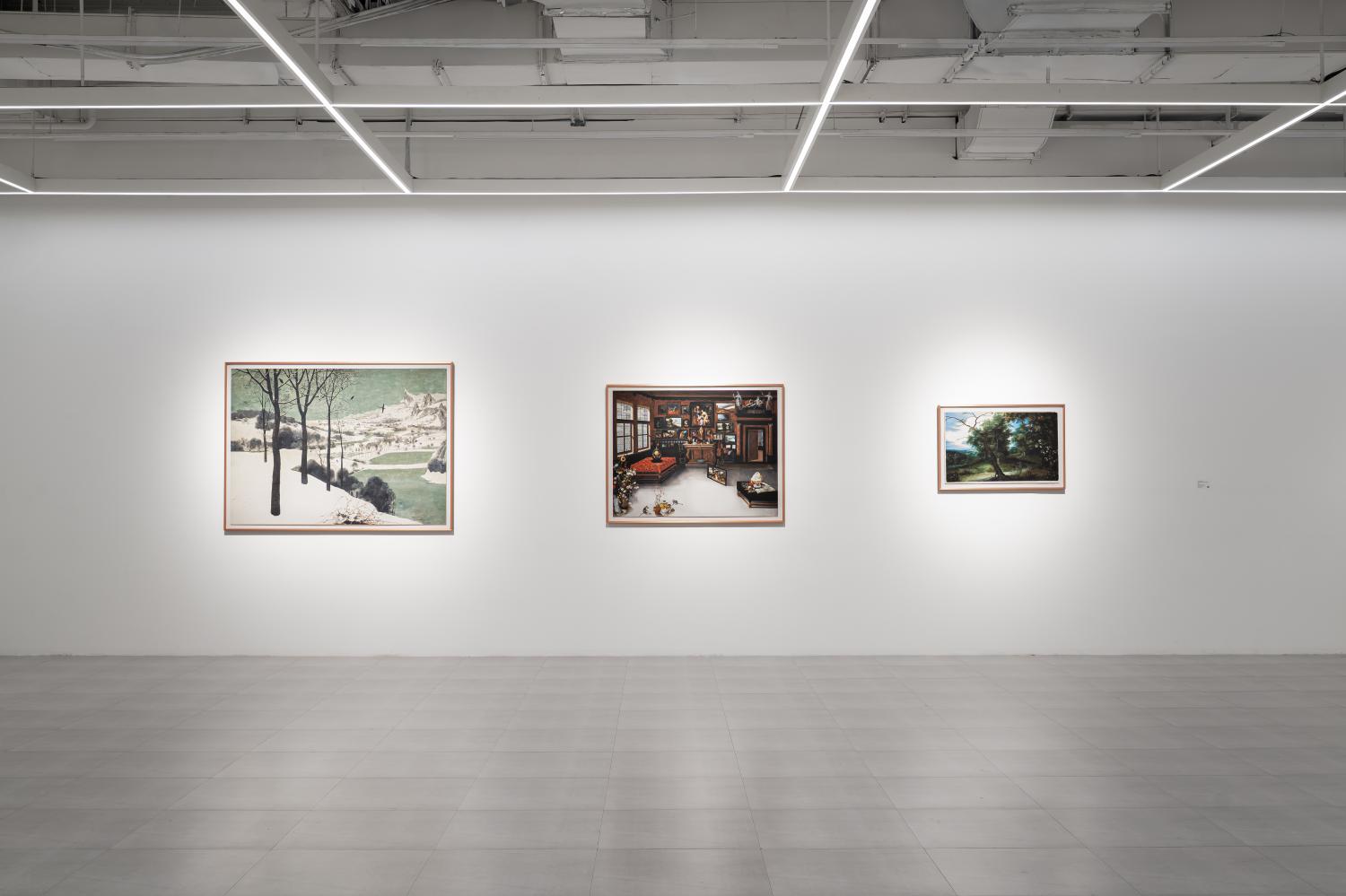
Rirkrit Tiravanija’s thermochromic trio.
Opposite, Lim’s SEASTATE 9 presents a collection of six laser-cut paper models of Singapore’s shifting coastlines. His experience in professional sailing informs his artistic engagement with the impact of capitalism on the sea. Each island model differs in shape and size and looks like a jigsaw. It draws attention to Singapore’s land reclamation that joins smaller islands together, for example, Jurong Island and Sentosa, and its impact on local communities. From a distance, his work evokes a map of islands reefs, and shoals in the vast ocean. Lim’s SEASTATE 029 is also a collection of relief prints of changing wave patterns. Viewed from top left to bottom right, they turn into cinematic scenes, showing the fluidity of images on paper.
Meanwhile, Natee and Chong challenge print medium as the source of truth. Known for questioning the canonical status of Western art, Natee expresses his concern in BUDDHA PALAZZO (A.M.). Evoking a mural painting, this five-panel artwork marks the conclusion of his decade-long project titled “Déjà vu: Buddha Is Hiding”, where he imagines Buddha’s journey to the West. A velvety texture from flocking draws attention to its own status. A combination of a palatial building in Italy with Buddhist iconography highlights cultural hybridity. Nearby, Archetype (Green) is a stone-like statue made from papier mâché. It came to his mind when he accidentally dropped his Gandara Buddha statue. Given its cultural syncretism between Classical Greek culture and Buddhism, shattered pieces of the whole statue raise the issue of ownership of cultural heritage.
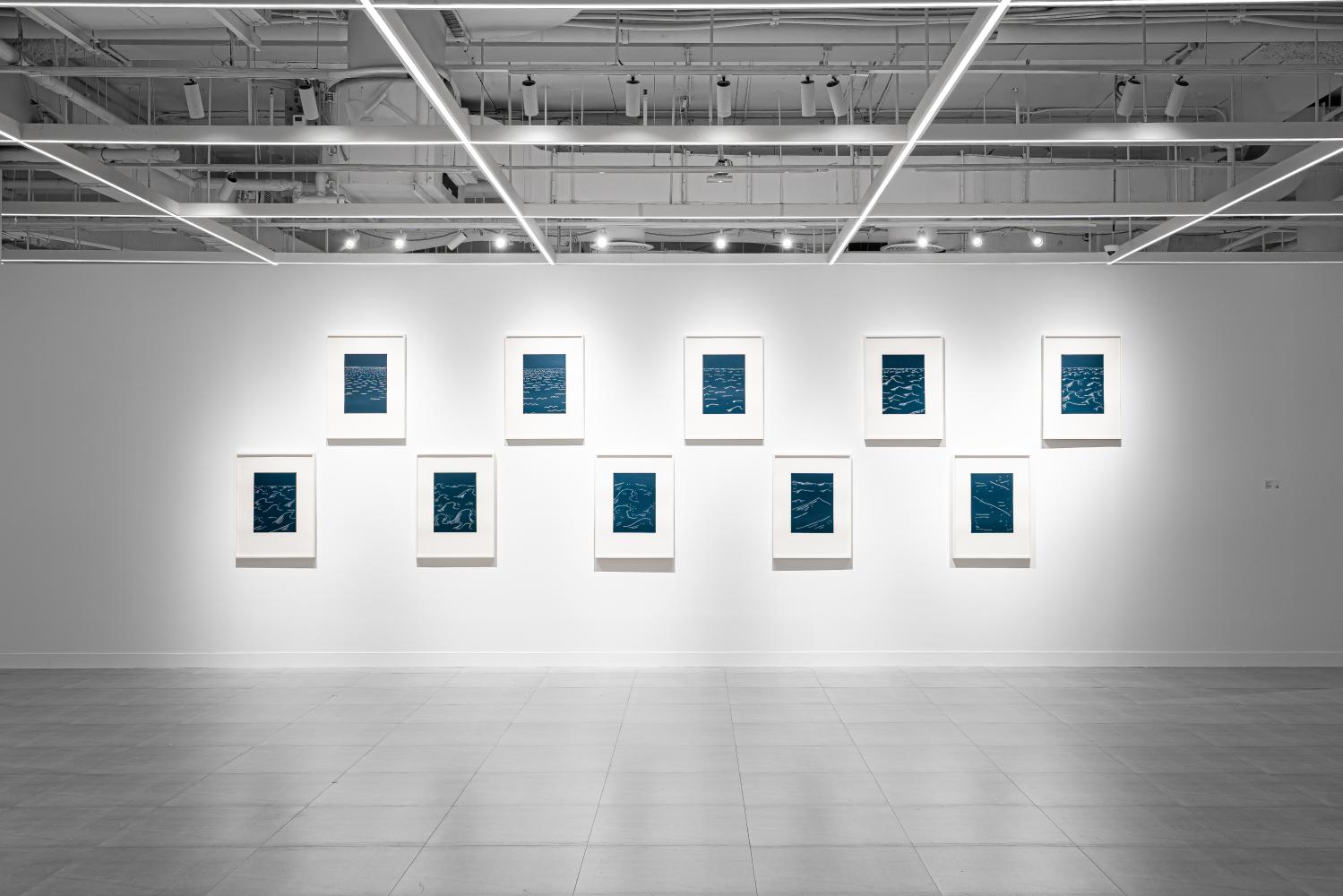
Charles Lim Yi Yong’s SEASTATE 029.
Nearby, Chong sustains his investigation of infrastructures that underpin contemporary life. In Safe Entry V.2.5, he creates acrylic paintings of QR codes for contact tracing during Covid-19 to draw attention to surveillance technology. Evoking his collection Calendars (2020-2096) in his solo exhibition, Circuit Breaker Paintings chronicles each day of Singapore’s partial lockdown by marking X (hazard tape for social-distancing caution). Chong painted the motif and posted it on social media to cope with pandemic-induced anxiety. His three other pieces are palimpsests of newspaper sheets from The Straits Times. Intentional glitches from techniques, particularly repetition and overlap, express tendencies towards reflexivity, challenging journalistic pursuit of objectivity and truth in its service.
The exhibition concludes, or begins, depending on the point of entry, with two female artists, who give expressions to the body of paper. Known for distilling women’s body parts into objects, Pinaree’s fascination with the breast stupa motif is reflected in her images currently on view. Multiple printing techniques, including relief, scratching and etching, create subtle textures to foster intimacy. Her depiction fluidly moves between breasts, everyday objects and stupas, blurring the spectrum of profanity and sacredness. For example, three pieces in Breast Vessel II look like women’s breasts, a comb or an incense burner, depending on perspective.
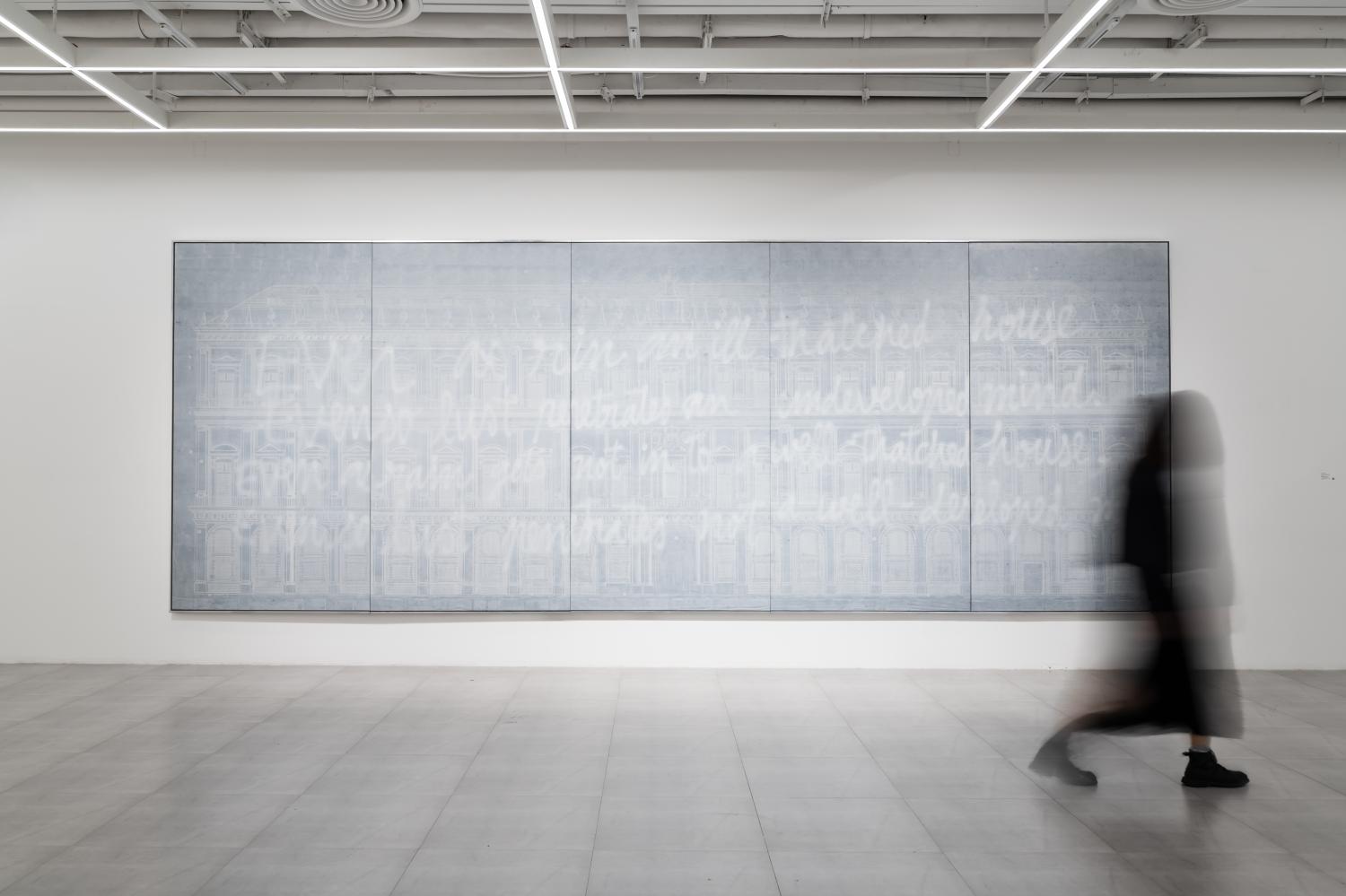
Natee Utarit’s BUDDHA PALAZZO (A.M.).
Familiar with examining human perception, Victor draws attention to “something invisible to the eye” — the inside of paper. In Pondification I, she creates blue paper pulp using decollage to address flooding in Singapore. Nearby, four pieces, Cloud Of Innocence 2, Cloud Camelia, Rose Galaxy and Cloud Galactic, are stacked circular discs with colourful paper pulp. It is a paradox that by placing paper on transparent polycarbonate sheets, viewers can see fibrous cells inside the material. Her engagement with absence in turn creates visible presence, showing that paper is more than a flat sheet, but something fleshy like the living organism.
As the curator said, “Forms Of Encounter” does not have an overarching theme. It simply allows six artists to pursue their own interests. Still, they are united by the innovative use of paper. Its materiality apparently comes to the fore in the digital age, where everything appears on a glossy screen. It is a counterpoint to dematerialisation, which characterises content in today’s digital media.
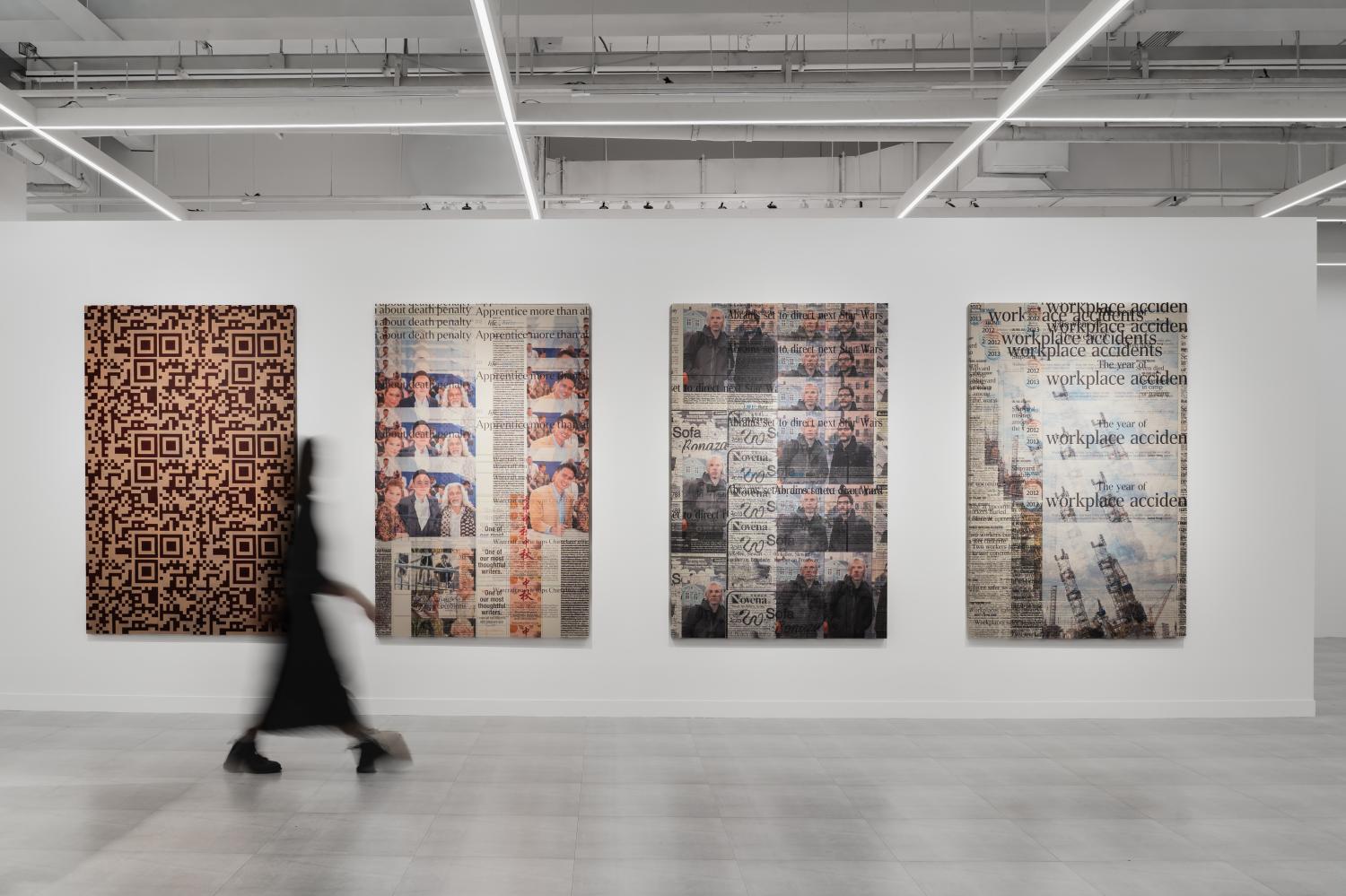
Heman Chong’s Safe Entry V.2.5, left, and three images from from The Straits Times.
“All of these artists had residencies at different times. It is interesting that STPI provides space for artists across the region to challenge and develop new works,” said Tung. “This exhibition is built on the premise that as much as their ideas might not have interacted during their residencies, their attitude towards paper is the same. Bold and challenging.”
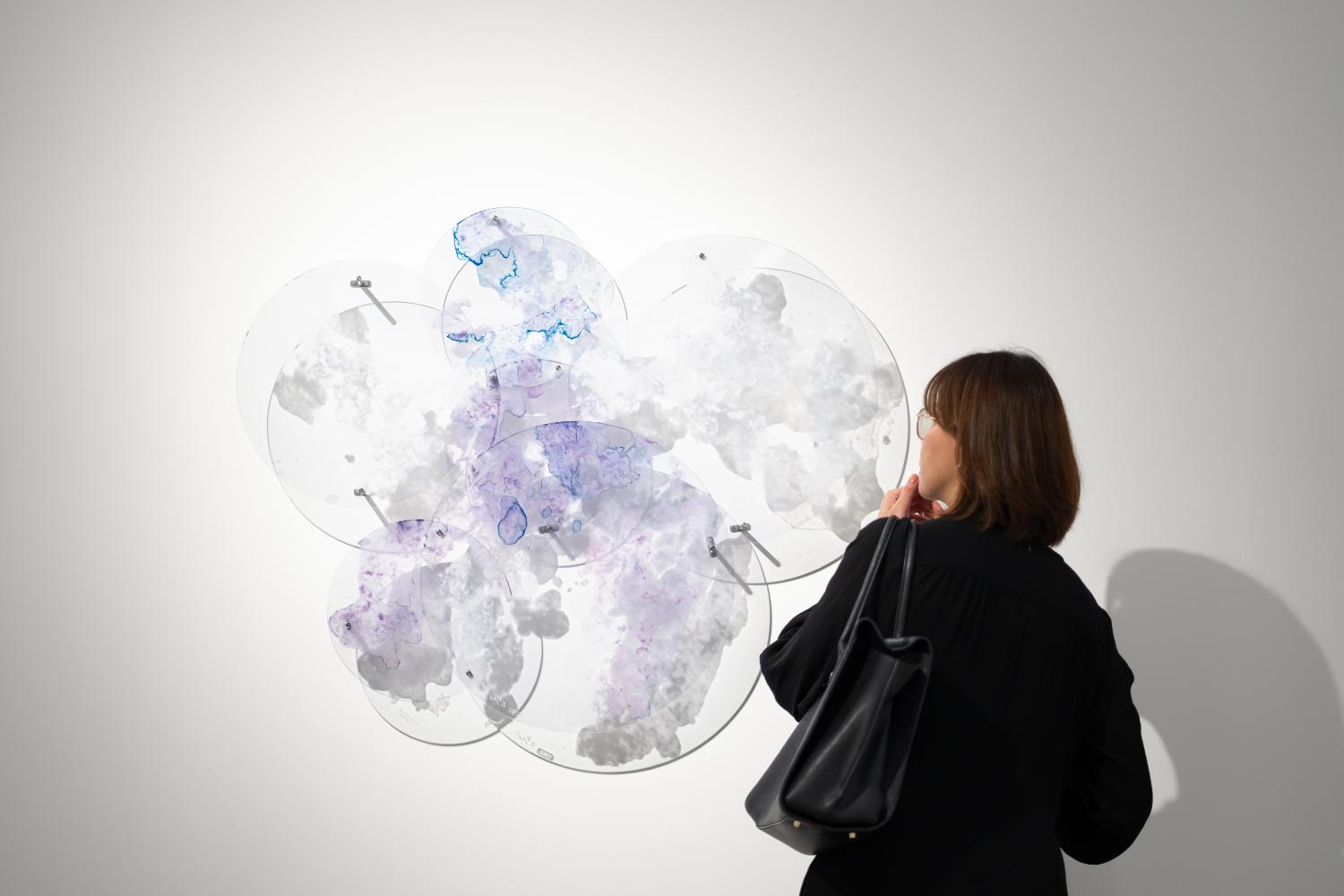
Suzann Victor’s Cloud Of Innocence 2.
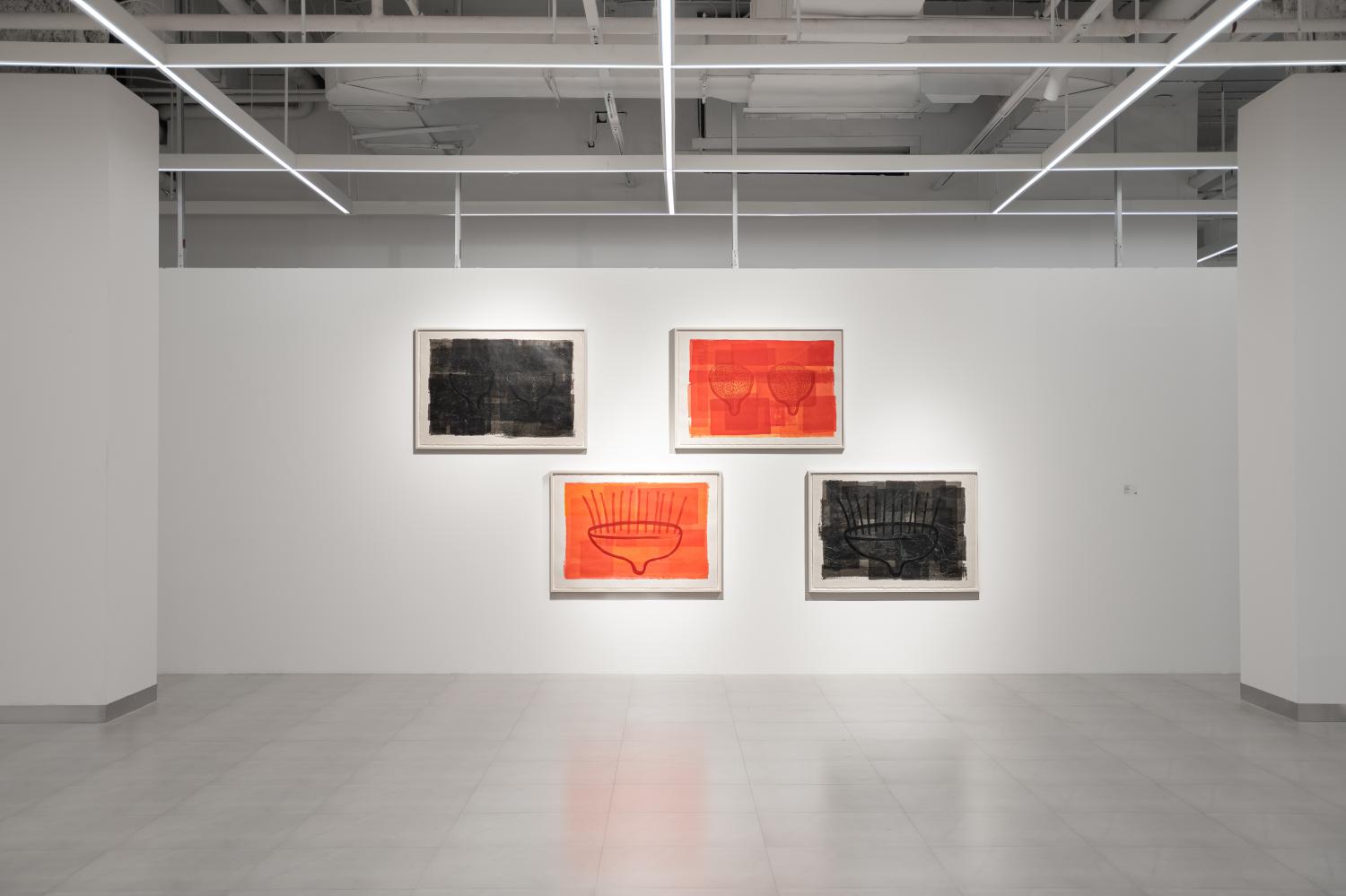
Pinaree Santipak’s works with breast stupa motifs.
