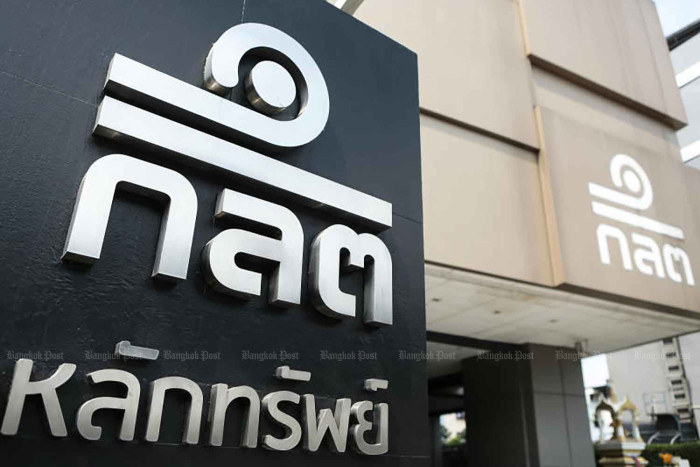
The Securities and Exchange Commission (SEC) is stepping up enforcement and expanding proactive safeguards to ensure Thailand’s capital market and digital asset ecosystem do not become channels for money laundering or technology-driven crimes.
Through partnerships with domestic and international agencies, the regulator sealed loopholes and blocked scam networks as financial crime risks rise, the SEC said in a statement.
“Investigations into suspicious transactions are moving ahead at a faster pace, supported by deeper data sharing with the Anti-Money Laundering Office [Amlo] and law enforcement authorities under the ‘connecting the dots’ framework,” the statement noted.
The initiative is designed to close structural loopholes and strengthen cross-agency surveillance.
At the operational level, all licensed market participants must strictly follow anti-money laundering requirements, including know-your-customer, customer due diligence (CDD), and mandatory reporting of suspicious activities.
The SEC reiterated that penalties will be enforced in cases of non-compliance, ranging from failure to report securities transactions to breaches involving tender offers or shareholder disclosures.
In the digital asset sector, standards were tightened to align with those applied to commercial banks. Exchanges and intermediaries are prohibited from opening accounts linked to blacklisted mule accounts and are required to conduct enhanced CDD for high-risk clients. They must also classify customers based on risk profiles.
Alongside Amlo, the SEC is progressing towards full implementation of the global travel rule. These combined efforts have already blocked 44,382 mule accounts, preventing illicit activity valued at more than 200 million baht.
The regulator prioritises proactive protection aimed at reducing public losses from investment scams, according to the statement. The SEC partnered with online platforms to shut down fraudulent investment channels, achieving a 100% takedown rate in 7 to 48 hours.
For the first 10 months this year, the regulator closed 3,134 scam-related accounts and URLs. Requests for consultation have doubled, suggesting increased public vigilance.
The agency is also working with the Digital Economy and Society Ministry to block unauthorised foreign digital asset platforms that are often used as laundering conduits.
These initiatives fall under the SEC’s “Preventive Anti-Scam for All” strategy, utilising consultation, communication and collaboration. The programme offers pre-transaction advisory services, consolidates information about investment fraud into a central knowledge hub, and drives the nationwide “Think Before You Transfer” campaign.
The programme also enhances cooperation with domestic and cross-border partners to remove fake business pages and strengthen identity verification standards across major digital platforms.
To reinforce structural supervision, the SEC signed a cybercrime prevention memorandum of understanding with 15 public and private organisations, and participates in a national subcommittee overseeing financial data integration under the connecting-the-dots framework.
The regulator said it will continue to deploy every legal and preventive tool available to safeguard the integrity of Thailand’s capital markets and digital asset system, enhancing transparency, closing vulnerabilities, and building investor confidence.