Bangkok’s runners are chasing more than endorphins – they’re chasing connection, visibility and a sense of control in a city that rarely slows down.
At Benjakitti Park, runners arrive before sunrise. Headlamps on, playlists loaded, watches synced. It’s not some monk-like commitment to discipline; it’s survival. Once the heat hits, Bangkok’s humidity turns every kilometre into resistance training.
For a brief window, the city softens. Footsteps replace engines. The skyline reflects off the park’s lake, and for a few quiet kilometres, Bangkok feels like it’s exhaling. Then the sun climbs, phones come out, and the uploads begin. Strava, the social fitness app that tracks workouts and lets users share them, gets flooded with neat orange lines tracing each route.
Those routes are more than data. They’re proof – evidence that the morning existed, that someone carved time out of a city that rarely gives it.
Bangkok’s running boom isn’t new, but how it’s performed is. The lone jogger has evolved into a kind of digital diarist, turning every split, heartbeat, and pace screenshot into a story. Strava’s orange interface has turned the city’s parks into living leaderboards – half exercise, half exhibition.
“Strava or it didn’t happen,” a friend says, scrolling through her feed. She isn’t joking. In the world of social running, a workout doesn’t feel real until it’s uploaded. The app’s social layer has transformed running from something private into something communal. Every run is now a post, every post a small broadcast of effort and existence.
In a city where sidewalks double as parking spots and gyms double as social clubs, running offers a kind of personal real estate. Strava gives that space a digital outline. The orange line is proof of movement, but it’s also proof of order, something Bangkok never quite manages on its own.
The city’s running scene has become its own ecosystem. There are the brand-backed crews: Adidas Runners Bangkok, On Run Club, and Asics Ride the City, whose meet-ups draw hundreds in matching singlets. Then there are the low-key groups: friends meeting at 8 p.m. outside Phrom Phong, sprinting past Sukhumvit’s standstill traffic. The run is half the ritual; the post-run meal completes it.
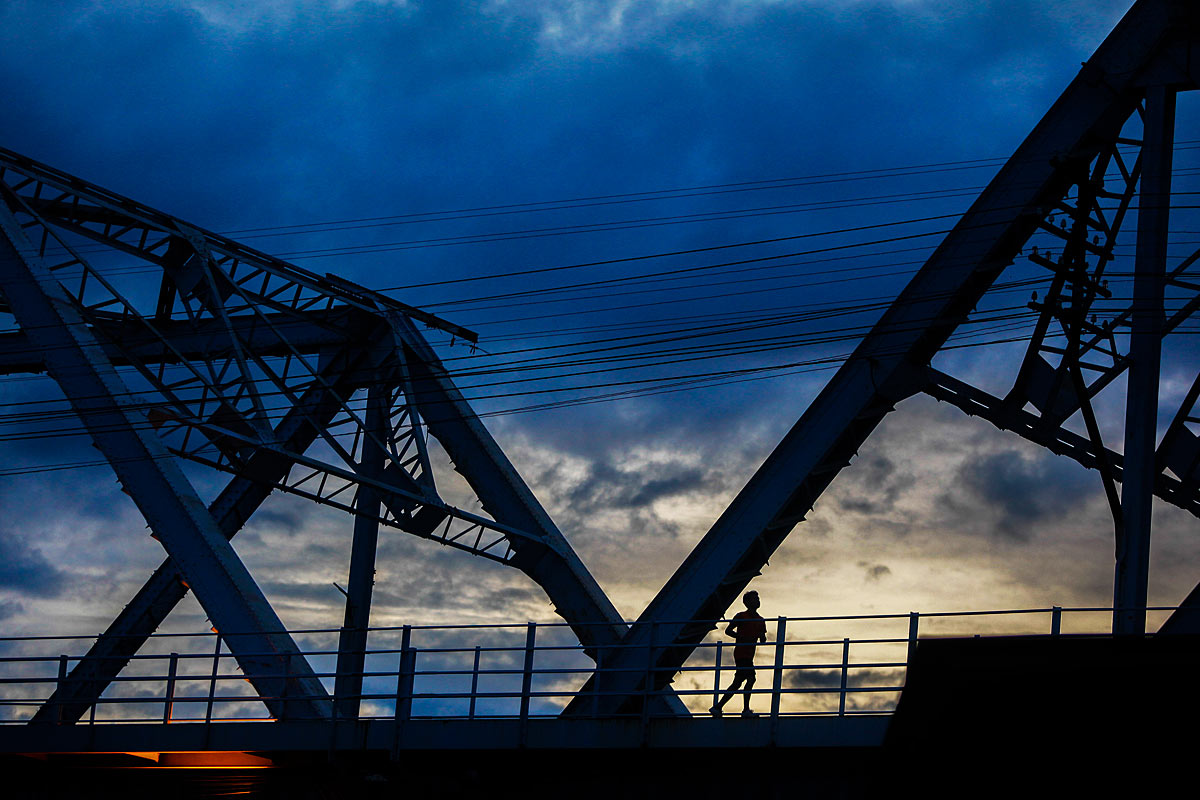
Strava has also redrawn Bangkok’s geography. Its heat maps glow brightest where the ground feels safe and even: Benjakitti, Lumphini, the Chao Phraya promenade. But some runners push further, over Rama VIII Bridge at dawn, around Ari’s leafy sois, through Ratchada’s still-sleepy streets.
Of course, running here is still an act of negotiation. The air can be punishing, the crossings chaotic, the humidity relentless. But that might be part of the appeal. There’s something deeply Bangkok about sprinting through discomfort. The rhythm of the city has always rewarded persistence; the ability to keep going even when the air feels thick enough to chew.
And for all the data and digital validation, most runners aren’t chasing medals. They’re chasing connection. The app’s comment section (the little orange thumbs and “Nice pace!” replies) becomes a space of low-pressure community. Office workers log pre-meeting kilometres, freelancers treat runs like therapy, weekend racers chase both personal bests and visibility. The feed is part motivation, part group chat.
Running clubs now double as social networks. People meet collaborators, partners, friends. In this way, a new kind of civic space has formed, one where you can belong without small talk, where the shared act of struggling through the heat feels like enough.
By night, Benjakitti glows again. Runners loop around the reflection pools, a quiet choreography visible from the condos above. Watches light up wrists like fireflies. Strava records everything: the stumbles, the turns, and the stubborn optimism of a city in motion.
The run isn’t over until it’s uploaded. And maybe that’s okay.
Chavisa Boonpiti is a contributor to BitesizeBKK, a digital news outlet.