Nation nudged to transform into regional AI hub

Microsoft Thailand chief stresses need for massive training programme to equip everyone with AI skills

Microsoft Thailand chief stresses need for massive training programme to equip everyone with AI skills

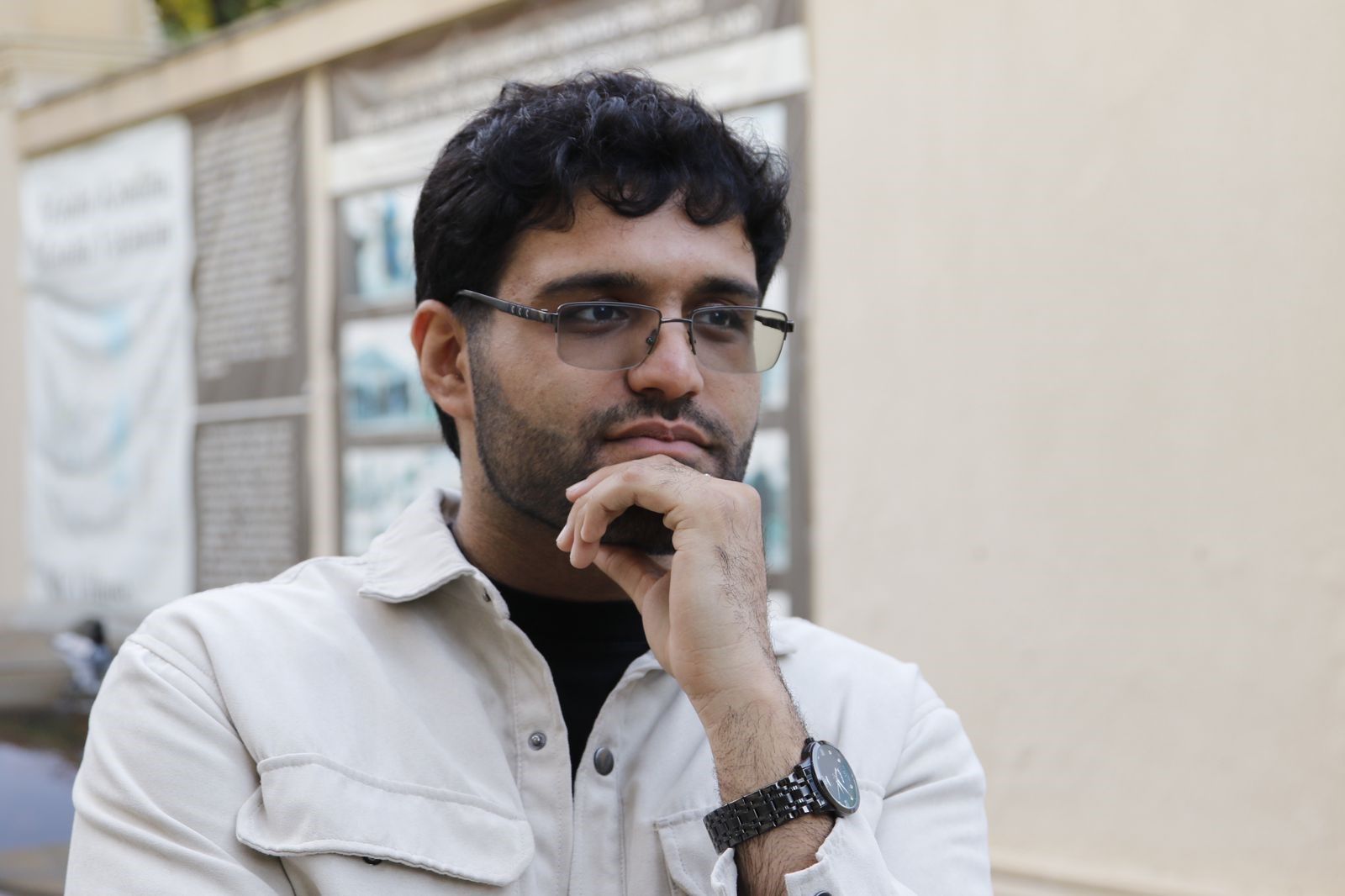
Dhanawat Suthumpun, managing director of Microsoft Thailand, tells the Post Forum that Thailand is in a great position to attract investment in digital services. (Photo: Nutthawat Wichieanbut)

Thailand can strategically position itself to become an artificial intelligence hub in Asia, fuelled by investment in data centres, a commitment to green energy availability and accelerated training, says the managing director of Microsoft Thailand.

“Thailand is in a great position for investment in digital services,” Dhanawat Suthumpun said during a panel discussion at the Bangkok Post Economic Forum 2025 on Friday.

“AI offers an amazing opportunity, and I hope Thailand can unlock the challenges we face today and create a lot of opportunities.”

For example, AI can be used to provide real-time data on supply and demand, enabling the Ministry of Commerce (MOC) to offer “MOC GPT” as a platform where exporters can access services.

AI can also be used to empower and transform all sectors, provide inclusive education, offer co-coaching with teachers and address workforce gaps, he said.

Mr Dhanawat urged organisations to embrace AI at scale.

Thailand has strong potential to attract foreign investment thanks to its strategic geographical location, power availability and digital talent, he said.

Microsoft invested $80 billion globally in 2024, and is committed to spending $100 billion this year on AI, data centres and cloud infrastructure.

“This global investment includes data centres in Thailand through our partnerships,” said Mr Dhanawat.

In addition, Microsoft Thailand has invested several million dollars in programmes to train 1.6 million users.

He said Thailand should harness AI to shift its focus from a labour-intensive, volume-based model to a high-value, innovation-driven economy. This requires a massive national training programme and strong public-private investment partnerships, said Mr Dhanawat.

AI training at scale essential

With AI tools rapidly becoming more widely available to businesses, the competitive edge lies in a workforce’s ability to use them effectively, he said.

The immediate priority is a massive training programme to equip all Thais and companies with the necessary AI skills to generate business impact.

“Being a ‘second-fastest follower’ is a losing strategy in a modern, differentiated economy,” said Mr Dhanawat.

“Thailand must position itself at the forefront of innovation.”

He said a major obstacle to transformation, particularly for small and medium-sized enterprises (SMEs), is financial constraints on investment in new technology.

While SMEs recognise AI’s benefits, many are focused on survival and lack the capital for digital transformation, said Mr Dhanawat.

The country needs a public-private partnership model similar to Singapore, where the government offers significant subsidies to SMEs for AI investment, he said.

Without co-investment or subsidies, SMEs risk being trapped — aware of the need to transform but unable to afford the initial investment, said Mr Dhanawat.

Tirana hosts major Azerbaijani carpet exhibition marking UNESCO anniversary

On November 18, “Azerkhalcha” OJSC, the Embassy of Azerbaijan in
Albania and Tirana Art Gallery, with the support of Tirana City
Municipality, held the next exhibition of Azerbaijani carpets in
Europe at Tirana Art Gallery.
The exhibition is dedicated …

On November 18, “Azerkhalcha” OJSC, the Embassy of Azerbaijan in
Albania and Tirana Art Gallery, with the support of Tirana City
Municipality, held the next exhibition of Azerbaijani carpets in
Europe at Tirana Art Gallery.

The exhibition is dedicated to the 15th anniversary of the
inclusion of the traditional art of carpet weaving in the UNESCO
Representative List of intangible cultural heritage with the direct
initiative and support of the first vice-president of the Republic
of Azerbaijan, Mehriban Aliyeva. The next day, on November 19, a
meeting and master classes were held between students of art
faculties of various educational institutions and Azerbaijani
artists.

The special event organized to mark the opening of the “May your
hands remain well!” exhibition was attended by officials of
Albanian state institutions, members of parliament, representatives
of the diplomatic corps in Tirana, media representatives,
representatives of science and academic circles, artists and
cultural figures, as well as members of Azerbaijani, Turkish and
other communities living in Albania.

The “May your hands remain well!” carpet collection includes
traditional carpets from the Karabakh, Guba and Shirvan carpet
weaving schools woven in the workshops of “Azerkhalcha” OJSC, as
well as works from various special collections. These include one
carpet from the “44” collection of “Azerkhalcha” OJSC in
collaboration with Rashad Alekperov, two carpets from the
“Architect of Memory” and “Woman” collections with Aydan Salahova,
one carpet from a joint project with Faig Ahmed, three exclusive
carpets from the “Pomegranate Symphony” collection with young
artist Samira Allahverdiyeva, and two – “Nakhchivan” and “Qarabagh”
carpets by Rufat Ismayil in collaboration with “AFFFAIR”. In
addition, the exhibition will feature two carpets by the Albanian
artist Xhevahir Kolgji, who in his works connects East and West and
thus tries to destroy the borders.

The exhibition was declared open by the Azerbaijani Ambassador
to Albania, Anar Huseynov. The Diplomat informed about the history
of carpet weaving, which is one of the vivid examples of
Azerbaijan’s ancient and rich cultural heritage, and the state’s
care for the development of this art in our country. The ambassador
noted that the purpose of the exhibition is to convey the culture
and truth of Azerbaijan to local residents through art. The
two-month exhibition will contribute to the rapprochement of the
peoples of Azerbaijan and Albania. He thanked the municipality of
Tirana for the conditions created for the exhibition.

During his speech, Chairman of the Board of Directors of
“Azerkhalcha” OJSC, Honored Artist Emin Mammadov congratulated the
event participants on the occasion of the 5th anniversary of the
November 8 Victory Day and the magnificent victory, which we
recently celebrated and which is written in golden letters in the
centuries-old history of our people, and spoke about the history of
the organization. The Chairman said that the main goal of
“Azerkhalcha” OJSC is to preserve the tradition of carpet weaving
and further develop this art. He stressed that Azerbaijani
folk-applied art and its branch, carpet weaving, occupy a special
place in the history of the national culture of our people.
E.Mammadov spoke about the short history of various carpets
displayed at the exhibition and spoke about the future plans and
main goals of “Azerkhalcha” OJSC.

Then, Director of The Art Gallery of Tirana Edith Pula and
Ambassador Plenipotentiary of the Republic of Albania to Azerbaijan
Besart Kadia, who visited his homeland for this exhibition,
continued the event with their speeches.

In order to promote the art of carpet weaving in Azerbaijan to
the world, protect our national spiritual heritage, adapt it to the
modern era and pass it on to future generations, and support the
promotion of the art of carpet weaving, the “Qarabakh” and
“Nakhchivan” carpets, belonging to the joint “A New Look at
Cultural Heritage” collection of “Azerkhalcha” OJSC and “AFFFAIR”,
were donated to the Tirana Art Gallery by “PASHA Holding” and
“PASHA Bank”. These carpets will continue to be displayed in the
gallery’s permanent collection. At the same time, another example
of ”Nakhchivan“ carpet was presented by ”Pasha Holding” to the
Ministry of Foreign Affairs of Albania as a gift.

The process of weaving a real Azerbaijani carpet was
demonstrated and master classes were held for the visitors of the
exhibition. Participants of the exhibition have the opportunity to
make their own loops on the carpet. A special certificate of
“Azerkhalcha” OJSC was also presented to everyone who participated
in the weaving process of the Azerbaijani carpet. The exhibition
will last until January 20.

World Bank urges Thailand to speed reforms

New growth pillars include green manufacturing, agribusiness, wellness, digital services and creative economy

New growth pillars include green manufacturing, agribusiness, wellness, digital services and creative economy

“Future industries need future-ready cities,” says Melinda Good, World Bank division director for Thailand and Myanmar, stressing that the work should start in at least a half-dozen places beyond Bangkok. (Photo: Nutthawat Wichieanbut

Thailand must fast-track its economic transformation by building five new growth pillars to achieve high-income status, says a senior World Bank officer.

Melinda Good, division director for Thailand and Myanmar, urged the country to shift toward future industries and accelerate reforms to strengthen competitiveness and long-term prosperity.

Speaking on Friday at the Bangkok Post Economic Forum 2025, she said Thailand now stands at a pivotal moment, with GDP growth stuck near 2% in 2025 — far below the 5% needed to reach high-income status by 2037.

To become a high-income nation, she said, Thailand must accelerate economic restructuring and align itself with global shifts in technology, trade and the climate transition.

“All disruption comes with opportunities,” she noted.

According to her, the World Bank has identified five future industries that can serve as Thailand’s new growth pillars: green and advanced manufacturing, agribusiness, sustainable and health tourism, digital services, and the creative economy.

“These sectors are not merely opportunities, they are necessities for Thailand’s next chapter of growth,” she said.

Key enablers include spurring investment, innovation and trade, investing in Thailand’s future workforce and building Thailand’s cities of the future.

“Thailand already possesses strong foundations, including a robust manufacturing base, rich cultural assets and emerging technological capabilities,” Ms Good said.

“Yet what remains missing is the connective tissue — clear policy alignment, deeper collaboration across sectors and rapid upskilling of people.”

To move forward, she said urgent investments are needed in clean energy, research and development and modern skills training.

Short-course programmes offering micro-credentials can help workers quickly transition into high-demand areas such as AI, EVs, solar, wellness, food innovation and film production, Ms Good said.

She added that the World Bank is encouraging the development of low-carbon model cities to demonstrate practical change.

These model cities, she said, can become catalysts for innovation, investment and long-term sustainability.

“Future industries need future-ready cities,” she noted.

“It’s not only Bangkok. Khon Kaen, Chiang Mai, Hat Yai, Phuket, Ubon Ratchathani and Udon Thani can all become engines of growth if they build the right ecosystem,” she said.

“Winning cities will offer practical, employer-anchored training, clean and reliable power, efficient transport, predictable permitting, vibrant places to live and create and fast digital connectivity.”

With the IMF-World Bank Annual Meetings coming to Bangkok in 2026 — the first time in more than three decades — Ms Good said Thailand has a unique window to showcase its ambition.

By acting decisively today, Thailand can secure a more prosperous, resilient and inclusive future, she said.

According to Ms Good, the upcoming global economic gatherings will serve as “the Olympics of the economy”, a rare chance for Thailand to demonstrate its future direction to the world.

She emphasised that achieving the country’s ambitions will require both people and places that are ready for the industries of tomorrow.

World Bank urges Thailand to speed reforms

New growth pillars include green manufacturing, agribusiness, wellness, digital services and creative economy

New growth pillars include green manufacturing, agribusiness, wellness, digital services and creative economy

“Future industries need future-ready cities,” says Melinda Good, World Bank division director for Thailand and Myanmar, stressing that the work should start in at least a half-dozen places beyond Bangkok. (Photo: Nutthawat Wichieanbut

Thailand must fast-track its economic transformation by building five new growth pillars to achieve high-income status, says a senior World Bank officer.

Melinda Good, division director for Thailand and Myanmar, urged the country to shift toward future industries and accelerate reforms to strengthen competitiveness and long-term prosperity.

Speaking on Friday at the Bangkok Post Economic Forum 2025, she said Thailand now stands at a pivotal moment, with GDP growth stuck near 2% in 2025 — far below the 5% needed to reach high-income status by 2037.

To become a high-income nation, she said, Thailand must accelerate economic restructuring and align itself with global shifts in technology, trade and the climate transition.

“All disruption comes with opportunities,” she noted.

According to her, the World Bank has identified five future industries that can serve as Thailand’s new growth pillars: green and advanced manufacturing, agribusiness, sustainable and health tourism, digital services, and the creative economy.

“These sectors are not merely opportunities, they are necessities for Thailand’s next chapter of growth,” she said.

Key enablers include spurring investment, innovation and trade, investing in Thailand’s future workforce and building Thailand’s cities of the future.

“Thailand already possesses strong foundations, including a robust manufacturing base, rich cultural assets and emerging technological capabilities,” Ms Good said.

“Yet what remains missing is the connective tissue — clear policy alignment, deeper collaboration across sectors and rapid upskilling of people.”

To move forward, she said urgent investments are needed in clean energy, research and development and modern skills training.

Short-course programmes offering micro-credentials can help workers quickly transition into high-demand areas such as AI, EVs, solar, wellness, food innovation and film production, Ms Good said.

She added that the World Bank is encouraging the development of low-carbon model cities to demonstrate practical change.

These model cities, she said, can become catalysts for innovation, investment and long-term sustainability.

“Future industries need future-ready cities,” she noted.

“It’s not only Bangkok. Khon Kaen, Chiang Mai, Hat Yai, Phuket, Ubon Ratchathani and Udon Thani can all become engines of growth if they build the right ecosystem,” she said.

“Winning cities will offer practical, employer-anchored training, clean and reliable power, efficient transport, predictable permitting, vibrant places to live and create and fast digital connectivity.”

With the IMF-World Bank Annual Meetings coming to Bangkok in 2026 — the first time in more than three decades — Ms Good said Thailand has a unique window to showcase its ambition.

By acting decisively today, Thailand can secure a more prosperous, resilient and inclusive future, she said.

According to Ms Good, the upcoming global economic gatherings will serve as “the Olympics of the economy”, a rare chance for Thailand to demonstrate its future direction to the world.

She emphasised that achieving the country’s ambitions will require both people and places that are ready for the industries of tomorrow.

ANIMAFILM Festival held in Lankaran

The “ANIMAFILM in Lankaran” festival was held on November 21 at
the Lankaran City Cultural Center, organized by the Heydar Aliyev
Found…

Laman Ismayilova

The “ANIMAFILM in Lankaran” festival was held on November 21 at
the Lankaran City Cultural Center, organized by the Heydar Aliyev
Foundation and the Azerbaijan Animation Association,
Azernews reports.

The event, held within the framework of the “ANIMAFILM Festival
in the Regions” project, was attended by Leyla Aliyeva,
Vice-President of the Heydar Aliyev Foundation, founder and head of
the IDEA Public Union, and Alena Aliyeva.

At the festival, children were shown animated films such as
“History”, “Evergreen”, “Nargiz”, “The Language of Money”, and
“Soyuz Graviton”, which were featured at the 8th ANIMAFILM
International Animation Festival, as well as new films like “Earth
and Moon” and “Bum-bum”.

It is worth noting that the event, initiated by Leyla Aliyeva,
Vice-President of the Heydar Aliyev Foundation, is of great
importance not only for children’s education and development, but
also for promoting Azerbaijani animation art among young
audiences.

Here we are to serve you with news right now. It does not cost much, but worth your attention.

Choose to support open, independent, quality journalism and subscribe on a monthly basis.

By subscribing to our online newspaper, you can have full digital access to all news, analysis, and much more.

Subscribe

You can also follow AzerNEWS on Twitter @AzerNewsAz or Facebook @AzerNewsNewspaper

Thank you!

Mugham concert captivates audience in Baku

The International Mugham Center (IMC) has hosted another
spectacular event within “Azerbaijani Mugham” project,
Azernews reports.
The music evening themed “Destgah Mu…

Laman Ismayilova

The International Mugham Center (IMC) has hosted another
spectacular event within “Azerbaijani Mugham” project,
Azernews reports.

The music evening themed “Destgah Mugham”, focused on the
performance of “Shur”, one of the most classical and beloved
mughams in Azerbaijani music.

The concert featured performances by Rauf Jafarov, Sarhan
Mirzoyev, and Yusif Jafarbayli, all of whom are laureates of the
Mugham Television Contest. The event was accompanied by the IMC’s
musical ensemble, under the direction of tar player Rashad
Ibrahimov. The concert program aroused great interest among the
k

Being one of the oldest musical styles in the East, mugham music
never ceases to amaze music enthusiasts around the globe, serving
as a major element in uniting people.

The mugham contains seven main modes – Rast, Shur, Segah (are
especially common), Shushtar, Bayaty-Shiraz, Chahargah, Humayun,
and three collateral kinds – Shahnaz, Sarendj, and Chaargah in some
other form.

“Shur” is considered one of the fundamental mughams in
Azerbaijan’s professional musical tradition, known for its ability
to express a wide range of emotions, including joy, light sorrow,
nostalgia, and spiritual depth. It is often described as the
“mugham of heartfelt warmth” and is frequently associated with
feelings of love and emotional connection.

The “Azerbaijani Mugham” project’s primary objective is to
preserve and develop the classical tradition of Azerbaijani mugham,
ensuring its legacy is passed on to future generations. In today’s
rapidly changing world, the importance of such initiatives is
especially profound.

For young performers, participating in these programs provides
them with a deeper understanding of the philosophy behind mugham,
helping them master its intricate stylistic elements while
maintaining a living link between tradition and modernity.

Through this project, emerging talents are given a platform to
grow, and audiences have the opportunity to immerse themselves in
the richness of Azerbaijan’s national musical heritage time and
again.

The International Mugham Center (IMC), a prominent cultural
landmark in Baku, has become a symbol of the city’s identity,
distinguished by its unique architectural design and prime
location.

The center was established on the initiative of the First
Vice-President of Azerbaijan and President of the Heydar Aliyev
Foundation, Mehriban Aliyeva, in accordance with the presidential
decree dated April 6, 2005.

The center, which laid its foundation that same year and is
known as one of Baku’s unique architectural projects, opened its
doors in 2008.

The Mugham Center regularly organises large-scale music
festivals and concerts by highly acclaimed cultural figures.

The Center also takes important steps towards bolstering
cultural ties with Turkiye, Poland, Brazil, Uzbekistan, Morocco,
and other countries.

The International Mugham Center is determined to further expand
its work and promote Azerbaijani musical culture.

Numerous projects are being carried out by the center in the
direction of studying and promoting mugham art.

In 2025, the Mugham Center became the first cultural institution
in Azerbaijan to be awarded “international” status by
legislation.

This new status contributes to improving the financial
well-being of the people working at the center, which has been one
of the leading concert institutions in Baku for many years.

All 12 tourists rescued after boat capsizes off Pattaya

Skipper of chartered fishing vessel found unconscious but alive

PUBLISHED : 21 Nov 2025 at 20:41

Skipper of chartered fishing vessel found unconscious but alive

Rescuers retrieve some of the people, including the skipper, from the water after a chartered fishing boat capsized off Pattaya on Friday. (Photo: Thailand Rescue Diver Facebook page)

All 12 passengers were rescued after a chartered fishing boat capsized off the coast of Pattaya on Friday, with the skipper found unconscious but alive and brought ashore for emergency treatment.

The incident occurred when the vessel carrying 12 Thai tourists sank near Koh Man Wichai, about 20 kilometres off the coast of Pattaya city in Chon Buri, after being hit by strong waves and high winds.

Four passengers, including a young girl, managed to swim to a nearby island, while eight others — among them two boys — were left stranded at sea for several hours.

At 5.30pm, rescue units reported that nine missing people, including the skipper, had been located and retrieved from the water. One person was found unresponsive but with vital signs. All were being transferred from inflatable rescue boats to shore.

According to the Chon Buri Maritime Enforcement Command Centre (Thai-MECC), the alarm was first raised at 1.33pm through a a marine rescue Line group and the emergency hotline 1465.

Passenger Yongyut Decharasamee, who made the emergency call, said he and 11 friends had rented the boat captained by a man known as “Tai Lek Pattaya”. It departed Laem Bali Hai pier at 7am.

As the boat passed Koh Lan, it encountered high waves and strong winds. At the same time, the vessel’s bilge pump malfunctioned, causing it to rapidly take on water before it started sinking around 9am.

Not all of the passengers had properly fitted life jackets, and some could not swim, according to Mr Yongyut.

He said he drifted in the sea for about seven hours before managing to reach an unidentified island. He later learned that four people, including a young girl, had also made it onto the island, while eight others — including two young boys — remained adrift awaiting rescue.

The Thai-MECC deployed patrol vessel 4008 to search the area, coordinating efforts with nearby boats due to rough sea conditions.

Authorities urged all vessels in surrounding waters to immediately report sightings of survivors or floating objects to the 1465 hotline.

Officials said the situation was now under control, with all victims accounted for, while a full investigation is under way into the cause of the capsize and the boat’s safety equipment.

Investments in electricity, gas and steam production see strong growth

In January-October of this year, 1.345 billion manats (…

Investments in electricity, gas and steam production see strong growth

Akbar Novruz

In January-October of this year, 1.345 billion manats ($791.2 million) were spent on the production, distribution, and supply of electricity, gas, and steam from investments in fixed capital in Azerbaijan.

Find the plan that suits you best.

1 month subscription

Full digital access to all news for 1 month

3 months subscription

Full digital access to all news for 3 months

2.00

Select

-33%

6 months subscription

Full digital access to all news for 6 months

3.84

Select

-36%

1 year subscription

Full digital access to all news for 1 year

7.10

Select

-41%

Here we are to serve you with news right now. It does not cost much, but worth your attention.

Choose to support open, independent, quality journalism and subscribe on a monthly basis.

By subscribing to our online newspaper, you can have full digital access to all news, analysis, and much more.

Subscribe

You can also follow AzerNEWS on Twitter @AzerNewsAz or Facebook @AzerNewsNewspaper

Thank you!

Azerbaijan strengthens multilateral engagement as Baku hosts D-8 Media Forum

In today’s complex global landscape, small states often face the
challenge of navigating international norms while advancing
national interests. Azerbaijan presents a…

Nazrin Abdul

In today’s complex global landscape, small states often face the
challenge of navigating international norms while advancing
national interests. Azerbaijan presents a compelling example of
strategic diplomacy, balancing adherence to global standards with
the flexibility to set its own terms when necessary—a hallmark of
professional statecraft.

Azerbaijan’s nuanced diplomacy is reflected not only in its
bilateral relations but also in its active engagement with regional
and multilateral initiatives, such as the D-8 Economic Cooperation
Organisation. Currently, the D-8 Media Forum on “Promoting
Dialogue, Cooperation, and Regional Solidarity” is underway in
Baku, bringing together heads of media agencies, leading media
organisations from D-8 member states, high-ranking officials, and
renowned experts. The forum represents Azerbaijan’s proactive
approach to fostering collaboration in areas that extend beyond
traditional diplomacy, emphasising the strategic role of media in
shaping public opinion, building trust, and promoting regional
cohesion.

Azerbaijan was unanimously elected as a member of the D-8
Economic Cooperation Organisation during the 11th D-8 Summit in
Cairo, Egypt, on December 19, 2024. Subsequently, on March 19,
2025, the country officially submitted the ratification documents
of the D-8 Charter to the Secretariat in Istanbul, thereby
attaining full membership. This milestone reflects both the trust
of existing member states and Azerbaijan’s growing role in
multilateral economic cooperation.

President Ilham Aliyev has highlighted that the D-8, operating
for nearly three decades, is now expanding—a testament to
Azerbaijan’s strong diplomatic ties, credibility, and cooperative
engagement with all member states. By hosting the Media Forum,
Azerbaijan signals its commitment to strengthening dialogue and
developing a reliable information environment, which is essential
for fostering mutual understanding and regional solidarity.

It is also worth noting that last week, Azerbaijan was accepted
as a full member of the Central Asian “G6” format based on a
decision by the Heads of State of the region. This milestone
reflects Azerbaijan’s growing integration into regional
multilateral platforms.

Joining such organisations offers Azerbaijan strategic
advantages. Instead of acting alone, the country can amplify its
voice and influence by participating in collective frameworks.
Currently, Azerbaijan implements a balanced and exemplary foreign
policy, taking into account both geostrategic considerations and
broader international factors. This approach strengthens ties not
only with immediate neighbours but also with countries spanning
from East to West and North to South. Through these relationships,
Azerbaijan not only fosters its own development but also enhances
its regional power and global influence.

Multilateral engagement also contributes to regional
development. The D-8 countries, for example, with a combined
population of 1.2 billion and substantial economic potential, are
capable of supporting one another. At the same time, political
divergences among these nations can pose challenges to economic
integration. Yet, shared interests—such as common religion,
culture, and historical ties—can serve as powerful drivers of
cooperation and economic growth. In this sense, regional unity is
both a source and measure of regional power.

As President Ilham Aliyev emphasised, the D-8 platform, now
spanning three continents, offers significant opportunities to
promote development in critical areas, including sustainable
economic growth, digital transformation, artificial intelligence,
global climate change mitigation, and energy security.
“Azerbaijan has transformed into an important actor of regional
and international cooperation by building multifaceted partnerships
with D-8 countries in energy, transportation and communication
spheres,”
the President noted.

It is also important to recall Azerbaijan’s proactive role in
climate initiatives. During COP29 in Baku, the country stressed the
importance of accessible climate finance, particularly for small
island states facing critical environmental threats. This
commitment continues at COP30 in Brazil, building on the legacy of
Azerbaijan’s initiatives. Even prior to these events, during its
chairmanship of the Non-Aligned Movement, Azerbaijan provided
financial and humanitarian support to more than 80 countries,
including 20 small island nations. This approach underscores a
broader principle: developed countries, particularly those with a
colonial past, have a responsibility to provide financial and
technical assistance to nations most affected by climate change,
rather than allowing the costs of global development to fall
disproportionately on smaller states.

Beyond climate and economic development, Azerbaijan recognises
the strategic importance of media in shaping regional cooperation.
As President Aliyev stated, “The information cannot rest as a
mere news in the contemporary world as it plays an important role
in shaping confidence and understanding between peoples by turning
into a main driving force of international relations, public
opinion and economic development.”

Azerbaijan has consistently hosted prestigious international
media events, establishing itself as a hub for dialogue and
exchange. Since 2023, the Global Media Forum has been held annually
in Shusha, attracting representatives from over 50 countries.
Following this model, the D-8 Media Forum brings together public
and political figures, communication experts, and media
professionals from member states to address emerging challenges in
the global information space and advance shared objectives.

The forum aims to establish reliable collaboration among media
organisations to create an accurate, impartial, and responsible
information environment. In today’s world, information drives
international relations and economic development and plays a
central role in fostering mutual understanding among nations. For
the D-8 countries, this shared media cooperation can strengthen
regional cohesion and trust.

Azerbaijan’s experience demonstrates the stakes involved: during
the 2020 Patriotic War, the country was targeted by disinformation
campaigns that distorted the facts. Nevertheless, the truth
prevailed, and the Azerbaijani Army achieved victory, liberating
occupied territories despite significant external pressures. This
experience highlights the necessity of cross-border media
collaboration to counter disinformation effectively.

To this end, the Centre for Media Excellence is being
established under the initiative and guidance of President Aliyev.
As Ahmad Ismayilov, Executive Director of the Media Development
Agency, explained, the centre will combat fake news, enhance media
professionalism, organise training programs, and implement
media-related projects across D-8 countries.

Azerbaijan’s engagement with the D-8 reflects a
multi-dimensional approach to foreign policy that uses multilateral
platforms to support regional development and advance cooperation
in areas such as energy, transport, climate action, and media
governance. Through initiatives like the D-8 Media Forum, which
aims to strengthen collaboration, enhance information security, and
promote professional media standards among member states,
Azerbaijan contributes to the creation of a more cohesive and
resilient D-8 community while supporting efforts to address
emerging challenges in the global information environment.

Robust local government system key to democracy — Balarabe

Hadiza Balarabe, deputy governor of Kaduna State has said that genuine democracy rests on the competence, legitimacy and integrity of governance at the…

Hadiza Balarabe, deputy governor of Kaduna State has said that genuine democracy rests on the competence, legitimacy and integrity of governance at the grassroots.

Balarabe also noted that governments should bear in mind ‘’that sustainable development is impossible without strong, capable, and trusted local governments.’’

The Deputy Governor made this known in a keynote address at the 1st International Conference of the Department of Public Administration at the Kaduna State University (KASU) on Thursday.

She noted that the theme of the conference, “Rethinking Local Government Administration: Policy Reforms, Institutional Capacity and Public Financial Management for Sustainable Development,’’ is in tandem with President Bola Tinubu’s reforms.

Read also: Balarabe reaffirms commitment to building resilient, inclusive health system in Kaduna

Balarabe recalled that Kaduna State under the leadership of Governor Uba Sani has led ambitious governance reform efforts since he assumed office.

‘’Our commitment has always been to build a public service that is responsive, service-oriented, people-centered, and future-ready.

‘’And we know that such a vision cannot be achieved unless our local governments are empowered, well-structured, well-resourced, transparent, and effective.

‘’From public financial management to digital ecosystems, from fiscal transparency to human capital investment, from strengthening local governance systems to fostering accountability, our State has consistently demonstrated that reform is not only possible—it is necessary,’’ she added.

According to her, the conference was not just an academic engagement but a strategic platform for dialogue, reflection, and action on the future of governance.

Related News

She recalled that ‘’many Departments of Public Administration in Nigeria began as Clerical Training Centers, for the training of civil servants as clerks and administrators in the colonial era, to service the machinery of the colonial state.

‘’At independence, however, there was a shift in context. Public Administration became a tool for nation-building, public sector expansion, and the creation of indigenous administrative capacity.”

Balarabe noted that ‘’policy reforms must truly modernize the local government system, clarify roles, and eliminate duplication and inefficiencies.

‘’They must address the structural design of local governance, the autonomy and accountability mechanisms needed to improve service delivery.

‘’And the legal frameworks that shape the relationship between state governments, local governments, and communities,’’ she added.

In his welcome address, Abdullahi Ibrahim Musa, the Vice Chancellor of Kaduna State University, disclosed that the institution is first amongst equals.

He disclosed that KASU has recently gotten a rigourous competitive grant of N1 billion from TETFUND for commercial agriculture.

According to him, KASU got the grant because it had pre-determined criteria that indicate capacity and proactiveness as well as a business-like model.

‘’In addition, our university has a robust and functional infrastructure, including a social enterprise culture, which made it to secure the grant,’’ he added.