South Caucasus and Central Asia hold strategic importance for U.S. companies

The South Caucasus and Central Asia are emerging as strategically important regions for American businesses, AzerNEWS reports, citing a senior official of the U.S. Chamber of Commerce.

Speaking at a briefing held in Baku, Khush Choksi, Senior Vice President of International Member Relations, Middle East and Trkiye at the U.S. Chamber of Commerce, emphasized that the organization-the world’s largest business association-operates globally and sees growing opportunities in these regions.

‘The South Caucasus and Central Asia are developing markets of significant interest to U.S. companies,’ Choksi said. He noted that the Chamber’s active engagement with Azerbaijan began two years ago, when it brought a delegation to the country during the COP conference. ‘Azerbaijan hosted the event at a very high level, placing equal emphasis on both traditional and renewable energy sources. This ideal balance attracted businesses and marked the Chamber’s first serious step into Azerbaijan,’ he added.

According to Choksi, the delegation included more than 31 companies and over 60 participants, with both days of the briefing proving highly productive.

Highlighting Azerbaijan’s economic profile, Choksi stressed that diversification is one of its most remarkable features. ‘Even energy today accounts for only 3.7 percent of the economy, which demonstrates the broad balance of the country’s economic structure,’ he said. ‘This is also reflected in the wide range of sectors represented in our delegation and in the overall interest in Azerbaijan.’

He explained that the delegation comprised companies from telecommunications, energy, defense, healthcare, payment systems, and banking, while manufacturing was also represented in various forms. ‘The scope is extremely broad. In other words, Azerbaijan’s economy is developing comprehensively,’ Choksi noted.

As economic growth continues, new opportunities are also emerging in the banking and financial sectors, he said. Azerbaijan’s role in multiple transport corridors offers significant potential, particularly in digital payments and related growth areas.

Choksi also pointed to the country’s expanding tourism sector, describing it as a wide-ranging field that includes aircraft manufacturing such as Boeing, as well as international hotel brands like Hilton and Marriott. ‘The diversity of opportunities in tourism alone is quite substantial,’ he said.

Addressing the energy sector, Choksi underlined Azerbaijan’s potential role as a regional hub. He noted that the country’s strong infrastructure enables it to leverage energy resources to further diversify its economy and sustain long-term growth.

‘Azerbaijan’s development presents multiple opportunities,’ he said, citing tourism as an example, including rising visitor numbers, ski resorts, modern infrastructure, and Baku’s rich historical heritage.

Choksi also highlighted Azerbaijan’s strategic geographical position. ‘Its location connecting East and West supports Europe’s energy needs, transport routes, logistics, manufacturing, and North-South connectivity,’ he said. ‘Azerbaijan can serve as an energy hub, especially as the region continues to develop. The country is strategically positioned to provide access to a number of markets beyond its borders.’

Sheikh-ul-Islam Allahshukur Pashazade meets Pope Francis in Vatican

On February 9, 2026, Sheikh-ul-Islam Allahshukur Pashazade, head of the Caucasian Muslims Office (CMO), met with His Holiness Pope Francis, the head of the Catholic Church and the Holy See, in Vatican City, AzerNEWS reports, citing the CMO Press Service.

The audience, held at the personal invitation of the Pope, was attended by religious leaders in Azerbaijan, including Bishop Vladimir Fekete, Ordinary of the Apostolic Prefecture of Azerbaijan; Milikh Yevdayev, head of the Mountain Jews Community of Azerbaijan; Robert Mobili, chairman of the Alban-Udi Christian Religious Community; and Zamir Isayev, leader of the Sephardic Jewish Community in Baku.

Pope Francis warmly welcomed the guests and praised the joint visit of Azerbaijan’s religious communities as a remarkable example of coexistence in an environment of peace and human brotherhood.

Sheikh-ul-Islam Pashazade conveyed the greetings of President Ilham Aliyev, First Vice-President Mehriban Aliyeva, and the people of Azerbaijan to the Pope. He noted the high level of Azerbaijan-Vatican relations, established by National Leader Heydar Aliyev, continued by President Ilham Aliyev, and supported by First Vice-President Mehriban Aliyeva.

He also recalled the historic visit of the late Pope Francis to Azerbaijan, highlighting his engagement with leaders of different religious communities and his appreciation for Azerbaijan’s multicultural values and exemplary interfaith environment.

Sheikh-ul-Islam Pashazade expressed satisfaction with the current level of interfaith cooperation between the Vatican and the Caucasian Muslims Office and emphasized the importance of further deepening these relations, noting that the establishment of a CMO representation in Vatican City could make a significant contribution to this process.

Georgia targets completion of key transit highway linking Trkiye, Azerbaijan, and Armenia

Georgian Prime Minister Irakli Kobakhidze has announced that construction on most of the main sections of the highway stretching from the Turkish border to the Armenian and Azerbaijani borders is expected to be completed by the end of the decade, Azernews reports.

Speaking to PosTV, Kobakhidze said the government aims to make maximum use of Georgia’s strategic geographical position by further developing its transport infrastructure, particularly its role as a regional transit hub. He noted that large-scale investments are being directed toward this goal.

According to the prime minister, the main sections of the road connecting the Turkish border with Azerbaijan and Armenia are planned to be put into operation by the end of 2030.

Sputnik Georgia reported that under the 2026 state budget, construction will be fully completed on several major sections of the highway network. These include the Rustavi-Kyrmyz Korpu and Algeti-Sadakhli sections, as well as the Batumi-Sarp road leading to the Turkish border.

The project is seen as a key component of Georgia’s broader strategy to strengthen regional connectivity and enhance its role in cross-border trade and transit between the South Caucasus and neighboring regions.

G-77 and China Group hold plenary at UNESCO under Azerbaijan’s chairmanship [PHOTOS]

The first plenary meeting of the G-77 and China Group for 2026 has been held at UNESCO Headquarters under the Azerbaijan’s chairmanship, AzerNEWS reports.

UNESCO Director-General Khaled El-Enany attended the event as the keynote speaker.

Opening the plenary session, Azerbaijan’s Permanent Representative to UNESCO, Ambassador Elman Abdullayev, thanked member states for the trust placed in Azerbaijan.

He emphasized that during Azerbaijan’s chairmanship, the interests of Global South countries would be kept high on UNESCO’s agenda, the Group’s activities would be further enriched, and coordination among member states would be strengthened.

Against the backdrop of ongoing international and regional challenges, the ambassador highlighted the importance of reinforcing the multilateral system, as well as solidarity and cooperation within the UN framework. He also noted that the G-77 and China Group serves as an important platform in the fields of education, science, culture, communication, and information, as well as on priorities such as Africa, small island developing states, and youth.

Speaking at the meeting, UNESCO Director-General Khaled El-Enany stated that the initiative launched within the framework of UNESCO’s 80th anniversary aims to strengthen multilateralism and solidarity, as well as activities aligned with the organization’s core mandate in the areas of peace, education, science, culture, and communication. He stressed the importance of inclusive and transparent consultations with member states throughout the reform process.

During the plenary session, newly appointed permanent representatives were congratulated, the agenda was adopted, and discussions were held on the UNESCO 80 initiative as well as the Group’s ongoing activities.

Azerbaijan’s chairmanship of the G-77 and China Group once again highlights the country’s growing role within international organizations, particularly UNESCO, and its contribution to global dialogue and solidarity.

Dates of Laylat al-Qadr nights announced for Ramadan

The dates for the sacred Laylat al-Qadr nights during Ramadan have been announced, AzerNEWS reports.

According to a special calendar detailing daily prayers as well as imsak and iftar times, the first night of Laylat al-Qadr will fall on the night of March 7-8, corresponding to the 8th of Ramadan.

The other significant nights will be observed on the nights of March 9-10, March 11-12, and March 15-16. This year, the first day of Ramadan in Azerbaijan began on February 19.

Note that Ramadan celebrations in Azerbaijan will take place on March 20 and 21.

Ramadan was established as a holy month for Muslims following the revelation of the Quran to the Prophet Muhammad in 610 CE, during the occasion known as Laylat al-Qadr, often called “the Night of Power.”

During this sacred month, Muslims around the world observe fasting from sunrise to sunset, abstaining from food and drink, as well as striving to avoid thoughts and behaviors considered impure under Islamic teachings. Fasting is obligatory for all believers, with exceptions for minors, the elderly, the ill, the mentally ill, pregnant or nursing women, travelers, and soldiers.

At sunset, Muslims gather in homes or mosques to break their fast with a meal called iftar. Mosques often host large iftar gatherings, particularly for the poor and needy. After breaking the fast, Muslims perform the fourth of their five daily prayers, followed by dinner, and then attend the Isha prayer, the fifth daily prayer at the mosque.

The day concludes with a special voluntary prayer, often performed in congregation. During Ramadan, Muslims also dedicate time to reading the Quran, performing acts of charity, and engaging in worship.

The final ten days of Ramadan are considered especially sacred, with the 27th night holding particular significance as the Night of Power, when Prophet Muhammad received his first revelation. Many Muslims spend this night in prayer and reflection.

Ramadan ends with Eid ul-Fitr, the Festival of Fast-Breaking, observed 29 or 30 days after the start of the month. It is one of the two major religious holidays in the Muslim calendar. Families gather to celebrate, exchange gifts, prepare special pastries, visit the graves of relatives, and offer prayers in mosques.

In Azerbaijan, a predominantly Muslim country, Ramadan has been officially observed since 1993, following the collapse of the Soviet Union. Even during the Soviet era, when all religious holidays were banned, Azerbaijani Muslims continued to fast.

For centuries, Azerbaijan has been a historical and cultural center of the Islamic world, with its people deeply committed to their religious, national, and moral values. Today, freedom of conscience and religion are fully protected under both local legislation and international law.

Azerbaijani athletes starts Olympic battle at Winter Games

Litvintsev will begin his campaign today at the 25th Winter Olympic Games being held in Italy, AzerNEWS reports.

Litvintsev will compete in the short program event of figure skating. The competition will take place at the Mediolanum Forum arena in Milan and is scheduled to start at 18:30 (Baku time).

Another Azerbaijani representative, Anastasia Papatoma, will take to the slopes on February 15, competing in the giant slalom event in alpine skiing. Three days later, she will also participate in the slalom discipline. Both races will be held in Cortina d’Ampezzo, one of Italy’s most renowned alpine ski resorts.

The Winter Olympic Games will run until February 26, followed by the Winter Paralympic Games from March 6 to 15.

Competitions are being staged across several regions of northern Italy, with Milan serving as the main metropolitan hub and Cortina d’Ampezzo hosting many of the alpine events. Additional venues in Bormio, Livigno, Val di Fiemme, and Anterselva are welcoming athletes in disciplines that require world-class mountain and snow conditions. The Games feature around 2,900 athletes from more than 90 countries, competing for medals in 16 sports and over 110 events.

Traditional Olympic winter sports such as alpine skiing, cross-country skiing, biathlon, ski jumping, Nordic combined, figure skating, ice hockey, curling, speed skating, and short track once again take center stage. Freestyle skiing and snowboarding highlight dynamic, youth-oriented disciplines, while the sliding sports of bobsleigh, skeleton, and luge add speed and technical precision to the program.

A major highlight of the Milano-Cortina Games is the Olympic debut of ski mountaineering, a discipline that perfectly reflects the Alpine character of the host regions. Its inclusion marks the continued evolution of the Olympic movement and its efforts to connect with new generations of athletes and fans.

Nigeria’s missing budget and price of fiscal drift

Nigeria is heading into another fiscal year with its public finances in a state of organised confusion. As 2025 draws to a close, the country is still …

Nigeria is heading into another fiscal year with its public finances in a state of organised confusion. As 2025 draws to a close, the country is still wrestling with overlapping budgets, delayed reports, shifting numbers and a missing medium-term plan.

Senators now openly warn that the overlap of the 2024 and 2025 budgets has cast doubt on when – or even whether – a 2026 Appropriation Bill will be presented in good time. What should be a predictable annual ritual – medium-term plan, budget proposal, legislative scrutiny, implementation, reporting – has become a muddle of extensions, amendments and after-the-fact explanations. For an economy of over 200 million people, this is more than an accounting irritant; it is a recipe for weak growth, wasted money and eroding trust.

One country, many budgets

In theory, Nigeria operates a January–December budget cycle. In practice, recent years have normalised running multiple budgets at once. The 2023 Appropriation Act, worth about N21.8 trillion, and the N2.17 trillion 2023 supplementary budget did not die with the calendar year. They were first extended to March 31, 2024, then again to June 30, 2024, and finally to 31 December 2024, ostensibly to prevent projects from being abandoned.

Alongside them, the 2024 ‘Budget of Renewed Hope,’ initially put at about N28.7 trillion (later restated in some documents nearer N27.5 trillion), began its own life cycle. Analysts have pointed out that, at various points in 2024, four separate budget instruments – the 2023 main and supplementary budgets, the 2024 main budget and a 2024 supplementary – were all in force.

The habit did not stop there. The capital component of the 2024 budget, which should have lapsed in December 2024, was first extended to 30 June 2025, and then extended again to 31 December 2025. As Premium Times put it in October, Nigeria is currently running two budgets simultaneously: the extended 2024 capital budget and the 2025 budget of about N54.2 trillion. That is not a sign of clever flexibility; it is a symptom of a system that cannot complete what it starts.

Budget numbers that won’t sit still
The story of the 2025 budget illustrates the drift. On 18 December 2024, President Bola Tinubu presented a N49.7 trillion 2025 budget proposal to the National Assembly. As the plan moved through the legislative process, the envelope was revised upward to around N54.2 trillion. Lawmakers then added their own adjustments and, on 13 February 2025, passed a record N54.99 trillion Appropriation Act – with a deficit of N13.08 trillion, or about 3.9 percent of projected GDP.

It did not end there. In November 2025, the National Assembly approved an additional N1.15 trillion in domestic borrowing to close the gap between the deficit initially proposed by the executive and the larger deficit it had itself approved. The total 2025 budget now stands at N59.99 trillion. On paper, then, Nigeria is promising more spending than ever before. In reality, the problem is not the headline size; it is the capacity to implement.

Implementation that never quite starts

Under Nigeria’s Fiscal Responsibility Act (FRA), the Budget Office must publish a quarterly budget implementation report within 30 days of the end of each quarter. These Budget Implementation Reports (BIRs) are supposed to tell citizens and investors what has actually happened to the trillions appropriated in Abuja. In the last year, that legal discipline has broken down.

Civic-tech group BudgIT noted in August 2025 that the government had failed to publish any BIRs for nearly a year, in breach of the FRA. The Budget Office later confirmed that the reports had been delayed by lengthy verification and reconciliation exercises – and by the confusion created by overlapping budget cycles. When the full-year 2024 budget performance report finally appeared in October 2025, investigative work by FIJ showed that only 32.28 percent of the 2024 capital budget had been disbursed as of June 2025 – six months after the budget was meant to have run its course.

In other words, less than one-third of capital spending had moved, even as the government was asking Parliament to extend the life of the budget and to approve still more borrowing. The 2025 capital budget is faring little better. While some releases have been made, capital implementation has been heavily delayed, with lawmakers themselves warning that the extended 2024 projects are crowding out the start-up of 2025 projects. Contractors complain of unpaid certificates across two budget years, and banks are watching project-linked loans with growing unease. A budget that lives mostly on paper is no budget at all.

A missing medium-term compass

Behind the annual drama is a deeper institutional failure: the erosion of medium-term fiscal planning. The FRA requires the federal government to prepare a rolling Medium-Term Expenditure Framework (MTEF) and Fiscal Strategy Paper covering the next three years, and to lay it before the National Assembly at least four months before the start of the new financial year.

The annual budget is supposed to be derived from this framework. In 2025, that sequence has come apart. As of October, the Senate was complaining that overlap between the 2024 and 2025 budgets had cast doubt on “the viability of the presentation of the 2026 Appropriation Bill… anytime soon,” and no 2026–2028 (or 2026–2029) MTEF had been transmitted for scrutiny. States, meanwhile, are already tabling their own 2026 budgets, in some cases without a clear federal benchmark to work with. A ship without a chart can still move. It just struggles to arrive where it said it was going.

Related News

Debt: the comforting story and the awkward numbers

On one level, the debt story looks reassuring. The World Bank’s October 2025 update notes that Nigeria’s public debt-to-GDP ratio has fallen to 39.8 percent, its first decline in more than a decade, helped by higher nominal GDP and exchange-rate effects. Yet the way the 2025 budget is being financed tells a different tale. After pushing total spending to nearly N60 trillion, the federal government has leaned harder on both domestic and external borrowing.

In early November, Nigeria sold $2.35 billion in Eurobonds, split between a long 10-year and a long 20-year tranche, at yields of about 8.625 percent and 9.125 percent. The Debt Management Office (DMO) makes no secret of the purpose: the proceeds will be used to finance the 2025 fiscal deficit and other government financing needs. Taken together with the additional N1.15 trillion in domestic borrowing approved in November, this means that Nigeria is paying some of the highest interest rates in its history to fund budgets whose capital components are only partially implemented and poorly reported.

No visible dividend for citizens

For ordinary Nigerians, these fiscal contortions would be tolerable if they delivered visible improvements in daily life. They have not. The World Bank estimates that over 46 percent of Nigerians now live below the national poverty line, with food inflation hitting the poorest hardest, as they spend up to 70 percent of their income on food. Another recent report puts the number of Nigerians living in poverty at about 139 million in 2025, up sharply from 2018.

The Bank notes that the cost of a basic food basket has risen roughly fivefold since 2019, a brutal ‘tax’ on households that see little of the supposed benefits of macroeconomic reform. While headline inflation is projected to ease somewhat in 2025, it remains high by historical standards, and food prices continue to erode real wages and savings. Against this backdrop, talk of record budgets and ‘transformation’ rings hollow. Nigerians do not experience budgets as PDFs on government websites; they experience them as roads, power, schools, hospitals and jobs. On that test, the current system is failing.

How to fix a drifting system

None of this is inevitable. Nigeria’s budget mess is the product of choices – and it can be reversed by different choices. At minimum, five reforms are urgent:
1. Restore the calendar and stop serial extensions.
One budget per year should be more than a slogan. Extensions of capital implementation should be rare, tightly justified and project-specific, not routine blanket rollovers that normalise running two budgets at once.

2. Treat fiscal rules as binding law.
The timelines in the Fiscal Responsibility Act – for MTEF preparation, budget submission and quarterly implementation reports – should be enforced by Parliament and, if necessary, the courts. A rule that can be ignored is no rule at all.

3. Publish implementation data on time and in usable form.
Returning BIRs to their statutory schedule, and publishing project-level data in machine-readable formats, would greatly strengthen public oversight and investor confidence. The 2024 experience – a full-year report appearing ten months late – should be an exception that is never repeated.
4. Align borrowing with a transparent fiscal strategy.

Extra borrowing approvals should be framed within a clear, medium-term debt strategy – including explicit limits on interest-to-revenue ratios – rather than justified piecemeal each time a gap appears.

5. Rebuild executive–legislative coordination.
The Presidency and the National Assembly need a shared, public budget timetable: date for MTEF submission, date for budget presentation, deadline for passage. Political contestation is healthy, but procedural chaos is not.

A budget is more than an annual spectacle in the National Assembly. It is the country’s most important economic contract. Until Nigeria returns to a single, timely, well-implemented and honestly reported budget each year, anchored in a credible medium-term plan, the country will continue to live with what it has now: rising numbers on paper, rising debt in practice, and too little change in the lives of the people all this is supposedly for.

Dr Adeosun is BusinessDay’s chief economist

Azerbaijan, Türkiye launch first Shusha Forum to boost strategic cooperation

The First Shusha Forum of Azerbaijani and Turkish think tanks is
underway in the city of Shusha, organized by the Center of Analysis
of…

Qabil Ashirov

The First Shusha Forum of Azerbaijani and Turkish think tanks is
underway in the city of Shusha, organized by the Center of Analysis
of International Relations (AIR Center), Azernews
reports.

The event brings together the heads and researchers of leading
analytical institutions from both countries. Discussions will focus
on regional security, foreign policy, economic integration, and
prospects for cooperation in transport, communications, and the
energy sector.

The forum will open with remarks by Farid Shafiyev, Chairman of
the AIR Center, and Polat Safi, head of the Strategic Research
Center of the Ministry of Foreign Affairs of the Republic of
Türkiye. Their speeches will underline the growing importance of
strengthening the institutional foundations of the
Azerbaijan–Türkiye strategic alliance and its constructive role
amid unfolding regional realities.

Panel sessions will then address several key themes: “Main
Trends in the Foreign Policies of Azerbaijan and Türkiye and
Opportunities for Cooperation,” “Deepening Azerbaijan–Türkiye
Cooperation: Integration Prospects within the Organization of
Turkic States,” and “Transport-Communication and Energy Partnership
Dimensions in Azerbaijan–Türkiye Cooperation.”

The First Shusha Forum marks an important step in building
institutional partnerships between Azerbaijani and Turkish think
tanks, creating joint analytical platforms, and coordinating future
strategic initiatives.

Here we are to serve you with news right now. It does not cost much, but worth your attention.

Choose to support open, independent, quality journalism and subscribe on a monthly basis.

By subscribing to our online newspaper, you can have full digital access to all news, analysis, and much more.

Subscribe

You can also follow AzerNEWS on Twitter @AzerNewsAz or Facebook @AzerNewsNewspaper

Thank you!

Bauchi shuts down schools over rising insecurity

Governor Bala Mohammed of Bauchi State has ordered the immediate shutdown of all primary, secondary, and tertiary institutions, including federal and p…

Governor Bala Mohammed of Bauchi State has ordered the immediate shutdown of all primary, secondary, and tertiary institutions, including federal and privately owned schools, following heightened security threats across the state.

Mohammed said the decision was reached after extensive consultations and a careful review of rising risks to students, teachers, and school communities.

Read also: Deliberate closure of schools by government marks new low in Nigeria’s battle with insecurity

He noted that while the directive may cause inconvenience, protecting children remains a “moral responsibility” the government will not compromise.

“Our children deserve to learn in an environment that is safe, stable, and free of fear,” he said.

Related News

The governor added that the state is working with security agencies to tackle the threats and restore normal academic activities as soon as safety is assured.

He urged parents, guardians, school owners, and other stakeholders to remain calm and cooperate with authorities, stressing that vigilance from the public is critical.

“If you see something, say something. Timely information is crucial to safeguarding our communities,” Mohammed said.


Facebook unveils tool to shield Reels from copycats

Meta has unveiled a new feature on Facebook dubbed “Facebook Content Protection”, a tool designed to detect the unauthorised use of copy video Reels and empower original creators to decide how to handle copyright infringements. Functioning simi…

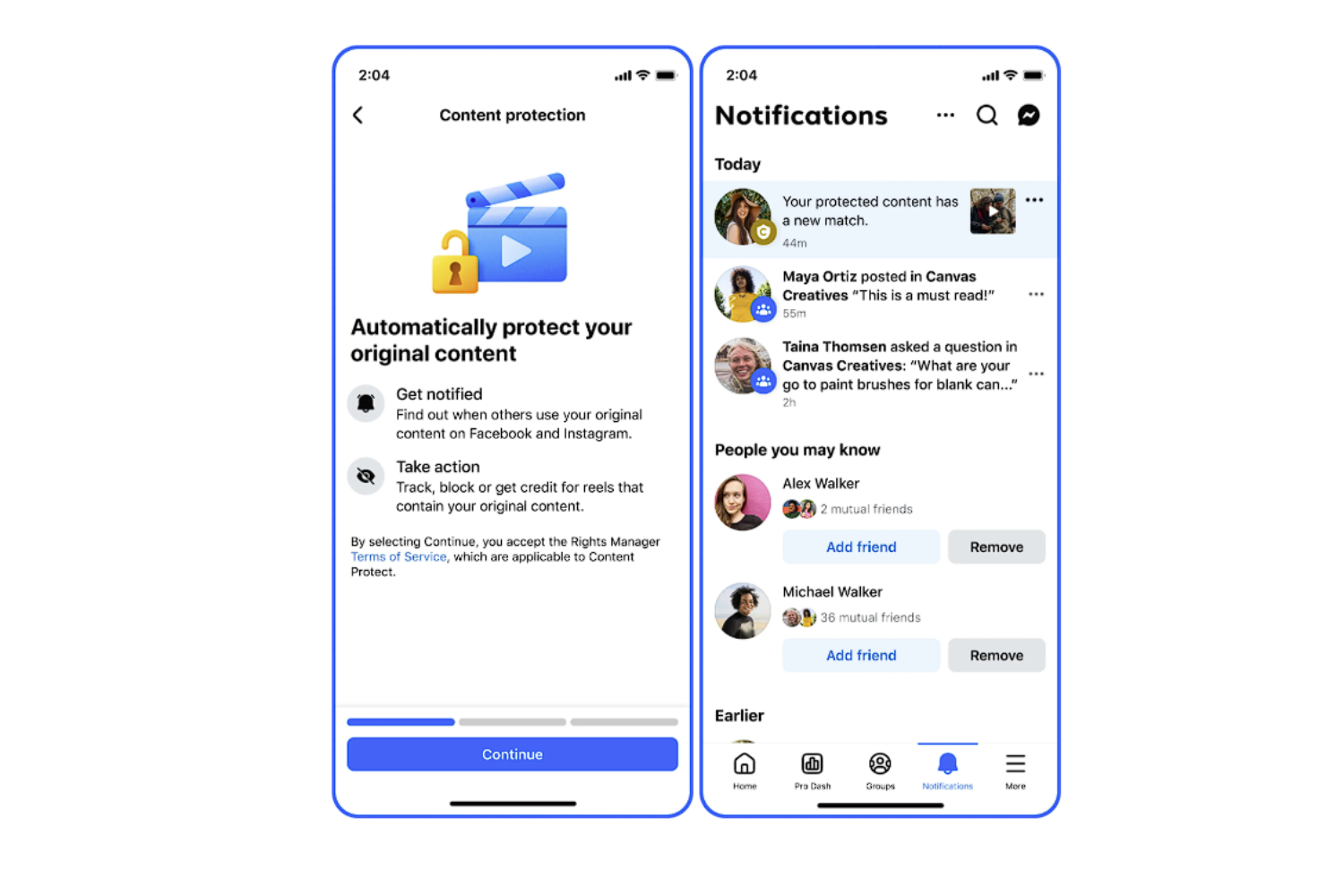
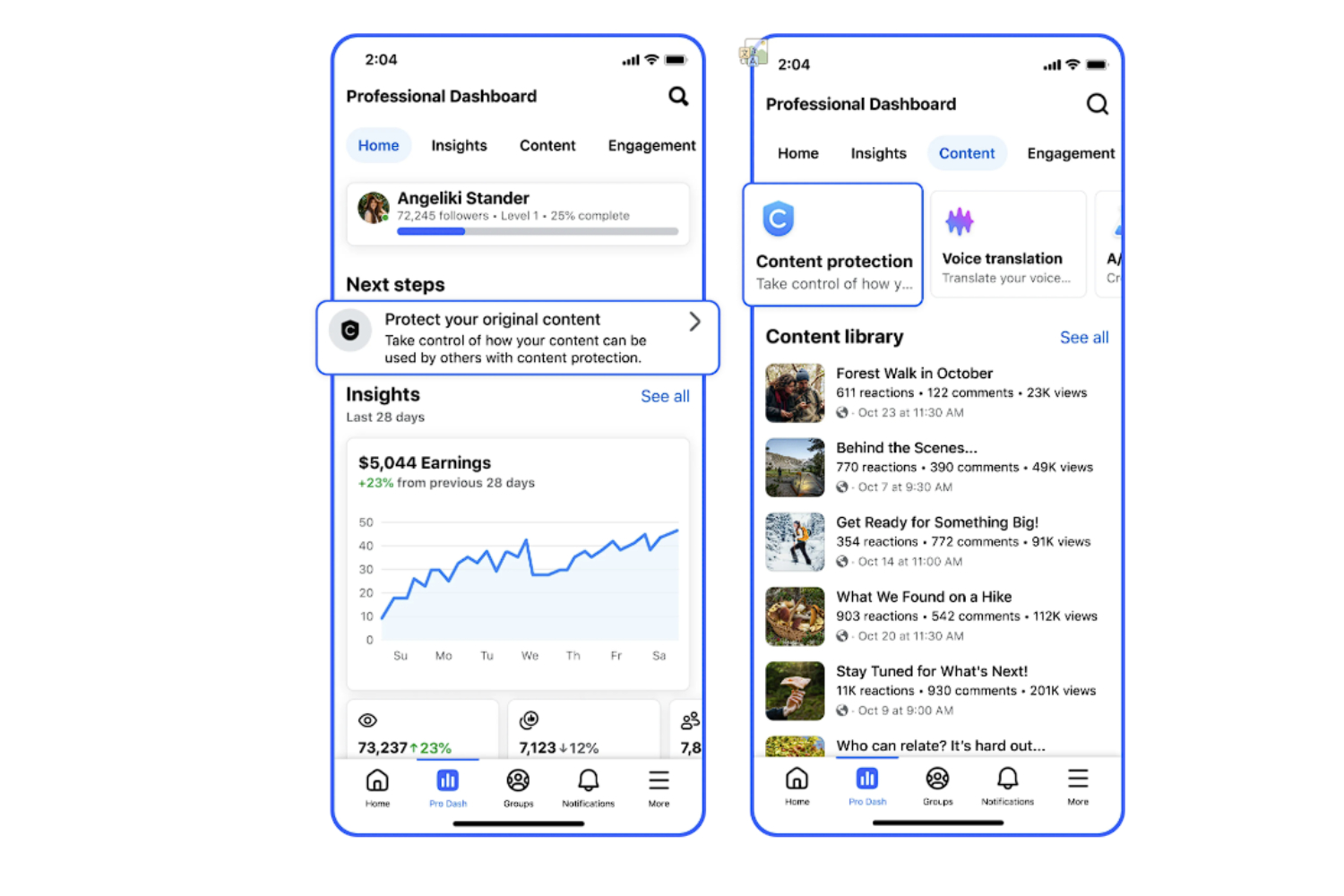
Meta has unveiled a new feature on Facebook dubbed “Facebook Content Protection“, a tool designed to detect the unauthorised use of copy video Reels and empower original creators to decide how to handle copyright infringements.

Functioning similarly to the Rights Manager, the new tool operates on the condition that creators must post their clips directly to Facebook. This allows the system to effectively track and detect instances of copying across the platform.

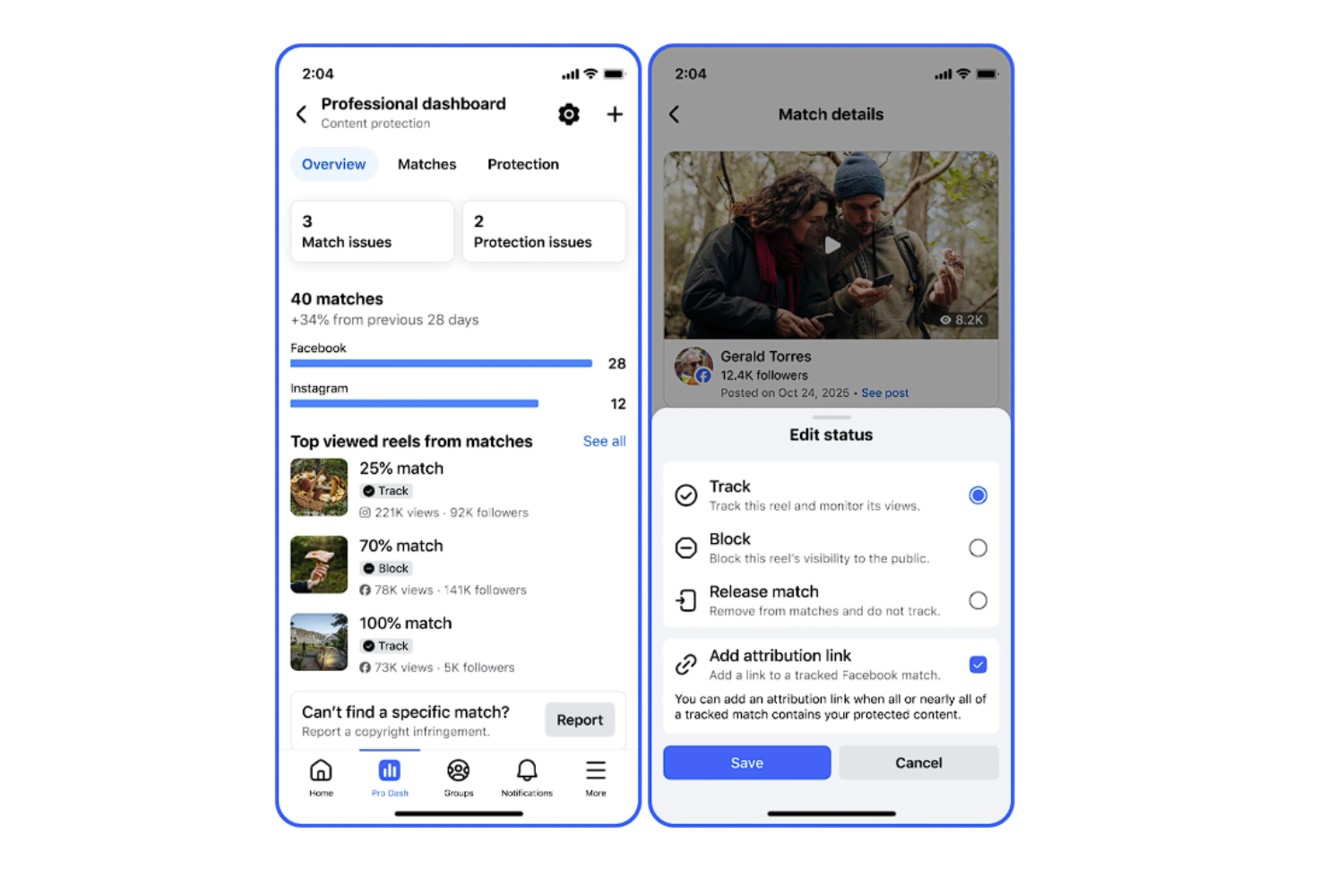
When the system identifies a video that appears to be a copy, it automatically notifies the original owner with comprehensive data. This report includes the percentage of the content match, view counts, follower numbers, and the monetisation status of the infringing clip.

Photo: Facebook

Photo: Facebook

Upon receiving a notification, content owners are presented with three distinct courses of action to manage the unauthorised use of their work.

1. Block Visibility: which effectively orders the removal of the stolen video Reels from public view on both Facebook and Instagram.

2. Add Attribution Links: This option allows them to monitor the status of the content or append a credit label to the video, providing viewers with a direct link to the original creator’s true profile or page.

3. Release Claim: which grants permission for the re-used clip to remain posted on the platform without penalty.

Photo: Facebook

Photo: Facebook

To streamline operations for collaborators, clip owners can also create an “Allow List”. This designates specific accounts that are permitted to re-post clips without undergoing verification or triggering notifications to the owner.

Meta has stipulated strict penalties for misuse of the system. Any creator found submitting false reports to claim rights over content they do not own faces being permanently banned from using the Facebook Content Protection tool.

Currently, the tool is available to creators enrolled in the Facebook Content Monetization programme who meet the criteria set by the platform.

Source: Facebook

Photo: Facebook

Photo: Facebook