British parliament hosts landmark launch of the Eurasia Policy Council [PHOTOS]

The UK has taken a significant step toward deepening its engagement with one of the world’s most strategically important regions, as the Eurasia Policy Council (EPC), an independent, non-partisan think tank focused on the geopolitics, economics and environmental security of Central Asia and the wider Eurasian space, was officially launched at the House of Lords, Azernews reports.

Hosted by Lord Qurban Hussain, the high-profile ceremony brought together an audience of senior British politicians, members of both Houses of Parliament, former diplomats, experts from Oxford, SOAS and King’s College London, executives from the energy and infrastructure sectors, international NGOs, and national media representatives.

The event was marked by an unprecedented level of regional participation, with official delegations and senior figures from Trkiye, Azerbaijan, Kazakhstan, Uzbekistan, Kyrgyzstan, Tajikistan, and Iran attending – underscoring the EPC’s ambition to become a bridge between London, Brussels and the rapidly evolving states of Eurasia.

In his opening remarks, Lord Hussain emphasized the timeliness of the initiative amid rising geopolitical tensions and climate challenges.

‘Eurasia stands at the crossroads of the world’s most acute challenges – great-power competition, economic instability and the existential threat of climate change,’ he said.

‘The Eurasia Policy Council offers the neutral, expert-led space required to address these complexities with intellectual rigour, dignity and a shared commitment to peace.’

Afzal Khan MP, a long-time advocate of closer UK-Central Asia ties, called the launch ‘both timely and essential.’

‘At a moment when multilateral institutions are under strain, the EPC will help Britain and Europe forge deeper, more resilient relationships with a region indispensable for energy security, critical minerals and the future of the rules-based order,’ he said.

Salman Sheikh, a leading strategist on Eurasian and Middle Eastern affairs, highlighted the growing economic potential of the region.

‘Eurasia is emerging as a hub for green energy, rare-earth elements and new transport corridors. The EPC will promote evidence-based partnerships that deliver inclusive growth rather than zero-sum competition.’

Addressing environmental risks, climate-security expert Dr Robert Hamilton warned that ecological pressures are becoming major destabilizing forces.

‘By placing climate resilience at the heart of its agenda, the EPC is showing both courage and foresight,’ he said, pointing to water scarcity in the Amu Darya and Syr Darya basins, glacial retreat in the Tian Shan and Pamir mountains, and the disruptive pace of the global energy transition.

The EPC outlined four core pillars of its mission:

Rigorous, peer-reviewed research on geopolitical and economic developments

High-level diplomatic and Track-1.5 dialogue between the UK, EU and Eurasian states

Promotion of sustainable investment and green technology transfer

Building climate resilience, with a focus on water management, renewable energy and disaster-risk reduction

Closing the event, EPC Co-Founders Raza Syed and Prof. Shabnam Delfani stated:

‘This launch marks the start of a sustained British and European commitment to engage with Eurasia not as a distant periphery, but as an indispensable partner in tackling shared global challenges.’

The EPC’s first flagship report – dedicated to water security and regional governance in Central Asia – will be published in spring 2026, followed by its inaugural annual conference in London next autumn.

As competition intensifies from the Black Sea to China’s western frontier and climate pressures reshape economies across the region, the newly established Eurasia Policy Council positions itself as a key actor in Britain’s foreign-policy landscape, advancing independent analysis and trusted dialogue at a critical moment.
Two key clashes to highlight matchday action in the Misli premier league

Two matches of the XII round of the Misli Premier League will take place today.

According to Azernews, the first match of the day will see Turan Tovuz face Araz-Nakhchivan at 15:00. The Tovuz side currently holds second place with 22 points, while the Nakhchivan club stands sixth with 19 points.

The second match will kick off at 17:30, with Zira hosting Gabala. ‘Qartallar’ sit fifth with 20 points, while the home side is positioned 11th with 5 points.

Misli Premier League – XII round

November 22

15:00 – Araz-Nakhchivan vs Turan Tovuz

Referees: Ravan Hamzazade, Jamil Guliyev, Gulnura Akbarzade, Emin Aliyev

VAR: Rashad Ahmadov

AVAR: Vugar Hasanli

Referee-inspector: Omar Pashayev

AFFA representative: Eldar Mammadov

Venue: Liv Bona Dea Arena

17:30 – Zira vs Gabala

Referees: Elvin Bayramov, Rahil Ramazanov, Shirmamed Mamedov, Ali Aliyev

VAR: Nijat Ismayilli

AVAR: Vusal Mammadov

Referee-inspector: Anar Salmanov

AFFA representative: Yavar Rahimov

Venue: Zira Sports Complex stadium

It should be noted that the round will conclude on November 23. In earlier games, Kapez defeated Karvan-Yevlax 2:1 away, while Qarabag overcame Sumgayit 4:2.

COP29 achieves worldwide recognition for its breakthrough climate outcomes

As the international community focuses on COP30 in Belém, Brazil, comparisons with last year’s COP29 in Baku naturally arise. A minor fire incident at the COP30 venue – quickly contained thanks to prompt action by Brazilian emergency services – served as a reminder of the challenges any host country faces when organizing an event of such scale and complexity. Fortunately, no serious injuries were reported, and Brazilian officials have stressed that the investigation will clarify the cause. Azerbaijan has expressed full solidarity with Brazil, recognizing that unforeseen situations can occur anywhere and that what ultimately matters is the shared global commitment to advancing climate action.

Against this backdrop, COP29 remains notable for the clarity of its outcomes and the strong foundations it laid for future conferences, including COP30. For Azerbaijan, hosting COP29 was not only a major national responsibility but also an opportunity to contribute meaningfully to the global climate agenda. The country mobilized significant resources to ensure a smooth, effective, and inclusive summit, resulting in unanimous praise from participating states – an acknowledgment of both Azerbaijan’s organizational capacity and its dedication to international cooperation.

A defining achievement of COP29 was the adoption of the Baku Finance Goal (BFG) – a groundbreaking commitment to mobilize $1.3 trillion annually for developing countries. By establishing clear expectations for developed nations to contribute at least $300 billion annually by 2035, the BFG significantly elevated global climate finance ambitions and provided a reliable framework that COP30 and future COPs can build upon.

For the first time since the signing of the Paris Agreement, Article 6 was fully operationalized at COP29. This long-awaited step unlocked regulated international carbon markets, ensuring transparency, environmental integrity, and new opportunities for global emissions reductions. This achievement provides a technical foundation that will support future negotiations, including those underway in Belém.

COP29 also fully institutionalized the Loss and Damage Fund, with pledged contributions already exceeding $730 million. For small island states and climate-vulnerable nations, this marks a significant advancement. Azerbaijan made prioritizing support for these countries a central element of its presidency – a commitment fully aligned with Brazil’s own focus on climate justice at COP30.

Another major achievement was the adoption of the Baku Adaptation Roadmap and the Global Adaptation Target document. These decisions ensure that adaptation – critical for many developing countries – receives systematic attention within future COP processes. This forward-looking framework is designed to assist all host nations, including Brazil, as they navigate evolving climate negotiations.

COP29 paid special attention to the urgent climate challenges faced by Small Island Developing States (SIDS)-one of the most climate-vulnerable groups in the world. Azerbaijan brought together representatives of SIDS, climate experts, and international stakeholders to highlight the fragility of island ecosystems, the risks of sea-level rise, and the critical need for targeted adaptation financing.

Azerbaijan has made significant efforts to elevate the voices of SIDS and address their climate-related losses, particularly where environmental threats are most severe. This included emphasizing biodiversity protection, resilience building, and the importance of ensuring that climate finance mechanisms specifically address the unique needs of highly vulnerable regions. The prominence of these issues at COP30 in Brazil is, in many ways, a continuation of the Baku initiative and reflects the momentum Azerbaijan helped generate.

COP29 also succeeded in finalizing the long-awaited 10-year Lima Work Programme on Gender, demonstrating Azerbaijan’s ability to build consensus around sensitive and long-negotiated issues. This outcome strengthens the practical and inclusive dimensions of global climate diplomacy.

While COP29 produced substantial breakthroughs, Azerbaijan views its achievements not as a point of competition but as a foundation for global progress. Azerbaijan remains ready to support Brazil’s COP30 presidency in any capacity-through knowledge-sharing, climate finance expertise, adaptation frameworks, or technical coordination. Both countries bring complementary strengths: Azerbaijan in institutional and financial frameworks, and Brazil in biodiversity conservation and climate justice.

COP29 demonstrated that with determination, diplomacy, and careful planning, a host country can deliver major outcomes that shape global climate policy. Azerbaijan is proud to have contributed to this progress and remains committed to supporting Brazil and all COP30 participants as they work to advance key climate priorities. In an era of accelerating environmental challenges, the continuity between COP presidencies – and the spirit of cooperation between nations like Azerbaijan and Brazil-will remain essential for achieving shared climate goals.

Leyla Aliyeva and Arzu Aliyeva visit family of National Hero Panjali Teymurov in Astara [PHOTOS]

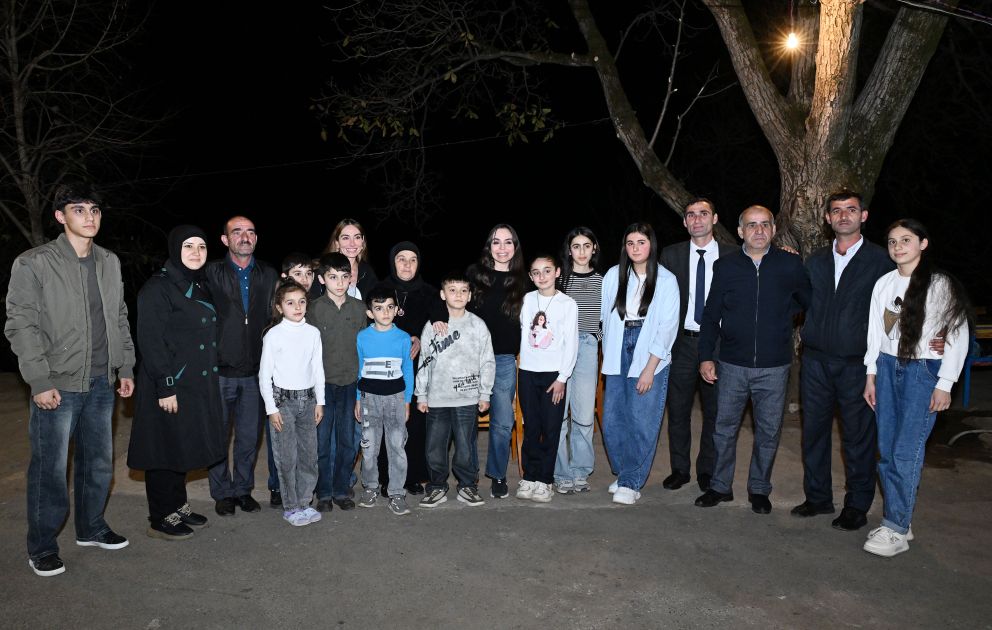
On November 21, Leyla Aliyeva, Vice-President of the Heydar Aliyev Foundation, and Arzu Aliyeva visited the family of the Azerbaijani National Hero Panjali Teymurov in Astara.

They commemorated the memory of Panjali Teymurov, who was martyred during the April battles, and were also briefed on his services to the motherland, as well as his high professionalism and bravery as a military serviceman.

Subsequently, Leyla Aliyeva and Arzu Aliyeva familiarized themselves with the house-museum built to perpetuate the memory of the valiant martyr.

Pajali Nurmahammad oghlu Teymurov, the legendary Azerbaijani Special Forces’ serviceman, was born on March 24, 1981, in the Azarud village of Astara district. Following 17 years of service to the motherland, Panjali Teymurov was martyred during the April battles in 2016.

Panjali Teymurov, who received many awards for his exemplary service, was posthumously awarded the “For the Motherland” medal in 2016. He was later conferred the title of National Hero of Azerbaijan by an Order signed by the Supreme Commander-in-Chief, President Ilham Aliyev, on November 7, 2025.

COP29 achieves worldwide recognition for its breakthrough climate outcomes

As the international community focuses on COP30 in Belém, Brazil, comparisons with last year’s COP29 in Baku naturally arise. A minor fire incident at the COP30 venue – quickly contained thanks to prompt action by Brazilian emergency services – served as a reminder of the challenges any host country faces when organizing an event of such scale and complexity. Fortunately, no serious injuries were reported, and Brazilian officials have stressed that the investigation will clarify the cause. Azerbaijan has expressed full solidarity with Brazil, recognizing that unforeseen situations can occur anywhere and that what ultimately matters is the shared global commitment to advancing climate action.

Against this backdrop, COP29 remains notable for the clarity of its outcomes and the strong foundations it laid for future conferences, including COP30. For Azerbaijan, hosting COP29 was not only a major national responsibility but also an opportunity to contribute meaningfully to the global climate agenda. The country mobilized significant resources to ensure a smooth, effective, and inclusive summit, resulting in unanimous praise from participating states – an acknowledgment of both Azerbaijan’s organizational capacity and its dedication to international cooperation.

A defining achievement of COP29 was the adoption of the Baku Finance Goal (BFG) – a groundbreaking commitment to mobilize $1.3 trillion annually for developing countries. By establishing clear expectations for developed nations to contribute at least $300 billion annually by 2035, the BFG significantly elevated global climate finance ambitions and provided a reliable framework that COP30 and future COPs can build upon.

For the first time since the signing of the Paris Agreement, Article 6 was fully operationalized at COP29. This long-awaited step unlocked regulated international carbon markets, ensuring transparency, environmental integrity, and new opportunities for global emissions reductions. This achievement provides a technical foundation that will support future negotiations, including those underway in Belém.

COP29 also fully institutionalized the Loss and Damage Fund, with pledged contributions already exceeding $730 million. For small island states and climate-vulnerable nations, this marks a significant advancement. Azerbaijan made prioritizing support for these countries a central element of its presidency – a commitment fully aligned with Brazil’s own focus on climate justice at COP30.

Another major achievement was the adoption of the Baku Adaptation Roadmap and the Global Adaptation Target document. These decisions ensure that adaptation – critical for many developing countries – receives systematic attention within future COP processes. This forward-looking framework is designed to assist all host nations, including Brazil, as they navigate evolving climate negotiations.

COP29 paid special attention to the urgent climate challenges faced by Small Island Developing States (SIDS)-one of the most climate-vulnerable groups in the world. Azerbaijan brought together representatives of SIDS, climate experts, and international stakeholders to highlight the fragility of island ecosystems, the risks of sea-level rise, and the critical need for targeted adaptation financing.

Azerbaijan has made significant efforts to elevate the voices of SIDS and address their climate-related losses, particularly where environmental threats are most severe. This included emphasizing biodiversity protection, resilience building, and the importance of ensuring that climate finance mechanisms specifically address the unique needs of highly vulnerable regions. The prominence of these issues at COP30 in Brazil is, in many ways, a continuation of the Baku initiative and reflects the momentum Azerbaijan helped generate.

COP29 also succeeded in finalizing the long-awaited 10-year Lima Work Programme on Gender, demonstrating Azerbaijan’s ability to build consensus around sensitive and long-negotiated issues. This outcome strengthens the practical and inclusive dimensions of global climate diplomacy.

While COP29 produced substantial breakthroughs, Azerbaijan views its achievements not as a point of competition but as a foundation for global progress. Azerbaijan remains ready to support Brazil’s COP30 presidency in any capacity-through knowledge-sharing, climate finance expertise, adaptation frameworks, or technical coordination. Both countries bring complementary strengths: Azerbaijan in institutional and financial frameworks, and Brazil in biodiversity conservation and climate justice.

COP29 demonstrated that with determination, diplomacy, and careful planning, a host country can deliver major outcomes that shape global climate policy. Azerbaijan is proud to have contributed to this progress and remains committed to supporting Brazil and all COP30 participants as they work to advance key climate priorities. In an era of accelerating environmental challenges, the continuity between COP presidencies – and the spirit of cooperation between nations like Azerbaijan and Brazil-will remain essential for achieving shared climate goals.

Genesis GV60 Magma targets Mercedes-AMG and BMW M

Genesis has unveiled the GV60 Magma, the brand’s first high-performance model, positioning it to compete directly with long-established rivals such as Mercedes-AMG and BMW M, Azernews reports, citing Korean media.

Production is scheduled to begin later this year in Ulsan, South Korea, with a domestic launch planned for January. The GV60 Magma will then expand to European markets, starting with Germany, the UK, and Switzerland in the second quarter, followed by France, Spain, Italy, and the Netherlands.

The highly anticipated Magma variant is based on the same architecture as the standard GV60-Genesis’s first dedicated electric vehicle built on the E-GMP platform, shared with Hyundai Motor Group siblings like the Hyundai Ioniq 5 and Kia EV6. This platform allows for fast charging, long range, and impressive performance capabilities.

Visually, the GV60 Magma emphasizes its sporty character with a lowered stance on 21-inch wheels, flared vented arches, and a striking rear diffuser complemented by Genesis’s signature rear wing. Inside, the cabin is expected to blend luxury materials with advanced tech features, including a driver-focused digital display and customizable performance settings.

Genesis aims to position the Magma not just as a performance EV, but as a statement of the brand’s evolving identity-blending cutting-edge electric technology with the excitement and prestige traditionally associated with high-performance German cars. Analysts suggest that this model could redefine perceptions of electric performance vehicles, especially in markets where German rivals have long dominated.

Leyla Aliyeva and Arzu Aliyeva visit family of National Hero Panjali Teymurov in Astara [PHOTOS]

On November 21, Leyla Aliyeva, Vice-President of the Heydar Aliyev Foundation, and Arzu Aliyeva visited the family of the Azerbaijani National Hero Panjali Teymurov in Astara.

They commemorated the memory of Panjali Teymurov, who was martyred during the April battles, and were also briefed on his services to the motherland, as well as his high professionalism and bravery as a military serviceman.

Subsequently, Leyla Aliyeva and Arzu Aliyeva familiarized themselves with the house-museum built to perpetuate the memory of the valiant martyr.

Pajali Nurmahammad oghlu Teymurov, the legendary Azerbaijani Special Forces’ serviceman, was born on March 24, 1981, in the Azarud village of Astara district. Following 17 years of service to the motherland, Panjali Teymurov was martyred during the April battles in 2016.

Panjali Teymurov, who received many awards for his exemplary service, was posthumously awarded the “For the Motherland” medal in 2016. He was later conferred the title of National Hero of Azerbaijan by an Order signed by the Supreme Commander-in-Chief, President Ilham Aliyev, on November 7, 2025.

President Ilham Aliyev attends inauguration of pharmaceutical production facility [PHOTOS]

President of the Republic of Azerbaijan Ilham Aliyev attended the opening of a pharmaceutical production facility owned by Scandens Pharmaceutical Industries Ltd in the Hokmali settlement of the Absheron district, Azernews reports.

Minister of Economy Mikayil Jabbarov and Director General Kamran Hasanov briefed the head of state on the facility.

Designed in accordance with international standards, the facility is equipped with advanced technologies and equipment from Germany, Switzerland, and Italy. The enterprise will annually produce approximately 800 million tablets and capsules across various therapeutic areas, including antibiotics, diabetology, hepatology, cardiology, andrology, allergology, and gastroenterology. The products will supply the domestic market and are planned for export in the future. A total of 120 jobs have been created at the facility.

The 74-million-manat project was implemented through private investment. With the investment promotion document issued by the Ministry of Economy, the company received 6.5 million manats in concessions for imported equipment.

The launch of the facility marks a new stage in the development of Azerbaijan’s pharmaceutical industry. All stages of medicine production – from raw materials to finished products – will be carried out locally. The new enterprise will contribute to strengthening the pharmaceutical sector, supporting local production, and increasing Azerbaijan’s export potential by manufacturing competitive products that meet domestic and international standards.

The facility will also serve as a training base for professional personnel in the pharmaceutical field. Under the quadrilateral Memorandum signed between Scandens Pharmaceutical Industries Ltd, Azerbaijan Medical University, Hungary’s University of Pécs, and the Pannon Pharma company, short- and long-term training and internship programs for pharmaceutical and non-pharmaceutical specialties will be implemented.

President Ilham Aliyev launched the facility.

A total of 710 solar panels with a combined capacity of 450 kW/h have been installed on the roof of the facility, enabling it to meet approximately 40 percent of its energy consumption through renewable sources.

Titled world’s most beautiful girl

Fatima Bosch from Mexico has been crowned the winner of the international beauty pageant Miss Universe, Azernews reports.

The crown was presented by the outgoing titleholder, Victoria Teilvig of Denmark, Miss Universe 2024. The first runner-up was the representative from Thailand, while third, fourth, and fifth places went to contestants from Venezuela, the Philippines, and Côte d’Ivoire, respectively.

The award ceremony began with the announcement of the 30 finalists. Most participants were then eliminated, leaving contestants from India, Guadeloupe, China, Thailand, the Dominican Republic, Brazil, Rwanda, Côte d’Ivoire, Colombia, the Netherlands, Cuba, Bangladesh, Japan, Puerto Rico, the USA, Mexico, the Philippines, Zimbabwe, Costa Rica, Malta, Chile, Canada, Croatia, Paraguay, Venezuela, Guatemala, Palestine, Nicaragua, and France.

From this group, contestants from Chile, Colombia, Cuba, Guadeloupe, Mexico, Puerto Rico, Venezuela, China, the Philippines, Thailand, Malta, and Côte d’Ivoire advanced to the next stage. The judges then selected the final five participants: Pravinar Singh from Thailand, Ahtis Manalo from the Philippines, Stephanie Abesali from Venezuela, Fatima Bosch from Mexico, and Olivia Yase from Côte d’Ivoire.

Fatima Bosch, known for her elegance, charisma, and advocacy work, stood out during the competition. Her win highlights Mexico’s continued strong presence in the pageant world. Observers also noted that this year’s contest showcased unprecedented cultural diversity, with finalists representing countries from every corner of the globe, emphasizing beauty in all its forms.

The event also featured several memorable moments on stage, including dynamic talent performances and national costume displays that celebrated the rich traditions of each contestant’s home country.

Leyla Aliyeva and Arzu Aliyeva visit family of National Hero Panjali Teymurov in Astara

On November 21, Leyla Aliyeva, Vice-President of the Heydar
Aliyev Foundation, and Arzu Aliyeva visited the family of the
Azerbaijani National Hero Panjali Teymurov in Astara.
They commemorated the memory of Panjali Teymurov,…

On November 21, Leyla Aliyeva, Vice-President of the Heydar
Aliyev Foundation, and Arzu Aliyeva visited the family of the
Azerbaijani National Hero Panjali Teymurov in Astara.

They commemorated the memory of Panjali Teymurov, who was
martyred during the April battles, and were also briefed on his
services to the motherland, as well as his high professionalism and
bravery as a military serviceman.

Subsequently, Leyla Aliyeva and Arzu Aliyeva familiarized
themselves with the house-museum built to perpetuate the memory of
the valiant martyr.

Pajali Nurmahammad oghlu Teymurov, the legendary Azerbaijani
Special Forces’ serviceman, was born on March 24, 1981, in the
Azarud village of Astara district. Following 17 years of service to
the motherland, Panjali Teymurov was martyred during the April
battles in 2016.

Panjali Teymurov, who received many awards for his exemplary
service, was posthumously awarded the “For the Motherland” medal in
2016. He was later conferred the title of National Hero of
Azerbaijan by an Order signed by the Supreme Commander-in-Chief,
President Ilham Aliyev, on November 7, 2025.

Here we are to serve you with news right now. It does not cost much, but worth your attention.

Choose to support open, independent, quality journalism and subscribe on a monthly basis.

By subscribing to our online newspaper, you can have full digital access to all news, analysis, and much more.

Subscribe

You can also follow AzerNEWS on Twitter @AzerNewsAz or Facebook @AzerNewsNewspaper

Thank you!