Uber launches robot deliveries in UK

By Alimat Aliyeva
Uber announced on Thursday that it will partner with Starship
Technologies to introduce autonomous robot deliveries in the UK
starting in December, with plans to expand to additional European
markets next year and the United States in…

By Alimat Aliyeva

Uber announced on Thursday that it will partner with Starship
Technologies to introduce autonomous robot deliveries in the UK
starting in December, with plans to expand to additional European
markets next year and the United States in 2027,
Azernews reports, citing foreign media.

Initially, Uber Eats customers in the Leeds and Sheffield areas
will be able to receive deliveries from Starship’s robots, the
company said.

This partnership is the latest in a series of collaborations
Uber has established with autonomous vehicle and robotics companies
as it increasingly focuses on automating its services to drive
growth and efficiency. In the United States, Uber already works
with Avride and Serve Robotics to provide robotic food
deliveries.

Starship, based in San Francisco, will deploy robots operating
at Level 4 autonomy, meaning they can navigate and complete
deliveries within a designated area without human intervention. The
robots are equipped with advanced sensors, cameras, and AI systems
to safely avoid obstacles, interact with pedestrians, and ensure
timely deliveries.

Experts suggest that this move could significantly reduce
delivery costs, speed up service in congested urban areas, and
provide a glimpse of the future of “last-mile” logistics.
Interestingly, some of Starship’s robots are designed to carry
multiple orders simultaneously, and users can track the robots in
real time via the Uber Eats app, making the experience interactive
and futuristic.

With the rise of autonomous technology, partnerships like Uber
and Starship’s signal a shift in the delivery industry, where smart
robotics and AI could become as commonplace as traditional couriers
within a few years.

Japan restarts top nuclear plant

The governor of Japan’s Niigata Prefecture announced on Friday that he would allow the partial restart of the Kashiwazaki-Kariwa nuclear power pl…

Japan restarts top nuclear plant

The governor of Japan’s Niigata Prefecture announced on Friday that he would allow the partial restart of the Kashiwazaki-Kariwa nuclear power plant, the world’s largest, as part of Japan’s efforts to revive its nuclear industry and reduce reliance on fossil fuel imports, Azernews reports.

Find the plan that suits you best.

1 month subscription

Full digital access to all news for 1 month

3 months subscription

Full digital access to all news for 3 months

2.00

Select

-33%

6 months subscription

Full digital access to all news for 6 months

3.84

Select

-36%

1 year subscription

Full digital access to all news for 1 year

7.10

Select

-41%

Here we are to serve you with news right now. It does not cost much, but worth your attention.

Choose to support open, independent, quality journalism and subscribe on a monthly basis.

By subscribing to our online newspaper, you can have full digital access to all news, analysis, and much more.

Subscribe

You can also follow AzerNEWS on Twitter @AzerNewsAz or Facebook @AzerNewsNewspaper

Thank you!

OpenAI launches ChatGPT group chats worldwide

By Alimat Aliyeva
OpenAI has officially rolled out the ChatGPT group chat feature
globally for all users, including those on the free plan as well as
Go, Plus, and Pro subscriptions. The launch follows a week of pilot
testing in selected regions, inclu…

By Alimat Aliyeva

OpenAI has officially rolled out the ChatGPT group chat feature
globally for all users, including those on the free plan as well as
Go, Plus, and Pro subscriptions. The launch follows a week of pilot
testing in selected regions, including Japan and New Zealand,
Azernews reports.

According to a report from TechCrunch, the new feature allows
multiple users to have shared conversations with ChatGPT in a
single chat thread.

OpenAI representatives note that this update transforms ChatGPT
from a personal assistant into a collaborative tool where friends,
colleagues, or family members can plan activities, create content,
and make decisions together. At the same time, the AI can assist by
searching for information, summarizing data, and comparing
different options to help groups reach informed decisions.

Up to 20 participants can join a single group chat after
accepting an invitation. Each participant’s personal settings and
memory remain private. To start a group chat, users simply click on
the people icon and add participants directly or via a link. All
invited members must complete a short profile with their name,
username, and avatar. When a new participant joins an existing
chat, a separate copy of the conversation is created, leaving the
original thread unchanged.

ChatGPT is designed to recognize when it should contribute to
the conversation and when it is better to stay silent. Users can
also tag the AI using the ChatGPT mention to prompt a response. In
addition, the AI can react with emojis and even reference
participants’ avatars, adding a playful and interactive dimension
to group discussions.

The introduction of group chats comes less than two weeks after
the release of the GPT-5.1 model, which includes Instant and
Thinking modes, offering faster responses and enhanced reasoning
capabilities.

Interestingly, this new feature could transform how people
collaborate online. Beyond casual chats, it opens opportunities for
team brainstorming, study groups, family planning, and even
creative projects. Experts suggest that by blending social
interaction with AI assistance, group chats may redefine
collaborative work and make ChatGPT an integral part of everyday
teamwork.

Japan’s inflation rises in October

Inflation in Japan rose by 3% in October compared to the same period last year, the country’s Statistics Bureau reported on Friday, Azernews repo…

Japan's inflation rises in October

Inflation in Japan rose by 3% in October compared to the same period last year, the country’s Statistics Bureau reported on Friday, Azernews reports, citing foreign media.

Find the plan that suits you best.

1 month subscription

Full digital access to all news for 1 month

3 months subscription

Full digital access to all news for 3 months

2.00

Select

-33%

6 months subscription

Full digital access to all news for 6 months

3.84

Select

-36%

1 year subscription

Full digital access to all news for 1 year

7.10

Select

-41%

Here we are to serve you with news right now. It does not cost much, but worth your attention.

Choose to support open, independent, quality journalism and subscribe on a monthly basis.

By subscribing to our online newspaper, you can have full digital access to all news, analysis, and much more.

Subscribe

You can also follow AzerNEWS on Twitter @AzerNewsAz or Facebook @AzerNewsNewspaper

Thank you!

Testimonies of victims heard at Ruben Vardanyan’s trial at Baku Military Court

The trial of Armenian citizen Ruben Vardanyan, accused under
articles of the Criminal Code of the Republic of Azerbaijan related
to crimes against peace and humanity, war crimes, terrorism,
financing of terrorism and other serious crimes, continued on …

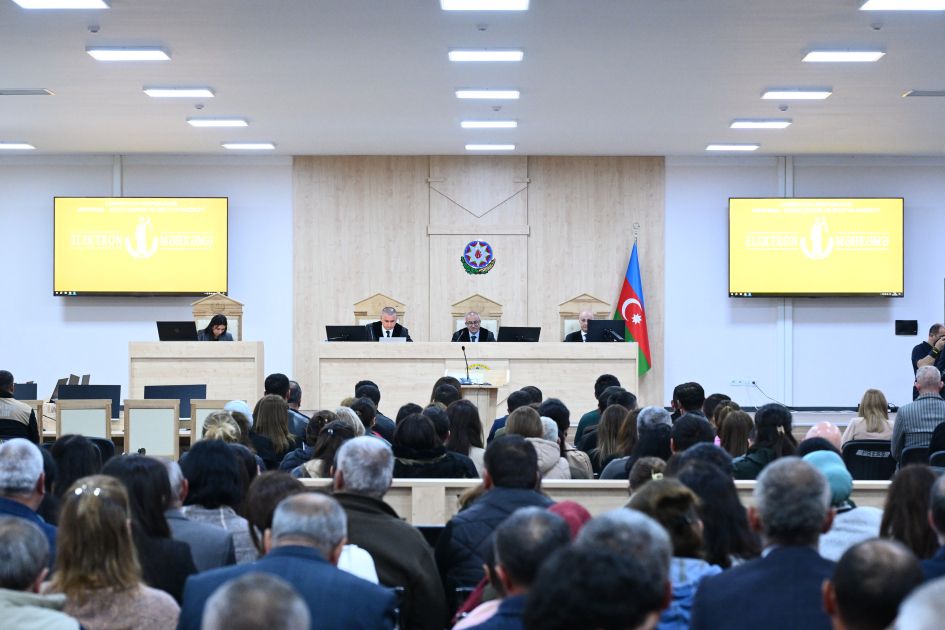
The trial of Armenian citizen Ruben Vardanyan, accused under
articles of the Criminal Code of the Republic of Azerbaijan related
to crimes against peace and humanity, war crimes, terrorism,
financing of terrorism and other serious crimes, continued on 21
November.

The open court session at the Baku Military Court was held under
the chairmanship of Judge Zeynal Aghayev, with judges Anar Rzayev
and Jamal Ramazanov on the panel (reserve judge Gunel Samadova).
The accused was provided with an interpreter in the language he
understands (Russian) as well as a state-funded defence lawyer.

Judge Zeynal Aghayev introduced the panel of judges, the
prosecutors upholding the state accusation, the interpreters and
others to the victims and legal successors of victims participating
in the hearing for the first time, and explained their rights and
obligations under the law.

The testimonies of the victims were then heard.

Responding to questions from Senior Assistant to the Prosecutor
General Vusal Aliyev, victim Baylar Shabanov, noted that while they
were driving from Sugovushan in the direction of Aghdara-Kalbajar,
the remnants of the Armenian army and illegal Armenian armed groups
opened gunfire on the “Niva” vehicle they were driving at. The
incident caused serious damage to the vehicle.

Victim Kanan Rzazade stated that while he was in an ambulance
with a distinctive insignia in the Kalbajar district, the enemy hit
his vehicle with a mortar shell, injuring him and Elvin Suleymanov,
who was with him at that time.

Hasil Talibov reported that Farid Mehbali and Elshan Babazade
were killed, and Ilkin Vasalov, Mehdi Yusifov, and several others
were wounded as a result of an enemy provocation in the Zangilan
district.

Responding to questions from Assistant Prosecutor General for
Special Assignments Tugay Rahimli, victim Zamin Amrali noted that
Farid Rustamov and Nahid Mamedov were killed, and Farid Mammadov,
Saleh Gasanov, and several others were wounded as a result of an
enemy mortar shell explosion in the Zangilan district.

Victim Orkhan Alasgarov testified that he was wounded by enemy
artillery shelling in Kalbajar district, and that Sarkhan Omarov,
who was with him at the time, was killed.

Victim Ibrahim Mayilli said that Farid Mehbali and Tabriz
Rahimov were killed in a mortar shell explosion fired by the enemy
in the Zangilan district, while he, Rahib Mammadov, Seymur Hasanli,
and several others received injuries of varying severity.

Answering questions from Nasir Bayramov, head of the Public
Prosecution Department of the Prosecutor General’s Office, victim
Alim Maharramov, stated that an explosion occurred while he was
cleaning mines planted by the enemy in the Gubadli district. As a
result of the incident, he, V. Naghiyev, E. Alishanov and V.
Ibrahimov received various injuries.

Victim Farid Shahbazov noted that he, along with Sadig Shakarov
and Murad Aliyev, sustained a shrapnel injury as a result of the
mortar fire by the remnants of the Armenian armed forces and
illegal Armenian armed detachments in the vicinity of the Aliaghali
village of Aghdam district.

Another victim Parviz Shirinov claimed that he, along with Elnur
Soltanov and Sadig Hamidov, was injured in an explosion of the
grenade thrown by the remnants of the Armenian armed forces and
illegal Armenian armed detachments in the Janyatag village of
Aghdara district.

Responding to the questions from state prosecutor Tarana
Mammadova, victims Murtuz Namazov and Mahammad Gilmizliyev claimed
they were injured as a result of the explosion of a landmine
planted by the enemy in the forest trail in the Zangilan district.
N.Namazov sustained a head injury, while M.Gilmizliyev saw his
right knee amputated.

Responding to the inquiries from state prosecutor Vusal
Abdullayev, victim Sarkhan Isgandarov said that he was injured as a
result of the enemy rifle fire in the Gulyatag village of Aghdara
district.

Victims Abdul Malikov, Mardan Allahverdiyev, and Sahil Rasulov
noted they sustained various bodily injuries as a result of the
artillery and grenade fire from the remnants of the Armenian armed
forces and illegal Armenian armed detachments in the Vangli village
of Aghdara district, with Zamin Hasratov, Bayram Huseynov, Tamerlan
Rashidli, Subhan Abbasov, Ravan Mammadov, and Emin Jafarov also
wounded in the incident.

Responding to the inquiries from state prosecutor Fuad Musayev,
victim Ramil Manafov said he was wounded by enemy fire in Zangilan
district.

Another victim Samir Akbarov mentioned that, while evacuating
those injured in a landmine blast in the Aghdam district, he, as
well as several other people around him, also sustained injuries by
stepping on a landmine.

Victim Rustam Rustamov said he was wounded as a result of the
fire from the remnants of the Armenian armed forces and illegal
Armenian armed detachments in Aghdara district.

In their testimonies, victims Ramal Badalli and Khayal Hajiyev
emphasized they were wounded by enemy fire from various
directions.

The court session continued with the examination of documents
and other evidence in the criminal case file.

The next court hearing has been scheduled for 24 November.

Ruben Vardanyan faces multiple charges under the Criminal Code
of the Republic of Azerbaijan, including Articles 100.1, 100.2
(planning, preparing, initiating, and waging a war of aggression),
107 (deportation and forced displacement of the population), 109
(persecution), 110 (forcible disappearance of persons), 112
(deprivation of liberty contrary to international law), 113
(torture), 114.1 (mercenary activity), 115.2 (violation of the laws
and customs of warfare), 116.0.1, 116.0.2, 116.0.10, 116.0.11,
116.0.16, 116.0.18 (violation of international humanitarian law
norms during an armed conflict), 120.2.1, 120.2.3, 120.2.4,
120.2.7, 120.2.11, 120.2.12 (intentional murder), 29.120.2.1,
29.120.2.3, 29.120.2.4, 29.120.2.7, 29.120.2.11, 29.120.2.12
(attempted intentional murder), 192.3.1 (illegal entrepreneurship),
214.2.1, 214.2.3, 214.2.4 (terrorism), 214-1 (financing of
terrorism), 218.1, 218.2 (creation of a criminal group), 228.3
(illegal acquisition, transfer, sale, storage, transportation, and
possession of firearms, ammunition, explosives, and devices),
270-1.2, 270-1.4 (acts threatening aviation safety), 278.1
(forcible seizure or retention of power, forcible change of the
constitutional structure of the state), 279.1, 279.2, 279.3
(creation of armed formations not provided for by law), and 318.2
(illegal crossing of the state border of the Republic of
Azerbaijan).

Water supply network construction begins in Ghor, Afghanistan

Afghan authorities launched the construction of 28 water supply networks in western Afghanistan’s Ghor province on Thursday, Azernews reports, ci…

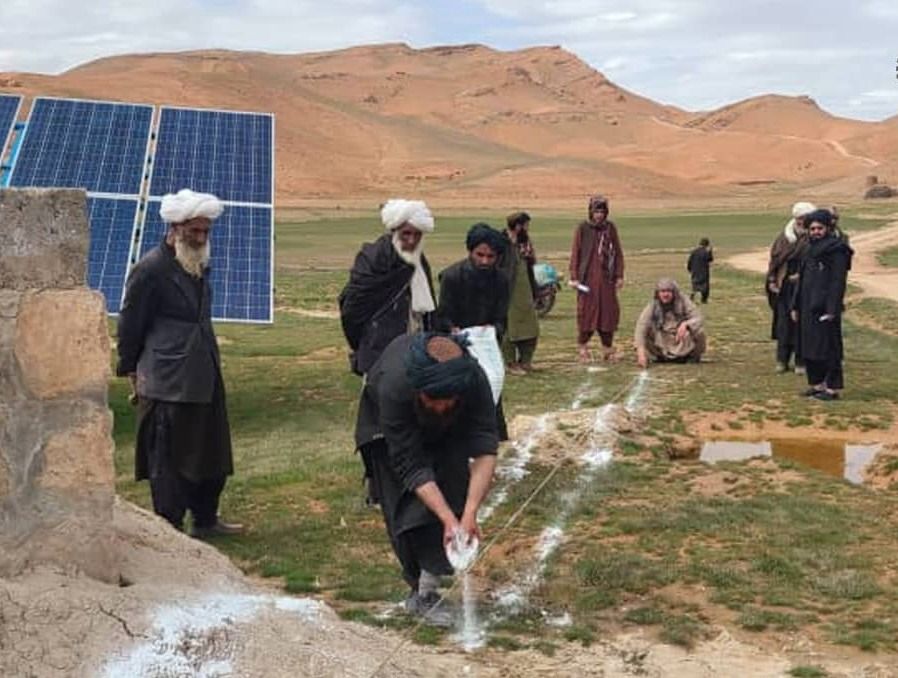
Water supply network construction begins in Ghor, Afghanistan

Afghan authorities launched the construction of 28 water supply networks in western Afghanistan’s Ghor province on Thursday, Azernews reports, citing foreign media.

Find the plan that suits you best.

1 month subscription

Full digital access to all news for 1 month

3 months subscription

Full digital access to all news for 3 months

2.00

Select

-33%

6 months subscription

Full digital access to all news for 6 months

3.84

Select

-36%

1 year subscription

Full digital access to all news for 1 year

7.10

Select

-41%

Here we are to serve you with news right now. It does not cost much, but worth your attention.

Choose to support open, independent, quality journalism and subscribe on a monthly basis.

By subscribing to our online newspaper, you can have full digital access to all news, analysis, and much more.

Subscribe

You can also follow AzerNEWS on Twitter @AzerNewsAz or Facebook @AzerNewsNewspaper

Thank you!

Heydar Aliyev Foundation’s Vice-President Leyla Aliyeva visits boarding school in Lankaran

On November 21, Leyla Aliyeva, Vice-President of the Heydar
Aliyev Foundation, and Alena Aliyeva visited a special boarding
school for children with disabilities in the city of Lankaran.
First, they, along with the students a…

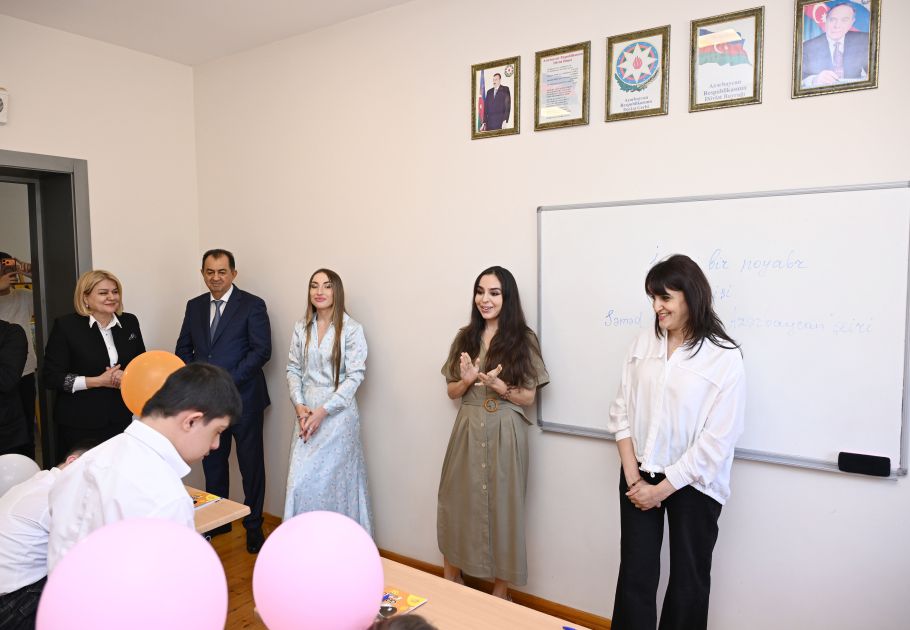
On November 21, Leyla Aliyeva, Vice-President of the Heydar
Aliyev Foundation, and Alena Aliyeva visited a special boarding
school for children with disabilities in the city of Lankaran.

First, they, along with the students and teachers, visited an
exhibition of handicrafts dedicated to the 5th anniversary of the
historic Victory.

They also toured the classrooms, training rooms, and recreation
rooms to see the effective organization of children’s leisure
activities.

As the only regional special boarding school for children with
disabilities in the southern region, it offers specialized
services. These services include education and rehabilitation for
children diagnosed with autism, Down syndrome, and mental
impairment. The school also provides accommodation, a benefit
currently utilized by 34 children.

Here we are to serve you with news right now. It does not cost much, but worth your attention.

Choose to support open, independent, quality journalism and subscribe on a monthly basis.

By subscribing to our online newspaper, you can have full digital access to all news, analysis, and much more.

Subscribe

You can also follow AzerNEWS on Twitter @AzerNewsAz or Facebook @AzerNewsNewspaper

Thank you!

BYD launches new electric car in Israel

Chinese automaker BYD officially launched sales of its new electric car model in Israel on Thursday, the company’s Israeli dealership, Shlomo Mot…

BYD launches new electric car in Israel

Chinese automaker BYD officially launched sales of its new electric car model in Israel on Thursday, the company’s Israeli dealership, Shlomo Motors, announced, Azernews reports, citing foreign media.

Find the plan that suits you best.

1 month subscription

Full digital access to all news for 1 month

3 months subscription

Full digital access to all news for 3 months

2.00

Select

-33%

6 months subscription

Full digital access to all news for 6 months

3.84

Select

-36%

1 year subscription

Full digital access to all news for 1 year

7.10

Select

-41%

Here we are to serve you with news right now. It does not cost much, but worth your attention.

Choose to support open, independent, quality journalism and subscribe on a monthly basis.

By subscribing to our online newspaper, you can have full digital access to all news, analysis, and much more.

Subscribe

You can also follow AzerNEWS on Twitter @AzerNewsAz or Facebook @AzerNewsNewspaper

Thank you!

Heydar Aliyev Foundation reopens fully renovated Lankaran orphanage building

The building of the social service institution of Osman Mirzayev
Orphanage in the city of Lankaran has been overhauled by the Heydar
Aliyev Foundation. The orphanage building was inaugurated after the
renovation on November 21.
The event was attended b…

The building of the social service institution of Osman Mirzayev
Orphanage in the city of Lankaran has been overhauled by the Heydar
Aliyev Foundation. The orphanage building was inaugurated after the
renovation on November 21.

The event was attended by Leyla Aliyeva, Vice-President of the
Heydar Aliyev Foundation, and Alena Aliyeva.

The building of the orphanage No. 5, which has been operating in
Lankaran since 1941, has become unusable due to structural
deterioration. In 2024, major repairs of the building of the
orphanage social service institution were launched.

The building consists of 5 buildings with one and two floors.
The social service institution accommodates 120 children of younger
and older age groups. Classrooms, computer science, sewing and
carpet weaving, dance and music rooms, and a workshop have been
created in the building. The social service institution has been
equipped with necessary furniture and equipment, and subject rooms
have been equipped with visual aids.

The facility includes recreation and medical rooms, a wardrobe,
a library, a reading room, a dining room, an assembly hall, a gym
and an outdoor sports field. A playground equipped with playground
equipment has also been built.

Redevelopment and landscaping works have been carried out in the
courtyard of the social service institution.

Europe’s silence on Azerbaijan’s recovery exposes its double standards

As Azerbaijan pushes forward with its peace agenda and
reconstruction efforts, recently, a striking imbalance has recently
emerged in the international response, part…

Akbar Novruz

As Azerbaijan pushes forward with its peace agenda and
reconstruction efforts, recently, a striking imbalance has recently
emerged in the international response, particularly from Europe.
During the years of occupation, the European Union and various
European organisations regularly introduced peacebuilding programs,
civil society initiatives, and grant-based projects, many of which
ultimately helped maintain the existing status quo rather than
resolve the conflict. Yet now, in a period when Azerbaijan has
restored its sovereignty, opened the path for normalisation with
Armenia, and is addressing the immense humanitarian and
infrastructural consequences of occupation, Europe’s involvement
has sharply declined.

Azerbaijan today finances almost the entirety of its demining
operations alone, despite more than 20 per cent of its territory
being left in ruins and heavily contaminated with landmines and
unexploded ordnance. Only a handful of states, such as Uzbekistan
and Pakistan, have provided meaningful assistance. Europe, which
once showed sustained interest and even competition in peace
initiatives during the conflict, now demonstrates near-total
passivity. This is particularly evident when contrasted with the
EU’s vigorous political, financial, humanitarian, and
reconstruction support for Ukraine.

Azerbaijan, despite this discrepancy, has not withheld its own
assistance to Ukraine, raising questions about why Europe applies a
selective, asymmetric standard in its approach to post-conflict
recovery. While the EU invests heavily in Ukrainian reconstruction
and mine clearance, it has not initiated even a single substantial
reconstruction or demining project in Azerbaijan. This selective
engagement not only undermines Europe’s credibility but also
reinforces doubts about its intentions and priorities in the South
Caucasus.

The current reality invites discussion on whether Europe has
strategically distanced itself from a peace process in which
Azerbaijan now holds the initiative, and whether this withdrawal
risks weakening regional stability. At the same time, new regional
platforms, such as the Zangazur corridor and broader connectivity
projects, present opportunities for meaningful support in energy,
transport, reconstruction, and humanitarian fields. Yet Europe
remains detached, prompting sharper questions about its future
role, its geopolitical principles, and its long-term vision for the
region.

“Europe has abandoned the South Caucasus at the very moment when
real peace became possible,” British political scientist Neil
Watson told Azernews, before outlining his
assessment:

“To regain credibility and relevance in the South Caucasus, the
EU should establish a dedicated EU Recovery and Demining Fund for
the Azerbaijani region of Garabagh, focusing on rebuilding critical
infrastructure, schools, and agriculture in the liberated
territories, thereby making a public and symbolic commitment. The
EU should support the Zangazur Corridor, also known as the Trump
International Corridor for Peace and Prosperity (TRIPP), not just
as a transport route, but as a blueprint for regional connectivity,
energy diversification away from Russia, and a path towards a
stable and interconnected South Caucasus, which has the potential
to become essential in the New World Order. The EU must appoint a
Special Envoy for the South Caucasus, embedding the region into the
EU’s strategic agenda, rather than treating it as a peripheral
issue. Brussels should invest in the digital and green
transformation of the region before China, Türkiye, or the Gulf
states dominate this space. It is also important to launch a
Brussels-Garabagh Dialogue Platform involving Armenian and
Azerbaijani civil society, moderated by EU institutions, thereby
playing a moral and diplomatic balancing role.”

Watson continued:

“EU foreign policy is more about inertia and optics than
principle. Armenia was seen as the so-called ‘victim’ as it fitted
the EU’s preferred narrative of a fragile Christian democracy
needing support. When Azerbaijan regained control of its
internationally recognised territories, it ceased to be the
underdog and used the Russian expansionist mentality to its
advantage. Europe struggles to engage with strong, assertive
partners who don’t follow its playbook. Geopolitical bias played a
role — especially under pressure from Armenocentric France, which
heavily influenced the policy stance in Brussels.”

He added, and in the conclusion, warned that the EU has a
choice:

“The EU only supports peace when it’s convenient and beneficial
to it. EU neutrality is selective. It doesn’t protect principles;
it protects narratives. This has undermined the EU’s image as a
reliable peacebroker and shifted trust toward alternative power
centres like Türkiye. The ultimate message is dangerous: ‘Strength
and sovereignty won’t be rewarded, unless they align with EU
preferences. Europe has a choice: reclaim its influence by being
bold and fair, or remain a spectator in a region moving toward new
alliances. Azerbaijan has played its hand. The South Caucasus is
united and independent of Russian domination for the first
time.”